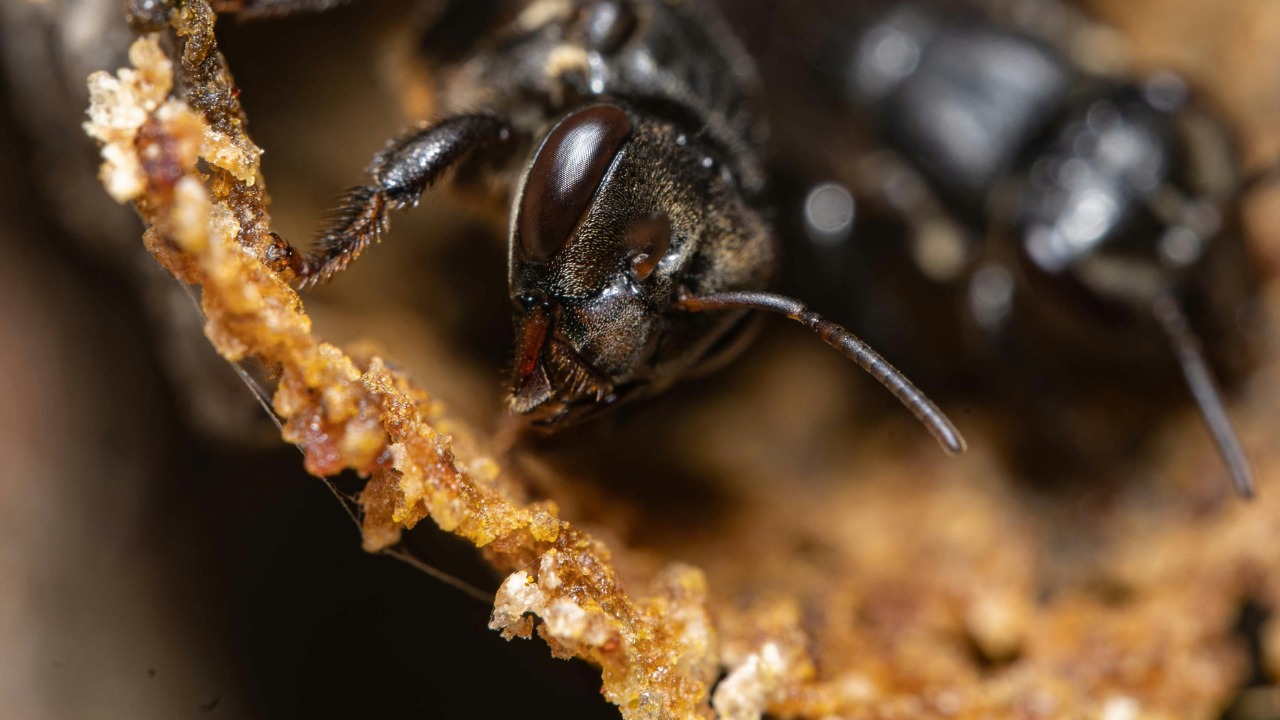

In the Peruvian Amazon, a tiny pollinator has become the unlikely protagonist of a legal revolution. Local authorities have recognized stingless bees as holders of rights in their own ecosystems, turning an insect into a subject of law rather than a mere resource. The move signals a profound shift in how one corner of the world understands nature, justice, and the survival of the forests that sustain both people and bees.
By extending legal personhood to these honey-making stingless bees, officials are testing whether courts can be used to defend an entire web of life, not just human interests. The decision, rooted in Indigenous knowledge and a growing “rights of nature” movement, could reshape conservation in Peru and far beyond if it proves enforceable in practice.
How stingless bees became legal subjects in the Peruvian Amazon
The breakthrough for stingless bees emerged from the central Amazon of Peru, where local authorities moved to recognize the insects as rights-bearing beings within their native forests. Reports describe how officials in the Peruvian Amazon adopted a legal framework that treats these bees not as property but as members of the community whose existence, habitat, and ecological functions must be protected. In practical terms, that means the bees’ survival and well-being can now be defended in court if they are harmed by deforestation, pollution, or other human activities, a step that earlier this year was described as the first time in history that an insect has been formally recognized as a rights holder in law.
Coverage of the decision emphasizes that the recognition applies to honey-making stingless bees native to the Amazon, which are central to local ecosystems and cultures. One detailed account explains that, for the first time in history, the law is recognizing an insect as a rights holder in In Peru, in the Amazon region, underscoring how unprecedented this move is within environmental law. Other reports on how stingless bees in the Amazon became the first insects with legal rights describe a process that involved local leaders, legal advocates, and community groups working together to draft and pass the new protections.
A world first: insects enter the rights-of-nature era
What makes this decision globally significant is not only that it protects a threatened pollinator, but that it marks the first time an insect has been explicitly granted legal rights. Multiple accounts describe how honey-making stingless bees in the Peruvian Amazon have become the first insects to gain legal rights, noting that the move extends the logic of rights of nature from rivers and forests to a small, winged animal. One report on Honey, Making Stingless Bees, Peruvian Amazon Become the First Insects, Gain Legal Rights, Making Stingles highlights that this is not just a symbolic gesture, but a legal innovation that could influence how other jurisdictions think about nonhuman life.
Social media coverage has echoed that framing, presenting the decision as a global first for pollinators and for environmental law. A widely shared post describes how stingless bees become the world’s first insect to be granted legal rights, placing the Peruvian Amazon at the center of a broader conversation about climate action and biodiversity. That post, which frames the story as part of a wider push to protect pollinators, refers to the decision in Jan as a turning point in how societies might safeguard species that are often overlooked in law despite their ecological importance.
From Satipo’s ordinance to a broader Amazonian shift
The legal recognition of stingless bees in the Peruvian Amazon did not emerge in a vacuum. Earlier, the district of Satipo in central Peru approved a historic ordinance that explicitly recognized an insect as a rights holder, setting a precedent with no equal in environmental law. In that measure, described in detail as Satipo Approves Historic Ordinance, In World First, An Insect Is Granted Legal Rights, local authorities affirmed that the insect and the ecosystems it sustains possess inherent rights that must be respected and protected. The Satipo decision helped crystallize a legal theory that could then be adapted to the specific context of stingless bees in the Amazon.
Advocates describe the Satipo ordinance as a precedent with no equal, because it moved beyond traditional conservation rules and into the realm of rights, where nature is treated as a subject of law. A follow-up explanation notes that, in a precedent with no equal, the ordinance recognized the insect and the ecosystems they sustain as having inherent rights, language that is echoed in later Amazonian measures. That framing, detailed in the clause on Satipo Approves Historic Ordinance, In World First, An Insect Is Granted Legal Rights, helped legitimize the idea that insects can be rights holders, paving the way for the Amazon’s stingless bees to receive similar recognition.
What the new rights actually cover
Legal rights for stingless bees are not abstract slogans; they are defined in concrete terms that can be invoked in court. Reports on the Peruvian Amazon decision explain that the bees are now recognized as having rights to exist, to maintain their natural cycles, and to have their habitats restored if damaged. One detailed account notes that Peru grants legal rights to stingless bees so that they can be defended in court if they are harmed, describing how the ordinance allows guardians to bring cases on behalf of the bees when their colonies or foraging grounds are threatened. That description of how Peru grants legal rights to the bees underscores that the measure is designed to be enforceable, not merely symbolic.
The rights framework also ties the bees’ protection to the health of the wider forest. Advocates involved in the process describe how the legal shift serves to recognize the bees’ role as pollinators and to embed that recognition in the process of environmental stewardship. A detailed overview of the initiative explains that From Knowledge to Action, Forging the First Declaration of Rights for Stingless Bees, Our long-term engagement with Indigenous communities helped shape a declaration that links the bees’ rights to the integrity of their ecosystems. In that account, which describes how From Knowledge, Action, Forging the First Declaration of Rights for Stingless Bees, Our, Indigenous partners contributed, the rights are framed as tools to defend both the insects and the forests they sustain.
Indigenous knowledge and local leadership at the center
Indigenous communities in the Peruvian Amazon have long cultivated stingless bees for honey, medicine, and ceremony, and their knowledge was central to the legal transformation. Accounts of the rights process emphasize that Indigenous leaders worked with legal advocates to articulate why the bees should be recognized as more than resources, describing them as relatives and guardians of the forest. One report notes that Apu Cesar Ramos, president of an Indigenous organization, was among those who publicly supported the recognition of the bees’ rights, highlighting how local leadership framed the measure as a defense of both culture and territory. That role is captured in coverage that mentions Apu Cesar Ramos, president of a regional group, underscoring that the push came from within the Amazon, not imposed from outside.
Educational and advocacy efforts also helped build public support. A video report describes how, in a global first, stingless bees in the Peruvian Amazon have been granted legal rights, and notes that Helping Peru recognize stingless bees as a native species in 20 twenty-four involved outreach and collaboration with local communities. That account, which refers to how Helping Peru recognize the bees as native species was part of the process, shows that the legal change was accompanied by efforts to strengthen cultural and scientific understanding of the insects’ importance.
Why stingless bees matter so much to the forest
Stingless bees are not just legal curiosities; they are among the planet’s most important pollinators, especially in tropical forests. Reports on the Peruvian decision stress that these bees are some of the oldest bee species on Earth and that they play a crucial role in pollinating a wide variety of Amazonian plants. One analysis notes that stingless bees become the world’s first insect to be granted legal rights in Peru, Amazon, and highlights that these bees are among the oldest bee species on Earth, a detail that underscores their evolutionary significance. That description of Stingless, Peru, Amazon pollinators reinforces why protecting them is seen as protecting an ancient lineage that underpins the forest’s diversity.
Scientists have also begun to document the unique properties of stingless bee honey and other products, which are used in traditional medicine and may have broader applications. One report notes that “And the variety was also really wild – these molecules have been known to have anti-inflammatory effects or antiviral” properties, referring to compounds found in bee products that could have pharmaceutical value. That observation, captured in the phrase And the variety of molecules, suggests that safeguarding the bees is not only about ecology but also about preserving potential medical resources that are still being explored.
Rights of nature, from rivers to bees
The stingless bee decision is part of a broader legal movement that treats elements of nature as rights-bearing entities. Around the world, rivers, forests, and ecosystems have been recognized as legal persons, and Peru’s Amazonian initiative extends that logic to insects. Advocates involved in the stingless bee declaration describe it as a crucial legal shift that serves to embed ecological relationships into law, aligning with a growing trend in Latin America to recognize nature’s inherent rights. The detailed account of how From Knowledge to Action, Forging the First Declaration of Rights for Stingless Bees, Our collaboration with Indigenous communities unfolded shows how this rights-of-nature framework is being adapted to specific species and landscapes, rather than applied in a one-size-fits-all way.
Within Peru, the Satipo ordinance and the Amazonian bee recognition sit alongside other local governance experiments that seek to protect ecosystems through rights language. While some municipalities, such as the Nauta Municipality in the Loreto region, are better known for their proximity to major Amazonian rivers than for insect law, the broader pattern is one of local governments testing new tools to defend their territories. In that context, the stingless bee case becomes a high-profile example of how rights-of-nature ideas are moving from theory into municipal ordinances and practical enforcement mechanisms.
Global stakes: pollinators, climate, and legal innovation
The decision to grant legal rights to stingless bees comes against a backdrop of mounting threats to pollinators worldwide, including climate change, habitat loss, and pesticides. A social media explainer on the bees’ new status notes that the decision emerges against a backdrop of mounting threats to pollinators, including climate change, habitat loss, and pesticides, framing the Peruvian move as part of a global response to pollinator decline. That context, highlighted in the description of Jan coverage, suggests that legal rights could become one more tool in the fight to keep pollinator populations from collapsing.
Legal scholars and advocates see the stingless bee case as a test of whether rights-of-nature frameworks can deliver concrete conservation outcomes. One analysis notes that, in a first for nature, the planet’s oldest bee species has become the world’s first insect to be granted legal rights, including recognition of their ecosystems’ inherent rights. That description of how Dec, Rachael, Zoology, University of Southampton reported the case underscores that the stakes go beyond one species or one country. If courts in the Peruvian Amazon can successfully enforce the bees’ rights, it could encourage other jurisdictions to experiment with similar protections for pollinators, forests, and even entire biomes.
More from MorningOverview