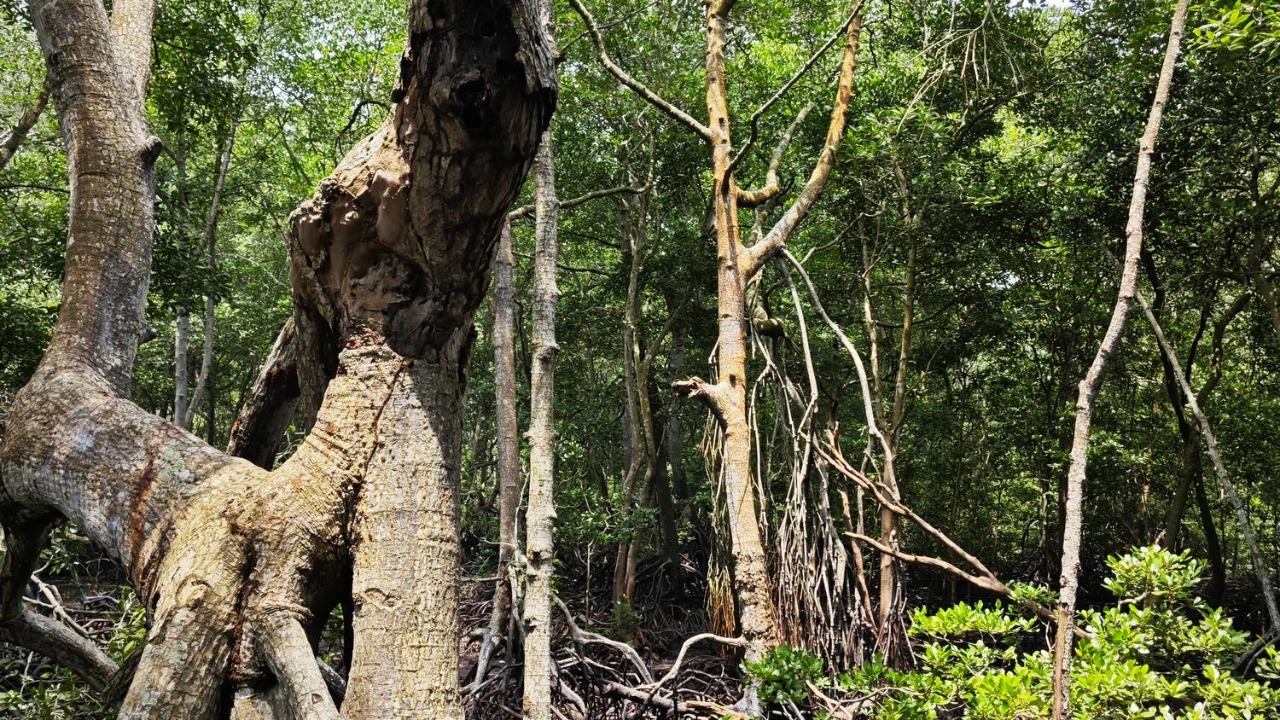

In Panama’s tropical forests, trees are quietly rewriting the rules of survival. Faced with longer, harsher dry spells, they are reallocating energy below ground, extending roots deeper into the soil to keep access to water as the surface dries out. The shift is subtle but profound, revealing how a rainforest famed for lush canopies is now fighting for its future in the dark.
What looks like a simple change in root length is in fact a complex adaptation to a warming climate and more frequent drought. Long-term experiments in Panama show that this underground response can help forests endure water stress, but scientists warn that there are limits to how far this strategy can go before the ecosystem’s resilience begins to fray.
Panama’s forests are adapting underground to a new climate reality
The core finding is stark: trees in Panama’s tropical rain forests are growing longer roots as droughts intensify, effectively chasing water deeper into the ground. In controlled plots where rainfall has been reduced for years, researchers have documented trees shifting biomass from shallow, fine roots near the surface into thicker, deeper structures that can tap moisture reserves that remain even when the topsoil is parched. This pattern, described in detail in reporting on In the Face of Drought, shows that the forest is not passively suffering through dry seasons but actively reorganizing itself below ground.
That reorganization is not just a curiosity for botanists, it is a frontline response to climate stress. The same long-term experiment, highlighted again in coverage of trees in Panama, indicates that these deeper roots help maintain water uptake and keep many trees alive through extended dry periods that would otherwise be lethal. By tracking how root systems change over years of manipulated rainfall, scientists can see adaptation in real time, rather than inferring it from isolated drought events.
What longer roots actually mean for a tropical tree
When I talk about trees growing “longer roots,” I am not describing a simple linear extension, like a rope unspooling into the soil. The response involves a reshaping of the entire root network, with some surface roots dying back while new growth pushes downward into deeper layers where water lingers. Visual evidence from root scans, including work illustrated by Amanda Langhi Coreiro, shows how fine roots in the upper soil can thin out under stress, even as thicker, more persistent roots expand at depth. The result is a more vertically oriented architecture that prioritizes access to stable water over rapid nutrient uptake near the surface.
This shift comes with trade-offs. Surface roots are efficient at capturing pulses of nutrients from decaying leaves and organic matter, so losing them can slow growth even if the tree survives. At the same time, building and maintaining deeper roots is energetically expensive, forcing trees to divert carbon that might otherwise go into leaves, flowers, or seeds. The Panama experiments suggest that, at least for now, many species are willing to pay that price to secure water, but the balance between survival and productivity is changing in ways that will shape the forest’s future structure and function.
Evidence from Panama’s long-term drought experiment
The most compelling evidence for this underground adaptation comes from a long-running rainfall manipulation in Panama, where researchers have systematically reduced water reaching parts of the forest canopy. Over years of treatment, they have watched how trees respond, measuring not just mortality and growth but also the hidden dynamics of roots. Reporting on this work notes that a long-term experiment reveals that tropical forests in Panama are able to adapt to droughts, but scientists caution that this resilience may be short lived if warming and drying trends continue.
Within those experimental plots, trees exposed to chronic water reduction have consistently developed longer roots compared with those in control areas that receive normal rainfall. Coverage of trees in Panama emphasizes that this is not a one-off reaction to a single dry year but a sustained adjustment over time. The experiment shows that some species can maintain water uptake and avoid catastrophic die-off by investing in deeper roots, yet it also reveals that others cannot keep pace, hinting at future shifts in which species dominate the canopy.
A global pattern: tropical trees reaching deeper for water
What is happening in Panama fits into a broader pattern emerging across the tropics. Observations from other regions show that tropical trees are losing many of their shallow roots during droughts while increasing the number and length of deeper roots that can tap subsurface moisture. A widely shared description of this pattern notes that Tropical trees are growing deeper roots to survive droughts, with surface roots sacrificed as the soil dries and deeper structures proliferating where water remains available.
More detailed reporting on these trends explains that tropical trees are growing deeper roots as part of a broader suite of drought responses that also includes closing stomata, shedding leaves, and altering wood density. In some forests, this belowground flexibility allows the ecosystem to compensate for reduced rainfall, at least up to a point. In others, shallow soils or bedrock close to the surface limit how far roots can go, making those systems more vulnerable. Panama’s forests, with their relatively deep and weathered soils, may be among the better positioned to exploit this strategy, but they are still operating within physical and biological constraints.
How root changes reshape forest resilience
Longer roots do more than keep individual trees alive, they alter how the entire forest responds to stress. By tapping deeper water, trees can maintain photosynthesis and transpiration during dry spells, which helps stabilize local temperatures and humidity. This buffering effect is one reason tropical forests are often described as climate regulators. The Panama experiments, as summarized in coverage of In the Face of Drought, suggest that deeper rooting allows the forest to keep functioning even when rainfall is sharply reduced, at least over the timescales studied so far.
Yet the same studies also highlight signs of strain. Reporting on tropical forest roots notes that changes aboveground, such as more intense heat and altered rainfall patterns, are filtering below, putting pressure on root systems that cannot endlessly adjust. As trees invest more in deep roots, they may become less able to respond to other stresses, like nutrient depletion or pest outbreaks. Forest resilience, in other words, is being maintained through a costly reallocation of resources, and there is no guarantee that this trade-off will hold under more extreme climate scenarios.
Limits to adaptation in a warming world
It is tempting to read the story of longer roots as a reassuring tale of nature’s ability to cope, but the scientists behind the Panama work are careful to stress its limits. The long-term experiment that shows forests in Panama can adapt to droughts also warns that this capacity may be temporary if warming and drying continue to accelerate. The summary shared through Panama underscores that while deeper roots help trees access water for a long time, they cannot conjure moisture that is not there. If aquifers and deep soil layers themselves dry out, the strategy fails.
There are also biological ceilings on how far different species can push their roots. Some trees are anatomically constrained, with root systems that are naturally shallow or that depend on specific soil layers for nutrients and symbiotic fungi. Coverage of trees in Panama notes that not all species respond equally in the experiment, hinting at future shifts in community composition as drought-tolerant, deep-rooting species gain an advantage. Over time, that could transform the forest’s biodiversity, carbon storage, and even its cultural value to nearby communities.
Why root behavior matters for reforestation and policy
For anyone involved in reforestation or climate policy, the Panama findings carry a clear message: what happens below ground is as important as what we see in the canopy. Planting trees that cannot adjust their roots to new moisture regimes risks creating forests that look healthy in the short term but are primed for failure in the next major drought. The expertise of institutions like the Smithsonian Tropical Research Institute, whose men and women are described as knowing as much about reforestation in the tropics as anyone in the world, is crucial for designing restoration projects that account for root traits and drought resilience, not just fast growth.
That same institution is investing in training the next generation of scientists and practitioners to think this way. Programs such as the Smart Reforestation forest restoration intern initiative bring students into direct contact with field experiments, including work on how root systems respond to climate stress. By linking scientific insight with collaboration among governments, NGOs, and local communities to improve livelihoods and well-being, these efforts aim to ensure that the lessons from Panama’s deeper roots inform how new forests are planted and managed across the tropics.
What Panama’s deeper roots tell us about the future of rainforests
Seen together, the reports from Panama and other tropical regions sketch a picture of forests that are both vulnerable and inventive. Trees are not passive victims of drought; they are engineers, reshaping their own plumbing to keep water flowing as the climate shifts. The documentation that some tropical trees are reaching deeper for water, and that Panama’s forests in particular are growing longer roots in experimental drought plots, shows that adaptation is already under way, not a hypothetical future response.
At the same time, the strain visible in root scans, the uneven responses among species, and the warnings from long-term experiments all point to a narrowing margin for error. Longer roots buy time, but they do not remove the need to limit greenhouse gas emissions, protect remaining intact forests, and design reforestation projects that are built for a drier world. As I read the evidence from Panama, I see a forest that is doing everything it can to survive, sending its roots deeper into uncertainty. Whether that effort is enough will depend on choices made far beyond the tree line.
More from MorningOverview