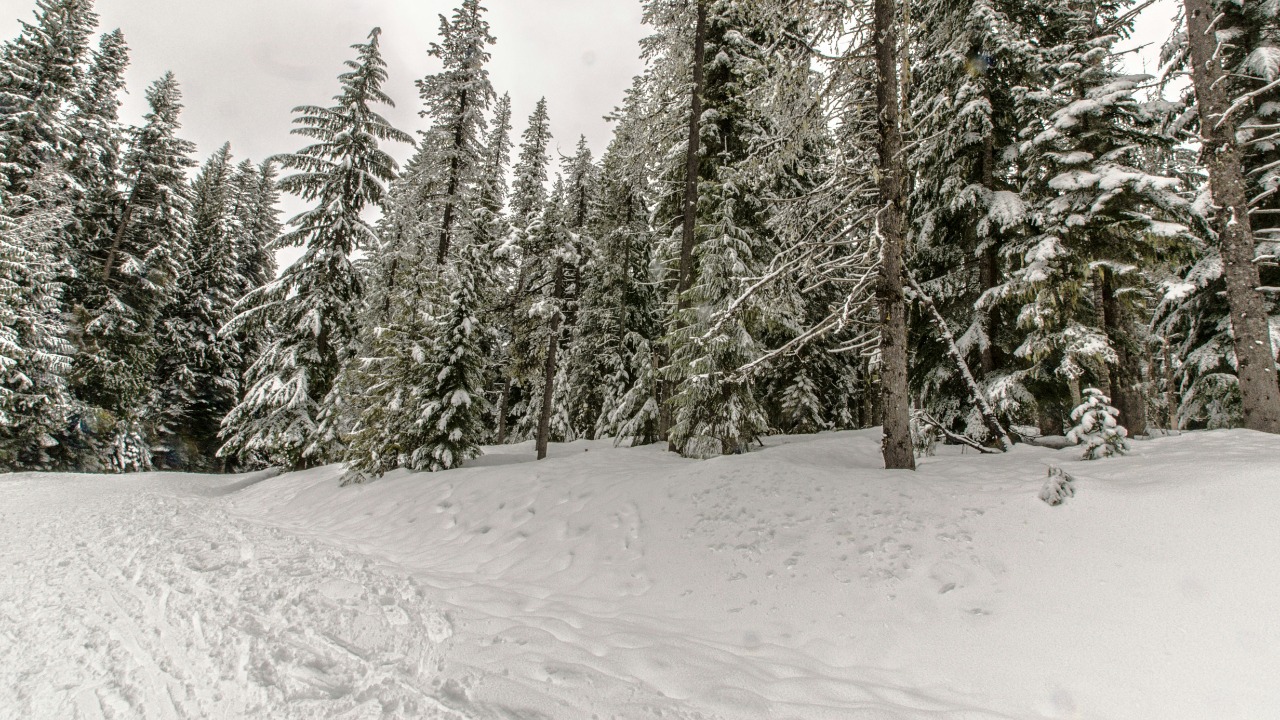

Forecasters are warning that parts of Oregon’s high country are on track for a dangerous stretch of winter weather, with some mountain slopes expected to pile up more than 35 inches of snow in just a few days. The National Weather Service is blunt about the stakes: whiteout conditions, powerful winds, and periods when driving through the Cascades may be functionally impossible. For anyone who lives in, works in, or needs to cross the state’s interior, this is the kind of pattern that can shut down plans and, if people are not prepared, put lives at risk.
The stormy setup is unfolding across a region that already treats winter travel as a serious undertaking, from the coastal ranges to the volcanic peaks that define Oregon. What makes this episode stand out is not just the depth of the snow but the combination of heavy precipitation, high winds, and a parade of systems that will keep conditions volatile through midweek and beyond.
How much snow is coming to the Oregon Cascades
The most eye catching numbers are focused on the east slopes of the Oregon Cascades, where forecasters say totals could range from 16 to 35 inches of new snow, driven by winds that may gust to 45 m p h at times. That corridor, which includes key passes and high elevation communities, is under a winter storm warning that stretches into Thursday, a signal that this is not a quick burst but a sustained event tied to deep Pacific moisture. When I look at those figures, I see a setup where plows will struggle to keep up and where even short trips over the crest could turn into hours of crawling or waiting for closures to lift.
Lower elevation passes are not escaping either. An updated forecast for Oregon’s main mountain routes calls for 2 to 4 feet of snow on the higher passes, enough to repeatedly bury lane markings and overwhelm unprepared vehicles. Earlier guidance for the Cascade passes highlighted a window from Jan 6-8 for heavy snow and high winds, with the National Weather Service office in Portland flagging a total of 2 to 4 feet of snow as a realistic outcome for the most exposed stretches. That same forecast noted that the snowpack in some areas remained below what would be considered 100 percent of normal for the season, so this storm is both a travel hazard and a significant boost to the winter water supply, a point that has been underscored in coverage of Zach Urness and in later updates that describe how Jan and What to know fit into the evolving picture.
Warnings, watches, and the risk of impossible travel
When the National Weather Service escalates from a watch to a warning, it is a sign that confidence is high and impacts are expected, not hypothetical. In southern Oregon, The National Weather Service issued an updated winter storm watch at 12:19 p.m. on Monday, valid from Tuesday 10 a.m. until Thursday morning, covering the Siskiyou Mountains and the southern Oregon Cascades. That alert, which explicitly urged people to monitor for updates on this situation, framed the coming period as one where heavy snow and strong winds would combine to make travel difficult or impossible at times, especially over higher summits and exposed ridges that funnel wind.
Statewide, a separate Winter Storm Watch bulletin for Oregon carried a similar tone, with a headline that spelled out the risk of dangerous conditions and a time window that runs through midweek in Pacific Standard Time. The language in that alert is familiar to anyone who has watched big winter systems roll through the region: snow covered roads, sharply reduced visibility, and the potential for vehicles to become stranded if they attempt to push through at the wrong moment. It is the same kind of scenario that prompted The National Weather Service to warn of whiteout conditions and possible blizzard conditions in a prior cold season event, when officials cautioned that travel could be impossible in some areas and urged drivers to reconsider nonessential trips, a message amplified in a widely shared social post.
Storm pattern: multiple systems and atmospheric rivers
What is driving these extreme totals is not a single rogue storm but a sequence of Pacific systems lining up over the region. A technical Quick Look briefing on the Storms Forecast to Impact the Pacific Northwest, Updated in early Jan, describes Multiple waves of moisture and energy aimed at the coast, each one reinforcing the last. In practical terms, that means snow that falls on Tuesday is not given much time to settle or be cleared before the next round arrives, and winds that ease briefly can ramp back up as the next low pressure center swings through.
Farther north, the same pattern is expected to deliver heavy rain and mountain snow to the Olympic Mountains and Washi, where Precipitation totals due to both storms are forecast to reach 75 to 150 m m, or roughly 3 to 6 inches of liquid equivalent. According to the Center for Western Weather and Water Extremes, that moisture will be lifted over the Cascade Range, where it cools and falls as snow at elevations above roughly 1 500 m (5 000 feet), a process that helps explain why the Oregon Cascades are staring at 2 to 4 feet of accumulation while valley floors see mostly rain. That broader context matters, because it shows this is part of a larger Pacific Northwest pattern, not an isolated local anomaly, as detailed in the two storms analysis and the Jan Quick Look that highlights how these Storms Forecast will Impact the Pacific Northwest once they are fully Updated and Multiple impulses come ashore.
On the ground: passes, ski areas, and state agencies
On the ground, the first impacts are already visible in the Cascade passes, where chains, traction tires, and patient driving are quickly becoming non negotiable. Earlier this week, Officials advised people to delay travel if possible on key east west routes, pointing to images from the Oregon Dept of Transportation that showed U.S. 26 coated in compact snow and ice. NWS meteorologists in that same briefing warned that conditions would deteriorate further as the heaviest snow bands moved through, a message that aligns with the broader winter storm warning now in place for the mountain corridors that connect the Willamette Valley to central and eastern parts of the state.
For ski areas, the storm is both a blessing and a logistical challenge. Timberline Lodge on Mount Hood, for example, saw its first big snowfall of the season earlier this month, part of a pattern that brought fresh powder to The Cascades and helped jump start operations at Timberline, Mt. Hood Meadows, and Ski Bowl. A follow up forecast from PORTLAND, Ore, carried by KATU, noted that warmer temperatures later in Jan could melt off some of the recent snow in the Oregon Cascades, underscoring how volatile the snowpack can be when atmospheric rivers shift snow levels up and down. For now, though, the focus is on safely managing the influx of new snow, a task that will test lift operations and access roads even as skiers and snowboarders eye the deepening base, as described in coverage that ties together KATU reporting and the broader regional pattern.
How drivers and communities can prepare
For drivers, the most important step is to take the warnings at face value and adjust plans before conditions deteriorate. When The National Weather Service and state agencies talk about travel being difficult or impossible at times, they are not speaking in abstractions, they are describing scenarios where visibility drops to near zero, lanes disappear under drifts, and even four wheel drive vehicles with snow tires struggle to maintain control. In its latest winter storm warning for Oregon mountain passes, the agency explicitly called out the risk of vehicles becoming stranded and urged people to carry emergency supplies, a message echoed in an Updated forecast that said Oregon mountain passes were on track to get 2-4 feet of snow and that a winter storm warning had been issued for the affected corridors, as detailed in the Updated Oregon outlook.
Communities, meanwhile, are leaning on a familiar playbook that includes prepositioning plows, coordinating with utilities, and pushing out clear messaging through local channels. The state’s Winter Storm Watch alert for Oregon, which carried a Headline timestamped in PST, urged residents to stay tuned for updates on this situation and to prepare for potential power outages and blocked roads, guidance that dovetails with the more localized watch issued by The National Weather Service for the Siskiyou Mountains and southern Oregon Cascades from Tuesday to Thursday. For residents who want to dig deeper into the technical side, the Jan Quick Look briefing on the Storms Forecast to Impact the Pacific Northwest, which has been Updated to reflect Multiple incoming systems, offers a window into how forecasters are tracking the evolving pattern. And for a more localized sense of how specific passes like Santiam, Willamette, and Government Camp are faring, detailed coverage of Jan conditions from the National Weather Service office in Portland, including the note that 6-8 for heavy snow and high winds could push totals to 2 to 4 feet and still leave some basins shy of 100 percent of normal for the season, is available through targeted National Weather Service briefings and the broader Winter Storm Watch for Oregon that ties those local details into a statewide picture, alongside the southern focus described when National Weather Service updated its Monday and Tuesday alerts.
Ultimately, the numbers tell a clear story. With 16 to 35 inches possible on the east slopes of the Oregon Cascades, 2 to 4 feet on the highest passes, and winds near 45 m p h, this is a storm cycle that demands respect. I see it as a reminder that in a state where winter is both a lifeline for water resources and a recurring hazard for travel, paying close attention to evolving forecasts, from the Jan Quick Look to local NWS updates, is not optional. It is the difference between a manageable disruption and a dangerous ordeal on a dark, snow choked highway.
More from Morning Overview