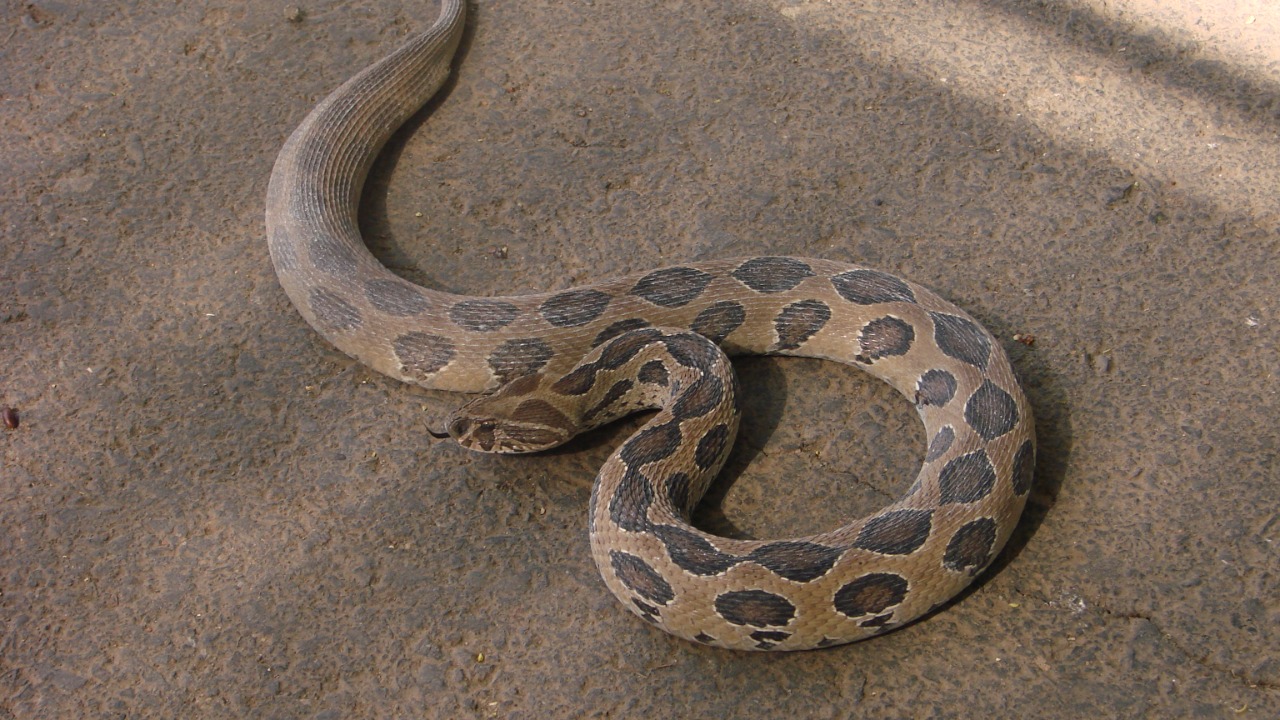

Across the Indian countryside, a familiar but often unseen threat is quietly changing. Russell’s viper, already one of the most lethal snakes in the region, is becoming even more dangerous as its venom shifts, its range expands and people push deeper into its habitat. The result is a fast‑moving public health challenge that is colliding with climate change, rapid development and an urgent race to modernise treatment.
What makes this story especially stark is that the danger is not just the snake itself, but the speed at which its biology and behaviour are being reshaped by human activity. As scientists map its toxins, track its movements and test new drugs, they are finding that the old assumptions about where Russell’s viper lives and how its venom behaves are no longer reliable, just as rural India can least afford more uncertainty.
India’s deadliest snake, by the numbers
Russell’s viper, known to biologists as Daboia russelii, is found across the Indian subcontinent and is responsible for a disproportionate share of serious snakebites. One detailed analysis reports that this single species accounts for around 43% of snakebite cases in India, far more than any other snake species. That dominance reflects not only its potent venom but also how frequently people and Russell’s vipers now cross paths in fields, villages and expanding suburbs.
Researchers estimate that India suffers an estimated 58,000 annual snakebite deaths, and Russell’s vipers are described as responsible for most snakebite deaths and accidents within that toll. In one study, scientists note that Russell‘s vipers are the leading cause of fatal envenomation in India, underscoring why this species, rather than the cobra or krait, has become the central focus of new antivenom and drug research. When one animal is tied so directly to tens of thousands of deaths, even small shifts in its behaviour or venom can have outsized consequences.
How climate is rewriting Russell’s venom
Scientists are now documenting that climate is not just moving snakes into new places, it is also reshaping what their venom does to the human body. Work highlighted under the banner “Climate Dictates a Venomous Snake’s Toxic Arsenal Regional” shows that regional climate influences the venom toxin composition of Russell’s vipers, meaning the same species can deliver very different effects depending on where it lives. In that research, the authors describe how Climate Dictates which toxins are emphasised in a given region, effectively tuning the snake’s “toxic arsenal” to local conditions.
Separate reporting on “The surprise factor that makes India’s deadliest snake even more toxic” goes further, warning that one of India’s most dangerous snakes could become even more harmful as temperatures and rainfall patterns shift. The piece notes that one of India’s most dangerous snakes may respond to climate change by altering venom components in ways that change symptoms and severity. For doctors, that means a bite in a hotter, drier district might demand a different clinical response than a bite in a cooler, wetter one, even when the culprit is still Daboia russelii.
Climate change is expanding the danger zone
Beyond chemistry, climate change is also expected to redraw the map of where Russell’s vipers and other highly venomous snakes can live. A modelling study on the future of snakebite risk in India explains that climate change is anticipated to significantly impact the biogeographic distribution of snakes, leading to shifts in where people face the highest risk of envenomation. The authors stress in their Background that understanding these shifts is essential to manage envenomation risks effectively in India, because health systems and antivenom supplies are still organised around older distribution patterns.
Another analysis of India’s most venomous snakes warns that climate change is expanding the potential ranges of these species, pushing them into new districts and higher elevations. In that work, researchers explain that climate change is expanding the potential ranges of India’s most venomous snakes, a trend that threatens vulnerable rural communities already grappling with high snakebite fatalities and limited access to care. For Russell’s viper, which already glides across vast stretches of the Indian landscape, this expansion means more villages on the frontline and more first‑time encounters in places that have little experience with the species.
Human expansion is pulling Russell’s viper closer
Climate is only half the story. Human expansion is also drawing people and Russell’s vipers into closer contact, particularly in fast‑changing rural and peri‑urban belts. A detailed report on how human expansion is making one of India’s deadliest snakes more dangerous describes how farmland, roads and settlements are fragmenting habitats and creating new hunting grounds for rodents, which in turn attract vipers. The analysis, framed under “Human expansion is making one of India’s deadliest snakes more dangerous — Here’s how”, notes that this pattern has been visible across India since herpetologist Romulus Whitaker began documenting it decades ago.
As fields are irrigated and night‑time lighting spreads, Russell’s vipers are finding more prey and more hiding places at the edges of human activity. The same report explains that what looks like progress for agriculture and infrastructure can inadvertently create ideal viper habitat, especially in areas where waste and grain stores support booming rodent populations. For farm workers walking barefoot at dusk, or children playing near piles of bricks and scrap, the result is a rising risk of surprise encounters with a snake that strikes quickly when disturbed.
Venom maps and the puzzle of regional symptoms
Clinicians have long noticed that bites attributed to Russell’s viper can produce very different symptoms in different parts of India, from catastrophic bleeding to kidney failure or neurological problems. A recent IISc‑led project set out to explain why, developing detailed “venom maps” of this deadly snake to predict the nature of a bite based on where it occurs. The researchers behind this IISc Study Creates ‘Venom Maps‘ project emphasise that Russell’s viper is one of the most medically important snake species in the world, and that mapping its toxins region by region can help doctors anticipate complications and choose better treatments.
Complementing that work, another analysis of Russell’s viper notes that the species is found across the Indian subcontinent and that victims can experience very different symptoms depending on where the snakes live. The report explains that Russell’s viper (Daboia russelii) populations show striking variation in venom composition, which helps explain why a standard antivenom sometimes works well in one region but less effectively in another. For health planners, these venom maps are a blueprint for tailoring antivenom production and clinical protocols to local realities instead of assuming a one‑size‑fits‑all solution.
Why traditional antivenom is struggling to keep up
India has relied on horse‑derived antivenoms to treat snakebites for more than a century, a technology that has saved countless lives but is now showing its limits against a fast‑changing threat. One recent study points out that these animal‑derived products are slow to act, can trigger severe allergic reactions and may not neutralise the full spectrum of toxins present in modern Russell’s viper venom. In a plain language summary of new work on small molecule inhibitors, researchers note that Plain Language Summary findings show Russell’s viper (Daboia russelii) causes over half the snakebite cases in India, and that relying solely on traditional antivenom leaves dangerous gaps in early treatment.
The same body of research underscores that antivenom is often administered late, after patients reach distant hospitals, by which time much of the venom’s damage is already done. Because Russell’s viper venom can trigger rapid clotting disorders and organ damage, delays of even a few hours can be fatal. That is why scientists are now exploring adjunct therapies that can be given in the field or at small clinics to stabilise patients before antivenom is available, a shift that reflects how the snake’s evolving venom has outpaced the century‑old tools designed to stop it.
Repurposed drugs and the race for faster treatment
One of the most promising developments in this race is the use of repurposed small‑molecule drugs to neutralise key toxins in Russell’s viper venom. In a recent study, researchers tested combinations of existing medicines and found that certain small molecule inhibitors could block the enzymes that drive bleeding and tissue destruction. The authors explain that the study used three SMIs and that some venom effects were best countered by marimastat alone, highlighting how The study used three SMIs to show that targeted drugs can complement or even partially substitute for antivenom in the crucial early window after a bite.
Another analysis of the same work stresses that India has relied on horse‑derived antivenoms for more than a century but that these treatments are slow and sometimes ineffective against the full range of Russell’s viper toxins. The researchers argue that combining antivenom with repurposed drugs could dramatically improve survival, especially in rural settings where patients often arrive late. For a country where Russell’s vipers are responsible for most snakebite deaths and accidents, and where the annual toll is estimated at 58,000 deaths, the prospect of faster, more precise therapies is not a luxury but a necessity.
Big Four migration and new hotspots
While Russell’s viper is the focus of much of this work, it is part of a broader group known as the “Big Four” snakes that cause most serious bites in India. Recent discussions on the migration of these species under climate pressure highlight how all four, including Russell’s viper, are shifting their ranges. In a widely shared update on the “migration of India’s deadliest snakes”, presenters explain that warming temperatures and changing rainfall are pushing the Big Four into new districts, a trend that is especially visible across India‘s central and northern states.
For Russell’s viper, which already occupies a vast swath of the subcontinent, this migration means that communities with little historical exposure may suddenly find themselves in a high‑risk zone. Health workers in these emerging hotspots may not recognise the snake or its bite patterns, and local clinics may not stock the right antivenom. Combined with the climate‑driven changes in venom composition and the human‑driven expansion of farmland and settlements, the migration of the Big Four is turning snakebite from a localised rural hazard into a more widely distributed national challenge.
Adapting public health to a moving target
All of this leaves India’s public health system facing a moving target. Climate change is altering where Russell’s vipers live and what their venom does, human expansion is increasing encounters and traditional antivenom is struggling to keep pace with regional variation. Analyses of future risk stress that climate change is anticipated to significantly impact snake distributions and that authorities must plan antivenom production, training and surveillance around these projections. The authors of the snakebite risk study argue that using climate‑informed models can help health officials allocate resources and manage envenomation risks effectively in India, rather than reacting after new hotspots emerge.
At the same time, researchers studying Russell’s viper venom under changing conditions warn that climate change could alter the composition of toxins in ways that make existing antivenoms less reliable. One report notes explicitly that Climate change could make India’s deadliest snake even more toxic, a scenario that would demand continuous updating of venom maps, antivenom formulations and clinical guidelines. In practice, that means treating Russell’s viper not as a fixed threat but as an evolving one, shaped by the same forces that are transforming India’s climate, landscapes and rural economies.
More from MorningOverview