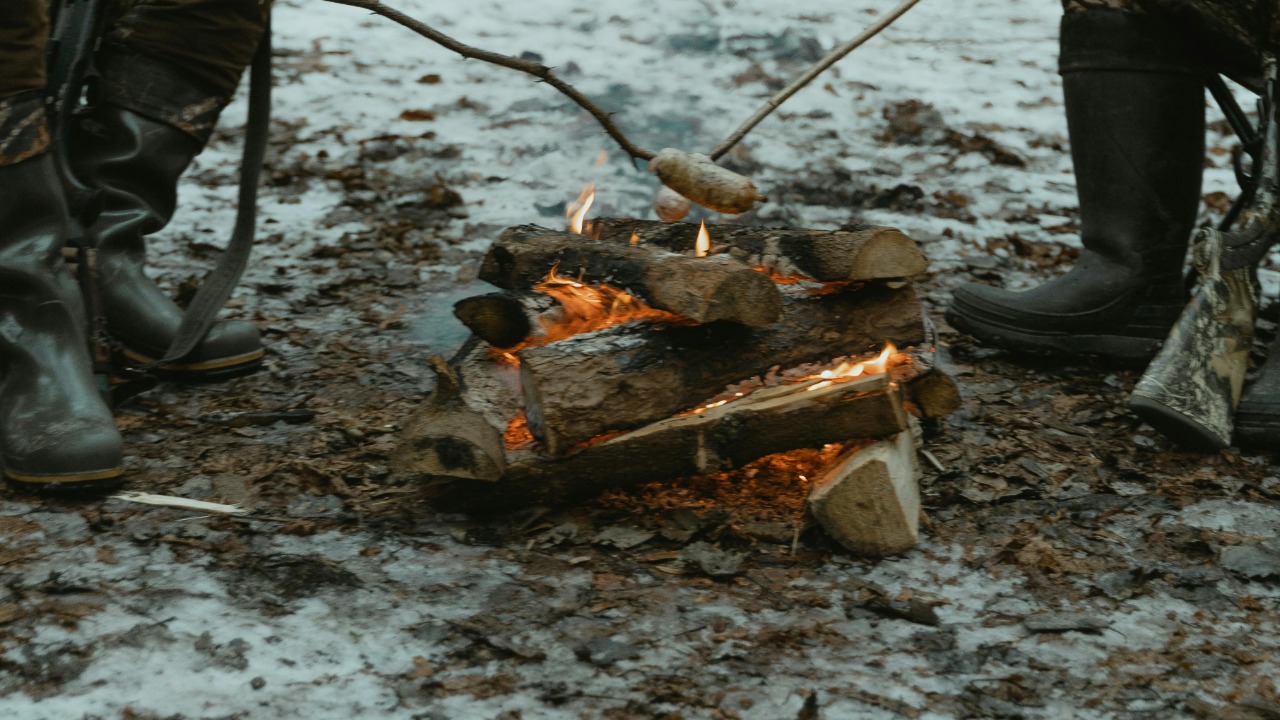

Archaeologists working in eastern England say they have found the earliest known traces of humans deliberately kindling fire, a discovery that pushes one of our species’ defining skills far deeper into the past than most researchers expected. The find, buried in ancient sediments and preserved as subtle chemical and mineral clues, is already forcing a rethink of when our ancestors first learned to spark flames on demand rather than simply borrowing them from natural blazes.
At stake is more than a tidy date on a timeline. If the new evidence holds up, it suggests that the mental leap required to turn stone and mineral into controlled fire happened hundreds of thousands of years earlier than the previous consensus, reshaping how I understand the evolution of technology, social life, and even the bodies of the early humans who lived in what is now Britain and continental Europe.
A quiet Suffolk field hiding a radical claim
The latest shock to the story of human fire use comes from a seemingly ordinary patch of countryside in the English county of Suffolk, at a site known as East Farm, Barnham. Excavations there have revealed what researchers argue is the oldest-known evidence of prehistoric humans not just tending flames but actively lighting them, a claim that, if confirmed, would make this Suffolk discovery the current front‑runner for the oldest human fire on record and mark a turning point in how I think about early technology in northern Europe.
Archaeologists working at this long‑studied site describe how Excavations at East Farm, Barnham uncovered a distinctive concentration of burned sediments, stone tools and mineral fragments that together point to deliberate fire‑making. According to reporting on the project, the team argues that the pattern of heating, the association with tools and the broader context in the English landscape all indicate that early humans in Suffolk were not simply camping beside a wildfire but had mastered the trick of creating sparks when and where they needed them, long before later populations in the region.
Red earth, shattered stones and the telltale pyrite
The case for intentional fire at Barnham rests on a surprisingly subtle set of clues, starting with a patch of soil that looked wrong to trained eyes. Researchers noticed an area of ground that was unusually red, a color change that typically appears when dirt is repeatedly heated to high temperatures, and they then tied that discolored zone to a cluster of stone artifacts and mineral fragments that would make little sense without fire at the center of the story.
Continued work at the site turned up four small pieces of iron pyrite, the glittering “fool’s gold” that throws sparks when struck with flint, along with flint tools that show signs of use in that same context, all within a 400,000‑year‑old archaeological layer in England that had already yielded evidence of human occupation. Reporting on the project notes that Researchers noticed a patch of soil that was unusually red, then linked it to those four iron pyrite fragments that can shower sparks when they are hit with flint, a combination that strongly suggests deliberate fire‑making rather than a random geological quirk or a one‑off natural blaze.
Rewriting the age of fire by hundreds of thousands of years
What makes the Suffolk discovery so disruptive is not just that it shows early humans using fire, but that it appears to show them making it far earlier than the standard textbooks allow. For years, many archaeologists treated a roughly 400,000‑year‑old campfire in northern Europe as the benchmark for when our ancestors in that region could reliably kindle flames, and they often assumed that earlier sites showed only opportunistic use of natural fires rather than true mastery of ignition.
The new evidence from England suggests that people were striking sparks at least 350,000 years earlier than that benchmark, a gap that effectively shatters the old timeline and forces a reconsideration of how quickly fire‑making spread across Ice Age landscapes. A detailed account of the research explains that a Groundbreaking discovery shows humans were making fire 350,000 years earlier than previously thought, based on material from northern France, and the Suffolk work now dovetails with that revised chronology by pointing to similarly ancient fire‑making behavior in Britain, rather than a much later technological breakthrough.
From opportunistic flames to controlled technology
To understand why this matters, I have to step back to the broader story of how humans learned to live with fire. Early hominins almost certainly began by scavenging flames from lightning strikes or wildfires, using them briefly for warmth or protection before they died out, and only later did they learn to keep embers alive and eventually to generate sparks on demand, a transition that marks the difference between opportunistic use and true control of this dangerous tool.
Scholars who study this transition point out that the control of fire by early humans was a critical technology that reshaped diet, social life and migration, with the oldest definitive evidence for regular fire use often cited from sites in Africa and the Levant, and later European sites showing more advanced techniques such as using iron pyrite to strike sparks with flint. A synthesis of this work notes that Not to be confused with Controlled burn, the control of fire by early humans includes both the ability to maintain natural flames and the more sophisticated practice of using minerals like pyrite to strike sparks with flint, exactly the combination that the Suffolk and northern French discoveries now seem to document in astonishingly old layers.
How scientists read ancient campfires in the dirt
Proving that a dark stain or a scatter of stones is really an ancient hearth is far from straightforward, which is why the Suffolk claim leans heavily on microscopic and chemical analysis rather than just the naked eye. Specialists in geoarchaeology slice thin sections of sediment and examine them under powerful microscopes, looking for the distinctive signatures of ash, charcoal and heat‑altered minerals that can distinguish a true campfire from a natural discoloration or a later disturbance.
One influential study of Acheulean sites showed how micromorphology, the close study of undisturbed sediment blocks, can reveal in situ fire features that would otherwise be invisible, identifying burned bone, heated clay and ash lenses that prove a hearth once burned in that exact spot. In that work, the authors explain that Through the application of micromorphological techniques they could show that certain sediments and bones were heated in place, not transported later, a methodological approach that underpins the confidence researchers now express about the red soil, heated clay and burned materials at Barnham and related European sites.
The long debate over the first human flames
The Suffolk discovery drops into a field that has argued for decades over when humans first truly mastered fire, with different sites and methods producing competing claims. Some researchers have pointed to traces of burning in African caves more than a million years old, while others have favored later, clearer hearths in the Levant and Europe, and the debate has often turned on whether a given patch of ash or charcoal really reflects deliberate human activity or could be explained by natural processes.
For years, one of the most widely cited benchmarks came from a lakeside site in Israel, where archaeologists uncovered the 790,000-year-old remnants of a campfire that many considered the earliest solid evidence of repeated fire use by hominins. Reporting on that work describes how the 790,000-year-old hearth remains in Israel included burned flint, charred wood and other materials that together made a strong case for controlled fire, and it is against that backdrop that the new European finds, which claim even older fire‑making behavior, are now being weighed and scrutinized.
England’s 400,000-year-old campfire and a shifting baseline
Before the latest wave of discoveries, many archaeologists treated a roughly 400,000‑year‑old campfire in England as the earliest secure evidence of humans in that region deliberately using fire, a baseline that shaped how they thought about the spread of this technology into higher latitudes. That site, with its cluster of burned sediments and artifacts, seemed to show that by that time early humans could at least maintain flames, even if it was not clear whether they could generate them from scratch.
New reporting now emphasizes that the Suffolk evidence predates that 400,000‑year‑old campfire by a significant margin, and that the combination of heated clay, red soil and pyrite fragments points to a more advanced skill set than simple ember‑tending. One account explains that Over 400,000-Year-Old Evidence of Fire-Making Unearthed, Thousands of Years Earlier Than Once Thought describes how archaeologists linked a patch of heated clay and associated artifacts to deliberate fire‑making, effectively moving the goalposts for when such behavior appears in the English record and aligning it with even older signals from continental Europe.
Britain, France and a continent-wide fire revolution
What is striking about the Suffolk find is how neatly it lines up with evidence from northern France, suggesting that early humans across a broad swath of western Europe were experimenting with the same fire‑making techniques at roughly the same time. At a site in that region, researchers have identified a similar combination of heated sediments, stone tools and pyrite fragments, arguing that hominins there were also striking sparks long before the previously accepted dates for such behavior.
According to a detailed summary of the French work, the team behind that project argues that their material shows humans were making fire 350,000 years earlier than earlier estimates, and that this behavior was not a one‑off curiosity but part of a broader technological repertoire. The report explains that a Dec Oldest evidence in Britain, with Fragments of iron pyrite mirrors the French pattern, with both regions yielding pyrite pieces that could be used with flint to generate sparks, a convergence that strengthens the case for a continent‑wide shift in how early Europeans harnessed fire rather than isolated local experiments.
Neanderthals, modern humans and who lit what
The question of who exactly was making these ancient fires is as contentious as when they were lit, because the time window in question overlaps with both early Homo sapiens and their close cousins, the Neanderthals. Some of the oldest European fire sites are associated with Acheulean stone tools that predate classic Neanderthal industries, while others fall squarely within the time when Neanderthals dominated much of the continent, and that mix has fueled debate over whether fire‑making was invented once and shared, or discovered independently by different groups.
Recent work on Neanderthal sites has added to the picture by showing that these hominins were capable of sophisticated fire use, including repeated hearth construction and possibly their own ignition techniques, rather than simply relying on natural flames. One study, highlighted in a report that notes a researcher calling a new fire discovery the most exciting of his 40-year career, describes how Dec research on Neanderthals and a 40-year span of work has built the case that these relatives were not technological laggards but active innovators in fire use, a conclusion that dovetails with the idea that both Neanderthals and early modern humans may have shared or independently developed the pyrite‑and‑flint techniques now emerging from Suffolk and northern France.
London’s Roman puzzle and the broader archaeology of fire
While the Suffolk discovery reaches back into deep prehistory, it also sits within a much longer human story of learning to control and depict fire, a story that stretches into the historic era and even into the art that later civilizations left behind. In London, for example, archaeologists recently solved a 1,800-year-old Roman fresco puzzle that involved interpreting how ancient artists represented daily life, including the use of light and heat in domestic and ritual settings, a reminder that fire has always been both a practical tool and a powerful symbol.
The same report that details the Suffolk work notes that Dec Archaeologists working on a 1,800-year-old Roman fresco in London were able to decode the imagery with the help of modern analytical techniques, just as Scientists studying the English fire sites rely on microscopic and chemical tools to read traces of burning in the soil. For me, that parallel underlines how the archaeology of fire spans everything from the faintest mineral scars left by a Paleolithic hearth to the vivid painted flames on a Roman wall, all part of a continuous human engagement with combustion.
Why the Suffolk fire matters for human evolution
If early humans in Suffolk and northern France were striking sparks hundreds of thousands of years earlier than once thought, the implications ripple far beyond a single site report. Reliable fire‑making would have allowed small groups to push into colder environments, cook tougher foods, fend off predators and extend their waking hours into the night, all changes that could have reshaped social structures, energy budgets and even brain development long before the appearance of fully modern humans.
Researchers who study the evolution of diet and metabolism have long argued that cooking and controlled fire were central to the rise of large‑brained hominins, and the new European evidence suggests that this package of behaviors may have been in place earlier and in more regions than previously recognized. One synthesis of the Suffolk and related work notes that Scientists in the English county of Suffolk now argue that the ability to light fires in our lineage occurred much earlier than previously assumed, a shift that forces me to reconsider when and where the key physiological and cultural adaptations linked to fire might have emerged.
How popular science is framing the “oldest fire” story
As with many big archaeological claims, the Suffolk discovery has quickly filtered into popular science coverage, where it is often framed as a dramatic overturning of what we thought we knew about the dawn of technology. Some accounts emphasize the sheer age of the evidence and the idea that early humans were far more capable than their reputation suggests, while others focus on the detective work involved in teasing a story out of a few grams of heated clay and a handful of glittering mineral fragments.
One widely shared summary, for example, highlights how Scientists Discovered the Oldest Evidence of Human-Made Fire and stresses that another important point is that this behavior appears in multiple European sites, not just a single outlier, while also reminding readers that the work sits within a broader effort to understand how early technologies shaped everything from our money, health and holidays to the deep evolutionary past. For my part, I see the Suffolk fire not as a final answer but as a powerful new data point in a long‑running conversation about what made us human, and how early in our story that transformation truly began.
More from MorningOverview