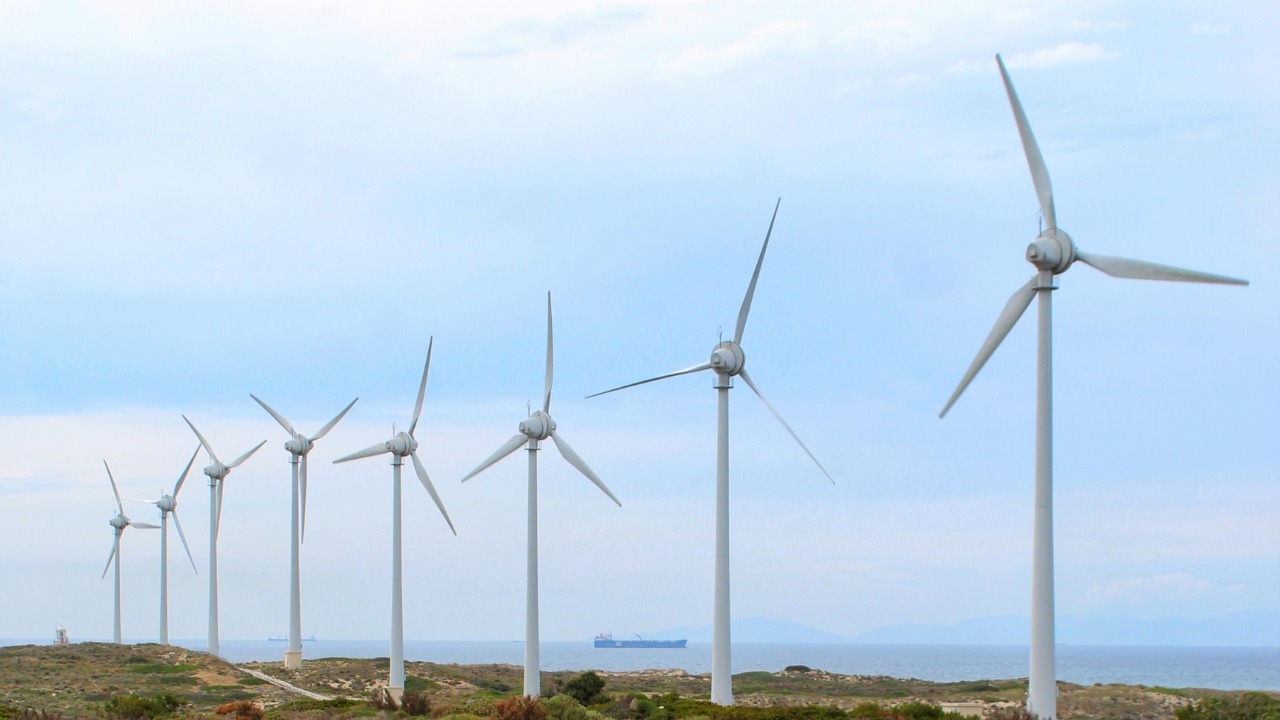

A nearly finished offshore wind farm off New England’s coast is moving forward again after a federal judge cleared construction to resume, even as President Donald Trump repeats his promise of “no windmills” on his watch. The clash between courtroom momentum for Danish developer Orsted and the president’s anti-turbine rhetoric has turned one project into a test of how far executive resistance can slow, but not necessarily stop, the energy transition.
At the center is Revolution Wind, a large-scale project that had been frozen by an Interior Department order, then revived in federal court just as Trump sharpened his attacks on offshore turbines. The result is a vivid snapshot of competing power centers in U.S. climate policy: a White House that derides wind and a judiciary that, at least in this case, is insisting the law, not political slogans, decides whether blades keep spinning.
The judge, the order, and a nearly finished project
The legal turning point came when a federal Judge overturned an Interior Department directive that had halted work on Revolution Wind, a project developed by Danish company Orsted off Rhode Island. According to court filings, the Interior Department had argued that the turbines could disrupt military radar, a claim that effectively froze construction even though the wind farm was already close to completion. By reversing that order, the Judge signaled that the administration’s national security rationale was not strong enough, at least at this stage, to justify sidelining a major clean energy investment, and the ruling allowed Orsted to restart activity while the broader lawsuit continues to unfold.
The decision is particularly striking because Revolution Wind is not a speculative venture on the drawing board but an industrial-scale project that is almost 90 percent complete, with Orsted reporting that the buildout is nearing the finish line. In practical terms, the Judge’s move means crews can return to the water, contractors can keep getting paid, and the region can stay on track for a significant influx of offshore power instead of watching partially installed infrastructure rust in the ocean. The Interior Department’s earlier halt order, which had been justified on the basis that turbines could disrupt military radar, now faces a more skeptical legal review as the case proceeds in federal court, underscoring how judicial oversight can check abrupt policy shifts that threaten to strand billions of dollars in clean energy assets. I see this as a reminder that once a project reaches this level of completion, courts are more likely to weigh the costs of stopping it against the government’s stated concerns, as reflected in the detailed account of the Interior Department dispute.
Orsted’s courtroom win and what it means for offshore wind
For Orsted, the ruling is more than a procedural victory, it is a validation of its bet that the United States will remain a viable market for large offshore projects despite political headwinds. The company had already sunk major capital into Revolution Wind, and the fact that the project is almost 90 percent complete meant that a prolonged shutdown could have turned a flagship development into a stranded asset. By securing permission to resume work while litigation continues, Orsted Wins Ruling to keep its construction schedule largely intact, preserving not only its own balance sheet but also the credibility of offshore wind as a bankable sector in U.S. waters.
The case also sends a signal to other developers watching from the sidelines as federal policy whiplash complicates long-term planning. If a company can demonstrate that it has followed the permitting process, invested heavily, and reached an advanced stage of construction, courts may be reluctant to let late-breaking political objections derail the project entirely. That does not eliminate risk, but it does suggest that the rule of law can provide a backstop when executive branch agencies shift course. In my view, the fact that Orsted’s nearly finished project was allowed to move forward, as detailed in the account of how Orsted Wins Ruling to Resume US Wind by the administration, will likely be read by investors as a modest but meaningful reassurance that contracts and permits still carry weight even in a volatile political climate.
Trump’s “no windmills” vow and the politics of backlash
While Orsted was winning in court, Trump was sharpening his message against offshore turbines, turning technical disputes into a cultural and political fight. He has argued that offshore wind projects lose money, destroy the landscape, and kill birds, folding those claims into a broader narrative that paints renewable energy as both economically suspect and environmentally hypocritical. In one recent remark, Trump said, “I’ve told my people we will not approve windmills,” a line that crystallizes his stance into a simple directive for the federal bureaucracy and signals to his supporters that he sees turbines as symbols of elite climate policy rather than practical infrastructure.
That vow is not just rhetoric, it has real implications for how agencies interpret their marching orders, from the Interior Department to regulators who oversee coastal and maritime impacts. When a president declares that “we will not approve windmills,” staff down the chain may feel pressure to slow-walk permits, search for grounds to revoke approvals, or lean into arguments about radar, fisheries, or viewsheds that can justify delays. I read Trump’s comments, including his insistence that turbines “destroy the landscape and kill birds,” as part of a deliberate strategy to frame offshore wind as an environmental villain rather than a climate solution, a framing that was captured in detail when he told reporters, “I’ve told my people we will not approve windmills,” as recounted in coverage of Trump versus offshore wind.
Inside the courtroom clash between rhetoric and regulation
The Revolution Wind case illustrates how Trump’s sweeping declarations collide with the granular realities of administrative law. On one side, the president has been explicit that he does not want new turbines approved, going so far as to say, “Maybe we get forced to do something because some stupid person is going to sue us,” a line that reveals both his disdain for litigation and his awareness that courts can constrain his agenda. On the other side are developers, state governments, and local stakeholders who have spent years navigating environmental reviews, lease auctions, and community consultations, only to see a late-stage federal order threaten to upend their plans. When those stakeholders go to court, they are not arguing about slogans, they are arguing about statutes, procedures, and whether agencies have followed their own rules.
In this instance, the Judge’s decision to let Orsted resume work suggests that the legal arguments for halting Revolution Wind were not airtight, especially given how far along the project already was. The president’s remark that “Maybe we get forced to do something because some stupid person is going to sue us” now reads almost like a prediction of what unfolded: litigation forced the administration to defend its actions in a forum where evidence and precedent matter more than political branding. From my perspective, the case underscores a basic tension in U.S. governance, presidents can set broad priorities, but when they collide with existing permits and investments, the courts often have the final say. That tension is evident in the detailed recounting of how Trump complained that “Maybe we get forced to do something because some stupid person is going to sue us,” a line that surfaced in reporting on Trump and the federal courts this week.
What Revolution Wind signals for the next phase of U.S. energy policy
Looking ahead, I see the Revolution Wind ruling as an early marker of how the next phase of U.S. energy policy will be contested: not only in elections and agency rulemakings, but in courtrooms where individual projects become proxies for larger ideological battles. The fact that a federal judge on Monday cleared Danish offshore wind developer Orsted to resume work on its nearly finished project in Rhode Island, even as the administration tried to keep it on ice, shows that legal institutions can still carve out space for climate infrastructure in a hostile political environment. It also highlights the importance of project maturity, a nearly finished wind farm with contracts, jobs, and hardware in the water is harder to cancel than a proposal on paper.
For coastal communities and energy planners, the message is mixed. On one hand, the court’s decision to let Orsted move forward while its lawsuit progresses suggests that developers who invest heavily and follow the process have a fighting chance even when the White House is opposed. On the other hand, Trump’s vow of “no windmills” and his willingness to lean on agencies like the Interior Department to halt projects on grounds such as radar interference mean that every new offshore proposal could face similar turbulence. In that sense, Revolution Wind is both a victory and a warning, a sign that offshore wind can survive in the courts, but only after costly delays and legal battles that few smaller players can afford. The stakes for Rhode Island and the broader region, where a federal judge on Monday cleared the nearly finished Revolution Wind project to resume work as quickly as possible while its lawsuit progresses, are captured in the detailed account of how Orsted prevailed in court despite the administration’s efforts to stop it.
More from Morning Overview