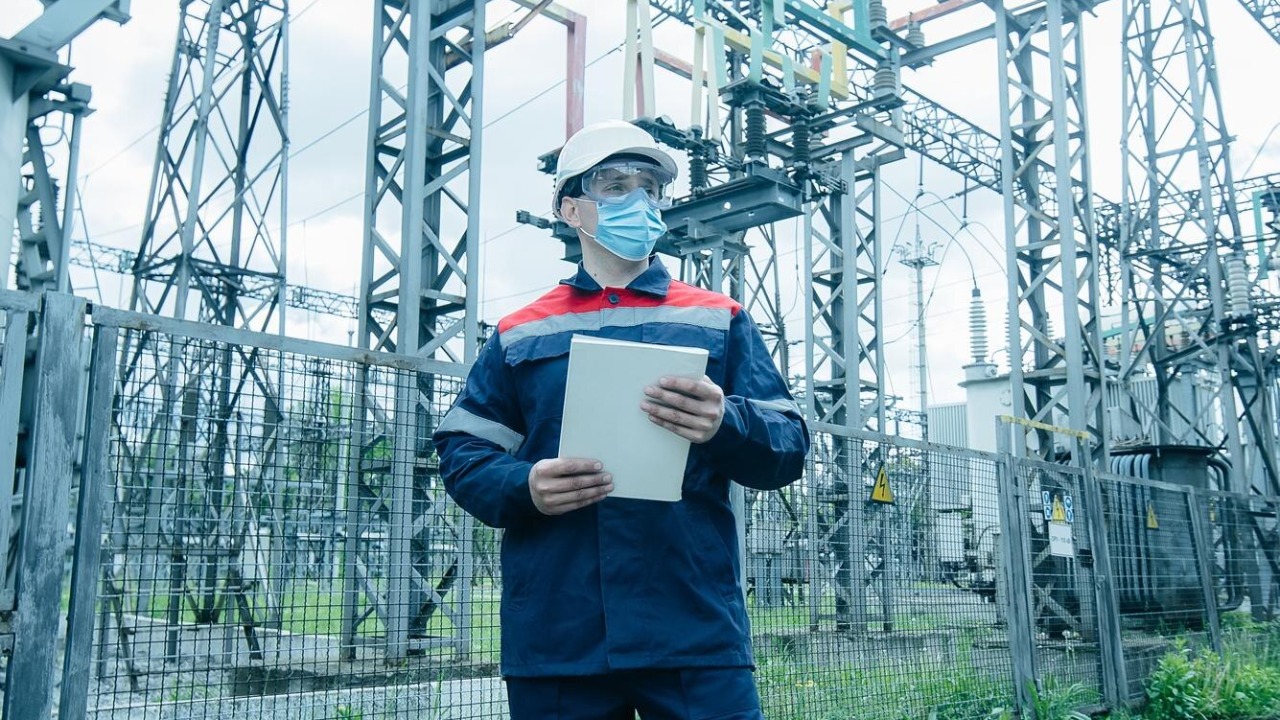

Officials have flipped the switch on a new energy storage complex that is being framed as a turning point for how the United States manages electricity, smoothing the flow of power between surging demand and increasingly variable supply. The Tibbits Energy Storage Facility is designed to act like a giant shock absorber for the grid, soaking up surplus electricity when production is high and releasing it when the system is under strain. As the country races to accommodate data centers, electric vehicles, and more renewable power, this first-of-its-kind project is being held up as a preview of a very different grid.
What is being built around Tibbits is not just another plant, but a template for a more flexible, resilient network that can keep the lights on even as traditional assumptions about demand and supply fall apart. I see it as a test of whether large-scale storage, paired with new regulatory thinking and community partnerships, can keep pace with the pressures that experts warn could otherwise push the grid toward blackouts within just a few years.
The facility that promises to change how the grid works
The Tibbits Energy Storage Facility has been pitched as a “game-changing” project because it is built from the ground up to stabilize the grid rather than simply generate power. Instead of burning fuel, it captures electricity when it is plentiful and cheap, then feeds it back when demand spikes or when wind and solar output sag. Officials involved in the project describe it as a model for how storage can be treated as core infrastructure, not a niche add-on, and that framing is central to why its activation is being watched so closely.
What makes The Tibbits Energy Storage Facility stand out is its scale and its economics. The project does not just provide 100 m of power to the grid, it also delivers an estimated $1.7 m in annual benefits, a figure that underscores how storage can pay off in avoided outages, reduced peak prices, and more efficient use of existing lines. Those same figures, including the shorthand $1.7, are now being cited by advocates who want regulators to treat storage as a cost saver rather than a luxury.
Why storage is suddenly the star of grid planning
For years, grid planners treated big power plants and long transmission lines as the main tools for keeping electricity reliable, with storage as a side project. That logic is shifting as more wind and solar come online and as demand patterns become harder to predict. Storage facilities like Tibbits can respond in seconds, not minutes or hours, which makes them uniquely suited to balancing the system when a cloud bank rolls over a solar farm or when a heat wave pushes air conditioners into overdrive.
In that sense, Tibbits is part of a broader move toward large, centralized infrastructure that can still behave flexibly. Analysts looking at What Actually Gets Built in the next few years expect big projects like this to dominate, but they also stress that these assets must be able to act like “flexible resources” rather than rigid generators. I see Tibbits as a physical expression of that idea, a large facility that can ramp up and down quickly enough to support a grid that no longer follows the old, predictable daily curve.
The Arkansas wind farm that shows how clean power pays off
The Tibbits project is not happening in isolation. In Arkansas, officials have powered up a major wind facility that is being described as “the first” of its kind in the state’s utility mix, a sign that clean generation is moving into regions long dominated by fossil fuels. The project is structured so that once the turbines are in place, the marginal cost of producing each additional unit of electricity is effectively zero, which changes the economics of long-term planning.
One of the most striking comments from that Arkansas effort came from a local voice identified as Jan, who said, “Once you have built it, [it] is free,” a blunt summary of how capital-intensive projects can deliver cheap energy for decades once the upfront investment is made. Reporting on the project notes that customers are expected to receive more than $50 million in benefits from the Arkansas wind farm, and that framing has been echoed in coverage that highlights how Officials see it as a template for future crossover projects. I read that as a clear signal that storage and renewables are being paired not just for climate reasons, but because they can deliver concrete financial gains to ratepayers.
Data centers are rewriting the demand side of the equation
Even as new clean power comes online, the demand side of the grid is changing faster than many planners expected, largely because of data centers. Facilities that host cloud computing, artificial intelligence training, and streaming services are drawing enormous amounts of electricity, often clustering near major transmission hubs and urban centers. Their appetite for power is so intense that it is reshaping regional forecasts and forcing utilities to rethink how quickly they must add capacity.
Leaders at PJM Interconnection, the operator of the nation’s largest electric grid, which includes Maryland and Washington, have been unusually blunt about the challenge. They have warned that the region is seeing far more requests for new data center connections than it can easily serve, and that recent capacity auctions only secured 14.8% of the resources that were sought. When I look at those numbers alongside the Tibbits launch, it is clear that storage is being asked to do more than just smooth out renewables, it is being asked to help cover a demand surge that traditional planning did not anticipate.
A looming 2026 crunch for the U.S. grid
The stakes for getting this right are high. Analysts tracking national trends warn that the U.S. power grid faces a potential crisis around 2026 as AI data centers, electric vehicles, and building electrification all push demand higher at the same time. If supply and flexibility do not keep up, the result could be rolling blackouts, higher prices, or both, especially during extreme weather events that already strain the system.
One assessment of these risks notes that the grid must not only add capacity, but also enhance resilience against cyber threats and the intermittency of renewables, or it could face 2026 blackouts driven by AI and electrification demands. In that context, the Tibbits Energy Storage Facility looks less like a nice-to-have innovation and more like a necessary piece of a broader defense strategy. I see its activation as a test case for whether large storage can be deployed quickly enough, and in enough places, to blunt the worst of that projected crunch.
How local projects fit into a national transformation
Although Tibbits and the Arkansas wind farm are local projects, they are being framed as part of a national shift in how the grid is built and managed. Each facility is tied to a specific community, with local officials and residents weighing in on land use, noise, and visual impact, but the underlying logic is national: use large, centralized assets that can still respond flexibly to changing conditions. That approach is visible in how planners talk about both storage and renewables as tools that can be replicated across regions, not one-off experiments.
At the same time, the geography of these projects matters. The Tibbits Energy Storage Facility is sited in a way that allows it to support nearby load centers and to relieve stress on existing lines, while the Arkansas wind project taps into strong regional wind resources that had not previously been fully exploited. Other locations, such as the areas highlighted in one major power corridor and a separate regional hub, are being evaluated through the same lens: can they host infrastructure that not only serves local needs but also strengthens the wider grid? I read these siting decisions as early steps in a patchwork that, if stitched together, could amount to a fundamentally different national network.
The politics and regulation behind “the first”
None of this happens without political and regulatory backing. Projects like Tibbits and the Arkansas wind farm have required state regulators, local councils, and utilities to sign off on new business models that treat storage and renewables as core assets. In Arkansas, the facility described as “the first” in the state’s utility portfolio had to clear skepticism about cost and reliability before it could move forward, and its eventual approval is now being cited by supporters as proof that regulators can be persuaded when the numbers add up.
On the storage side, the Tibbits Energy Storage Facility has been held up as an example of what can be achieved when policy, technology, and strong partnerships come together. Officials involved in the project have emphasized that its switch-on ceremony was not just a ribbon-cutting, but a signal that regulators are ready to treat storage as a mainstream tool for managing the grid. I see that as an important precedent, because without clear rules and revenue streams, even the most promising technologies will struggle to scale.
What this means for consumers and communities
For households and businesses, the most immediate impact of projects like Tibbits and the Arkansas wind farm will show up in reliability and, over time, in bills. Storage that can discharge during peak hours can reduce the need for expensive peaker plants, which are often older, dirtier, and costly to run. Wind projects that deliver low-cost energy once built can help flatten or even lower long-term rates, especially if the promised more than $50 million in customer benefits from the Arkansas facility materialize as projected.
Communities also have to weigh the trade-offs of hosting large infrastructure. The Tibbits Energy Storage Facility occupies land, requires new connections, and changes the landscape, just as wind turbines do in Arkansas. Yet the promise of local jobs, tax revenue, and a more stable grid is proving persuasive in many places, particularly as residents see the risks of outages tied to extreme weather and surging demand. As states continue to prioritize projects that look like Tibbits, and as more utilities pursue crossover efforts that blend storage with renewables, I expect the debate to shift from whether to build such facilities to how quickly they can be replicated and how fairly the benefits are shared.
More from MorningOverview