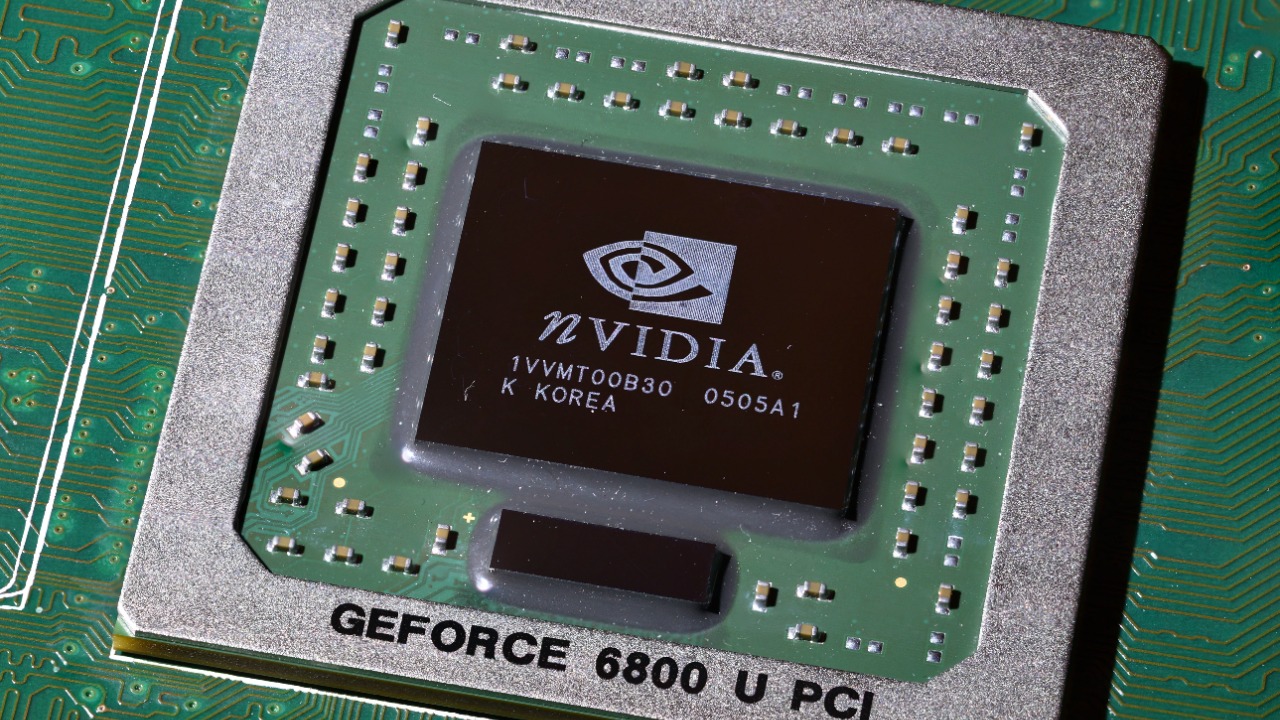

Nvidia has moved its next generation of AI hardware from slide decks to factory lines, with Vera Rubin chips already being manufactured at full scale. The company is not only ramping up a single processor but an entire Vera Rubin platform that pairs new GPUs, CPUs, networking, and data processing units into a tightly integrated AI supercomputing stack.
That shift from roadmap to real silicon matters because Rubin is designed to replace Blackwell as Nvidia’s flagship architecture and to anchor the company’s long term bet on accelerated computing. With full production now underway, the question is no longer whether Rubin will arrive, but how quickly it will reshape AI infrastructure, cloud economics, and the balance of power among the biggest model builders.
The Rubin platform moves from vision to factory reality
Nvidia has framed Rubin as a complete AI engine rather than a single chip, and the company is now building that engine at industrial scale. The platform centers on Extreme Codesign Across NVIDIA Vera CPU, Rubin GPU, NVLink 6 Switch, ConnectX-9 SuperNIC, BlueField-4 DPU and Spectrum, a set of six coordinated components that are meant to be deployed together in large clusters rather than piecemeal servers. By treating compute, networking, and data movement as one design problem, Nvidia is trying to squeeze more usable performance out of each watt and rack unit than was possible with Blackwell-era systems.
What makes this moment different from past unveilings is that Rubin is not being introduced as a distant promise. In a recent presentation, Jan explained that these are not paper products but real chips being built right now, with NVIDIA already committing manufacturing capacity and signaling to customers that they can plan concrete deployments rather than speculative pilots. That shift from aspirational roadmap to active production is a key reason investors and AI labs are treating Rubin as the next baseline for large scale training and inference rather than an optional upgrade path.
From CES stagecraft to “New Engine for Intelligence”
Nvidia used its CES spotlight to position Rubin as what Jan described as a New Engine for Intelligence, tying the platform to a broader narrative about AI becoming a foundational computing layer. The company introduced the audience to pioneering American astronomer Vera Rubi as the inspiration for the name, drawing a line between her work on dark matter and the invisible infrastructure that now powers generative models and autonomous systems. By invoking that legacy, Nvidia is signaling that it sees Rubin not as a minor refresh but as a generational shift in how AI workloads are powered.
Crucially, Nvidia said during its CES special presentation that The Rubin Platform is now in full production, a statement that goes beyond typical “sampling” language and implies that volume manufacturing is already aligned with customer demand. That claim reinforces the idea that Rubin is the company’s immediate answer to surging orders from hyperscalers and AI labs, not a placeholder for some later architecture. It also sets expectations that cloud providers and enterprises will be able to buy complete Rubin based systems, not just individual chips, as they plan data center expansions over the next few quarters.
How Rubin evolved from a microarchitecture to a full superchip platform
Rubin’s arrival in full scale production is the culmination of a roadmap that started when the Microarchitecture was Announced at Computex in Taipei by CEO Jensen Huang. At that point, Rubin was described primarily as the successor to Blackwell, with a focus on core architectural changes and a nod to Rubin’s successor, Feynman, already on the horizon. The emphasis then was on the long arc of Nvidia’s design pipeline rather than immediate deployment, which made Rubin feel like a future chapter in the company’s story.
Since that Computex debut, Nvidia has steadily expanded Rubin from a microarchitecture into a complete AI superchip platform that combines CPU, GPU, networking, and data processing into a single design envelope. That evolution is evident in the way Nvidia now talks about Vera Rubin as a platform that spans the Vera CPU, Rubin GPU, and tightly coupled fabric, rather than just a faster accelerator card. By the time Nvidia CEO Jensen Huang returned to the stage at CES, Rubin had shifted from a line on a roadmap slide to a concrete set of products that customers can order and integrate into their next generation clusters.
Jensen Huang’s message: Rubin is early, fast, and already built
Nvidia CEO Jensen Huang has been explicit that Vera Rubin is not slipping into the future but arriving ahead of expectations. In a recent interview, he said that Vera Rubin is on schedule to be deployed and emphasized that the company is moving away from its hardware being treated as isolated components, instead pushing customers toward the full platform. That message is designed to reassure AI labs and cloud providers that they can commit to Rubin based build outs without worrying about delays that might leave them stranded on older architectures.
Independent reporting backs up that confidence, with Jan noting that NVIDIA’s Revolutionary Rubin AI Chips Enter Full Production Well Ahead of Schedule, Proving Jensen, Pace Is Unmatche. The characterization of Rubin as “fast and lethal” in that context is less about marketing bravado and more about the speed at which Nvidia has moved from design to tape out to mass production. For customers who watched supply constraints and long lead times complicate earlier GPU generations, the fact that Rubin is already rolling off manufacturing lines at scale is a critical signal that Nvidia intends to stay ahead of demand rather than chase it.
What “full production” actually means for data centers
When Nvidia says Rubin is in full production, it is talking about more than just wafers leaving a fab. According to Jan, all six of the new Rubin chips are back from manufacturing partners and they have already passed some of the milestone tests that Nvidia uses to qualify hardware for customer deployment. That means the Vera CPU, Rubin GPU, NVLink 6 Switch, ConnectX-9 SuperNIC, BlueField-4 DPU and Spectrum components are not only being produced, they are also on track for deployment by customers, Nvidia said, which is the practical threshold that matters for data center planners.
At the same time, Nvidia has described Rubin as a New Engine for Intelligence that is now in full production, which implies that the company is aligning its supply chain, board manufacturing, and system integration around this platform. For operators of large AI clusters, full production translates into the ability to place volume orders, secure delivery windows, and design facilities around known power and cooling profiles. It also signals that Nvidia expects Rubin based systems to become the default choice for new AI infrastructure, rather than a niche option reserved for early adopters.
Rubin versus Blackwell: a generational leap, not a minor bump
The scale of Nvidia’s manufacturing push makes more sense when you look at how Rubin stacks up against its predecessor. Reporting on the Nvidia Blackwell successor Rubin releases in 2026 describes a significant performance boost, with Rubin positioned as the architecture that will carry Nvidia’s dominance in AI accelerators into the second half of 2026. During CES, Nvidia highlighted Rubin as the natural follow on to Blackwell, framing the transition as a planned handoff rather than a disruptive fork that would force customers to rethink their software stacks.
Other coverage has been even more explicit, noting that Nvidia announces Vera Rubin AI chip, claims it is 5X more powerful than Blackwell, a figure that, if realized in real workloads, would radically change the economics of training and serving large models. Nvidia has said that Vera Rubin AI is meant to expand AI use across industries, not just in frontier model labs, which helps explain why the company is so focused on getting Rubin into full production quickly. A fivefold performance gain over Blackwell, combined with platform level optimizations, would give cloud providers and enterprises a strong incentive to standardize on Rubin for everything from recommendation engines to autonomous driving stacks.
Why AI labs and hyperscalers are lining up for Rubin
Nvidia is not ramping Rubin in a vacuum; it already has a long list of customers that have built their businesses on its accelerators. The company has said that AI labs including Anthropic, Black Forest, Cohere, Cursor, Harvey, Meta, Mistral AI, OpenAI, OpenEvidence and Perplexity are part of the ecosystem that will benefit from the Rubin platform. These organizations are among the most compute hungry in the world, and their willingness to align with Rubin gives Nvidia a strong demand signal as it scales up production of the full stack.
On the cloud side, Nvidia has highlighted that Today at the Consumer Electronics Show, Nvidia CEO Jensen Huang officially launched the company’s new Rubin computing architecture in partnership with major providers such as OpenAI and Amazon Web Services. That kind of early alignment with hyperscalers ensures that Rubin based instances will be available to a broad range of developers and enterprises, not just the handful of labs that can afford to build their own supercomputers. It also reinforces Nvidia’s strategy of embedding Rubin deeply into the infrastructure of the largest cloud platforms, making it the default choice for customers who want access to cutting edge AI hardware without managing it themselves.
Networking, Spectrum-XGS, and the importance of data movement
One of the less flashy but most consequential aspects of Rubin’s full scale rollout is the networking layer that ties thousands of chips together. Nvidia has emphasized that Spectrum-XGS Ethernet technology, part of the Spectrum-X Ethernet platform, enables facilities separated by hundreds of meters to operate as a single logical AI cluster. By integrating Spectrum-XGS with the Rubin platform, Nvidia is trying to ensure that the gains from faster GPUs and CPUs are not lost to bottlenecks in data movement between racks or even between buildings.
This focus on networking is consistent with Nvidia’s broader message that Extreme Codesign Across NVIDIA Vera CPU, Rubin GPU, Switch, DPU, Spectrum is essential to unlocking the next generation of AI performance. Rather than treating Ethernet switches, DPUs, and SuperNICs as interchangeable commodities, Nvidia is designing them as co equal parts of the Rubin platform. For customers, that means the promise of more predictable scaling as they grow clusters from a few racks to campus scale deployments, with the assurance that the same vendor is responsible for the behavior of the entire stack.
Rubin as Nvidia’s answer to intensifying AI competition
Rubin’s rapid move into full production is also a strategic response to intensifying competition in AI hardware. Nvidia just laid out what’s next for the tech that made it the world’s most valuable company, with Lisa Eadicicco noting that the company briefly became a $5 trillion company last year on the strength of its AI business. That valuation has attracted rivals ranging from custom accelerators at cloud providers to new GPU architectures from traditional chipmakers, all aiming to chip away at Nvidia’s lead.
By bringing Rubin to market quickly and at scale, Nvidia is signaling that it intends to stay several steps ahead of those challengers. The company has framed Rubin as part of a long term roadmap that already includes future architectures like Feynman, while at the same time assuring customers that Rubin itself is ready for deployment now. In that context, full scale manufacturing is not just an operational milestone, it is a competitive tactic designed to lock in AI labs and cloud providers before alternative platforms can mature.
What comes next as Rubin systems ship to customers
With all six Rubin chips back from manufacturing and passing key tests, the next phase is about turning production capacity into deployed systems. Nvidia has said that All six of the new Rubin chips are on track for deployment by customers, Nvidia said, which suggests that reference designs, software stacks, and support programs are already in place. As those systems roll out, the real test will be how Rubin performs on concrete workloads like large language model training, recommendation engines, and real time inference for services such as autonomous driving and industrial automation.
From my perspective, the most important signal is that Nvidia has aligned its messaging, its ecosystem partners, and its manufacturing pipeline around Vera Rubin as the new default for AI infrastructure. With Rubin AI Chips Enter Full Production Well Ahead of Schedule and the Rubin Platform described as a New Engine for Intelligence that is now in full production, Nvidia is betting that customers will standardize on this architecture for the next several years. If that bet pays off, the chips now coming off the line will not just power the next wave of AI models, they will define the contours of the entire AI economy.
More from Morning Overview