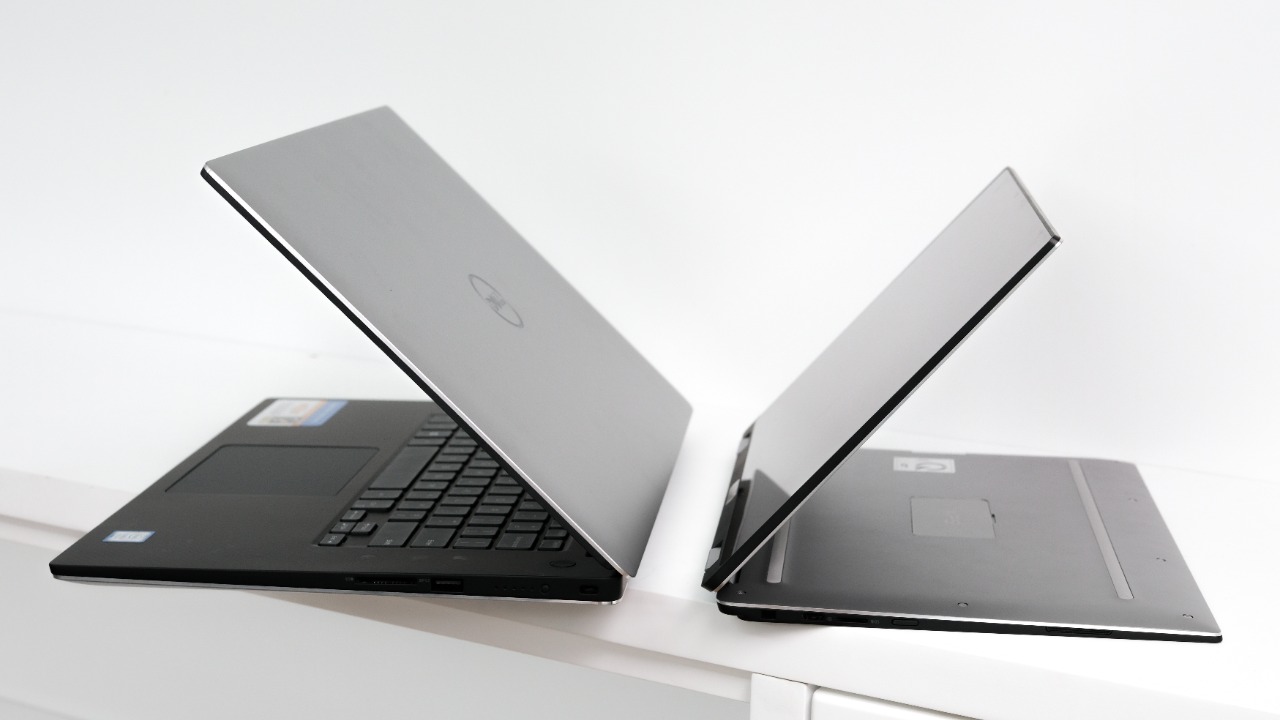

Nvidia’s long-rumored N1X chip has resurfaced in an unexpected place, buried in the logistics trail for Dell’s latest XPS laptops. The appearance of the elusive Arm-based silicon in a shipping manifest suggests Dell got far closer to testing Nvidia’s first consumer CPU than public product lineups reveal, even as the processor itself remains missing from store shelves and from CES stages.
The new leak ties together months of scattered hints about N1X, from engineering samples to performance whispers, and it raises a sharper question: if Dell was moving N1X hardware around for XPS, how close did Nvidia come to launching a rival to Qualcomm’s Snapdragon PC push before delays forced a reset?
The shipping trail that put N1X inside XPS
The latest clue comes from a logistics document that lists Nvidia’s N1X SoC alongside Dell’s next-generation XPS hardware, indicating that Dell was at least evaluating configurations that paired the secretive chip with its flagship thin-and-light line. The manifest points to N1X being treated as a real option for production-class systems rather than a lab-only curiosity, which fits with earlier references to N1 and N1X that surfaced more than a year ago and have lingered without a formal launch from Nvidia. The fact that this trail is tied to actual shipping activity, not just internal codenames, suggests Dell was moving physical units through its supply chain to validate thermals, firmware, and board designs.
That behind-the-scenes work sits in stark contrast to the public face of Dell’s XPS relaunch at CES, where the company framed its refreshed lineup as a clean, consumer-ready reboot. In its own messaging, Dell highlighted that “Key takeaways: Big news from CES 2026 – XPS is back and better than ever! We have reimagined the XPS lineup with you in mind. Icon…” and leaned on that language to position the new XPS machines as the company’s design showcase. Now, the manifest leak implies that under that polished surface, Dell was also experimenting with a very different CPU roadmap that could have shifted XPS away from its traditional Intel and AMD foundations.
Dell’s quiet N1X testing and the missed CES moment
The shipping records are not the only sign that Dell took N1X seriously. Separate reporting indicates that Dell tested a laptop built around Nvidia’s N1X as recently as late November, which is roughly two months before the current CES cycle. That timing matters, because it shows Dell was still running hands-on validation on an N1X notebook even as expectations were building for new GeForce launches like the RTX 50 SUPER family, a lineup that some reports say was pushed back and that “some say it is indefinitely delayed,” with the figure “50” explicitly tied to those RTX plans. The overlap hints at a broader reshuffle inside Nvidia’s roadmap, where both GPUs and CPUs have slipped relative to early expectations.
At the same time, N1X itself was conspicuously absent from the show floor. Coverage of the “5 Biggest No-Shows of CES 2026” explicitly called out how the Consumer Electronics Show opened without any sign of NVIDIA’s GeForce RTX 50-series “Blackwell” SUPER refresh and noted that the same event also failed to deliver the expected blueprint for N1/N1X, effectively grouping the Arm CPU with the other Biggest No surprises. For Dell, that meant the company could talk up its redesigned XPS hardware at CES while quietly shelving any public mention of the Nvidia-powered variant that had been in testing only weeks earlier.
How N1X fits into Nvidia’s delayed Arm strategy
The N1X story is inseparable from Nvidia’s broader Arm ambitions on Windows laptops. Earlier reporting described “The Windows-on-Arm chip from Nvidia and MediaTek” as a joint effort that is now expected to launch in 2026, with supply constraints cited as a key factor in pushing the schedule back until late 2026 instead, a delay that directly affects how quickly Nvidia and MediaTek can bring their Arm design to market. A separate analysis framed the same slip in starker terms, stating that the NVIDIA N1x CPU “Launch Stalls Until Late 2026, Reshaping AI PC Landscape,” and emphasizing that this CPU is central to Nvidia’s AI PC strategy, which now has to adapt to a later arrival window for its own CPU hardware.
Another report sharpened the timeline further, stating that the Nvidia N1X ARM CPU is “reportedly delayed until late 2026” and that the custom Arm CPU is now likely to appear closer to CES 2027, which effectively pushes the first wave of consumer systems into the following year and gives Qualcomm’s Snapdragon PC platform more time to entrench itself. That same piece underlined that the “custom Arm CPU” is the heart of Nvidia’s Windows strategy, and that the delay means any N1X-based XPS or similar design would not be viable as a near-term shipping product, which helps explain why Dell’s manifest activity has not yet translated into a retail ARM configuration.
Performance leaks and the Alienware angle
Even as schedules slip, leaked benchmarks and images have painted a more detailed picture of what N1X might deliver. One early performance leak described how Nvidia’s N1X SoC appeared to beat Intel in single threaded performance in specific tests, noting that Nvidia has been producing enterprise-grade CPUs to complement its GPUs for some time but has not yet released anything in the consumer notebook space, and that the N1X sample was tested under a version of Linux in those Jun benchmarks. Another leak, tied to the YouTube channel Moore’s Law is Dead, showed what appeared to be an engineering sample of an NVIDIA N1x chip and claimed it had as many CUDA cores as an RTX 5070, a detail that, if accurate, would put its integrated graphics in the same rough class as a midrange discrete GPU and signal Nvidia’s intent to compete aggressively in the overall notebook Moore market.
On the system side, there have been parallel hints that Dell is preparing more than just XPS prototypes around N1X. Reporting on a future Dell Alienware gaming laptop stated that a Dell Alienware system with an Nvidia N1X APU is reportedly coming in 2026, and that Nvidia is set to challenge Qualcomm’s Snapdragon X platform with this design, which would pair an Arm CPU and GPU in a single APU. If that roadmap holds, Dell could end up fielding both thin-and-light productivity machines and gaming-focused Alienware rigs on N1X, giving Nvidia a multi-segment launch footprint once the CPU is finally ready.
What the XPS leak signals for the next wave of AI PCs
For Dell, the presence of N1X in XPS shipping paperwork underscores how aggressively it is probing alternatives as the PC industry pivots toward AI-centric designs. The company’s own blog post on the new XPS generation stressed that “Big news from CES 2026 – XPS is back and better than ever!” and that the lineup has been “reimagined” with mobility and creativity in mind, language that aligns with the idea of pairing sleek chassis with more efficient silicon and dedicated AI acceleration, even if the current public models still rely on traditional x86 CES parts. The N1X manifest leak suggests Dell wanted a path where that same industrial design could eventually ride on Nvidia’s Arm-based platform once the CPU and software stack mature.
For Nvidia, the stakes are even higher. The company has already been building enterprise CPUs and positioning N1X as a cornerstone of its AI PC strategy, yet multiple reports now agree that the launch has slipped to late 2026 or even closer to CES 2027, which hands extra time to rivals like Qualcomm’s Snapdragon and to incumbent x86 vendors. In that context, the appearance of N1X in Dell’s logistics systems, alongside generic product entries that resemble other XPS configurations in online product listings, reads less like a one-off experiment and more like a dry run for a delayed but still very real platform shift.
What remains unclear is how much of that early work will survive the delay intact. Generic catalog entries for XPS-class hardware, visible in other online product databases, show how quickly configurations can change as vendors swap CPUs and GPUs behind the scenes. With N1X now pushed back, Dell and Nvidia will have to decide whether to hold designs in limbo, rework them around interim chips, or leapfrog to a more advanced N1X revision. For now, the shipping trail proves one thing: Nvidia’s secret CPU is not just a lab rumor, it has already brushed up against real XPS hardware, and that contact will shape how both companies approach the next generation of AI-focused PCs.
More from Morning Overview