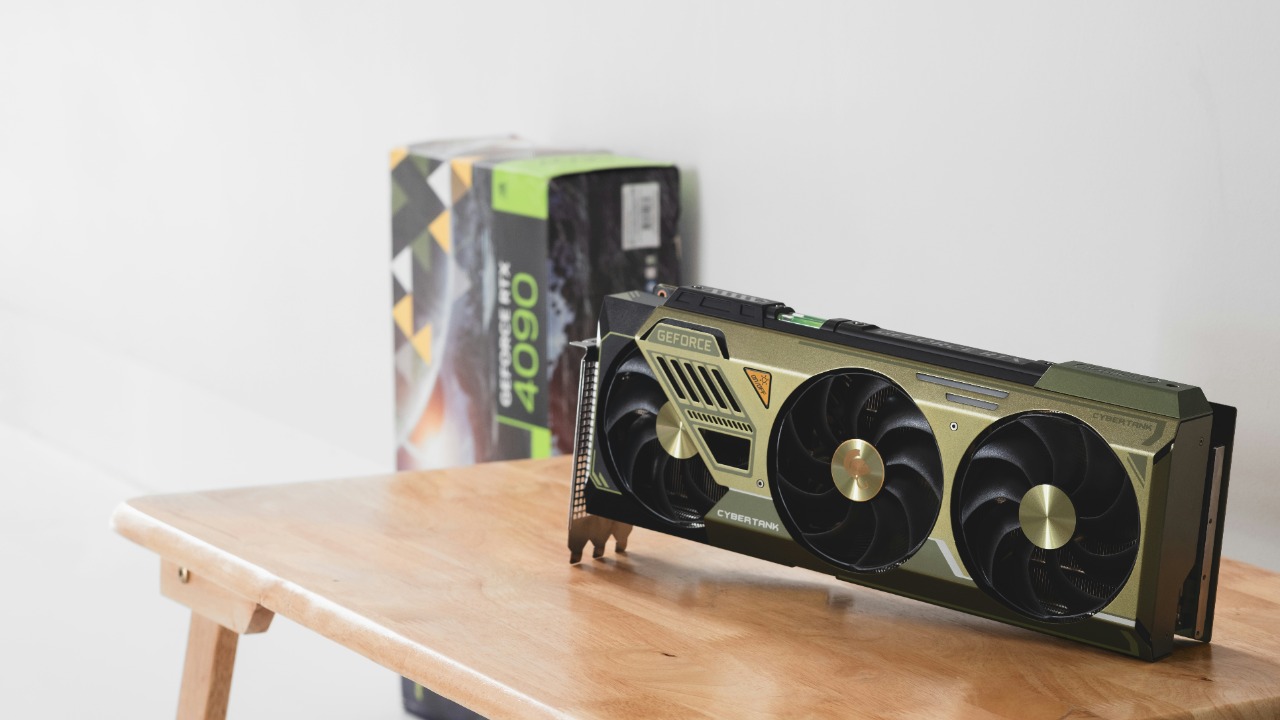

Nvidia’s 2025 driver cutoff did not just mark the end of an era for Maxwell, Pascal, and Volta GPUs, it exposed how tightly PC gaming now moves in lockstep with operating system lifecycles, AI demand, and corporate priorities. Popular cards like the GTX 1060 did not suddenly become unusable, but they were quietly pushed to the margins by a mix of Windows 10’s retirement, new graphics features, and a market that increasingly values data center revenue over long‑tail gamers.
I want to unpack why these GPUs were left behind when they were, how much of that decision was technical versus strategic, and what it means if you are still gaming or working on older hardware. The story stretches from Microsoft’s support timelines to Linux distribution policies, from VRAM‑hungry AI models to a second‑hand market that is suddenly looking a lot more attractive.
How Nvidia’s 2025 cutoff actually works
The headline change is simple: Nvidia is ending regular Game Ready driver support for GeForce GPUs based on Maxwell, Pascal, and Volta in the final quarter of 2025. In its own support documentation, the company explains that after a last Game Ready release in October, these architectures will stop receiving performance optimizations and new game profiles, which means no tuning for upcoming blockbusters or fixes for fresh compatibility issues on those chips. That plan is laid out in detail in a Jul support notice that explicitly ties the change to the end of mainstream Windows 10 support.
Alongside that, Nvidia published a formal roadmap titled Support Plan for Maxwell, Pascal, Volta, which spells out how these GPUs transition from full Game Ready coverage to a limited maintenance mode. The company is planning to retire the 580.88 WHQL branch as the last fully featured driver for those cards, a detail echoed in a second Jul explanation that frames the move as a natural sunset. In practice, that means security fixes will continue for a while, but the performance curve for older GPUs effectively flattens from late 2025 onward.
Windows 10’s end of life set the calendar
Although it is easy to see the cutoff as an arbitrary corporate decision, the timing is tightly coupled to Microsoft’s decision to stop mainstream support for Windows 10. Nvidia’s own messaging notes that, With Microsoft winding down Windows 10 for most users, it no longer makes sense to maintain a full Game Ready pipeline for GPUs that are overwhelmingly installed in Windows 10 systems. The company is effectively aligning its driver lifecycle with the operating system’s, so that the bulk of its engineering effort can move to Windows 11 and newer architectures.
On the consumer side, that alignment shows up in coverage that explains how Jul analysis of the GeForce 10‑series notes that post‑cutoff drivers will not optimize performance or fix bugs in new games for those cards. Instead, Nvidia is focusing its optimization work on GPUs that are officially supported on Windows 11, where adoption is still catching up but already represents a large share of the gaming base. In other words, the 2025 cutoff is as much about leaving Windows 10 behind as it is about leaving Maxwell and Pascal behind.
Why Pascal and friends lost the feature race
Under the hood, the most important reason these GPUs are being sidelined is that they lack the hardware blocks that define modern graphics and AI features. Reporting on the end of Game Ready support points out that Without dedicated matrix math hardware, Pascal and earlier GPUs cannot effectively run DLSS, while even seven‑year‑old Turin cards can. That single sentence captures the generational break: DLSS and similar technologies are now central to how games hit performance and image quality targets, and they simply do not map well onto older shader‑only designs.
That is why coverage of the decision stresses that Pascal and Maxwell are missing more than just ray tracing cores. They lack the tensor hardware that underpins DLSS and many AI‑assisted features, so every new driver that tries to squeeze more out of those cards runs into a hard ceiling. From Nvidia’s perspective, it makes more sense to invest in architectures like Turin that can deliver both traditional raster performance and AI‑driven upscaling, rather than stretching older silicon that will never support the full modern feature set.
The GTX 1060 problem: popular, but stuck in 2016
The awkward part of this transition is that some of the GPUs being cut off are still extremely common. The GTX 10‑series, and the GTX 1060 in particular, have been among the most widely used gaming cards for years, which is why coverage framed the announcement as Nvidia calling time on a popular GTX GPU. Even as newer RTX cards took over the high end, a huge slice of mid‑range PCs and hand‑me‑down rigs kept running these older chips, especially at 1080p.
For those users, the 2025 cutoff means that after October, their GTX cards will still run games, but they will not see targeted optimizations for new releases. Some coverage notes that security updates will continue for a few years, but performance tuning will not, which effectively freezes the GTX 1060 and its siblings at their 2025 capabilities. That is a manageable compromise for esports titles like Counter‑Strike 2 or League of Legends, but it is a much bigger limitation for players eyeing future single‑player blockbusters built around ray tracing and DLSS.
Linux users felt the shock first
While Windows gamers have a clear October 2025 line in the sand, Linux users have already experienced a more abrupt break. When NVIDIA Drops Pascal Support On Linux, Causing Chaos On Arch Linux, it triggered exactly what the headline suggests: rolling‑release distributions suddenly had to decide whether to keep shipping older drivers or drop support for entire generations of hardware. The piece notes that there were 75 thoughts in the discussion, a sign of how contentious the change was among users who rely on Linux precisely because it often extends the life of older machines.
That tension came to a head when Arch Linux dropped support for Nvidia Pascal and older GPUs from its official repositories. The distribution’s maintainers pointed out that Linux can be a solid option for anyone looking for an operating system that supports older hardware, but bleeding‑edge projects like Arch have to move forward with new kernels and graphics stacks. For Pascal owners, that means relying on community packages in the AUR or freezing their systems on older snapshots, a trade‑off that mirrors what Windows 10 users will face after the 2025 cutoff.
Security updates vs. “real” support
One of the subtler parts of Nvidia’s plan is the distinction between full Game Ready drivers and limited security maintenance. Coverage of the decision to discontinue support for some of the most popular Pascal cards explains that, More importantly, quarterly security updates will continue to roll out, but only until October 2028. After that date, support will end in full, leaving those GPUs without even critical vulnerability patches.
That nuance is easy to miss if you only see headlines about support ending in 2025. In reality, Nvidia is carving out a three‑year window where Maxwell, Pascal, and Volta still receive security fixes but no new optimizations, a compromise that tries to balance user safety with engineering resources. A separate Dec commentary on the same decision frames it as the end of a long run, noting that all good things must come to an end and that Pascal lasted as long as it did partly because it remained a fairly popular card. From my perspective, that staggered sunset is better than a hard cutoff, but it still leaves a clear endpoint that users need to plan around.
AI, VRAM hunger, and the squeeze on gaming GPUs
Behind the scenes, the 2025 cutoff is also shaped by a market where AI workloads dominate GPU strategy. Guides on the current shortage describe how the tech industry is grappling with a 2025 GPU crunch, asking How to secure GPU resources for AI projects during the 2025 shortage. Those reports highlight supply chain issues and surging demand from data centers, which soak up high‑end silicon that might otherwise have gone into gaming cards.
At the same time, analysis of the GPU Price Crisis argues that How AI VRAM Hunger Is Making Graphics Cards Unaffordable, as the same AI boom driving demand for accelerators is also pushing manufacturers to increase VRAM across their entire lineup. That shift makes it even less attractive to keep optimizing older 6 GB or 8 GB cards that cannot meet modern AI or high‑resolution gaming requirements. In that context, Nvidia’s decision to focus driver work on newer, higher‑VRAM architectures looks less like abandonment and more like triage in a market where every engineering hour is pulled toward AI.
Production cuts, excess stock, and the second‑hand pivot
Another piece of the puzzle is how Nvidia is managing its production mix between gaming and enterprise. Reporting on future plans notes that Nvidia is reportedly looking to cut gaming GPU production by up to 40% in 2026 due to VRAM supply issues. That same report points out that there is already an excess of certain 40‑series cards, which suggests Nvidia is trying to avoid a glut of mid‑range gaming GPUs while data center demand remains insatiable.
On the consumer side, that environment is pushing more people to consider used hardware. One columnist notes that PC Mag reports that Nvidia could cut production of its newer cards by 30 to 40% in the first half of 2026, and uses that backdrop to explain why a used video card might be the next logical upgrade. If new GPUs remain expensive and scarce, a well‑priced second‑hand RTX 20‑ or 30‑series card starts to look far more attractive than clinging to a GTX 1060 that will stop receiving optimizations. The 2025 cutoff, in other words, nudges users toward a second‑hand market that Nvidia’s own production strategy is indirectly inflating.
Gamers see a company chasing enterprise margins
For many PC enthusiasts, the driver cutoff is not just a technical or economic story, it is a symbol of shifting corporate priorities. In one widely shared discussion, a user argues that Feb commentary captures the mood: This isn’t just an issue of demand, it’s a conscious decision to prioritize the enterprise market at the expense of consumers, and that Nvidia is doing little more than the bare minimum for gamers. That sentiment has been building as AI revenue dwarfs gaming, and the 2025 cutoff feels to many like another data point in that trend.
From my vantage point, there is some truth to that critique, but it is also constrained by the realities of hardware design and software support. Nvidia’s own NVIDIA To Continue Maxwell, Pascal, Volta GPU Game Ready Driver Support Till October messaging emphasizes that Windows 10 support for all GeForce RTX GPUs is extended to October 2026, which shows that the company is still investing in consumer drivers, just not indefinitely for every architecture. The friction comes from the fact that gamers remember how long cards like the GTX 970 or 750 Ti remained viable, and they are now watching support windows tighten as AI pulls the company’s attention elsewhere.
What “end of support” really means for your PC
For anyone still running a Maxwell, Pascal, or Volta card, the practical question is simple: what happens to my games after 2025? The answer is more nuanced than a simple on‑off switch. Coverage of Nvidia’s plans explains that After a final Game Ready Driver in October 2025, GeForce GPUs based on Maxwell, Pascal, and Volta will no longer receive optimized drivers for the latest games and applications. That means existing titles should continue to run as they do today, but new releases may exhibit bugs or performance issues that never get fully ironed out on those architectures.
At the same time, some coverage stresses that Nvidia is still providing a lifeline for Windows 10 gamers by extending support for newer RTX cards and offering security updates for older ones. One piece notes that Nvidia throws Windows 10 gamers a lifeline with driver support, but times up for the popular GTX 1060 GPU as support runs out in October 2025, and that security updates will continue until 2028 for these products too. In practice, that gives users a multi‑year runway to plan an upgrade, but it also sets a clear deadline after which running these GPUs online will carry increasing risk.
How Nvidia framed the decision, and what it leaves unsaid
Nvidia’s own framing of the cutoff leans heavily on lifecycle management and resource allocation. In official language, Nvidia Ends Support for GeForce 10‑Series and Later Graphics Cards, Last Drivers Coming in October 2025, and notes that future optimizations will focus on Turing and newer. The company presents this as a standard generational transition, similar to how CPU vendors eventually stop issuing microcode updates for older sockets.
Independent analysis, however, points out that the decision lands at a time when Nvidia is already under scrutiny for its pricing and segmentation. One Dec feature on why Nvidia discontinued support for some of the most popular Pascal cards notes that ultimately, the related cards are still a fairly popular card, which makes the timing feel less like a response to dwindling usage and more like a push toward newer products. From my perspective, the truth sits somewhere in between: there are genuine technical and OS‑level reasons to move on, but the company is also not shy about using support windows to encourage upgrades.
What to do if you are still on Maxwell, Pascal, or Volta
If you are still running a GTX 900‑, 10‑, or early Titan‑class card, the smartest move is to treat 2025 as a planning horizon rather than a cliff. For light gaming at 1080p, a used RTX 2060 or 3060 can be a meaningful upgrade without breaking the bank, especially as more people offload those cards in favor of AI‑ready hardware. When you compare listings, it is worth checking detailed product specs for VRAM, power draw, and cooling, since those factors will matter more as games and AI tools continue to grow.
On the Linux side, you may need to decide whether to stick with a long‑term support distribution that keeps older drivers around or follow Arch and similar projects into a future that leaves Pascal behind. Some users will be comfortable pinning their systems to older kernels and drivers, while others will prefer to move to newer GPUs that integrate cleanly with current stacks. Either way, it helps to compare multiple product generations side by side, paying close attention to which architectures still sit inside Nvidia’s active Game Ready window. The real reason popular GPUs got left behind is that the rest of the ecosystem moved on, and the safest response is to plan your own upgrade on your terms rather than waiting for support to vanish.
More from MorningOverview