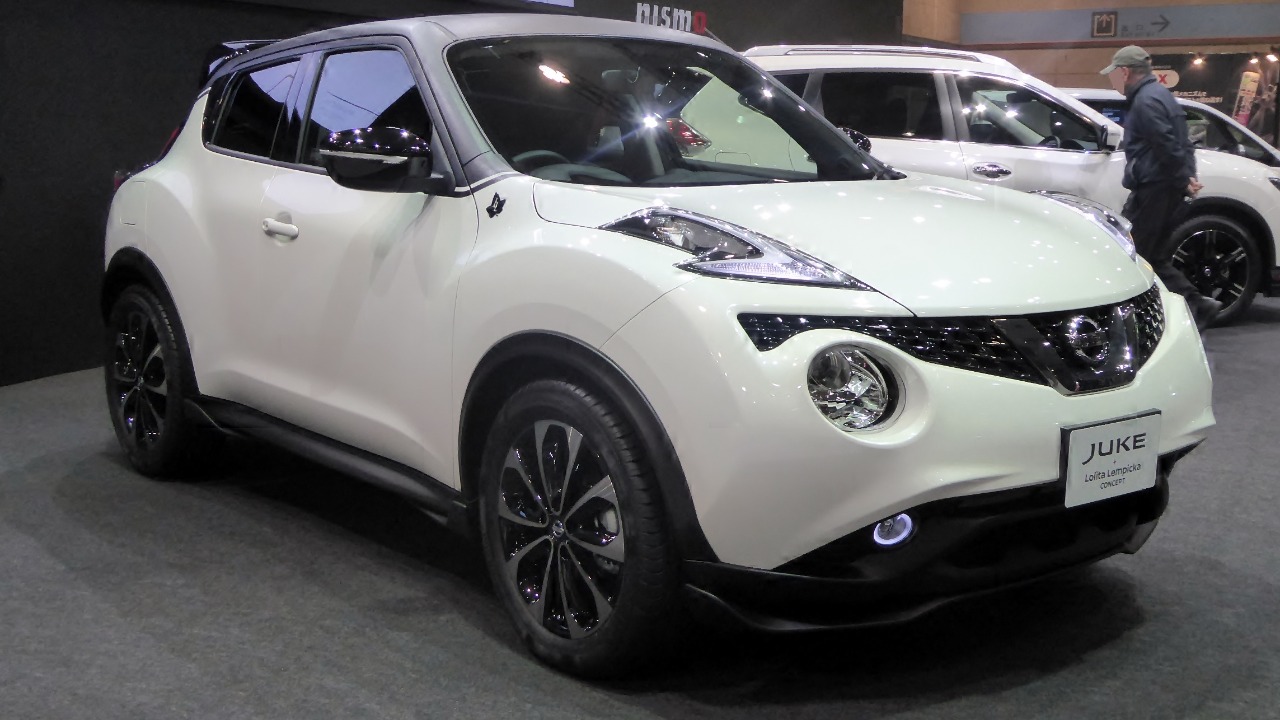

The idea that a stubby Nissan crossover can leave an Audi RS3 behind at the lights sounds like internet folklore, yet it is rooted in one of the wildest engineering exercises ever to come out of a major carmaker. By transplanting the heart of its flagship supercar into a city-sized SUV, Nissan created a machine that could embarrass some of the quickest compact performance cars on sale. The result is a reminder that acceleration is as much about what sits under the skin as it is about badges and body styles.
At the center of this story is the Nissan Juke R, a short, tall crossover that looks like a commuter runabout but accelerates like a track weapon. Built around the running gear of the brand’s halo coupe, it effectively turned a family-friendly shape into a stealth supercar, quick enough to challenge and even out-sprint the Audi RS3 in a straight line.
How Nissan turned a city crossover into a supercar slayer
Nissan did not simply tune the existing Juke engine and call it a day, it re-engineered the car from the ground up to house the drivetrain from its flagship performance model. The company took the compact, rounded Juke body and reworked the chassis, suspension, and driveline so that it could accept the full powertrain from the larger sports coupe. That meant integrating a sophisticated all-wheel-drive system, heavy-duty brakes, and a reinforced structure into what began life as a modest urban crossover.
The key to this transformation was the decision to build the concept around the GT-R’s 3.8-liter twin-turbo V6, an engine more commonly associated with the track-focused Nissan GT-R than with school runs. Nissan showed the idea as the Juke-R concept and constructed it around that 3.8-liter unit, effectively creating a crossover with supercar-grade hardware. According to detailed accounts of the project, the brand presented the car explicitly as the Juke-R concept and built it around the GT-R’s 3.8-liter twin-turbo V6, a configuration that made little rational sense for a tall, short crossover but delivered staggering performance.
The Nissan Juke R’s “Godzilla Engine” and what it really means
The powerplant at the heart of the Juke R is not just any V6, it is the same “Godzilla” engine that turned Nissan’s coupe into a cult hero among enthusiasts. The 3.8-liter twin-turbo V6 is renowned for its explosive mid-range torque and relentless pull, characteristics that become even more dramatic when installed in a lighter, shorter-wheelbase body. By dropping this unit into the Juke, engineers effectively gave a city crossover the kind of thrust usually reserved for dedicated high-performance machines.
One report describes how The Nissan Juke R Was A Cute Crossover With Godzilla Engine, spelling out how Nissan took the small, rounded Juke crossover and gave it the full GT-R treatment. The account notes that Nissan built it around the GT-R’s 3.8-liter twin-turbo V6, underlining just how extreme the transplant was for a vehicle of this size. That combination of a Cute Crossover With a Godzilla Engine turned the Juke into a genuine outlier, a car that looked approachable but delivered acceleration on par with far more exotic machinery, and it is this mismatch between appearance and capability that earns it the “sleeper” label.
Why the Audi RS3 is such a tough benchmark to beat
To understand why the Juke R’s acceleration is so shocking, it helps to look at what it is being compared against. The Audi RS3 has long been one of the quickest compact performance cars on the market, a model that blurs the line between everyday hatchback and track-ready weapon. Its reputation is built on a unique engine layout and a sophisticated all-wheel-drive system that together deliver ferocious straight-line speed.
At the core of the RS3’s appeal is a 2.5-liter TFSI five-cylinder turbocharged engine that gives the car its distinctive character and pace. Technical breakdowns of the 2023 model explain that the 2023 Audi RS3 is extremely fast largely because of this 2.5 TFSI unit, which is paired with strong torque output to deliver rapid acceleration and 500 Nm of torque. The broader performance package is detailed under sections labeled Engine Options, Horsepower and Acceleration, where analysts note that The RS uses its turbocharged five-cylinder to outpace rivals and deliver a level of thrust that has made it a benchmark among compact performance sedans and hatchbacks.
RS3 performance numbers: the Nürburgring-honed yardstick
The latest RS3 is not just quick in a straight line, it is a car that has been honed on demanding circuits and validated with hard numbers. Official performance data for the 2025 RS 3 Sedan quattro® lists a 0 to 60 m time of 3.6 seconds, a figure that places it firmly in supercar territory despite its four-door practicality. That same specification sheet underscores how the Sedan balances this pace with usable efficiency, quoting 20 / 30 / 23 for its fuel economy ratings, but it is the 3.6 second sprint that really defines its character.
Independent evaluations echo this focus on raw speed, highlighting how the RS3’s turbocharged five-cylinder engine is the standout feature in the model’s performance profile. Under the heading Engine Options, Horsepower and Acceleration, reviewers emphasize that The RS delivers explosive acceleration that allows it to outpace competitors like the Mercedes-AMG CLA 45. When combined with the car’s all-wheel-drive traction and launch control systems, these figures make the RS3 a formidable opponent in any drag race, which is precisely why a crossover that can match or beat it in a straight line is so noteworthy.
From “hot hatch” to “hyper hatch”: where the RS3 sits
Over the past decade, the RS3 has helped redefine what a compact performance car can be. Early versions of the RS3 Sportback were already so rapid that reviewers argued the car had pushed high-performance hatchbacks beyond merely “hot” status. You could argue that the Audi RS3 has taken high-performance hatchbacks into a new category, with Many referring to this car and its closest rivals as “hyper hatchbacks” because their performance is so mind-blowing.
This context matters because it shows that the RS3 is not an easy target. It is a car that has consistently raised the bar for acceleration and everyday usability, combining the practicality of an A3-based body with the pace of far more exotic machinery. When a crossover like the Juke R is said to out-accelerate the RS3, it is not being measured against an ordinary family car but against a machine that sits at the sharp end of the hyper hatchback spectrum, a model that enthusiasts already regard as a benchmark for real-world speed.
How the Juke R stacks up against the RS3 in a straight line
When Nissan’s engineers finished grafting the GT-R’s running gear into the Juke shell, the result was a crossover with acceleration figures that could embarrass many sports cars. Early testing of the Juke-R concept showed that its combination of the 3.8-liter twin-turbo V6 and all-wheel drive delivered explosive launches, with the tall, short crossover surging forward in a way that defied its upright stance. Accounts of those tests emphasize that the brand showed the idea as the Juke-R concept and built it around the GT-R’s 3.8-liter twin-turbo V6, a setup that made no sense for a tall, short crossover but produced startling straight-line performance.
Comparisons with the RS3 highlight just how dramatic that performance was. Analysts note that when you bring in the Audi RS3 as a reference point, the Juke R’s acceleration looks even more outrageous, because it is effectively matching or surpassing a car that is already regarded as a hyper hatch. Reports on Nissan’s powerful sleeper crossover explain that the Juke’s squat proportions and lack of sleek aerodynamics should have been a disadvantage, yet the sheer output of the GT-R-derived powertrain allowed it to out-accelerate the Audi in short sprints. In other words, the Juke R leveraged brute force and all-wheel-drive traction to overcome its less-than-ideal shape and still edge ahead of a purpose-built performance compact.
Why body style and aerodynamics did not save the RS3
On paper, the Audi RS3 should have every advantage in a drag race against a tall crossover. Its lower roofline, sleeker profile, and carefully tuned aerodynamics are all designed to reduce drag and improve stability at speed. The RS3’s chassis is also purpose-built for performance, with a suspension setup and weight distribution optimized for both cornering and straight-line traction, which is why it has become such a feared opponent in standing-start tests.
The Juke R, by contrast, starts from a compromised shape, with a higher center of gravity and a bluff front end that is far from ideal for cutting through the air. Yet detailed coverage of Nissan’s powerful sleeper crossover points out that the brand knowingly accepted these drawbacks when it built the Juke-R concept around the GT-R’s 3.8-liter twin-turbo V6, even though that made no sense for a tall, short crossover. The fact that this unconventional package could still out-accelerate the Audi RS3 in short bursts underlines how overwhelming power and traction can offset aerodynamic disadvantages over the relatively brief distances that define most real-world drag races.
The RS3’s five-cylinder legacy and the hot hatch arms race
The Audi RS3’s performance is not just about raw numbers, it is also about the character of its power delivery and the heritage of its engine layout. The 2.5-liter TFSI five-cylinder has become a signature for the brand, offering a distinctive sound and a torque-rich response that sets it apart from the four-cylinder units used by many rivals. Technical explanations of why the 2023 RS3 is so fast stress that the 2023 Audi RS3 is extremely quick largely because of its 2.5 TFSI five-cylinder turbocharged engine, which combines strong output with 500 Nm of torque to deliver relentless acceleration.
This engine has also formed the basis for even more extreme variants in the broader hot hatch world. In one of the most eye-catching examples, a track-focused hatchback uses the same 2.5-litre turbocharged five-cylinder engine as the normal car, but here it produces 407 hp, a figure that illustrates just how much headroom exists in this architecture. That particular model appears in a list of the 7 fastest hot hatches ever drag raced, where its 2.5-litre turbocharged five-cylinder output is singled out as a key factor in its straight-line dominance. Against this backdrop of escalating power and performance in compact cars, the Juke R’s ability to keep pace by borrowing a supercar engine looks less like a gimmick and more like an extreme extension of the same arms race.
What the Juke R vs RS3 matchup says about modern performance cars
Set against the broader landscape of performance cars, the Juke R’s ability to out-accelerate an RS3 underscores how flexible modern platforms and powertrains have become. Manufacturers can now mix and match components in ways that would have been unthinkable a generation ago, dropping a supercar-grade engine into a crossover shell and still achieving a drivable, if highly specialized, result. The Juke R is an extreme example of this trend, but it reflects a wider willingness among carmakers to experiment with body styles and powertrains in pursuit of attention-grabbing performance.
At the same time, the RS3’s continued evolution shows how far the mainstream has moved toward supercar levels of speed. Official data for the 2025 RS 3 Sedan quattro® that lists a 0 to 60 m time of 3.6 seconds, combined with independent assessments under headings like Engine Options, Horsepower and Acceleration that praise how The RS outpaces rivals, demonstrate that buyers can now access staggering acceleration in a practical, everyday package. When a tall, short crossover like the Juke R can momentarily edge ahead of such a car, it highlights both the ingenuity of Nissan’s engineers and the remarkable baseline that modern performance compacts like the Audi RS3 have established.
More from MorningOverview