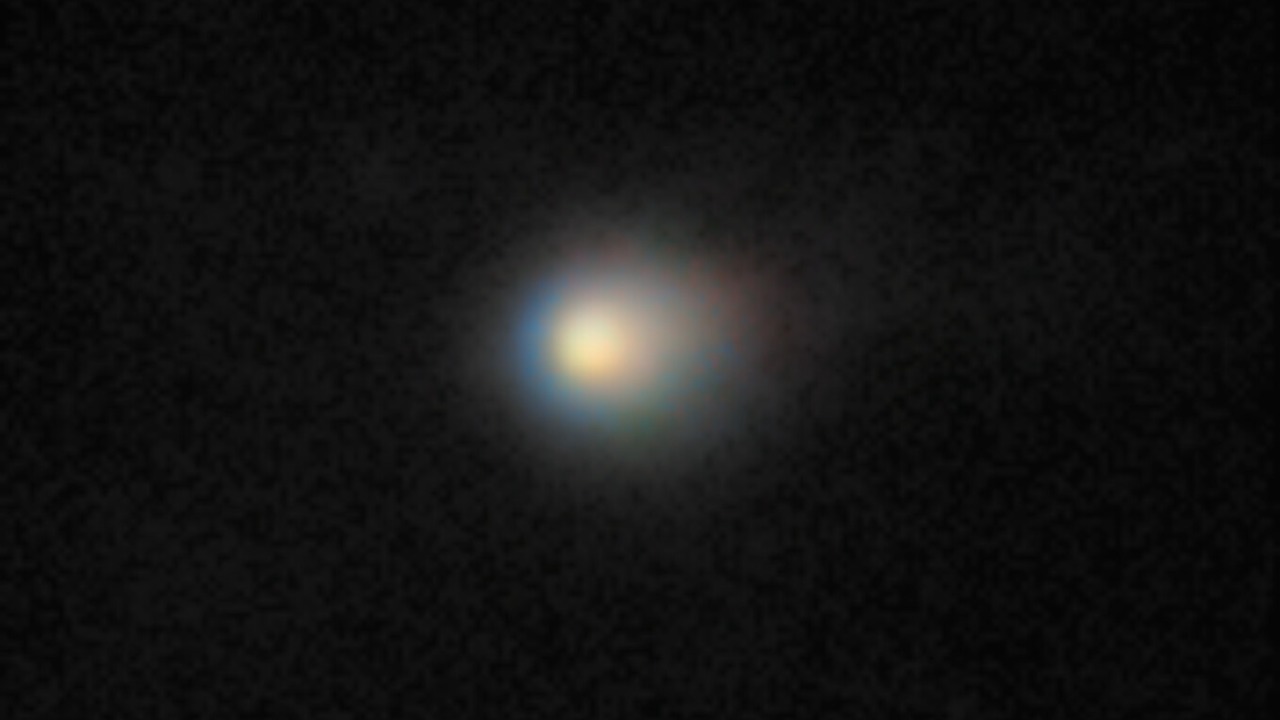

Interstellar comet 3I/ATLAS has gone from obscure visitor to front‑page mystery, as a cascade of new images reveals behavior that does not fit comfortably inside existing comet playbooks. Jets that appear to wobble, a tail that points the “wrong” way, and a spectrum loaded with odd chemistry have left specialists arguing over whether this object is simply an extreme comet or a sign that our theories about how small bodies behave in deep space are incomplete.
As I sift through the latest data and imagery, what stands out is not one single anomaly but the way multiple puzzles stack on top of each other. The result is a rare moment in planetary science when seasoned observers are willing to say, in public, that they are genuinely baffled and that 3I/ATLAS may force a rethink of how interstellar debris forms, evolves, and interacts with starlight.
The interstellar visitor that refuses to behave
3I/ATLAS is only the third confirmed object known to have arrived from outside the solar system, and it is already the strangest. Earlier interstellar visitors were surprising enough, but as postdoctoral researcher Zexi Xing at Auburn University in Ala put it, “Every interstellar comet so far has been a surprise,” and 3I/ATLAS is now the most extreme example of that pattern. Its orbit marks it as a true interstellar interloper, yet in many ways it looks like an overachieving version of the icy bodies that loop around our own Sun.
Mass estimates suggest that this object is not a lightweight fragment but a substantial worldlet. One analysis pegs the interstellar object at over 33 billion tons, a figure that prompted NASA lead scientist for Solar System small bodies Tom Statler to stress that it “very, very strongly resembles, in just about every way, the comets that we know,” even as he acknowledged the claims of a “major anomaly” in its properties linked to that mass estimate in recent reporting. That tension, between familiar appearance and exotic origin, is the backdrop for the more dramatic surprises now emerging from high‑resolution imagery.
Wobbling jets and a rare anti‑tail
The first hints that 3I/ATLAS might be dynamically unusual came from close‑up views of its coma and jets. New footage shows what observers have described as “weird wobbling jets,” with material spurting from the nucleus in shifting directions rather than in the relatively stable fans seen on many solar system comets, a pattern highlighted in a detailed breakdown of the wobbling jets of Dec ATLAS. The jets appear to precess or sway, suggesting either a complex spin state, multiple active vents switching on and off, or some combination of both that current models struggle to reproduce.
At roughly the same time, the comet’s tail structure began to look deeply counterintuitive. Instead of a simple dust tail streaming away from the Sun, images captured the coma fanning outward and forming what observers called an anti‑tail, a bright extension that seems to point toward the Sun rather than away from it. One observer who shared a real image of the object described how Comet 3I ATLAS was doing “something unusual” as the anti‑tail sharpened, using his own data to illustrate the strange geometry in a widely viewed Dec Comet ATLAS recording. Anti‑tails can be explained by perspective and dust sheet dynamics, but in combination with the wobbling jets they add to the sense that 3I/ATLAS is an outlier.
Sunward jets and a baffling brightening
The most arresting single image so far came from British observers who caught jets apparently firing toward the Sun. A new photo taken by British astronomers Michael Buechner and Frank Niebling shows material emanating from the nucleus in a sunward direction, a configuration that has raised fresh questions about how the comet’s surface is oriented and how solar heating is distributed across it. Their 3i/ATLAS update describes these strange sunward jets as part of a broader pattern of unexpected activity that has persisted as the comet moves through the inner solar system.
At the same time, the object has not followed the smooth brightening curve that astronomers typically expect as a comet approaches the Sun. Zhang and his colleague, analyzing early data, posted a study to arXiv that suggested Comet 3I/ATLAS underwent rapid brightening as it reappeared from behind the Sun, only to have a fraction of that visible brightness near perihelion compared with what simple models would predict. Their work, summarized in a report on how Zhang and ATLAS behaved around the Sun, underscores that the comet’s light curve is as quirky as its jets, hinting at episodic outbursts or structural changes in the nucleus.
A chemical cocktail unlike any known comet
Beyond the dramatic imagery, spectroscopy has delivered its own set of shocks. Observations with The James Webb Space Telescope revealed that the coma of 3I/ATLAS is unusually rich in carbon dioxide, with levels about eight times higher than typical values measured in other comets. That result, described as “Striking chemical oddities,” points to a composition that may have been shaped in a very different protoplanetary environment, and it is part of a broader pattern of Striking JWST findings that include heavy metals and surprising gaps in expected molecules.
Those same spectra show a chemical signature that has baffled scientists, with combinations of volatiles and metals that do not line up neatly with any cataloged comet in the solar system. The implication is that 3I/ATLAS may have formed in a region of its home system where temperatures, radiation, and disk chemistry produced a different balance of ices and dust, then spent millions of years in interstellar space before its current flyby. That history, inferred from the unusual mix of compounds, turns the comet into a kind of time capsule for conditions around another star, even as its present‑day behavior refuses to match expectations.
Blazing blue light and a “fire hose” of water
Visually, one of the most striking aspects of 3I/ATLAS is its color. As it swung past the Sun, observers reported that the comet brightened dramatically and took on an intense blue hue, far bluer than the Sun itself. Researchers suspect that emissions from molecules like cyanogen and possibly ammonia are responsible for this unusual color shift, making the blue glow particularly noteworthy in the context of the comet’s already odd spectrum, as detailed in an analysis of how Oct observations tracked its brightening.
At the same time, radio and infrared measurements indicate that the comet is losing water at a ferocious rate. One study likened the outflow to a “fire hose running at full blast,” with jets of water vapor streaming from the nucleus as solar heating ramps up. Zexi Xing, working as a postdoctoral researcher at Auburn University in Ala, emphasized that every interstellar comet so far has been a surprise, but this level of activity sets 3I/ATLAS apart even within that small group, a point underscored in the description of how it is leaking water like a fire hose. The combination of intense blue emissions and extreme water loss suggests that volatile layers are being stripped away in real time, exposing fresh material from deep inside the object.
Is 3I/ATLAS emitting its own light?
Perhaps the most controversial claim about 3I/ATLAS is that it might be emitting its own light rather than simply reflecting sunlight. Interstellar object 3I/ATLAS, which is zooming through our inner solar system, appears to be emitting its own light according to Harvard astrophysicist Avi Loeb, who has argued that the brightness pattern and color could hint at some form of energy generation or unusual surface properties. That argument was laid out in a report on how the Interstellar ATLAS object appears to shine, and it has fueled a wave of speculation well beyond the usual comet community.
Loeb has also suggested that massive evaporation of 3I/ATLAS could explain its intense blue light, citing a recent paper that modeled how outgassing might produce a spectrum with a bluer color than the Sun. In his report, Loeb framed this as a natural, if extreme, physical process rather than proof of anything artificial, even as he acknowledged that the object’s acceleration and color invite more exotic interpretations. Those ideas are summarized in coverage of how Nov Loeb ATLAS might be evaporating, and they highlight the thin line between legitimate scientific curiosity and the public’s appetite for alien megastructure stories.
Alien spacecraft theories meet hard radio data
Given that background, it is no surprise that some commentators have floated the idea that 3I/ATLAS could be an alien spacecraft or probe. To test that possibility, astronomers turned one of the world’s most sensitive instruments, The Green Bank Telescope, toward the object during its close approach. The Green Bank Telescope covers a very broad range of radio frequencies, meaning the team is unlikely to have missed any narrowband or broadband transmissions that would indicate artificial signaling, a capability described in detail in a report on how Jan observations probed the object.
The result was a resounding null detection. No radio beacons, no modulated signals, and no obvious signs of technology were found, leading the team to conclude that interstellar comet 3I/ATLAS is not an alien spacecraft, even if it remains hugely scientifically significant. That conclusion has not stopped more speculative discussions, but it does place a firm observational boundary around the wilder claims, reinforcing Tom Statler’s point that in just about every way the object still resembles the comets that we know, even if it pushes their properties to extremes.
NASA’s delayed images and the SETI follow‑up
While ground‑based observers were racing to capture their own data, NASA was preparing a suite of high‑resolution images that were delayed by a broader agency shutdown. During a virtual event on Wednesday, a senior official and colleagues finally released new and long‑awaited images of 3I/ATLAS, walking through what makes it so “magical” from a scientific standpoint and explaining how the shutdown had slowed the processing pipeline. That briefing, described in coverage of how During Wednesday ATLAS images were unveiled, added institutional weight to the sense that this is a once‑in‑a‑generation target.
Those official images have now been complemented by targeted searches for artificial signals during the comet’s Earth flyby. They have got their 3Is on the prize, as one account put it, describing how a giant telescope scanned 3I/ATLAS for signs of alien life during its Earth tour last month and how the highly anticipated data set is now in hand. That same report notes that Loeb said he encouraged the observations as part of a broader Search for Extraterrestrial Intelligence (SETI) project, framing the effort as a low‑cost way to rule out exotic possibilities while still mining the object for natural science, a perspective captured in the description of how They and ATLAS intersected with SETI goals.
What the baffling images mean for comet science
Stepping back from the daily drip of new images, I see 3I/ATLAS as a stress test for comet science itself. The wobbling jets, anti‑tail, and sunward plumes suggest that our standard assumptions about simple rotation and uniform outgassing may be too crude, especially for bodies that formed in other stellar nurseries. High‑resolution sequences of the object, such as those showing how Interstellar comet 3I/ATLAS has already passed Earth but continues to display baffling wobbling jets and a rare tail pointing pattern, underline how much we still have to learn about jet physics and nucleus structure, a point driven home in visual explainers of the Dec Interstellar ATLAS behavior.
At the same time, the chemical oddities and extreme water loss force modelers to revisit how comets evolve over long timescales in interstellar space. If 3I/ATLAS carries exotic materials originating from another star system, as some analyses suggest, then each new spectrum is not just a curiosity but a data point about planet formation beyond the Sun. The fact that so many seasoned observers are willing to say they are baffled is not a sign of failure, in my view, but evidence that the field is encountering genuinely new territory, with 3I/ATLAS serving as both a challenge and an invitation to rethink what a comet can be.
More from Morning Overview