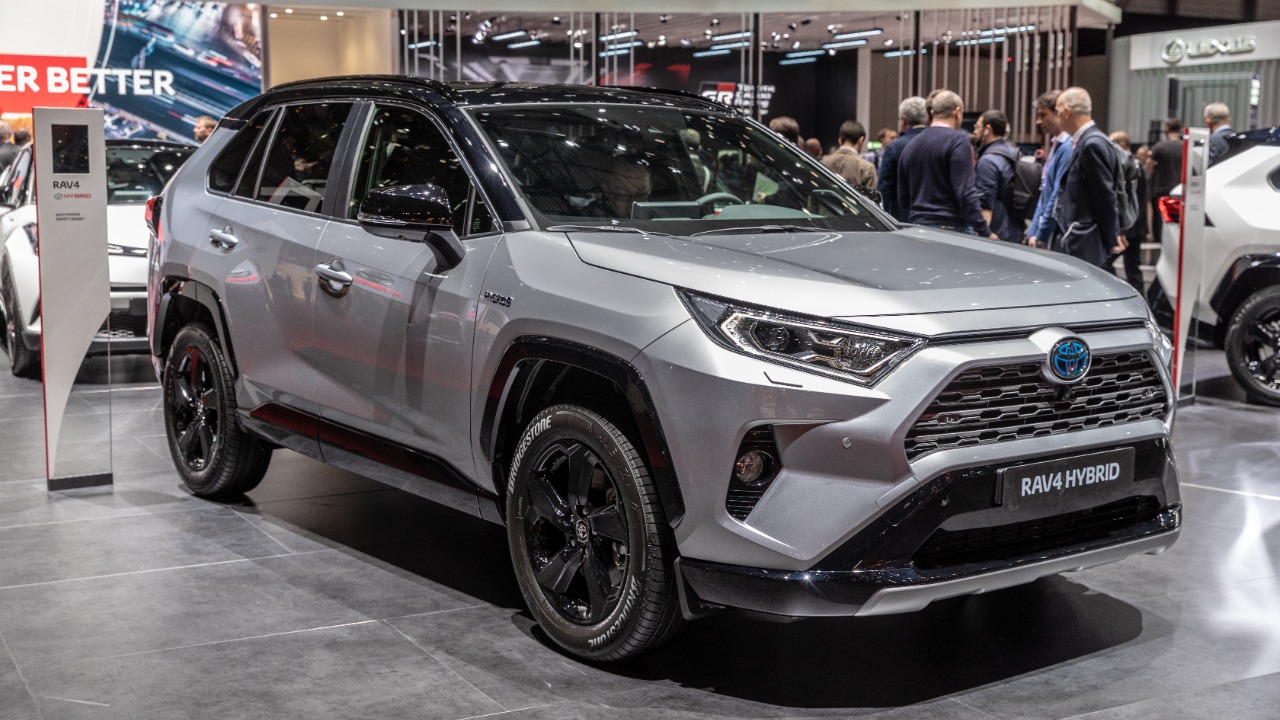

Nearly half of the Toyotas that rolled out of U.S. showrooms last year carried some form of electric motor, a milestone that signals how quickly the country’s biggest automaker is rewiring its lineup. Hybrids and other electrified models have shifted from niche options to the heart of Toyota’s business, reshaping what “mainstream” looks like in the American car market.
That shift is not just a marketing story, it is backed by hard sales data, a multi‑year investment strategy, and a bet that many drivers want better efficiency without giving up gasoline entirely. I see it as one of the clearest examples of how the transition away from pure internal combustion is happening in practice: incrementally, at scale, and led by a company that once defined the conventional car.
Nearly one in two Toyotas now has an electric motor
The headline figure is stark: electrified vehicles, from conventional hybrids to plug‑ins and battery electrics, accounted for 47 percent of Toyota and Lexus sales in the United States last year. That means nearly one in two vehicles the company sold here included an electric motor working alongside, or instead of, a gasoline engine. The shift is especially striking because it is happening at the core of the market, in familiar nameplates like RAV4, Camry, and Highlander, rather than being confined to a handful of experimental models.
According to Toyota Motor North America, total U.S. sales reached 2,518,071 vehicles, and electrified Toyota and Lexus models made up 47 percent of that volume. In other words, almost half of the company’s U.S. customers now drive away in vehicles that blend electric propulsion with gasoline, or skip gasoline altogether. For an automaker that built its reputation on reliable internal‑combustion engines, that is a profound rebalancing of its portfolio.
Sales momentum in PLANO’s biggest market
The surge in electrified sales is not happening in a vacuum, it is part of a broader growth story for Toyota Motor North America. The company, headquartered in PLANO, Texas, has been adding volume even as the U.S. market becomes more competitive and more fragmented. That growth gives Toyota the scale to keep investing in hybrid and electric technology while still defending its share in trucks, SUVs, and sedans.
Company figures show that TMNA’s U.S. sales rose 8.0 percent Year over Year, with electrified Toyota and Lexus models reaching that 47 percent share of total sales volume as part of the same report from TMNA 2025 sales up 8.0 percent. When an automaker grows overall while nearly half of its sales are electrified, it suggests that hybrids and other electric‑motor models are pulling customers in, not pushing them away.
From 2024 surge to 2025 milestone
The near‑50 percent electrified share did not appear overnight, it was built on a breakout year that came just before. In 2024, Toyota and Lexus crossed a symbolic threshold by selling more than one million electrified vehicles in the U.S., a sign that the technology had moved firmly into the mainstream. That surge laid the groundwork for electrified models to become almost half of the company’s American business a year later.
TMNA reported that Year‑end electrified Toyota and Lexus sales surpassed one million units and surged 53 percent, with electrified vehicles taking a significantly larger slice of the total by the end of that Year. When a category grows by more than half in a single Year at an automaker of this size, it signals a structural shift rather than a blip. I see the 2025 result, where nearly one in two sales involved an electric motor, as the logical next step in that trajectory.
Hybrid strategy: Toyota’s bet that is paying off
Behind the numbers is a deliberate strategy: Toyota has spent years doubling down on hybrids even as rivals chased splashier all‑electric launches. The company’s view has been that many drivers want better fuel economy and lower emissions but still value the familiarity and refueling speed of gasoline. That philosophy has produced a deep bench of hybrid versions across its lineup, from compact crossovers to full‑size pickups.
Analysts have noted that no other automaker in the U.S. currently offers a hybrid range as extensive as Toyota, Hybrid Bet Continues, Pay Off Right now, and that this strategy is turning into a majority of Toyota’s business here. I read the 47 percent electrified share as validation of that bet: by making hybrids the default choice on many models rather than a niche upgrade, Toyota has turned the electric motor into a normal part of the buying decision for mainstream shoppers.
How U.S. growth fits into Toyota’s global picture
While the U.S. is a critical market, Toyota’s electrified push is part of a global shift that shows up in its financial reporting. The company tracks its performance in fiscal Years that run across calendar boundaries, and its consolidated vehicle sales data highlight how volumes have been building over time. Those figures help explain why Toyota can afford to invest heavily in hybrid and electric technology while still returning profits to shareholders.
In its FY2024 materials, Toyota’s Consolidated Vehicle Sales table on Page 5 lists Reference periods labeled 22.4, 23.3, 23.4, 24.3, showing how retail volumes have climbed from one fiscal Year to the next. As I see it, the U.S. milestone where nearly half of TMNA’s sales are electrified slots into that broader pattern: a company using steady global growth to bankroll a long transition toward vehicles that rely more on electric motors and less on standalone internal‑combustion engines.
The Toyota division’s role in the U.S. surge
Within Toyota Motor North America, the core Toyota division carries most of the volume, and its performance helps explain how electrified models reached such a high share. The brand’s bread‑and‑butter vehicles, from Corolla to Tacoma, are increasingly offered with hybrid powertrains, which means the decision to choose an electric motor is embedded in everyday showroom conversations. When those high‑volume models tilt toward electrification, the overall mix shifts quickly.
Reporting on the latest results notes that The Toyota division delivered 2.15 m vehicles for the Year, up 8.1 percent, with electrified models nearing half of that volume. When the main brand grows at that pace while leaning so heavily on hybrids and other electrified options, it reinforces the idea that the electric motor is now central to Toyota’s U.S. identity rather than a side project.
2024’s foundation: volume, growth, and electrified mix
The 2025 milestone also rests on a solid base of overall U.S. growth in 2024, when Toyota’s American operations were already expanding. That Year, the company managed to increase total sales even as the broader market wrestled with higher interest rates and shifting consumer preferences. Strong demand for crossovers and trucks, many of them available with hybrid systems, helped keep showrooms busy.
One report notes that the firm sold 2.33 m vehicles in the U.S. in 2024, an increase of 3.7% compared with the previous Year, with electrified models taking a growing share of the total sales volume. I see that Year as the bridge between Toyota’s earlier hybrid leadership, symbolized by the Prius, and the current reality where electric motors are woven through almost every corner of its U.S. lineup.
From prediction to reality: the “year of the hybrid” arrives
Industry watchers have been anticipating a tipping point for hybrids in the U.S., and Toyota’s latest numbers suggest that moment has arrived. A few Years ago, some analysts argued that plug‑in hybrids and range‑extended designs would become more important as a bridge technology between conventional cars and full battery electrics. Toyota’s current sales mix, with nearly half of its U.S. volume electrified, looks like a concrete manifestation of that forecast.
Commentary from earlier in the transition noted that Two Years ago, observers predicted that 2024 would be the “year of the hybrid,” and that a future pivot toward range‑extended and plug‑in designs would mean fewer new Toyotas could run on gasoline alone, as highlighted in an analysis of how Two years ago that prediction was made. Looking at the current 47 percent electrified share, I would argue that the forecast understated the speed of change: the hybrid era is not just arriving, it is already embedded in the sales charts of the country’s top automaker.
More from Morning Overview