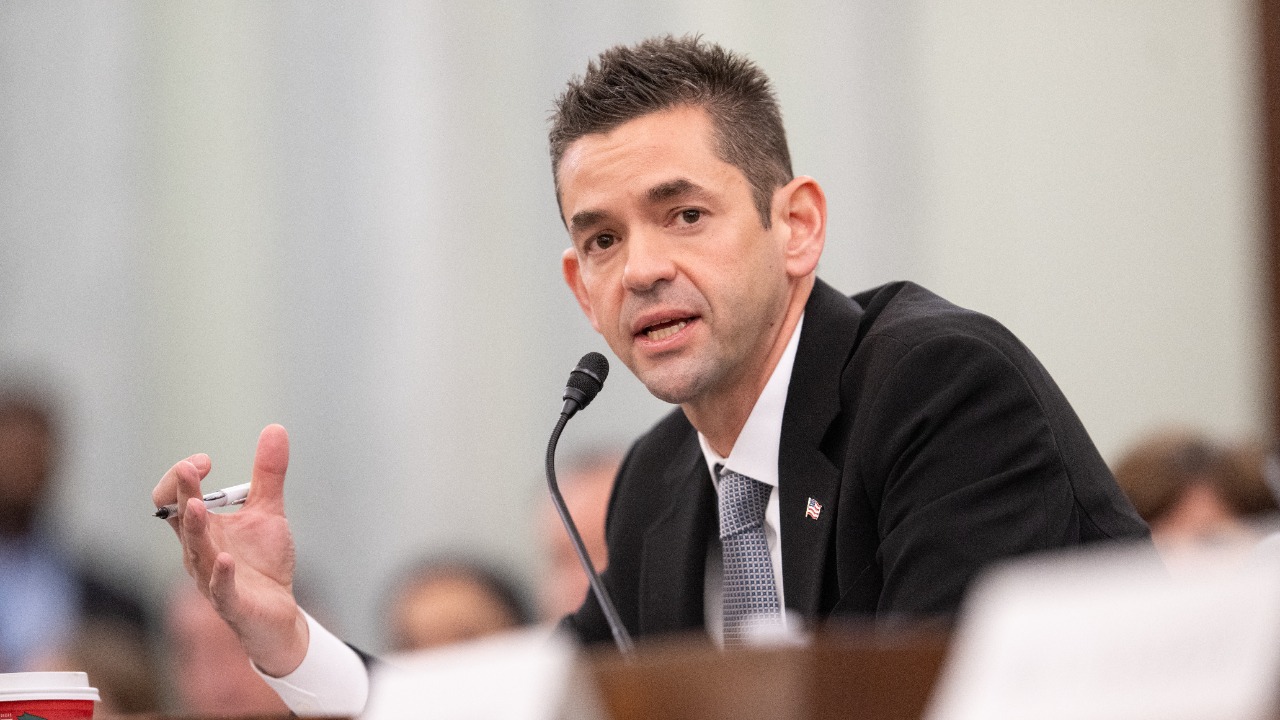

NASA’s new leader is trying to convince the country that a sweeping infrastructure shakeup will not come at the expense of the agency’s legacy. As critics warn of “trashing” historic facilities and artifacts, he is arguing that the real risk to NASA’s past is letting it decay in place while the agency chases ambitious new missions.
I see a leadership team trying to walk a narrow line: closing and demolishing some storied sites while promising to preserve the stories and hardware that made them famous. Whether that reassurance holds will depend on how these decisions play out far from Washington, in places like Goddard, Houston, and the museums that steward NASA’s most iconic spacecraft.
Isaacman’s rapid rise and the Trump-era mandate
The debate over NASA’s historical footprint is inseparable from the man now in charge of the agency. Jared Isaacman, a billionaire entrepreneur and astronaut, was confirmed as NASA’s 15th administrator after a contentious process that highlighted his close alignment with President Donald Trump and his lack of prior government experience. In official materials, NASA describes how he took the oath of office at NASA Headquarters, with the ceremony held at the Eisenhower Executive Office Building and overseen by Vice President Kelly, underscoring how tightly his appointment is woven into the current administration’s political project.
Reporting on his confirmation has stressed that Jared Isaacman is a Musk ally and a close adviser to Trump, with the Senate elevating him to lead NASA even though he has no federal government experience and built his reputation in the private sector and commercial spaceflight. Coverage of the confirmation notes that the Senate backed him as NASA chief while President Trump pushes for Artemis missions that send astronauts to the moon and eventually plant the Stars and Stripes on Mars, and NPR has emphasized that he is stepping into the role with a mandate to accelerate exploration despite never having served in federal office before.
A sweeping infrastructure overhaul, framed as modernization
From his first weeks in the job, Isaacman has tied his legacy to a major reconfiguration of NASA’s physical footprint, arguing that aging facilities must give way to new infrastructure if the agency is going to meet Trump’s aggressive timelines. According to detailed accounts of the plan, NASA is beginning an infrastructure overhaul under Isaacman that is explicitly designed to fulfill President Trump’s ambitious space exploration goals, including faster progress on lunar and Mars missions. One report describes how the agency is preparing to demolish some test facilities and redirect resources into new capabilities, with NASA Administrator Jared Isaacman to demolish test facilities as part of a broader restructuring that he argues will make NASA more competitive.
The overhaul is not limited to NASA’s own buildings. It is being coordinated with other parts of the federal government, including a plan for TRANSPORTATION SECRETARY DUFFY TO ANNOUNCE NUCLEAR REACTOR DEVELOPMENT PLAN FOR THE MOON, which is framed as a way to support long-duration lunar bases and deep space operations. In that context, Isaacman’s infrastructure push is presented as one piece of a larger Trump-era strategy to outpace global rivals in space, with TRANSPORTATION SECRETARY DUFFY TO ANNOUNCE NUCLEAR power initiatives on the moon and INSIDE NASA’S FAST TRACK PLANS for new space stations and lunar nuclear power systems that are meant to complement the demolition and consolidation of older facilities.
“Gutting Goddard” and the fear of erasing a flagship center
The fiercest backlash so far has centered on NASA’s Goddard Space Flight Center, a Maryland campus that has been central to Earth science, astrophysics, and satellite operations for decades. As part of the infrastructure overhaul, some of Goddard’s historic buildings and test facilities are slated for closure or demolition, prompting employees and outside observers to warn that the agency is “gutting Goddard” and discarding irreplaceable heritage in the process. The center’s own materials highlight its long record of scientific leadership and public outreach, with NASA Goddard presenting itself as a hub for missions that have reshaped our understanding of the Earth and the universe, which is precisely why the prospect of losing parts of the campus has hit such a nerve.
Those concerns exploded into public view after a New York Times report described how some of Goddard’s historic facilities were days away from being shut down, and how staff worried that decades of institutional memory would vanish with them. Coverage of the controversy notes that, on December 31, just days before the scheduled closure, the New York Times published an article stating that some of the center’s most storied infrastructure was suddenly thrown into question, and that the future of Goddard’s role inside NASA was no longer guaranteed. In response, the newly instated administrator, Jared Isaacman, found himself at the center of a storm over whether the agency was sacrificing its own history in the name of efficiency, a narrative captured in detailed reporting that described how New NASA Chief Pushes Back as the “gutting Goddard” label spread.
The administrator’s rebuttal: modernization, not amnesia
Isaacman has responded to the uproar with a mix of reassurance and defiance, insisting that the agency is not erasing its past but updating how it preserves it. In public statements, he has argued that NASA cannot cling to every aging building and test stand if it wants to fund new missions, and that the real measure of respect for history is whether the agency continues to build on it. One widely circulated message from NASA Administrator Jared Isaacman (@NASAAdmin) on January 2 was framed as a direct answer to accusations that the agency was trashing its own legacy, with the administrator stressing that he would not allow NASA’s heritage to be discarded and that he saw the changes as part of a long overdue modernization effort.
At the same time, Isaacman has tried to draw a distinction between physical infrastructure and the stories and artifacts that define NASA’s identity. He has suggested that some facilities can be closed or repurposed while their historical significance is documented and preserved in other ways, and that the agency will continue to honor the achievements that took place there. Reporting on his response notes that, while Isaacman’s statement is reassuring to some, it has not fully quieted fears among staff who see the demolition plans as a point of no return, a tension captured in coverage that describes how NASA Administrator Jared Isaacman pushed back on claims the agency is trashing its history even as the phrase “gutting Goddard” continued to circulate.
Discovery’s uncertain destination and the politics of artifacts
The fight over Goddard is not the only flashpoint where NASA’s physical legacy is on the line. The future home of Space Shuttle Discovery, one of the most recognizable spacecraft in the world, has become a test case for how Isaacman will handle politically charged decisions about artifacts. Jared Isaacman, NASA’s newly confirmed leader, has said he is not certain that Discovery will be moved from the Smithsonian to Houston, despite a push from Texas leaders and some in the Trump administration who want the orbiter to anchor a new attraction there. In interviews, he has indicated that he will determine whether moving Discovery from the Smithsonian to Houston is in NASA’s best interest, signaling that the decision is still open and that he is weighing both historical stewardship and regional politics.
The uncertainty has alarmed some in the Washington region who see Discovery as a cornerstone of the Smithsonian’s space collection and a major draw for visitors, and who worry that relocating it would be another sign that NASA is willing to uproot its history. Local coverage has highlighted how the new administrator’s stance has thrown into doubt what many assumed was a settled arrangement, with one summary noting that there is a new NASA administrator in the Trump administration and that the proposed shuttle move is now under fresh scrutiny. That same reporting describes how the New NASA Head on Proposed Space Shuttle Move has become a topic of local concern, while detailed coverage from Texas points out that Jared Isaacman, NASA’s newly confirmed administrator, is now the key decision maker on whether Discovery leaves the Smithsonian for Houston.
Inside the “near impossible” agenda driving these choices
To understand why Isaacman is willing to absorb so much criticism over closures and relocations, it helps to look at the scale of the agenda he has embraced. In testimony and public remarks, he has described a mission set that borders on the “near impossible,” from accelerating Artemis landings to building new space stations and deploying nuclear power on the moon, all while defending U.S. interests and promoting commercial development. One detailed account of his early tenure describes how NASA Administrator Jared Isaacman told the Senate Committee on Commerce, Science, and Transportation that he intends to push the agency to the “near impossible,” outlining a vision that includes protecting national interests in space and deepening partnerships with private companies.
That same hearing underscored how much of Isaacman’s strategy depends on redirecting resources from legacy infrastructure into new programs, a tradeoff that inevitably raises questions about what gets left behind. The Senate Committee on Commerce, Science, and Transportation pressed him on how he would balance stewardship of NASA’s history with the need to modernize, and his answers suggested that he sees consolidation and demolition as necessary steps to free up funding for cutting edge projects. In that light, the infrastructure overhaul, the debate over Goddard, and the uncertainty around Discovery’s future all look like early tests of whether his “near impossible” agenda can coexist with a meaningful commitment to the agency’s past, a tension that will likely define his relationship with both Congress and the NASA workforce.
How staff and communities are reading the signals
Inside NASA, the reaction to Isaacman’s assurances has been mixed, with some employees encouraged by his focus on new missions and others unnerved by the speed and scale of the changes. Longtime staff at centers like Goddard see the demolition of test facilities and the closure of historic buildings as more than a budgetary maneuver, interpreting it as a signal about whose work and which eras the agency values. The phrase “gutting Goddard” has resonated in part because it captures a broader anxiety that, in the rush to meet Trump’s timelines and outpace global rivals, NASA might treat its own history as expendable, even if the administrator insists otherwise.
Communities that host NASA facilities are also watching closely, aware that decisions made in Washington can reshape local economies and identities. In Maryland, the prospect of losing parts of Goddard has raised fears about jobs and prestige, while in Texas, leaders see the potential relocation of Discovery as a chance to cement Houston’s status as “Space City” for a new generation. At the same time, residents in Northern Virginia and the Washington region are mobilizing to keep the shuttle at the Smithsonian, arguing that moving it would diminish the capital’s role in telling the national story of spaceflight. These local debates are unfolding against the backdrop of a national conversation about how federal agencies should handle their aging infrastructure, and whether modernization must always come at the cost of the places and artifacts that made their reputations in the first place.
Preserving memory in an era of demolition
Isaacman’s central claim, that NASA can modernize without erasing its past, will ultimately be judged not by statements but by the mechanisms the agency puts in place to safeguard memory as buildings come down. That could mean more systematic archiving of engineering records, oral histories with retiring staff, and partnerships with museums and universities to document facilities before they are demolished. It could also involve creative reuse of surviving structures, turning some into visitor centers or educational hubs that connect new generations to the work that once happened there, even as the bulk of operations move to more efficient sites.
For now, the record is still being written. The infrastructure overhaul under Isaacman is only beginning, the fate of key facilities like Goddard is not fully settled, and the question of where Discovery will rest remains open. What is clear is that the choices made in the next few years will shape not only NASA’s ability to meet Trump’s ambitious exploration goals, but also how future generations understand the agency’s journey from the Apollo era to a world of lunar nuclear reactors and commercial space stations. If Isaacman succeeds in pairing demolition with genuine preservation, he may prove that modernization and memory can coexist. If he falls short, critics who warn that NASA is erasing its own past will have a powerful case that the cost of chasing the “near impossible” was higher than the agency was willing to admit.
More from Morning Overview