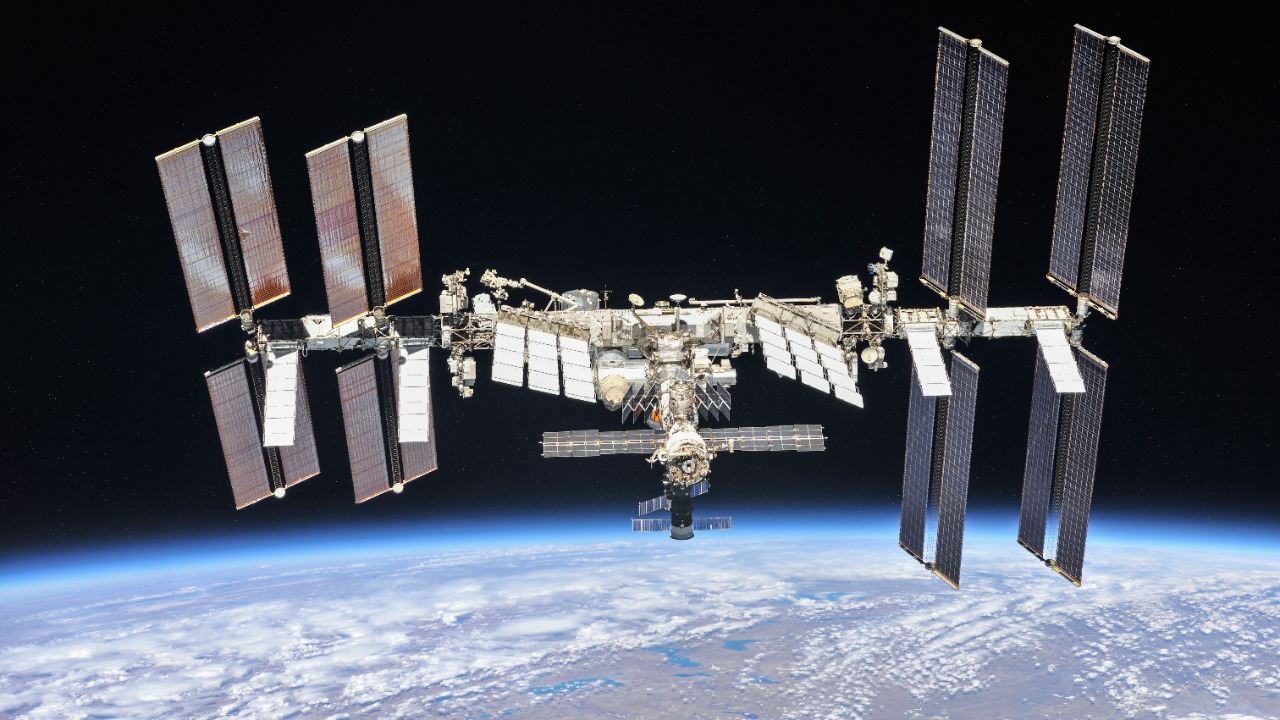

NASA is juggling a rare medical evacuation from the International Space Station and the countdown to its next crewed lunar flyby, yet agency leaders insist the emergency return will not derail Artemis 2. The early trip home for four astronauts is forcing a rapid reshuffle of station operations, but the moon mission’s hardware and schedule are moving ahead on a separate track. The question now is not whether Artemis 2 will happen, but how NASA manages risk on two high‑stakes human spaceflight fronts at once.
ISS medical evacuation reshapes the current crew
NASA is preparing to send four astronauts home early from the ISS after a medical issue involving one member of the orbiting crew, a reminder that even routine long‑duration missions can pivot quickly when health is at stake. Agency officials have said they will return 4 ISS astronauts to Earth in a dedicated medical evacuation, a move that temporarily shifts the station’s focus from research to crew safety and transport logistics, according to a live ISS update. For now, NASA is withholding specifics about the condition, but the decision to cut a long‑planned stay short underscores how quickly the agency can reconfigure its flight plan when a medical concern surfaces in orbit.
The evacuation centers on the SpaceX Crew‑11 mission, with NASA targeting a splashdown off the coast of California for The Crew that has been living and working on the station. The quartet will depart the International Space Station due to a medical issue, with recovery teams staged near California to bring them back to Earth as soon as conditions allow, according to detailed Crew‑11 plans. That early return will temporarily reduce the station’s population and shift responsibilities to the remaining residents, but NASA has emphasized that the orbital lab will stay continuously staffed and operational.
How NASA is managing station operations during the shake‑up
The medical evacuation is not happening in isolation, it follows a series of operational adjustments that show how NASA prioritizes crew health over non‑critical tasks. A planned ISS spacewalk was postponed due to a medical concern involving an astronaut, and NASA confirmed that TWO RUSSIAN COSMONAUTS AND A NASA ASTRONAUT WHO ARRIVED ON A RUSSIAN SPACECRAFT WILL REMAIN ON BOARD, ensuring the station retains experienced operators even as the evacuation unfolds, according to a report on the delayed spacewalk. That decision effectively trades short‑term maintenance work for medical flexibility, a trade NASA has made before when crew health or vehicle readiness demanded it.
NASA has also been explicit about the timing and cadence of the return. Today NASA announced that Crew‑11 will begin its journey back to Earth from the International Space Station on Wednesday, with the agency outlining how the Crew will undock, reenter and splash down in a carefully choreographed sequence, according to a mission status update. NASA’s Crew‑11 is returning to Earth early due to a medical issue with an unidentified astronaut, and officials have stressed that while the specifics about the medical issue remain private, the spacecraft and recovery systems are performing as designed, as outlined in a detailed mission brief. That combination of medical caution and technical confidence is central to NASA’s argument that the station emergency will not ripple into its lunar schedule.
NASA insists Artemis 2 remains on track
Even as it orchestrates the ISS evacuation, NASA is moving ahead with preparations for Artemis 2, the first crewed flight of the Space Launch System and Orion around the Moon. Agency leaders have said the ISS astronaut evacuation should not interfere with the upcoming Artemis 2 moon mission, emphasizing that the teams, hardware and budgets for the station and lunar programs are largely distinct, according to comments from senior NASA leadership. That separation is by design, the agency has spent years building parallel human spaceflight lines so that an issue in low Earth orbit does not automatically cascade into deep space plans.
The hardware timeline reinforces that message. NASA plans to roll out the Artemis 2 Space Launch System rocket to the pad in mid‑January, with officials noting that Launch could come as soon as Feb 6, weather and technical readiness permitting, according to a detailed overview of the Artemis schedule. A basal portion of NASA’s Artemis 2 Space Launch System rocket is already stacked inside the Vehicle Assembly Building, and engineers are pressing ahead with final integrated tests that are unaffected by the station’s crew rotation. From NASA’s perspective, the best proof that Artemis 2 is insulated from the ISS crisis is that the rocket’s milestones are still lining up on the calendar.
Inside the evacuation timeline and medical priorities
The evacuation itself is unfolding on a tight but deliberate timeline that reflects both medical urgency and orbital mechanics. NASA says targeting ISS medical evacuation for January 14, a date that balances the need to bring the affected astronaut back to Earth quickly with the constraints of orbital phasing, splashdown lighting and recovery ship positioning, according to a detailed planning note. Once the Crew‑11 Dragon undocks, the spacecraft will spend only a few hours in free flight before reentry, minimizing the time the patient spends in microgravity after the decision to return.
NASA has been equally precise about the countdown to undocking. Agency officials said that on Wednesday they will attempt to bring four astronauts home early from the ISS, with the operation timed for 8:40 PM PST to line up with recovery conditions and spacecraft performance margins, according to a briefing reported By Denise Chow that highlighted the exact figure of 40 in the planned undocking time. In parallel, NASA is accelerating some logistics that would normally wait until a routine crew handover, including medical support teams on the ground and post‑landing transport to specialized care facilities, according to an analysis that noted how the agency will accelerate return of four space station crew due to a medical concern affecting the seven‑person orbital lab, as detailed in a report that begins with the word Share and credits Mark Carreau January and identifies Left to right, Roscosmos cosmonaut Oleg Platonov alongside NASA astronauts, in a comprehensive mission overview. Those steps show how seriously NASA treats any in‑flight health anomaly, even as it reassures the public that the lunar program is proceeding.
Parallel teams keep lunar and station programs from colliding
What makes NASA confident that the ISS emergency will not derail Artemis 2 is the way its human spaceflight portfolio is compartmentalized. The ISS program office, commercial crew team and medical operations group are handling the evacuation, while the Artemis program, Orion spacecraft engineers and Space Launch System specialists continue their own test and rollout campaigns. NASA will roll out the Artemis 2 rocket from the Vehicle Assembly Building in mid‑January, and Mike Wall reported that the rollout is scheduled for a Friday, with Mike Wall noting in a separate context that he filed his story on a Fri at 5:31 PM PST and that When readers buy through links Future and its syndication partners may earn a commission, according to a detailed launch preview. That kind of long‑planned ground operation is largely unaffected by who is on the station at any given moment.
At the same time, NASA’s public messaging has been calibrated to reassure both the space community and lawmakers that the agency can walk and chew gum in orbit. Jan has become a pivotal month in which NASA must both protect the health of astronauts circling Earth and keep momentum behind Artemis, the program that aims to return humans to the lunar vicinity using the Space Launch System and Orion. By structuring its teams so that ISS operations, commercial crew flights and lunar exploration each have dedicated leadership and budgets, NASA is betting that an unexpected ISS evacuation, even one involving a medical issue serious enough to cut a mission short, can be handled without pushing Artemis 2 off course.
More from Morning Overview