
The skyline of NASA’s Marshall Space Flight Center in Huntsville is about to change in a way that closes a defining chapter of the Space Age. The towering structures that once shook under the power of Saturn V and space shuttle tests are slated for demolition as the agency clears room for a new generation of infrastructure. The decision pits preservation against progress, forcing NASA to justify why some of its most recognizable hardware-era monuments must come down to support the missions it wants to fly next.
The historic towers that built the Moon and shuttle eras
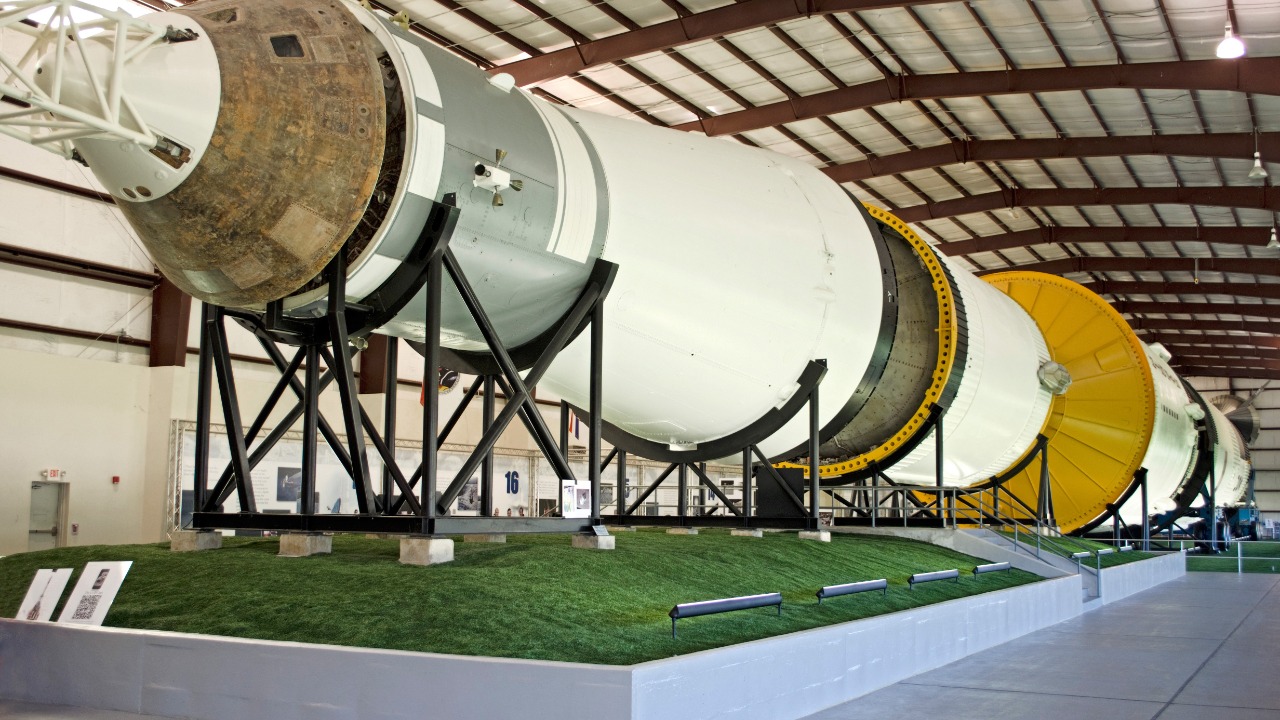
For anyone who has driven past Marshall, the test stands have long been the visual shorthand for American rocketry, their steel frames rising above the tree line like industrial cathedrals. The most famous of these is the Saturn V dynamic test stand, a structure so central to Apollo that it was later declared a National Historic Landmark and given an NRHP reference number to formalize its protected status. Inside that tower, NASA engineers shook and flexed a full Saturn stack to find structural weak points before committing astronauts to the real thing, a process that turned abstract calculations into hard data about how the rocket would behave in flight.
Those same facilities later adapted to the shuttle era, hosting tests that helped validate the propulsion and structural systems that carried orbiters like Columbia and Atlantis into space. Over time, the campus around them grew into a dense cluster of labs, control rooms, and simulation bays that supported everything from Apollo hardware to Space Launch System components. The physical setting, including the broader Huntsville area that appears in public mapping tools as a key spaceflight hub, became inseparable from the story of how the United States learned to build and test very large rockets.
Why NASA says the towers must fall
NASA’s argument for demolition starts with a blunt assessment: some of these structures are no longer needed for the missions the agency is planning to fly. Officials at Marshall have said the aging test stands and simulators have reached the point where maintaining them diverts money and staff from facilities that can actually support current propulsion and structural work. In formal reviews carried out under Section 106 of the National Historic Preservation Act, Marshall documented that the towers’ original roles have been overtaken by newer test stands, advanced simulation, and digital modeling that can replicate many of the same conditions without tying up massive steel structures.
That logic extends beyond the towers themselves to the broader complex of test and simulation facilities that grew up around them. NASA has described a phased plan in which older hardware-era buildings are cleared to make way for a long term modernization effort at Marshall Space Flight Cent, with the agency stressing that the structures targeted for removal are no longer needed for NASA’s missions. In that framing, the demolition is less an act of erasure and more a reallocation of finite resources, a way to stop pouring maintenance dollars into facilities that no longer match the way NASA designs and tests rockets.
Inside the modernization push reshaping Marshall
What replaces the towers is not an empty field but a reimagined campus that NASA leaders say will be better aligned with how the agency works today. At a briefing in HUNTSVILLE, Ala, officials described a major infrastructure modernization effort that will start with the removal of historic structures and then move into new construction, upgrades, and reconfiguration of existing labs. With With NASA Administrator Jared Isaacman in place, the agency has framed this as a generational refresh, one that will give engineers the kind of flexible, digital-first workspaces they need to support Artemis, commercial partnerships, and whatever comes after.
The demolition of the towers is only one piece of a broader wave of investment that is flowing into Huntsville under new federal spending. Two of the most recognizable test structures on the Marshall Space Flight Center campus are being removed at the same time that a new Trump budget law is unlocking an infrastructure surge for the region, a linkage that local leaders have highlighted as proof of Two of the smart stewardship of taxpayer resources. In that narrative, the loss of the old towers is offset by the promise of new labs, test cells, and support buildings that can handle everything from advanced propulsion to in-space manufacturing research.
The specific facilities on the chopping block
NASA has been explicit about which structures are in the first wave. Two test stands, the Propulsion and Structural Test Facility and Dynamic Test Facili, are slated for removal as part of a package of historic test and simulation facilities that Marshall is preparing to take down. Agency statements describe how these stands once hosted full scale hardware tests but now sit largely idle, their roles absorbed by newer assets and sophisticated Simulation environments. The same package includes a long closed simulator that stopped operating in 1997, a reminder that some of the buildings in question have been functionally mothballed for decades.
Other reporting has detailed how NASA is moving to demolish three iconic structures at Marshall, including towers used to test the Saturn V rocket and the space shuttle, as part of a coordinated effort to clear out facilities that no longer fit into the agency’s test portfolio. In public explanations, NASA has emphasized that this demolition is the first step in a larger modernization program linked to federal initiatives like the Working Families Tax Credit Act, which is cited as part of the funding context for the Two Propulsion and Structural Test Facility and Dynamic Test Facili project. The result is a carefully sequenced teardown, one that tries to balance operational needs, budget realities, and the symbolic weight of the hardware being removed.
Balancing heritage, politics, and the future of flight
For preservationists and space history enthusiasts, the loss of the Saturn era towers is painful precisely because they are irreplaceable artifacts of a time when the United States was learning how to leave Earth. The fact that the Saturn V dynamic test stand carries a formal place identity in public records and mapping tools underscores how deeply it is woven into the cultural and geographic fabric of Huntsville. Critics of the demolition plans argue that once these structures are gone, no amount of digital documentation or museum exhibits can fully capture what it meant to stand at their base and look up at the steel that once cradled a Moon rocket.
NASA, for its part, is trying to frame the decision as a necessary tradeoff in an era of constrained budgets and ambitious goals. Agency leaders have linked the Marshall modernization to broader national priorities, including infrastructure spending authorized in the One Big Beautiful Bill and other legislation that shapes how federal dollars flow into research campuses. In statements about the plan to topple towers used to test the Saturn V rocket and the shuttle, officials have stressed that the same modernization push will help sustain Marshall’s role in future exploration, a point echoed in coverage of Saturn and Space News reporting on the demolition. As I weigh those arguments, I see a familiar tension: the need to honor the physical legacy of Apollo and shuttle while accepting that the next era of exploration may demand a very different kind of landscape at Marshall.
More from Morning Overview