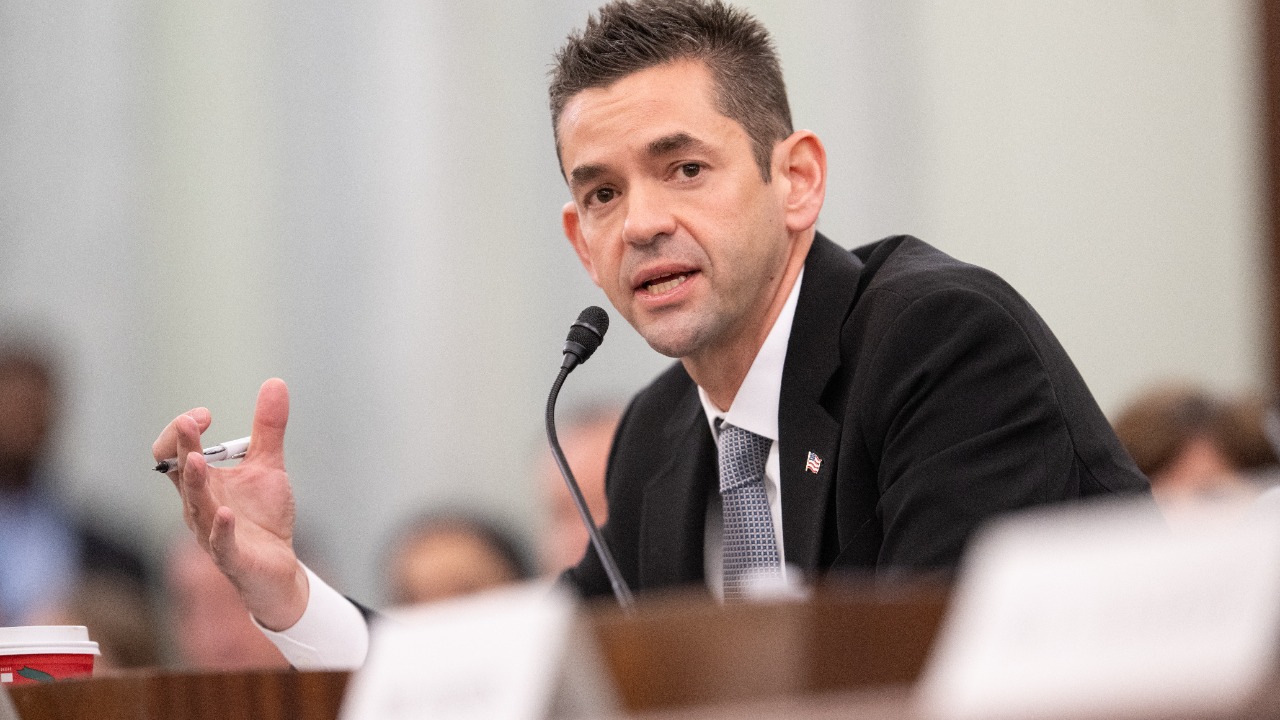

NASA finally has a permanent administrator again, but the agency’s long term path is anything but settled. Jared Isaacman arrives with money, experience in commercial spaceflight, and a mandate from President Donald Trump to move faster, yet the core questions about what NASA is for, and who it ultimately serves, remain unresolved.
As the new leader begins to sketch out his priorities, he inherits a sprawling portfolio that ranges from lunar landings to climate monitoring and basic science. The early signals from his confirmation fight, his first public comments, and the programs already being reshaped on his watch suggest an agency that could become leaner and more commercially driven, but also more exposed to political and economic crosswinds.
A billionaire at the helm of a public agency
Jared Isaacman is not a typical bureaucrat parachuted into a cabinet level job, he is a billionaire entrepreneur and private astronaut now tasked with running NASA. He has been sworn in as the 15th Administrator after a long vacancy, stepping into a role that, by statute, makes the Administrator of the National Aeronautics and Space Administration the chief executive of the agency and principal space adviser to the president. That alone would be a significant shift, but Isaacman also brings his own history as a mission commander and funder of private orbital flights, which colors how he talks about risk, speed, and partnership.
On his first day in office he made clear that he intends to move quickly, outlining priorities that include accelerating crewed missions and cutting through what he sees as unnecessary layers of review inside NASA. In an early interview he framed his approach as a push to get hardware flying sooner, including a crewed launch that he suggested could be ready as early as February, a sign that he wants to translate his private sector instincts into public policy from the start, as reflected in his first day remarks reported when NASA’s new leader made his priorities clear.
A bruising confirmation that left scars
Isaacman’s path to the top job was anything but smooth, and the way he arrived there helps explain why NASA’s direction still feels unsettled. The Senate confirmed him as the 15th NASA Administrator after a months long tug of war that centered on his wealth, his business ties, and the fear that he might tilt the agency too far toward commercial partners. The final vote made him President Donald Trump’s choice to lead the agency, with a recorded roll call that included senators who publicly questioned whether a billionaire entrepreneur should be trusted with such a central public science institution, a dynamic captured in accounts of the Senate confirming Jared Isaacman as 15th NASA Administrator.
The confirmation fight also exposed deeper anxieties about conflicts of interest and the future balance between government and industry in space. Lawmakers pressed Isaacman on his stakes in companies that contract with NASA and on whether he would recuse himself from decisions that could benefit his own ventures, concerns that were widely reported when Jared Isaacman was confirmed as NASA chief after a monthslong tug of war. He ultimately secured the job, but the skepticism that surfaced in that process has not vanished, and it will shadow his big strategic calls on contracts, program cuts, and new initiatives.
What kind of NASA does Isaacman want?
Even before he took the oath, Isaacman had been unusually explicit about how he wants to reshape the agency, and those ideas are now colliding with NASA’s existing culture. He has talked about reorganizing NASA to focus more tightly on cost control and schedule discipline, signaling that he sees bloated timelines and overruns as existential threats to the agency’s credibility. In one widely discussed outline of his thinking, he sketched a future in which NASA leans harder on private capital and expects companies to start funding more of their own space research, a vision summarized in an analysis of what Isaacman, as NASA’s new administrator, has in mind.
At the same time, he has framed his mission in almost start up terms, telling staff that he wants to strip away layers of bureaucracy that slow down launches and technology demonstrations. In early comments after taking the reins he emphasized accelerating key NASA programs and warned that the agency cannot afford to let process become an excuse for paralysis, a theme that emerged when Isaacman emphasized accelerating NASA programs as he took the agency’s reins. That rhetoric resonates with some engineers who are tired of delays, but it also raises questions about how he will balance speed with safety and scientific rigor.
A leader with deep spaceflight credentials and political baggage
Part of what makes Isaacman such a complicated figure for NASA is that he is both an insider and an outsider. He has flown in orbit, commanded private missions, and spent his own money to push the frontier of crewed spaceflight, which gives him a level of operational credibility that few previous administrators could claim. Supporters argue that this background, combined with his experience building a payments company into a multibillion dollar enterprise, makes him uniquely qualified to understand both the technical and financial pressures facing the agency, a case that was laid out when NPR explained what to know about Jared Isaacman as he was confirmed to lead NASA.
Yet his close ties to President Donald Trump and to the commercial space sector also make him a lightning rod. Critics worry that he may favor certain contractors or steer NASA toward projects that align with his own business interests, and that his appointment reflects a broader shift toward treating space as a domain for private capital first and public science second. Those tensions were evident in commentary that described how Jared Isaacman is talented and knowledgeable but brings questions about his vision for the space agency, underscoring that his strengths and his potential blind spots are two sides of the same coin.
Early moves: speed, reorganization, and a 20 day clock
Isaacman has not waited for the bureaucracy to catch up before signaling how he intends to use his first weeks in office. He has floated a set of actions for his first 20 days that read like a sprint checklist, from reviewing major human spaceflight programs to reassessing how NASA manages its portfolio of science missions. The idea is to quickly identify where he can cut red tape, reassign leadership, or shift resources to projects that he believes can deliver visible results within the current presidential term, a strategy that was outlined in a look at what he could do in his first 20 days.
That sense of urgency is also evident in how he talks about internal structure. Isaacman has suggested that NASA’s current organization, with its multiple mission directorates and overlapping review boards, is not optimized for the kind of rapid iteration he wants to see. He has hinted at a reorganization that would give program managers more authority while holding them to stricter cost and schedule targets, an approach that aligns with his broader push to make NASA behave more like a disciplined contractor than a sprawling government lab, and that echoes the themes he raised when he laid out his priorities on day one.
Congress, contracts, and the politics of partnership
None of Isaacman’s ambitions will matter if he cannot navigate Congress, which controls NASA’s budget and has its own ideas about where the agency should focus. The same senators who grilled him about conflicts of interest will now decide whether to fund the programs he wants to accelerate, and they will be watching closely to see how he handles major contracts for launch services, lunar landers, and Earth science missions. The political context was clear when the US Senate confirmed Jared Isaacman as new NASA administrator, a process that highlighted both bipartisan support for a functioning space agency and deep divisions over how much to lean on a small set of powerful private companies.
Isaacman’s own background as a customer and partner of those companies complicates the picture. If he pushes aggressively to expand commercial partnerships, he could unlock new capabilities and offload some costs, but he will also have to prove that NASA is not simply subsidizing ventures that would have happened anyway. That balancing act will play out in contract awards, oversight hearings, and the fine print of appropriations bills, where lawmakers will decide whether his vision of a more commercially integrated NASA is a bold modernization or an unacceptable privatization of public science.
Earth science feels the first shock waves
While much of the public attention has focused on rockets and astronauts, some of the earliest concrete changes under Isaacman are landing in Earth science, a part of NASA’s portfolio that is both politically sensitive and scientifically vital. The agency has announced that it is shutting down The Earth Observer, a long running publication that chronicled its Earth science work, and that several flagship Earth Observing System missions face retirement in 2026. The decision to shutter The Earth Observer publication and prepare EOS flagships for 2026 retirement affects a fleet that includes 20 missions, and it sends a signal about how the new leadership is prioritizing resources.
Supporters of the move argue that NASA must eventually phase out older satellites to make room for new instruments and that publications can be consolidated in a digital era. Critics counter that cutting a specialized outlet and allowing key climate monitoring platforms to age out without clear replacements risks eroding one of NASA’s most important contributions to global science. For Isaacman, the episode is an early test of whether his drive for efficiency will come at the expense of long term data records that do not produce splashy headlines but underpin everything from weather forecasting to climate policy.
An agency caught between ambition and uncertainty
All of these threads add up to a NASA that is both energized and unsettled. On one hand, the agency finally has a confirmed leader after a long stretch of limbo, and that leader is someone who has personally strapped into a capsule and ridden a rocket to orbit. On the other, the combination of Isaacman’s aggressive timelines, his commercial instincts, and the political scrutiny surrounding his appointment means that every major decision will be read as a referendum on what kind of space program the United States wants. The sense that NASA’s future is no more certain even with a new administrator in place was captured in reporting that noted how NASA finally has a leader but its future is no more certain, and that tension still defines the moment.
As Isaacman settles into the Administrator’s suite, the real test will not be how many speeches he gives about speed or how many organizational charts he redraws, but whether he can articulate a coherent, durable mission for NASA that survives changes in administrations and market cycles. The agency sits at the intersection of exploration, national prestige, climate science, and commercial opportunity, and any attempt to tilt it too far in one direction risks undermining the others. For now, NASA has a new leader and a burst of momentum, but the path ahead remains a work in progress, shaped as much by congressional appropriators and skeptical scientists as by the billionaire now sitting at the top of the org chart.
More from MorningOverview