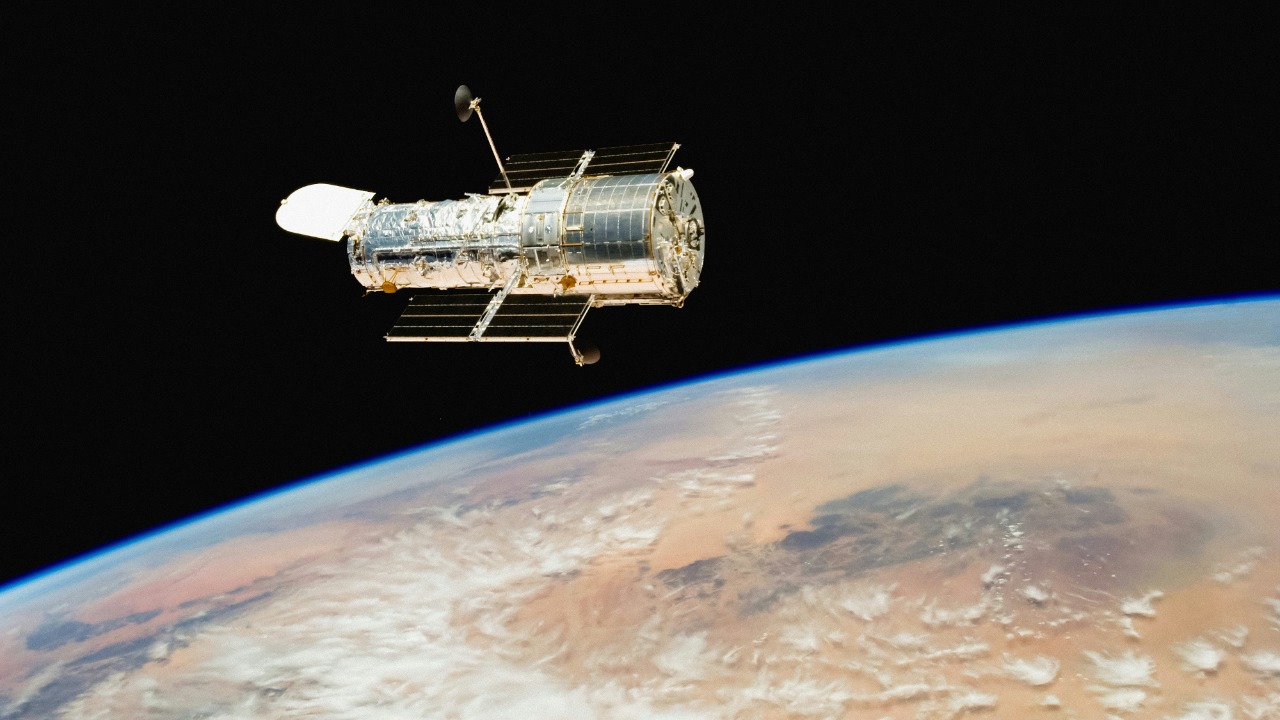

NASA is quietly turning a long‑range dream into hardware, backing a suite of technologies for a so‑called “Super Hubble” that would put the search for alien life at the center of its next flagship observatory. The Habitable Worlds Observatory, or HWO, is being shaped to do something no telescope has done before: directly study Earth‑like planets around nearby stars for signs that biology has taken hold. I see this as a pivot point, where decades of exoplanet discovery are finally converging on a mission built to answer whether life beyond Earth is common or vanishingly rare.
Behind the lofty branding is a very practical race against time, budgets, and political attention. NASA leaders have signaled that they “intend to move with urgency” on the technologies that will make this observatory possible, even as the agency navigates tight funding and competing priorities across the solar system. The result is a high‑stakes bet that better optics, smarter sensors, and new ways of servicing spacecraft in orbit can keep the next great space telescope from becoming a one‑shot gamble.
From Hubble’s legacy to a life‑first observatory
The Habitable Worlds Observatory is explicitly designed as a successor to Hubble and the James Webb Space Telescope, but with a narrower and more audacious mandate: find and characterize potentially habitable worlds. NASA’s current plan for HWO is to launch the observatory sometime between 2030 and 2040 and to catalog at least 25 Earth‑like exoplanet candidates, a target that reflects how far exoplanet surveys have come since the first detections in the 1990s. In official descriptions, The Habitable Worlds Observatory would be designed to allow servicing in space, a deliberate choice to extend its lifetime and bolster its science over time rather than accept a fixed, one‑and‑done mission profile.
That focus on longevity and habitability is why the project is already being framed as a “Super Hubble,” capable of imaging distant planetary systems in unprecedented detail. NASA says the observatory, sometimes described simply as Super Hubble, will be designed to identify and study planets that resemble Earth and to view the universe in unprecedented resolution, with the explicit goal of probing whether we are not alone in the universe. The current plan for HWO is to use that capability to build a statistically meaningful sample of Earth‑like worlds, then search those atmospheres for chemical fingerprints that could be linked to life, a step change from Hubble’s broad cosmological surveys and Webb’s early‑universe focus.
New tech, new urgency
To get there, NASA is seeding the technologies that will define this observatory long before its mirror is built. Agency officials have selected a suite of industry proposals to push forward key technologies for its proposed Habitable Worlds Observatory, signaling that NASA has selected a suite of industry tech to power the hunt for life and that it wants private partners deeply embedded from the start. In a separate announcement, NASA has taken a major step toward one of its most ambitious science goals as it searches for signs of life on planets beyond our own, tying the HWO work to a broader strategy that also includes missions involving Mars and other destinations.
Those technology awards are framed in unusually urgent language. In one description of the program, NASA leaders say, “We intend to move with urgency, and expedite timelines to the greatest extent possible to bring these discoveries to the world,” a line that has been repeated in coverage of how NASA funds new tech for the upcoming Super Hubble to search for alien life on other planets. A related report on how NASA funds new tech for the upcoming “Super Hubble” to search for alien life notes that the agency is backing hardware that can spot faint planetary signals thousands of light‑years away, a reminder that the observatory’s reach will extend far beyond the nearest stars. That sense of acceleration is not just rhetoric; it is being translated into contracts, lab work, and design studies that must converge in time for a launch window that is still more than a decade away.
Sensors, starlight, and the hunt for biosignatures
The heart of the mission is not just a bigger mirror, it is a new generation of sensors and starlight suppression tools that can tease out the glow of a small planet next to a blazing star. NASA wants a “Super‑Hubble” space telescope to search for life on alien worlds, and the current plan for HWO is to combine high‑contrast imaging with spectroscopy so that it can separate the light of an Earth‑sized planet from its host star and then break that light into a spectrum. In more public‑facing outreach, NASA has highlighted that it wants to build a super Hubble and is requiring engineers to develop a new type of sensor that literally pushes the limits of what can be detected, a point that has even surfaced in a Jun explainer video about how NASA and Hubble are driving this technology.
Those sensors will feed instruments tuned to look for specific atmospheric signatures. According to one overview of NASA’s upcoming telescope that will hunt alien life on exoplanets, the observatory dubbed Super Hubble will be designed to identify a range of gases and features that could hint at biological activity, part of a broader effort to scan the universe in unprecedented resolution. Another discussion of the mission, By Adam Frank and edited by Pam Weintraub, notes that these signatures are those that scientists think could be linked to life, and that suddenly, everyone is talking about aliens after a wave of discoveries and public interest. The challenge for HWO will be to distinguish genuine biosignatures from false positives, a task that depends as much on careful modeling and comparative planetology as on the raw sensitivity of its detectors.
Industry partners and the Colorado testbed
NASA is not trying to build this observatory in isolation. The agency has tapped Colorado companies to lead development on a telescope searching for life on other planets, turning the state into a kind of testbed for components and concepts that will eventually fly on HWO. Reporting on how NASA taps Colorado companies to develop the next space telescope notes that various examples of model satellites and instruments are already being used to prototype how the observatory might operate, from precision pointing systems to deployable structures that can survive launch and then unfold with millimeter accuracy.
These industrial partnerships sit alongside the formal technology selections that NASA has announced for HWO. In its own description of the program, NASA explains that The Habitable Worlds Observatory would be designed to allow servicing in space, to extend its lifetime and bolster its science over time, and that the current round of tech proposals is aimed at making that servicing architecture real. A separate analysis of how NASA backs industry tech to power the hunt for life underscores that NASA has selected a suite of industry proposals to push forward key technologies for its proposed Habitable Worlds Observatory, and that the agency wants these discoveries to be part of an international effort rather than a purely domestic showcase.
Budgets, politics, and the risk of a “Super Hubble” gap
All of this is unfolding in a constrained fiscal environment that could shape how ambitious HWO can be. A recent spending package provides $24.438 billion for NASA in fiscal 2026, slightly less than the $24.875 billion the agency received in 2024, a reminder that even marquee science missions must compete with human spaceflight, Earth observation, and technology programs for a share of a flat or shrinking pie. At the same time, a separate analysis of whether budget cuts will force NASA to withdraw from Europe’s next Venus mission notes that Overall, 19 ESA missions will face funding shortfalls if the Trump administration gets its way and that Many of those collaborations, however, are seen as strategically important, highlighting how international science projects can become bargaining chips in broader budget negotiations.
Within that context, HWO is both a scientific opportunity and a political gamble. One commentary on how NASA advances an ambitious mission to search for life beyond Earth stresses that NASA has taken a major step toward one of its most ambitious science goals as it searches for signs of life on planets beyond our own, but also that this work must be balanced against ongoing missions involving Mars and other destinations. Another report framed under the banner OUT OF THIS WORLD describes how Nasa’s futuristic observatory could finally find ALIENS as it hunts for hidden habitable worlds, and that experts see it as part of an international effort, a framing that could help build support in Congress and among partners even as domestic budget pressures mount. If the agency can hold that coalition together, the “Super Hubble” era will not just extend Hubble’s legacy, it will redefine what a flagship mission is for: not only to explore the universe, but to answer, as directly as physics allows, whether life has taken root on other Earths.
More from Morning Overview