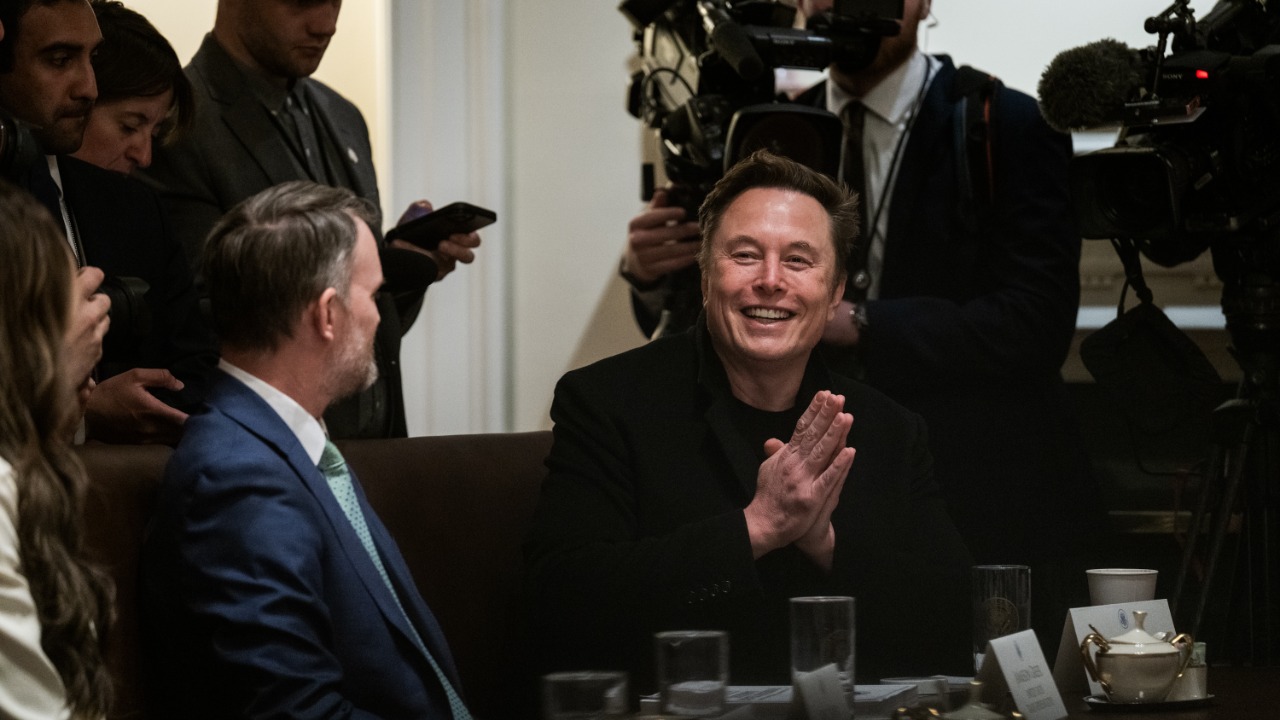

Elon Musk is turning xAI into one of the most capital intensive bets in modern technology, pouring tens of billions of dollars into chips, power and robots in a bid to dominate the next era of artificial intelligence. The company is losing money at a staggering pace, yet it is simultaneously raising record sums and committing to a 2 gigawatt data center footprint that would rival the largest cloud players. I see a classic Musk pattern emerging: burn cash aggressively now to build infrastructure so massive that rivals struggle to catch up later.
The $20 billion war chest behind xAI’s ambitions
To understand how xAI can afford to burn billions, it helps to start with the fresh capital Musk has secured. Earlier this month, the company completed an upsized Series E round that brought in $20 billion, beating an earlier target of $15 billion and instantly putting xAI in the same fundraising league as the biggest AI labs. According to investor materials, that round followed expectations that the company could be valued at $230 billion, a number that would place a still-young startup among the world’s most richly priced private tech firms. I see that valuation as less a reflection of current revenue and more a bet that Musk can repeat the playbook he used at Tesla and SpaceX, where early losses paved the way for dominant positions in electric vehicles and reusable rockets.
The investor roster behind this cash pile is equally telling. xAI has said that the $20 billion round drew backing from major chip and networking players, with Elon Musk confirming that firms such as Nvidia and Cisco are among the supporters, alongside sovereign and institutional capital. Legal filings show that advisers helped structure the Latest $20 Billion Equity Financing, underscoring how formal and large scale this raise has become compared with Musk’s earlier, more improvisational funding efforts. In my view, the combination of deep-pocketed chip suppliers and sophisticated financial advisers signals that xAI is being built not as a side project to X, but as a flagship AI platform expected to consume enormous compute and capital for years.
A 2GW bet on Mississippi’s AI future
The clearest expression of that capital intensity is landing in Mississippi. xAI has committed to invest more than $20 billion in a new data center in Southaven, a project that state officials describe as a record setting win for the region. Company materials describe the facility as a 2 gigawatt AI installation, a scale that would put it among the most powerful AI compute sites anywhere once fully built out. Separate reporting notes that the site in Mississippi is expected to create hundreds of permanent jobs and sits near predominantly Black communities in Memphis, raising both hopes for economic development and questions about who will benefit most from the boom. I see this as part of a broader shift in the geography of AI, where cheap land and access to power in the American South are becoming as important as proximity to Silicon Valley.
Beyond the headline number, the Southaven build reveals how xAI is thinking about infrastructure as a strategic moat. State documents describe a project that will dramatically expand xAI’s computing capacity, with the 2GW facility framed as one of the most powerful AI compute installations globally in Jan. Separate financial summaries say xAI expects to begin data center operations in Southaven in the coming years and highlight that the complex is close to a newly acquired power asset that can feed pricey, advanced data center hardware, according to SmartAsset style analysis. When I look at those details together, I see xAI trying to vertically integrate compute and energy in a way that could lower its long term cost per training run, even if the upfront bill is eye watering.
Record losses and the high cost of cognition
All of this building comes at a steep price. Financial disclosures from SAN FRANCISCO indicate that xAI has reported widening losses as it spends heavily on training large models and building what Musk describes as “embodied AI,” the software brains that will eventually control physical robots. One detailed account from SAN FRANCISCO describes xAI’s losses as “staggering,” driven by GPU purchases, data center commitments and research into the Optimus “brain.” Separate coverage notes that Musk’s AI venture has already burned almost $8 billion, a figure that appears in reporting by Carmen Arroyo and is echoed in Silicon Valley focused business outlets. In my reading, that number is less surprising than it might seem, given that a single cutting edge training cluster can cost billions once chips, networking and power are factored in.
What stands out is how quickly xAI has moved from launch to multi billion dollar burn rate. Reports from Silicon Valley Business circles describe the company as having “burned almost $8 billion” while simultaneously revealing more detail about its Optimus roadmap, suggesting that Musk is comfortable trading near term profitability for speed. I see a calculated gamble here: if xAI can reach a level of model capability and scale that only a handful of players can match, then the early losses may be overshadowed by future licensing, robotics and automotive revenue. The risk, of course, is that the market for AI services becomes more commoditized than Musk expects, leaving xAI with fixed costs that are harder to recoup.
Optimus, Tesla and the fight over “embodied AI”
At the center of Musk’s AI narrative is Optimus, the humanoid robot he has pitched as a future factory worker and household assistant. xAI is not just training chatbots; it is explicitly building the AI stack that will power Optimus, with Musk pinning hopes on a dedicated “brain” that can translate language and vision into physical action. Coverage of xAI’s financials notes that a significant share of the spending is tied to this investment in “embodied AI,” a phrase that appears in the SAN FRANCISCO report on the high cost of cognition and is repeated in Jan briefings about the Southaven data center. From my perspective, this is where xAI’s strategy diverges from pure software rivals: it is designed from the start to feed into robots that Musk wants to deploy at scale in factories and, eventually, homes.
That strategy is already creating friction with Tesla shareholders. In a detailed account by Fred Lambert, xAI is described as telling investors that it will build AI for Tesla Optimus at the same time Musk faces a breach of fiduciary duty lawsuit over whether he is diverting key AI assets away from Tesla. That report notes that there were 60 Comments on the story and that a separate filing referenced 55 as part of the legal back and forth, underscoring how closely retail investors are watching the split between Tesla and xAI. I see this as more than a corporate governance squabble; it is a test of whether Musk can run multiple AI heavy companies without convincing courts and regulators that he is favoring one set of investors over another.
Can Musk’s burn rate buy a lasting AI moat?
When I put the pieces together, xAI looks less like a conventional startup and more like an infrastructure project stitched to a robotics lab. The company has raised $20 billion in equity, lined up a 20 Bln funding package backed by Nvidia and Qatar linked investors, and committed to a 2GW data center in Mississippi that will demand vast amounts of power and cooling. It is burning almost $8 billion to chase “embodied AI” and the Optimus brain, while also promising to deliver models that can run services like Grok and Imagine through an agent API. In my view, the question is not whether xAI is spending heavily, but whether that spending is building a moat that others will struggle to cross, or simply keeping pace with rivals like OpenAI, Anthropic and Google that are also racing to lock up chips and power.
There are reasons to think the moat could be real. By tying its AI roadmap to a specific physical platform, Optimus, and anchoring its compute in a vertically integrated site in Mississippi, xAI is betting that control over both hardware and energy will matter as much as clever algorithms. At the same time, the reliance on huge equity raises, such as the Jan commitments around Southaven and the structured Advises on Billion Equity Financing, leaves xAI exposed if capital markets cool or if regulators tighten scrutiny of Musk’s overlapping roles. For now, though, the message from investors is clear: they are willing to fund a company that is burning billions to build something massive, on the assumption that in AI, scale itself may be the most valuable product of all.
More from Morning Overview