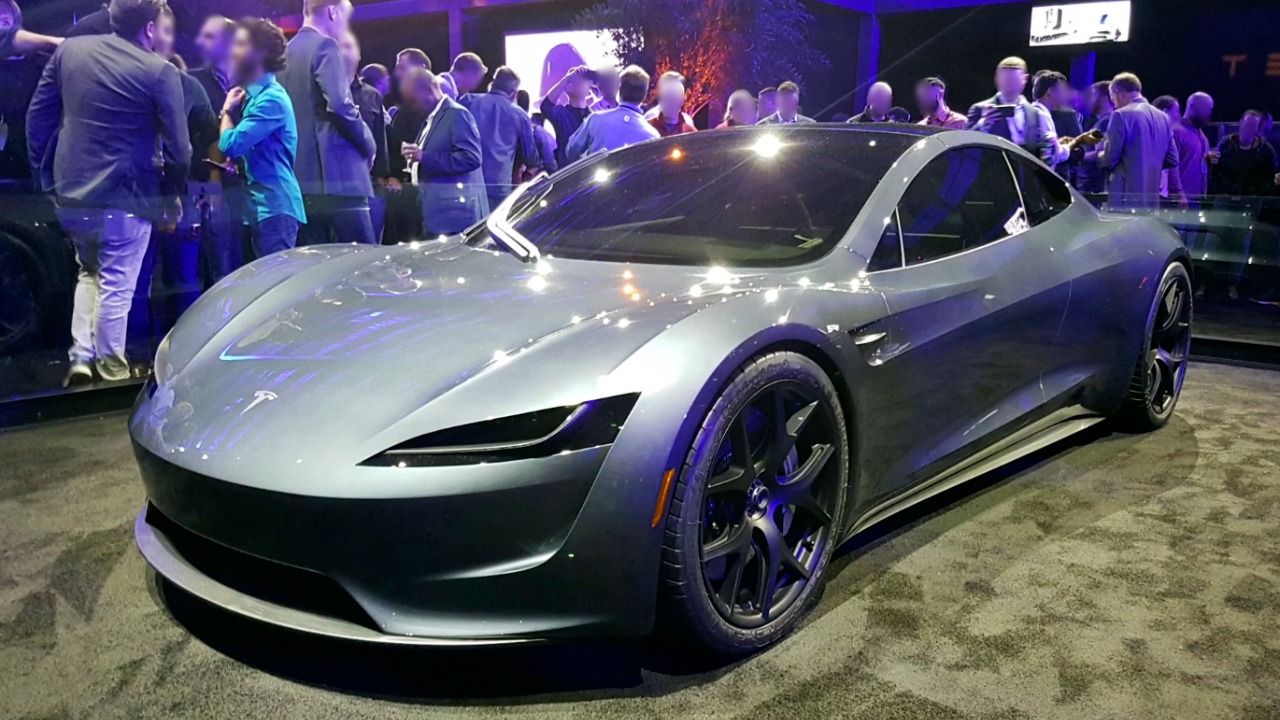

Elon Musk is positioning the next Tesla Roadster as a kind of farewell performance for human drivers, a final, extravagant showcase before software takes the wheel for good. His pitch is not about practicality or even safety first, but about building what he describes as the ultimate human-driven machine at the very moment autonomous systems are maturing. The result is a car that doubles as a statement about where Tesla is headed and what enthusiasts stand to lose.
Musk’s “best of the last” promise
When Jan shared Musk’s latest comments on social media, the message was blunt: the upcoming Roadster would be the “best of the last” human-driven cars, a celebration of the driver’s seat just as automation threatens to sideline it. In a separate post, Jan highlighted how Musk framed this Roadster as a capstone for people who still want to be behind the wheel, even as he pushes Tesla toward a future in which such engagement is unnecessary for transportation. That framing turns a niche supercar into a cultural marker, suggesting that the age of human-controlled performance machines is entering its final chapter.
Musk has reinforced that idea in more formal settings, describing the new Tesla Roadster as the pinnacle of what a person can drive before autonomous systems dominate the roads. In coverage of his remarks, he is quoted calling it the best of the last of human-driven cars and stressing that this model is about thrill and spectacle rather than incremental improvement. Jan’s posts about Elon and his comments on the Roadster, along with reports that Elon Musk is touting it in exactly those terms, underline how deliberately he is casting this car as a farewell to human control.
A supercar built for spectacle, not safety
Musk has been unusually candid that safety is not the primary mission for this Roadster, a striking admission from the chief executive of a company that has long marketed its vehicles around crash ratings and driver-assistance features. In Jan’s write-up of Elon Musk Outlines Radical Vision for Tesla Roadster, the project is described as “Safety Not the Main Goal for The Best of the Last,” making clear that this model is meant to push limits rather than serve as a family hauler. That stance fits with Musk’s broader argument that everyday transportation will soon be handled by autonomous fleets, leaving room for a small number of extreme machines that exist mainly to deliver adrenaline.
Reports on Musk’s comments emphasize that he is comfortable prioritizing performance and novelty over conservative engineering in this case, effectively treating the Roadster as a rolling demonstration of what Tesla’s hardware and software teams can do when they are not constrained by mass-market expectations. In that context, the Roadster becomes a kind of halo product for the brand, a car that may never see high volumes but that shapes how people perceive Tesla’s capabilities. Jan’s coverage of Elon Musk Outlines underscores that this is a deliberate tradeoff, with Musk openly acknowledging that the Roadster is about redefining automotive excitement rather than setting new safety benchmarks.
What we know about the 2026 Roadster itself
Beyond the rhetoric, the second generation of the Tesla Roadster is a concrete product with a defined place in the company’s lineup. The Tesla Roadster is described as a battery electric four-seater sports car planned to be built by Tesla, Inc, and in a shareholder update in November 2025 the company said production would begin in 2027. That timing means the car Musk is calling the last of its kind will arrive just as Tesla’s autonomous ambitions, including robotaxis and other driverless services, are expected to scale. The Roadster’s four-seat layout also signals that this is not a stripped-out track toy, but a high-performance EV that still nods to everyday usability.
Earlier coverage of the 2026 Tesla Roadster details how the model has evolved from the original two-seat sports car that helped establish Tesla’s reputation. The Roadster was first shown as a concept and is now moving toward a production version on April 1, 2026, with an estimated price that places it firmly in the electric supercar world and a $50,000 deposit required to secure a build slot. That pricing structure, outlined in an overview of the 2026 Tesla Roadster, reinforces that this is a low-volume flagship aimed at affluent enthusiasts rather than a mainstream commuter car. The technical description of The Tesla Roadster as a four-seater sports car planned by Tesla, Inc aligns with that positioning, situating the car at the intersection of luxury, performance, and brand signaling.
SpaceX tech, Tesla’s lineup, and the self-driving backdrop
Musk has hinted that the Roadster will not just be fast in conventional terms, but will also serve as a testbed for technology that blurs the line between cars and rockets. He has previously said that Tesla is working with his rocket manufacturing company, SpaceX, for the Roadster, suggesting that some form of rocket-inspired hardware or software could make its way into the production model. That collaboration, referenced in reports on Elon Musk Touts, reinforces the idea that this car is meant to be outrageous, a showcase for cross-pollination between Musk’s ventures rather than a conventional product cycle update.
Inside Tesla’s broader portfolio, the new Roadster is described as a fresh addition that sits alongside the company’s mass-market sedans and SUVs as well as its more experimental projects. Coverage of the company’s plans notes that the new Roadster is a distinct entry in Tesla’s range, arriving as the automaker also invests heavily in autonomous services and other mobility concepts in addition to EV manufacturing. That context, laid out in reporting on the new Roadster, makes clear that this car is not central to Tesla’s volume strategy. Instead, it functions as a high-profile counterpoint to the company’s push into driverless mobility, a reminder that Tesla can still build something wild for people who want to steer.
Investors, autonomy, and the end of human driving
For investors, Musk’s framing of the Roadster as the last great human-driven car is less about nostalgia and more about signaling where Tesla’s long-term value lies. Analysts who follow the company have been increasingly focused on its progress in self-driving technology, arguing that the real upside is in software, AI development, and services like the planned Cybercab rather than in selling more hardware alone. A recent price target bump for Tesla cited the company’s growing lead in self-driving and described better than feared deliveries as a step in the right direction for the Tesla story heading into a period defined by autonomy, AI development, and Cybercab. That assessment, detailed in analysis of Tesla, aligns with Musk’s own narrative that the Roadster is a sideshow compared with the main event of full self-driving.
At the same time, Musk’s insistence that the Roadster is the “best of the last” human-driven cars serves as a kind of emotional bridge for customers who are not ready to embrace a world of robotaxis and driverless fleets. By offering one final, extravagant expression of human-controlled performance, he is acknowledging that something is being lost even as he argues that autonomy will make transportation safer and more efficient overall. Jan’s coverage of Safety Not the Main Goal for The Best of the Last and Redefining Au, along with the repeated emphasis that Tesla Roadster is being pitched as the ultimate human-driven machine, captures that tension. The Roadster is both a product and a narrative device, a way for Musk to celebrate the end of one era even as he accelerates into the next.
More from Morning Overview