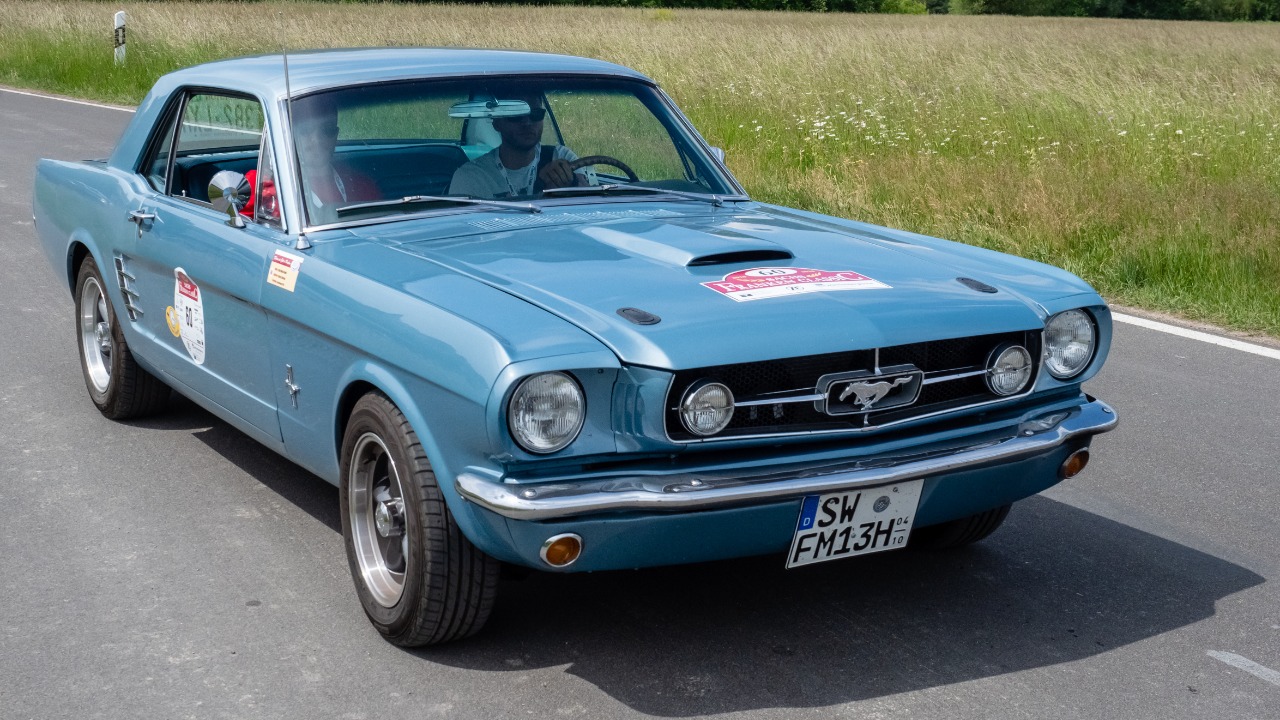

American muscle cars, once the loudest voice in the showroom, are now facing a quieter reality. New sales and pricing data point to a segment shrinking on two fronts at once: fewer new buyers and softening values for the classics that used to be bulletproof. The numbers suggest not just a cyclical dip but a structural shift that is forcing fans and automakers to rethink what “muscle” means in a market obsessed with efficiency and technology.
Yet the story is not as simple as nostalgia losing to the future. Even as traditional V8 coupes stumble, surveys show a stubborn core of enthusiasts who still want big power and bold styling, even if it comes with a plug or a smaller engine. The brutal trend is real, but it is colliding with an emotional attachment that will not disappear quietly.
New muscle car sales are sliding, even for the segment leaders
The clearest sign of trouble is in the showroom, where the once-crowded field of American performance coupes has thinned to a handful of survivors. Data from the 2024 U.S. Muscle Car Sales show that the list of Best Selling Muscle Cars In the United States, All Models Ra, is shorter and weaker than it was just a few years ago, with overall volume in the muscle car segment continuing to decline. What used to be a three-way fight between Detroit brands has become a slow fade, as buyers migrate to crossovers, trucks, and electric options that promise performance without the penalties at the pump.
By 2025, the pattern had hardened into a trend rather than a blip. Updated rankings for 2025 Best Selling Muscle Cars In the United States, All Models Ranked, confirm that the muscle car segment in the US has seen a decline in recent years, with demand failing to rebound even as supply chains normalized and incentives returned. The 2025 U.S. Muscle Car Sales underline that this is not just about one model underperforming, but a whole category losing ground in a market that now prizes practicality and technology as much as raw horsepower.
The Mustang’s lonely stand shows how fragile the segment has become
Nothing illustrates the fragility of the old formula better than the Ford Mustang’s current position. The Mustang remains the last gas-powered muscle car standing after rivals retreated or reinvented themselves, yet even this icon is struggling to hold its footing. Reporting on early 2025 results shows that Q1 sales for The Mustang are down sharply from 2024, despite the car still anchoring Ford’s performance image and carrying a starting price that hovers around $33,515 including destination fees. In other words, the one model that should be benefiting from a lack of direct competition is instead revealing how much the audience has shrunk.
That lonely status also exposes how dependent the segment has been on a specific recipe: two doors, rear-wheel drive, and a big internal-combustion engine. With The Mustang now effectively carrying the torch for traditional American muscle, its sales slide underscores how vulnerable that recipe is to changing tastes and regulations. The fact that the last gas-powered muscle car standing is losing momentum, as detailed in coverage of the Ford Mustang sales, suggests that nostalgia alone cannot offset concerns about fuel costs, insurance premiums, and looming emissions rules.
Classic muscle values are cooling, even for once untouchable icons
The pressure is not limited to new-car showrooms. On the collector side, fresh data show that Old muscle cars are losing value faster than anyone expected, a reversal that would have sounded unthinkable during the pandemic-era boom. Analysts tracking auction and private-sale results now report that Values for old American muscle cars are slipping faster than the broader classic market, especially for examples that are not perfectly documented or in top condition. The report on Old muscle cars makes clear that buyers are becoming more selective, rewarding only the rarest and best-preserved cars while turning away from driver-quality machines that once seemed like safe bets.
That shift is part of a broader cooling in the collector market, but the impact on American muscle is particularly sharp. Coverage of classic car trends notes that Muscle car prices hit the brakes and that the sharpest reality check is landing on old-school American muscle, the very segment that once defined attainable performance for a generation of enthusiasts. The same analysis argues that the days when any big-block badge guaranteed a steady climb in value are over, with some observers bluntly suggesting that the glory days for the big-block badge are over as younger buyers gravitate toward different kinds of performance cars. The piece on classic cars losing frames this as a generational reset, where American muscle no longer automatically commands a premium simply because it is loud and rare.
Enthusiasts still believe in muscle, but they are rethinking what it should look like
For all the gloomy sales charts and auction results, the cultural pull of muscle cars has not vanished. A Sep Survey titled Consumers Bullish on Muscle Cars’ Future, Even if it’s Not Green, found that overall, 64 percent of consumers said they still expect Muscle Cars to have a Future, Even in a landscape dominated by electrification and stricter emissions rules. That same research, based on a Survey of shoppers weighing performance and efficiency, shows that a significant share of respondents are open to the idea that a muscle car could be powered by something other than a traditional big-displacement V8, as long as it delivers the right mix of speed, style, and attitude. The detailed findings in the Consumers Bullish report suggest that the emotional appeal of muscle is more durable than the specific hardware that used to define it.
That gap between sentiment and spending is where the future of the segment will be decided. If 64 percent of consumers believe muscle cars have a future, but the 2024 and 2025 sales rankings show the muscle car segment in the US has seen a decline in recent years, then the problem is not desire in the abstract but the products currently on offer. I see a market where buyers still want the drama and identity that come with a muscle car, yet they are increasingly unwilling to compromise on technology, safety, and efficiency to get it. Bridging that gap will require automakers to reinterpret muscle for a new era, whether that means hybridized V8s, high-output sixes, or full battery-electric coupes that can outrun yesterday’s legends while satisfying regulators and accountants.
From cultural icon to niche: where the muscle car goes next
Put together, the data paint a picture of a segment moving from mainstream hero to specialized niche. New-car charts like the 2024 and 2025 Muscle Car Sales Figures By Model, With Rankings show shrinking volumes and fewer nameplates, while the Ford Mustang’s status as the last gas-powered muscle car standing highlights how exposed the old formula has become. On the collector side, reports that Values for old American muscle cars are slipping faster than the broader market, and that Muscle car prices hit the brakes, indicate that even nostalgia has limits when younger buyers have different icons and different financial realities. The brutal trend is not just about fewer sales, it is about muscle cars losing their automatic claim on the American imagination.
Yet I do not read this as a death sentence so much as a forced evolution. The Sep Survey showing that 64 percent of consumers still see a future for Muscle Cars, even if it is not green in the traditional sense, proves that the appetite for bold, emotional performance cars remains. The challenge for automakers is to turn that latent demand into viable products that can survive in a world of crossovers, EVs, and tightening rules. If they succeed, the next generation of muscle may look and sound very different from the big-block badge era, but it could still deliver the same rush that made these cars legends in the first place, even as the old guard fades faster than anyone expected.
More from Morning Overview