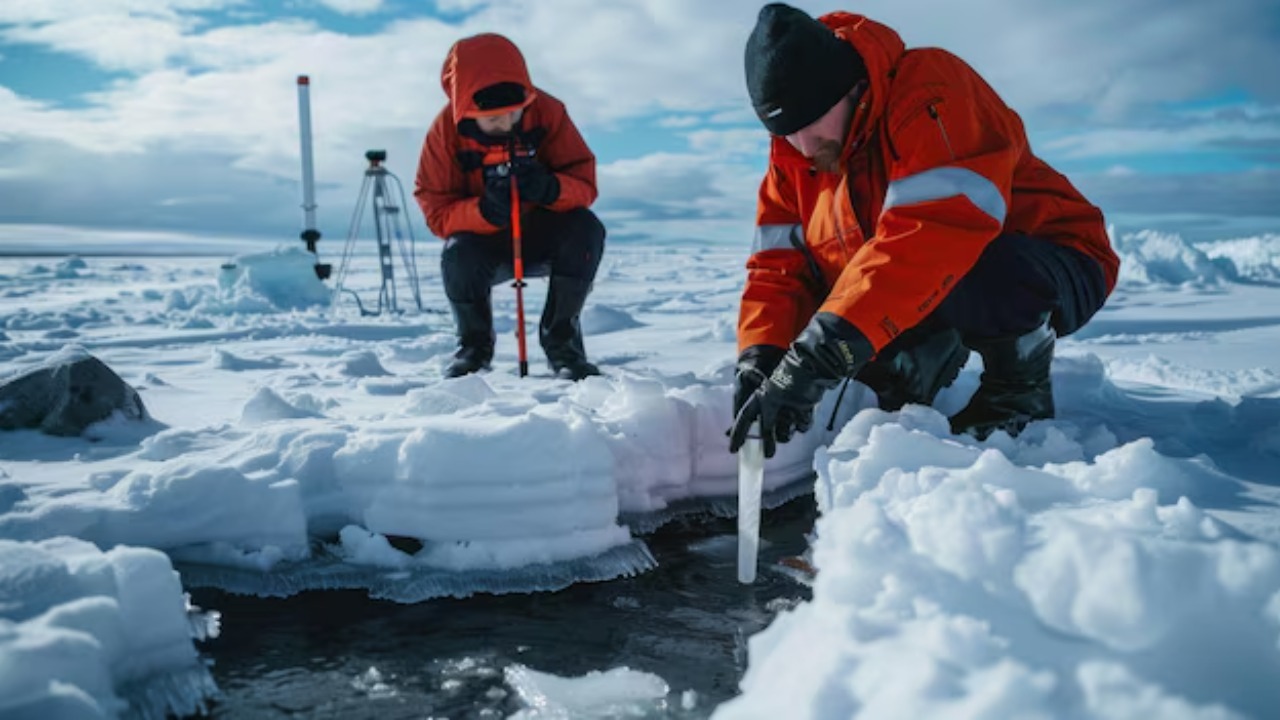

The tiny ocean robot that vanished beneath Antarctic ice for most of a year has reappeared with a warning that is as technical as it is existential. After roughly nine months adrift in a hostile under‑ice world, the float surfaced with measurements that point to a more fragile Antarctic ice system and a faster changing ocean than many models had assumed.
Its journey, which began as a targeted mission and turned into an accidental expedition, has yielded rare data from a place humans cannot safely reach. I see in that story not just a scientific breakthrough but a preview of how autonomous machines will increasingly act as our scouts on a destabilizing planet, returning with messages we may not be ready to hear.
The mission that went off script
The robot at the center of this saga was designed as a free‑floating ocean instrument, small enough to slip under sea ice yet sophisticated enough to log temperature, salinity, and other key indicators of how warm water interacts with Antarctic glaciers. It was deployed near the Totten Glacier, a massive outlet in East Antarctica that scientists regard as one of the continent’s most vulnerable ice bodies because relatively modest ocean warming can destabilize the ice shelf that buttresses it. The plan was straightforward: the float would dive, drift, and periodically surface to beam its measurements to satellites, building a profile of the water that laps at Totten’s underbelly.
Instead, powerful currents seized the robot and swept it away from its intended path, pulling it into a labyrinth of cavities beneath another East Antarctic ice shelf. According to reporting on the mission, the team watched as contact with the float became sporadic and then ceased entirely, a sign that the ice above had blocked it from communicating with satellites and that it was now traveling blind under the ice. The researchers had to accept that the mission had gone off script and that the robot might never be seen again, even as its instruments continued to record data in the dark.
Lost under the ice for months
For roughly nine months, the float was effectively missing, trapped in a world of thick ice, frigid water, and shifting currents that no crewed vessel could safely navigate. The team could not steer it, could not retrieve it, and could not even confirm its precise location, because the ice cover prevented the robot from surfacing to get a GPS fix or send a signal. In that period of silence, the mission shifted from a controlled experiment into a high‑stakes waiting game, with the researchers forced to imagine the robot crushed, frozen, or permanently entombed beneath the ice.
Yet the float kept working. Its sensors continued to log measurements of temperature, salinity, and pressure as it drifted through channels and cavities carved into the underside of the ice shelf. When it finally found a patch of open water and re‑established contact, the robot resurfaced with a continuous record of conditions from a part of the ocean that had never been directly sampled before. One account describes these as accidental observations of considerable scientific value, gathered from an area where direct measurements were previously impossible because the ice cover prevented the robot from communicating with satellites and blocked any ship from entering.
What the robot actually measured
The float’s alarming message is not a spoken warning but a set of numbers that, taken together, tell a troubling story about how warm ocean water is infiltrating Antarctic ice shelves. The robot’s instruments recorded layers of relatively warm, salty water flowing beneath the ice, a signature of modified circumpolar deep water that can erode the ice from below. By tracking how temperature and salinity changed with depth and location, the float revealed pathways through which this water reaches the base of the ice shelf, accelerating melt in places that had been assumed to be more insulated.
These measurements matter because they provide a direct test of climate and ocean models that, until now, have had to infer conditions under the ice from sparse data at the ice edge. The robot’s profile of the water column shows that heat is being delivered more efficiently to the ice base than some simulations had suggested, implying that projections of future melt and sea level rise may be conservative. Researchers have emphasized that these accidental observations are of considerable scientific value precisely because they come from an area where direct measurements were previously out of reach, and they were only possible because the float kept recording even when the ice prevented it from communicating with satellites.
From Totten Glacier to another ice shelf
One of the most striking twists in the story is that the robot, originally sent to study the Totten Glacier, ended up collecting its most consequential data beneath a different East Antarctic ice shelf. The float was deployed near Totten to investigate how warm water interacts with that glacier’s grounding line, but the current that captured it diverted the instrument into an adjacent system. In effect, the robot became an unplanned emissary to another ice shelf, mapping conditions that had not been part of the original mission brief.
Reporting on the expedition notes that nine months after it went missing, the robot resurfaced with extensive data on this other ice body and on the broader impact of climate change on Antarctic waters. That detour has turned out to be scientifically fortunate, because it shows that the processes threatening Totten are not isolated. Instead, similar patterns of warm water intrusion and under‑ice circulation appear to be affecting multiple parts of East Antarctica, including the ice shelf the float ultimately explored. By documenting how an East Antarctic ice shelf is being eroded from below, the robot has expanded the geographic scope of concern beyond the usual focus on West Antarctica.
Why scientists call the data “terrifying”
Researchers involved in the mission have not been shy about describing the float’s findings as terrifying, and the choice of language reflects both the content of the data and the context in which it arrived. The measurements suggest that warm water is reaching the base of Antarctic ice shelves more readily than expected, which can thin the ice, weaken its structural integrity, and eventually lead to large calving events or even collapse. For a glacier like Totten, which holds back a vast reservoir of inland ice, accelerated under‑ice melt could unlock significant contributions to global sea level rise, affecting coastal cities from Miami to Mumbai within the lifetimes of existing infrastructure.
One account of the mission explains that the free‑floating ocean robot was sent to collect data from the Totten Glacier, but a current pulled it away from its target and into a region where it documented processes that are impacting Antarctica as a whole. That broader framing is what makes the data so unsettling. The float’s record indicates that the mechanisms eroding one glacier’s ice shelf are part of a continent‑scale pattern, not a local anomaly. When scientists describe the returned dataset as terrifying, they are reacting to the implication that the Antarctic system may be more sensitive to ocean warming than many policymakers and planners have assumed.
The “little float that could” and the limits of human reach
There is a human, almost storybook quality to the way some researchers talk about the robot, captured in the phrase “Against the enormity of such a wild region, this is an amazing story of the little float that could.” That sentiment reflects genuine awe at the contrast between the robot’s modest size and the scale of the environment it navigated. The float is tiny compared with the towering ice cliffs and deep cavities of the Antarctic margin, yet it managed to survive eight months under the ice, collect a continuous stream of data, and then find its way back to open water where it could transmit its logs.
At the same time, the story underscores the hard limits of human presence in such regions. No crewed submarine or research vessel could have followed the robot’s path without unacceptable risk, and even icebreakers cannot access the narrow, roofed‑over channels where the float drifted. A detailed account of the mission describes how a tiny robot was lost under Antarctic ice for 8 months and then came back with rare data that would otherwise have been unattainable, crediting the float’s resilience and the ingenuity of the engineers who designed it to withstand crushing pressure and isolation. For me, that juxtaposition of vulnerability and capability is a preview of how much of our future knowledge of extreme environments will depend on small, semi‑autonomous machines.
How the data reshapes climate risk
The float’s measurements are already feeding into updated models of how Antarctic ice will respond to continued greenhouse gas emissions, and the implications are sobering. By quantifying the temperature and salinity of water directly beneath an East Antarctic ice shelf, the robot has provided a ground truth that modelers can use to refine estimates of basal melt rates. Early interpretations suggest that some previous simulations may have underestimated the amount of heat reaching the ice base, which in turn means that projections of sea level rise tied to Antarctic melt could be revised upward.
That matters for everything from national flood defenses to the design of coastal infrastructure like subway systems, ports, and wastewater plants. If the Antarctic contribution to sea level rise accelerates faster than expected, cities that are already investing in adaptation, such as Rotterdam with its movable storm surge barriers or New York with its coastal resiliency projects, may find that their current plans are insufficient. The robot’s data, gathered unintentionally as it drifted away from Totten Glacier and into another ice shelf system, highlight that the ocean is delivering heat to the ice in ways that are more complex and more efficient than many planning scenarios assume. In practical terms, the float’s alarming message is that the window for orderly adaptation is narrower than it appears on paper.
Robots as frontline witnesses of a warming world
I see this Antarctic saga as part of a broader shift in how we observe a changing planet, with autonomous robots increasingly serving as frontline witnesses in places that are too dangerous, too remote, or too vast for humans to monitor directly. The under‑ice float joins a growing fleet of Argo profiling floats, gliders, and moored instruments that quietly patrol the global ocean, surfacing periodically to upload their logs before disappearing again into the depths. In polar regions, where sea ice and extreme weather limit ship access, these robots are not just helpful, they are essential to building a continuous record of how heat and carbon move through the ocean.
The Antarctic float’s journey also illustrates the trade‑offs that come with relying on autonomous systems. Once the robot was swept away by currents and trapped under the ice, the team had no way to intervene, and the mission’s success depended on the float’s durability and a measure of luck. Yet the payoff, in the form of rare data from beneath an East Antarctic ice shelf, shows why researchers are willing to accept that risk. One detailed report on the mission notes that these accidental observations are of considerable scientific value precisely because they come from an area where direct measurements were impossible, and that they were only obtained because the ice temporarily prevented the robot from communicating with satellites, forcing it to operate on its own for months.
The next generation of Antarctic exploration
The story of the missing robot is already shaping how scientists think about the next generation of Antarctic exploration. Engineers are working on floats and gliders that can better navigate under ice, with improved obstacle avoidance, longer battery life, and smarter algorithms for deciding when and where to surface. Some designs borrow from consumer technologies, such as the inertial sensors used in smartphones or the compact batteries found in electric vehicles like the Tesla Model 3, adapting them for the cold, high‑pressure environment beneath ice shelves. The goal is to create a network of instruments that can map under‑ice cavities in three dimensions, track how they evolve over time, and feed that information into climate models in near real time.
At the same time, the Antarctic float’s experience is prompting a reassessment of mission planning and risk tolerance. If a robot can drift for nine months under the ice and return with transformative data, researchers may be more willing to send future instruments into similarly uncertain situations, accepting that some will be lost in exchange for the chance to capture unprecedented observations. One account of the mission emphasizes that nine months after the robot went missing, it resurfaced with extensive data on an East Antarctic ice shelf and on how climate change is reshaping Antarctic waters, a payoff that would have been impossible without embracing the possibility of failure. In that sense, the float’s alarming message is not only about the state of the ice, but also about the urgency of pushing our observational tools into the most challenging corners of the planet.
What this means for the rest of us
For people far from the Southern Ocean, it can be tempting to treat stories about Antarctic robots as distant curiosities, interesting but disconnected from daily life. I think that is a mistake. The data the float brought back speak directly to questions that affect coastal homeowners, city planners, insurers, and national governments: how fast will sea levels rise, how often will extreme flooding occur, and how much time is left to adapt existing infrastructure. When a tiny robot reports that warm water is gnawing away at the base of East Antarctic ice shelves more aggressively than expected, it is effectively updating the risk profile for every low‑lying community on the planet.
One detailed summary of the mission notes that the free‑floating ocean robot was sent to study the Totten Glacier, but a current pulled it away and into a region where it documented processes impacting Antarctica as a whole, a reminder that the continent’s ice system is interconnected. The float’s nine‑month disappearance and dramatic return with an alarming message encapsulate the new reality of climate science, in which autonomous machines venture into places humans cannot go, return with data that challenge our assumptions, and force difficult conversations about how quickly we must change course. The robot’s journey under the ice may have been accidental, but the choices it now demands from the rest of us are anything but.
Additional context from related reporting indicates that these accidental observations are of considerable scientific value and that they come from an area where direct measurements were previously impossible because the ice cover prevented the robot from communicating with satellites, as described in these measurements. Another account explains that nine months later, the robot resurfaced with extensive data on this ice body and on the impact of climate change on Antarctic waters, including an East Antarctic ice shelf, highlighting how Nine months later the mission’s unintended detour expanded its scientific reach. A further report stresses that the free‑floating ocean robot was sent to collect data from the Totten Glacier, but a current pulled it away from its target and into a region where it documented processes impacting Antarctica as a whole, underscoring how Totten Glacier is part of a larger, vulnerable system. Finally, one narrative captures the emotional resonance of the mission with the line “Against the enormity of such a wild region, this is an amazing story of the little float that could,” describing how a tiny robot was lost under Antarctic ice for 8 months and then came back with rare data, a journey chronicled in Against the.
More from MorningOverview