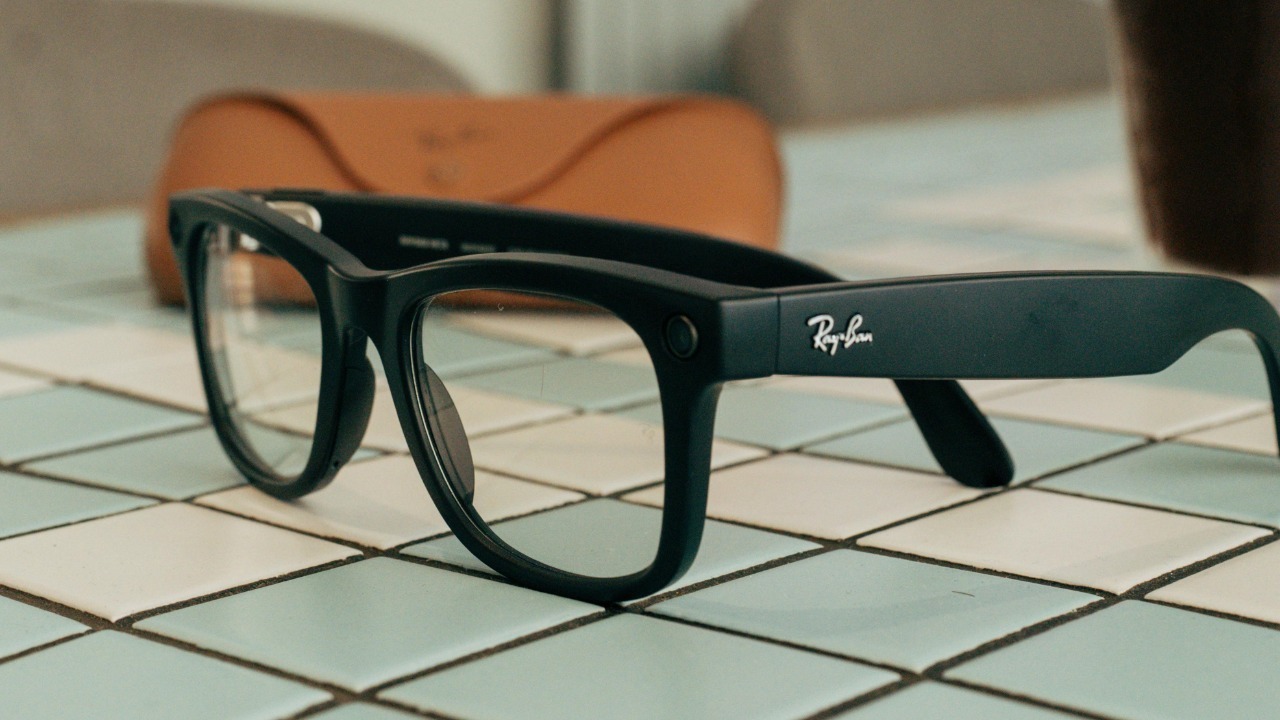

Meta’s newest smart glasses have become a victim of their own success. After a surge of early demand in the United States, the company is freezing the rollout of its Ray-Ban Display model in Europe and Canada, delaying launches that were supposed to cement its global lead in consumer augmented reality.
The pause affects key markets including the United Kingdom, France, Italy and Canada, and it arrives just as rivals are sharpening their own wearable strategies. I see the move as a revealing stress test of Meta’s hardware ambitions, exposing both the appetite for connected eyewear and the operational limits that still constrain the company’s metaverse-era hardware bets.
What Meta is pausing, and where
Meta is not canceling its Ray-Ban Display project, but it is putting the brakes on its international expansion plans. The company has confirmed that it is pausing the release of its Ray-Ban Display smart glasses in the UK, France, Italy and Canada, a group of early adopter markets that were meant to follow the initial United States launch once production ramped up and logistics stabilized, according to detailed accounts of the delayed international rollout. Instead of a smooth global debut, Meta is now telling would-be buyers outside the U.S. to wait while it works through a backlog of orders at home.
The freeze is particularly visible in Canada, where Meta had previously signaled that Meta Ray-Ban Display would arrive in early 2026. Local reporting now states bluntly that Meta Ray-Ban Display no longer coming to Canada in early 2026, underscoring how sharply the company has reversed course. The same story is playing out across Europe, where Meta had planned to bring Meta Ray-Ban Display to the UK and France as part of a broader push into premium AR wearables, a plan now on hold as the company prioritizes existing customers over geographic expansion.
The demand surge that broke Meta’s rollout plan
Meta’s explanation for the pause is straightforward: demand in the United States has outstripped what its factories can supply. Company statements describe “unprecedented demand and limited inventory” as the reason it has “decided to pause our planned international expansion,” a framing that is consistent across reports on how Meta pauses international expansion. In other words, Meta is not struggling to sell Ray-Ban Display; it is struggling to build enough of them.
That imbalance is visible in the basic buying experience. In the U.S., Meta Ray-Ban Display is described as “pretty much sold out,” with customers told that if they want to buy the glasses they must book an appointment for an in-person demo, a requirement that highlights how constrained supply has become for the Meta Ray-Ban Display. Meta is effectively rationing access, using controlled demos to manage expectations while it works to increase production capacity.
Price, positioning and the $799 question
Part of the story here is price. Meta has chosen to position Ray-Ban Display as a premium device, with reports emphasizing that the company has paused the global rollout of its $799 Ray-Ban Display Glasses As Demand Outstrips Supply. That figure puts the product well above earlier camera-only Ray-Ban collaborations and closer to the territory of high-end smartphones or entry-level laptops, which makes the strength of demand even more notable.
Meta Platforms Inc is treating Ray Ban Display as a flagship in its broader hardware strategy, with investor-focused coverage stressing that Meta Platforms Inc (META, Financials) is delaying worldwide distribution of its Ray Ban Display smart glasses because of strong U.S. uptake and growing demand for linked eyewear. By holding the line on a relatively high price while still selling through inventory, Meta is signaling that it sees Ray-Ban Display not as a niche experiment but as a core product that can support premium margins if it can scale production.
Europe and Canada left waiting
For consumers in Europe and Canada, the pause is more than a minor inconvenience, it is a reminder that Meta still treats the U.S. as its primary test bed for ambitious hardware. In Canada, the delay has been framed as a clear setback, with coverage noting that Meta Ray-Ban Display no longer coming to Canada in early 2026 despite earlier expectations. That leaves Canadian buyers watching from the sidelines while U.S. customers post early impressions and Meta refines the product through software updates.
The same dynamic is playing out in the United Kingdom and across the European Union. Meta had planned to roll out Meta Ray-Ban Display in the UK and France as part of a broader European push, a plan that is now explicitly described as delayed in coverage of how Meta Delays Global Rollout of Ray-Ban Display Glasses on Strong US Demand. For early adopters in London, Paris or Milan, the message is clear: Meta will serve its home market first, and everyone else will have to wait until the supply squeeze eases.
Inside Meta’s supply squeeze
Meta’s public line is that the pause is driven by a mismatch between supply and demand, and the details support that view. Reports on the company’s decision emphasize that Meta is serving up a worldwide pause on the international launch of its Ray-Ban Display smart glasses because customer interest has outpaced what its factories can produce, a dynamic laid out in coverage of how Meta freezes Ray-Ban Display rollout worldwide. The company is not talking about component shortages or specific manufacturing bottlenecks, but the effect is the same: limited inventory forces hard choices about where to ship units.
Other reports frame the situation as a classic supply squeeze, noting that Meta announced it is pausing international expansion of Ray-Ban Display glasses due to short supply and strong U.S. demand, a combination that has been summarized as a global rollout delay on supply squeeze. From my perspective, this is a familiar pattern in consumer electronics, where companies often underestimate demand for a new category and then scramble to rebalance production. What makes Meta’s case distinctive is that it is happening in a nascent AR market where the company is trying to prove that mainstream consumers actually want a screen on their face.
How the pause reshapes Meta’s AR strategy
Strategically, the freeze forces Meta to rethink how it sequences its hardware bets. The company has been explicit that it is pausing its plans to sell Ray-Ban Display smart glasses internationally, with one analysis of how Meta Pauses International Sales of Ray-Ban Display Smart Glasses noting that Meta still has long term ambitions for AR eyewear that extend well beyond 2026. In that context, the current delay looks less like a retreat and more like a tactical regrouping, a decision to consolidate in the U.S. while it builds the manufacturing and support infrastructure needed for a truly global product.
At the same time, Meta is not slowing down on related experiments. Coverage of how Karissa Bell reported on Meta and Garmin shows that Meta and Garmin are already demonstrating a wrist based neural band that could eventually pair with smart glasses for more intuitive control. That kind of parallel R&D suggests Meta sees Ray-Ban Display as one piece of a larger ecosystem, where neural input, AI assistants and lightweight displays converge into a more seamless computing experience. The pause in Europe and Canada slows that vision in those markets, but it does not change the direction of travel.
Consumer expectations in the UK, France and Canada
For consumers in the United Kingdom, France and Canada, the delay is a test of patience and brand loyalty. These are markets where Meta’s social apps are deeply entrenched and where early adopters are used to getting new hardware on roughly the same timeline as the U.S., whether that is a new iPhone or a flagship Android device. The fact that Meta is now telling buyers in the United Kingdom and France to wait while it clears a backlog at home risks creating a perception that the company still thinks in U.S. first terms when it comes to cutting edge hardware.
In Canada, the optics are similar. The country is a major market for Meta’s apps and a frequent early target for new tech launches, yet the current messaging is that Meta Ray-Ban Display will not arrive in early 2026 as planned, a point underscored by local coverage of Canada’s delayed access. I see a risk that some of the most enthusiastic potential customers will either import devices unofficially or shift their attention to rival products, especially if Apple or other players move quickly with their own AR eyewear in these regions.
Meta’s messaging: from Big Connect to “unprecedented demand”
Meta’s communication around Ray-Ban Display has evolved quickly, from onstage demos to damage control around delays. A viral clip from Meta’s Big Connect event shows Mark Zuckerberg struggling through a demo gone wrong, a moment that highlighted both the ambition and the fragility of live AR presentations. That stumble did not stop Meta from pushing ahead with Ray-Ban Display, but it did set the tone for a launch cycle where expectations and reality have sometimes been out of sync.
Now, the company’s language is all about “unprecedented demand” and “limited inventory,” phrases that appear in multiple accounts of how Meta is pausing release of Ray-Ban Display to the UK, France, Italy and Canada because of a mismatch between supply and demand, as described in coverage of the Ray-Ban display not launching in more countries just yet. From my vantage point, this is a classic reframing: a logistical problem is being presented as a success story about popularity. The underlying facts about the pause are clear, but the narrative Meta wants consumers and investors to hear is that Ray-Ban Display is so desirable that it broke the company’s own forecasts.
A crowded market and Meta’s position
Even with the pause, Meta remains one of the most aggressive players in consumer smart glasses. Analyses of how Meta freezes Ray-Ban Display rollout worldwide point out that the company is operating in a crowded market where everyone from Apple to smaller AR startups is exploring similar hardware. Meta’s advantage is its tight integration with Facebook, Instagram and WhatsApp, which gives Ray-Ban Display an immediate use case for hands free capture, messaging and notifications that rivals may struggle to match at launch.
At the same time, the delay gives competitors an opening. Reports that Meta Pauses Global Rollout Of Ray-Ban Display Glasses As Demand Outstrips Supply explicitly mention that other tech giants are exploring similar hardware with Apple, a reminder that Meta is not alone in chasing this category, as highlighted in the Corporate News coverage. If Apple or another rival can bring a competing product to market in Europe or Canada while Meta is still constrained, the company’s early lead in the U.S. could be less decisive than it appears today.
What this means for everyday buyers
For everyday buyers, the practical implications are simple. If you are in the U.S., you may still be able to get Ray-Ban Display, but you will likely need to schedule an in person demo and accept limited configuration options while inventory remains tight, a reality reflected in the way Meta’s new smart glasses are pretty much sold out. If you are in Europe or Canada, you are effectively in a holding pattern, with no firm new dates and only Meta’s assurances that it still plans to expand internationally once supply catches up.
In the meantime, some consumers may look at other connected eyewear options, from simpler camera glasses to more specialized AR headsets. The broader product landscape now includes everything from fitness focused glasses to enterprise AR headsets, and Meta’s delay could nudge some buyers toward those alternatives. For others, the combination of Ray-Ban branding, deep social integration and Meta’s clear commitment to the category will be enough to justify waiting, even if that means sitting out the first wave of consumer AR in their own country.
The road ahead for Ray-Ban Display
Looking ahead, the key question is how quickly Meta can resolve its supply issues and restart its international plans. Reports that Meta is halting the international rollout of its Ray-Ban display smart glasses emphasize that the company still sees 2026 as a pivotal year for engineering and deployment, with Meta halts international rollout framed as a temporary measure rather than a permanent retreat. If Meta can ramp up production and relaunch in Europe and Canada within a reasonable window, the long term damage to its reputation in those markets may be limited.
For now, though, the freeze is a reminder that even the biggest tech companies can be tripped up by the basics of hardware execution. Meta is still pushing ahead with related initiatives, including experiments with neural input and AI assistants that could eventually make Ray-Ban Display more powerful and intuitive. The company’s broader catalog of connected devices, from Quest headsets to other product lines, shows that it is willing to absorb short term setbacks in pursuit of a long term vision. The pause in Europe and Canada is a setback, but it is also a sign that Meta has finally found a wearable that people actually want, and that may be the most important data point of all.
More from Morning Overview