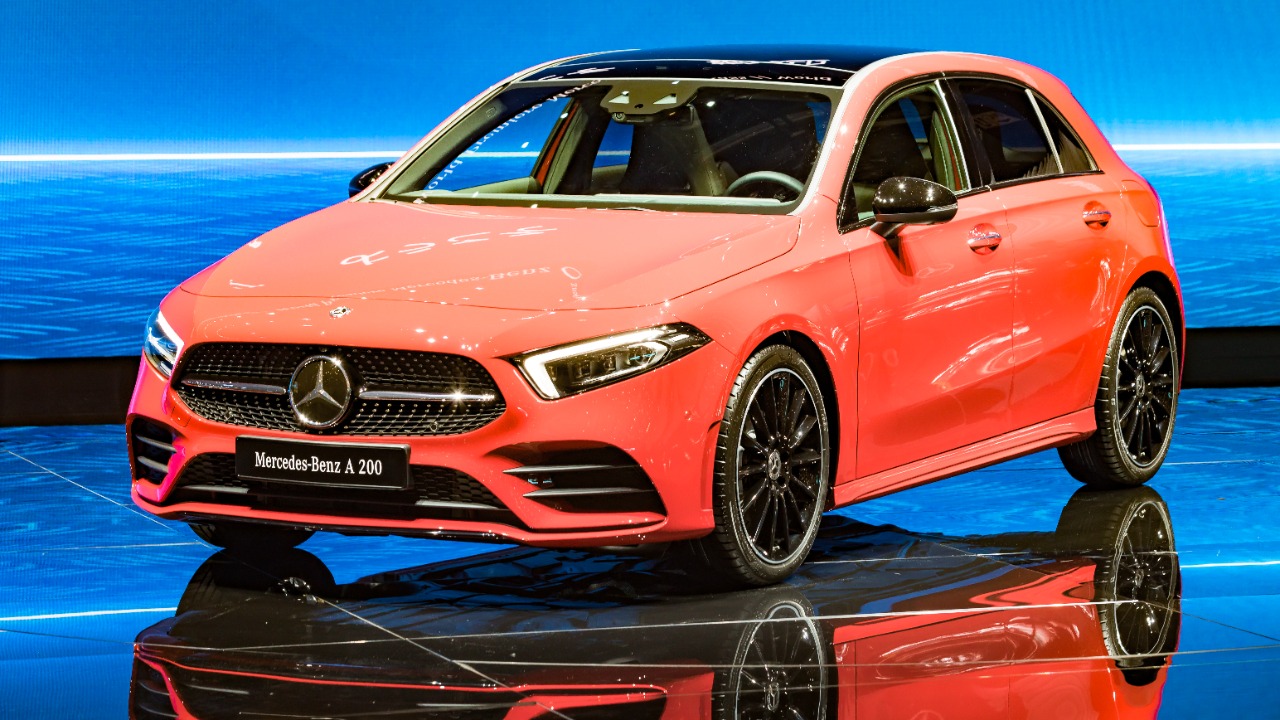

Mercedes-Benz is facing a costly reckoning over how it marketed and managed the pollution from its diesel vehicles, with a multistate settlement that will force the company to pay out $150 million to resolve allegations of deceptive emissions practices. The payout, which targets conduct that regulators say misled both consumers and state authorities, underscores how the fallout from diesel cheating scandals is still reshaping the auto industry years after the first cases surfaced.
At the heart of the dispute is the claim that Mercedes-Benz misrepresented how clean some of its diesel models really were, even as governments tightened air-quality rules and drivers paid premiums for supposedly lower-emission technology. The new settlement, which directs money to state governments rather than individual owners, is designed to punish past behavior and fund future enforcement, while raising fresh questions about how far regulators should go in policing the promises carmakers make about their environmental performance.
The core allegations behind the $150 million settlement
The states’ case against Mercedes-Benz centers on accusations that the company used deceptive tactics to present certain diesel vehicles as cleaner than they actually were in real-world driving. Regulators argue that the automaker’s marketing and technical disclosures painted a picture of advanced emissions control that did not match the pollution levels measured on the road, particularly for nitrogen oxides that contribute to smog and respiratory illness. The settlement, which requires a $150 million payout, is framed as a response to those alleged misrepresentations and the broader harm to public health and consumer trust.
Although the technical details remain tightly held in legal filings, the enforcement narrative echoes earlier diesel scandals in which software and calibration strategies allowed vehicles to perform differently in test conditions than on everyday commutes. In this case, state officials say the conduct amounted to “deceptive practices” that violated consumer protection and environmental laws, prompting the agreement that Mercedes-Benz will pay $150 million to resolve the claims. The figure is repeatedly described as $150 in the official materials, a shorthand that underscores the scale of the penalty while tying it directly to the alleged emissions cheating that regulators say distorted the market for cleaner cars.
How the emissions scandal unfolded across the states
The settlement did not emerge overnight, and the path to a $150 million resolution reflects years of investigation by state attorneys general and environmental regulators. After concerns surfaced about diesel emissions strategies in the mid-2010s, officials began scrutinizing how Mercedes-Benz calibrated its engines and what it told buyers about the environmental benefits of its technology. That scrutiny eventually coalesced into a coordinated multistate effort, with states pooling resources to examine technical data, interrogate marketing claims and compare laboratory test results with on-road performance.
By the time the agreement was announced, the coalition of states had built a case that Mercedes-Benz’s conduct warranted a substantial financial response, both to address past violations and to deter similar behavior by other manufacturers. The resulting deal, described in regulatory summaries as Mercedes to pay $150 million to states over an emissions scandal, reflects that coordinated strategy and the belief among state officials that only a large, headline-grabbing penalty would send a clear message that emissions cheating is unacceptable. The reference to $150 in the settlement documentation is not a rounding error but a deliberate, precise figure that anchors the enforcement action in a concrete financial consequence.
What regulators say Mercedes-Benz did wrong
Regulators have framed the case against Mercedes-Benz as a textbook example of how sophisticated engineering can be misused to skirt the spirit, if not the letter, of environmental rules. According to enforcement summaries, the company’s diesel vehicles were marketed as meeting strict emissions standards while delivering strong performance, yet testing by authorities suggested that some models emitted far more pollution in normal driving than consumers would have expected from the promotional claims. That gap between promise and performance is what officials describe as the core “deceptive practices” at issue.
In their public statements, state officials have emphasized that the problem was not simply technical noncompliance but the way the company communicated with buyers and regulators. They argue that Mercedes-Benz’s representations about its diesel technology created a false impression of environmental responsibility, undermining both consumer choice and state efforts to clean up the air. The enforcement narrative explicitly labels the conduct as deceptive practices and ties it to the $150 million penalty, reinforcing the idea that the financial hit is meant to match the seriousness of the alleged misconduct rather than being treated as a routine cost of doing business.
The role of Mercedes Benz USA and Daimler in the deal
The settlement is not limited to a single corporate entity, and that structure matters for understanding how accountability is being assigned. Mercedes Benz USA and Daimler, the parent company behind the brand, are both named as parties to the agreement, reflecting the view among regulators that responsibility for emissions strategies and marketing claims sits at multiple levels of the corporate hierarchy. By including both Mercedes Benz USA and Daimler, the states are signaling that they expect global automakers to coordinate compliance across their entire corporate families, not silo it within regional subsidiaries.
That dual participation also shapes how the money will be paid and how future oversight will work. With Mercedes Benz USA and Daimler both on the hook, regulators can push for changes that reach from engineering decisions in Europe to dealer communications in the United States, rather than treating the case as a narrow dispute over local advertising. The settlement materials explicitly describe Mercedes Benz USA and Daimler as jointly responsible for the $150 million payout, a framing that underscores the expectation that emissions integrity must be embedded in both corporate strategy and day-to-day operations.
How the $150 million will be distributed among the states
While the headline number is $150 million, the impact of the settlement will be felt unevenly across the country as individual states receive their shares. The agreement allocates funds based on factors such as the number of affected vehicles registered in each state and the scope of the alleged violations within their borders. Some states with large markets for diesel luxury vehicles are set to receive significant sums, which they can use to bolster environmental enforcement, fund pollution mitigation projects or support consumer protection initiatives tied to automotive marketing.
One example that illustrates the distribution is South Carolina, which is slated to receive just over $2 million from the settlement. That figure, highlighted in coverage of the deal, shows how even smaller states in terms of vehicle population can secure meaningful resources when they participate in multistate enforcement actions. The reference to South Carolina’s share appears in a summary noting that Mercedes Benz USA and Daimler will pay $150 million overall, with South Carolina to receive just over $2 million, a reminder that the big national number translates into concrete local budgets for environmental and consumer programs.
Why South Carolina’s share stands out
South Carolina’s allocation of just over $2 million may seem modest compared with the full $150 million, but it carries outsized symbolic weight in the broader enforcement story. The state has positioned itself as both a manufacturing hub and a defender of environmental standards, and its participation in the settlement underscores that those roles are not mutually exclusive. By securing a defined share of the payout, South Carolina can point to tangible benefits from its decision to join the multistate coalition, including potential funding for air-quality monitoring, legal enforcement capacity or public outreach on vehicle emissions.
The public explanation of the settlement in South Carolina has emphasized that Mercedes Benz USA and Daimler are paying $150 million in total and that South Carolina will receive just over $2 million as its portion. That framing, captured in a widely shared update that described how Mercedes Benz USA and Daimler settle with states for $150M and noted South Carolina’s specific share, helps residents see the connection between national enforcement headlines and local outcomes. It also reinforces the message that even states without the largest luxury car markets can leverage collective action to hold global manufacturers to account.
How this case fits into the wider diesel emissions saga
The Mercedes-Benz settlement slots into a broader pattern of diesel emissions controversies that have reshaped the auto industry over the past decade. In the mid-2010s, regulators around the world uncovered evidence that some manufacturers had used software and calibration tricks to pass laboratory tests while emitting far higher levels of pollutants on the road. Those revelations triggered a wave of investigations, recalls and legal actions that have cost automakers billions of dollars and forced a rethinking of how emissions are tested and enforced.
Mercedes-Benz has consistently argued that its situation is distinct from other high-profile diesel cases, but the structure of the new settlement shows that regulators see common themes in how advanced engine controls can be misused. Enforcement summaries explicitly link the company’s conduct to the wider category of emissions cheating scandals, noting that the $150 million payout is part of a broader effort to address the harm caused by these practices. One detailed account of the case explains that in the mid-2010s the company’s diesel strategies came under scrutiny as authorities investigated emissions cheating scandals, and that context helps explain why the current settlement is being watched so closely by both industry insiders and environmental advocates.
What state officials say they achieved with the deal
State officials have framed the settlement as a clear win for both environmental protection and consumer rights, arguing that the $150 million figure reflects a serious effort to hold Mercedes-Benz accountable. In their public comments, attorneys general and environmental regulators have stressed that the agreement not only imposes a financial penalty but also sends a message to the broader industry that deceptive emissions practices will be met with coordinated, multistate enforcement. They point to the size of the payout and the involvement of multiple corporate entities as evidence that the states were willing to push hard rather than accept a token resolution.
Some officials have gone further, describing the settlement as a model for how states can work together to confront complex, technical misconduct by global companies. They highlight the investigative work that went into building the case and the way the final agreement channels money back into state-level enforcement and environmental programs. One enforcement summary quotes a state leader saying that they are holding the company accountable, a phrase that appears in the context of Mercedes to pay $150 million to states over an emissions scandal and captures the tone of official reaction. For regulators, the deal is not just about punishing past behavior but about demonstrating that sophisticated engineering cannot be used to hide the true environmental cost of a product.
What this means for car buyers and the future of diesel
For drivers, the Mercedes-Benz settlement is another reminder that the green promises attached to diesel technology in the last decade often came with hidden caveats. Many buyers paid premiums for diesel models on the assumption that they were getting both strong performance and lower emissions, only to learn later that regulators believed some of those claims were misleading. While the new $150 million payout flows to states rather than directly to consumers, it reinforces the idea that buyers should treat environmental marketing with healthy skepticism and look for independent verification of emissions and fuel economy claims.
Looking ahead, the case adds to the pressure on automakers to pivot away from diesel and toward electric and hybrid powertrains that can more reliably meet tightening air-quality rules. The financial and reputational costs of emissions scandals have made diesel a riskier bet, especially in markets where regulators and consumers are increasingly focused on climate and health impacts. As companies like Mercedes-Benz absorb penalties tied to alleged deceptive practices and emissions cheating scandals, they are likely to double down on technologies that can deliver cleaner performance without relying on complex software strategies that invite regulatory scrutiny. For car buyers, that shift may ultimately mean more transparent choices and fewer surprises about what is coming out of the tailpipe.
More from MorningOverview