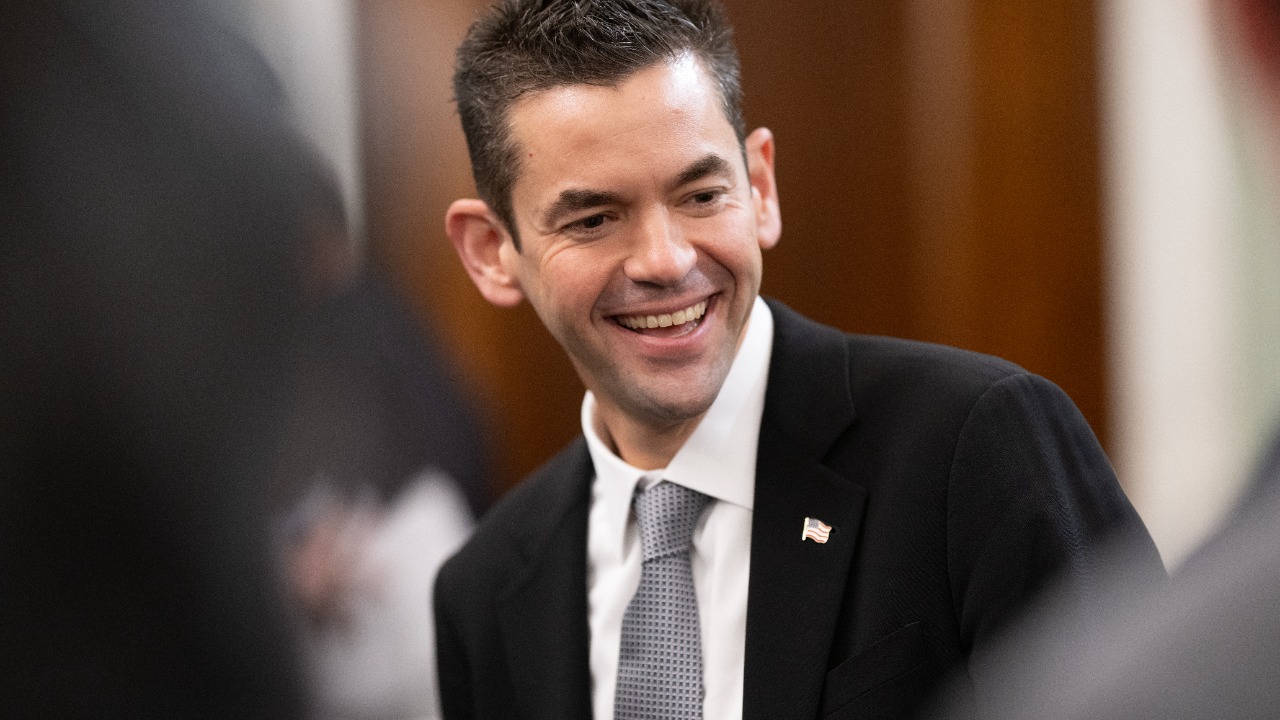

Jared Isaacman arrives at the top of NASA as a rare hybrid: a billionaire tech founder who has actually strapped into a capsule, flown with SpaceX and stepped into the vacuum as a private spacewalker. His elevation from customer to chief of the United States space agency signals how deeply commercial spaceflight is reshaping government exploration, and how President Donald Trump wants NASA run more like a high‑risk, high‑reward startup than a cautious bureaucracy.
To understand what that means for the Moon, Mars and the thousands of people who work for the agency, it helps to look at the arc that brought Isaacman from New Jersey teenager to NASA Administrator, and at the political fight that surrounded his nomination before the Senate finally handed him the keys.
From teenage entrepreneur to billionaire space customer
Long before he was testifying on Capitol Hill, Jared Taylor Isaacman was building companies. As a teenager he launched a payments business that eventually became Shift4 Payments, a publicly traded processor that handles transactions for restaurants, hotels and other merchants. He later created Draken International, an aviation firm that supplies adversary air training to the U.S. military, and those two ventures helped turn him into a billionaire with an estimated net worth of about US$1.4 billion, according to his biographical profile.
That entrepreneurial streak came with a pilot’s obsession. Isaacman accumulated thousands of hours in the cockpit, flying everything from business jets to fighter aircraft, and he used that experience to shape Draken International’s fleet and training model. The same appetite for speed and risk that defined his aviation ventures later made him one of SpaceX’s most important early private customers, willing to buy entire missions and then use them as platforms for philanthropy and technology demonstrations rather than simple joyrides.
Becoming “Rook”: the private astronaut who walked in space
Isaacman’s public profile shifted dramatically when he stopped merely funding rockets and started flying them. In 2021 he commanded Inspiration4, the first all‑civilian orbital mission on SpaceX’s Dragon spacecraft, and he followed that by leading Polaris Dawn, the opening flight of a privately funded program of increasingly ambitious missions. As Mission Commander for both Polaris Dawn and a subsequent flight in the Polaris Program, he earned the call sign “Rook” and logged extensive time as a two‑time astronaut with over 8,000 flight hours, details highlighted in his Polaris biography.
On one of those missions Isaacman became the first private citizen to conduct a spacewalk, stepping outside a SpaceX capsule in a pressure suit to test how commercial hardware performs in the harsh environment of low Earth orbit. That milestone, described in coverage of how he “also became the first private citizen to carry out a spacewalk,” underscored his unusual status as both financier and test subject for new systems, a combination that would later bolster arguments that he understood the technical and human stakes of exploration in a way few political appointees ever have, as noted in reports on his spaceflight record.
The Trump pick that jolted Washington
When President Donald Trump tapped Isaacman to lead NASA, the choice crystallized the administration’s preference for outsiders with business credentials over career civil servants. The nomination paired a White House that has pushed hard for rapid lunar and Mars timelines with a candidate who had already paid for his own missions and performed the first private spacewalk. Reporting on the selection emphasized that Trump was turning to a billionaire who had literally flown with SpaceX, with one account noting that the president picked “Jared Isaacman, billionaire who performed first private spacewalk, to lead NASA,” a description embedded in coverage of how the decision fit into the administration’s broader approach to science agencies and even referenced the Challenger disaster while Trump was a congressman, as detailed in a political analysis.
The pick immediately raised questions about how a private astronaut and CEO would handle the sprawling responsibilities of a federal agency that runs everything from climate satellites to planetary probes. Supporters argued that his experience buying and flying commercial missions made him the ideal bridge between NASA and a rapidly expanding private sector, while critics worried about conflicts of interest and the symbolism of putting a billionaire customer in charge of the agency that had once been the sole gateway to space. Those tensions set the stage for a confirmation process that would stretch over a year and require the White House to renominate him after initial resistance.
A bruising path to confirmation and swearing‑in
The Senate’s handling of Isaacman’s nomination turned into a case study in how partisan and ideological divides now shape space policy. After months of delay and a renomination, the chamber finally voted to confirm him as NASA administrator in a 67‑30 tally, a margin that reflected both bipartisan support and lingering skepticism. One account of the vote noted that the Senate voted “67‑30” to approve him and highlighted that he had “no federal government experience” before taking the job, framing the outcome as a calculated gamble on an outsider, as described in an overview of the confirmation.
Shortly after that vote, Isaacman was sworn in as the 15th NASA Administrator, taking the oath at NASA Headquarters in Washington in a ceremony that formalized his shift from private astronaut to public official. A contemporaneous note on social media recorded that “Jared Isaacman was sworn in today as NASA Administrator, the day after his 67‑30 Senate confirmation vote,” capturing both the speed of the transition and the significance of the role, as reflected in a summary of the swearing‑in.
What NASA is getting in its 15th Administrator
Once in office, Isaacman inherited a portfolio that would challenge even the most seasoned Washington veteran. NASA’s own profile of its new leader describes him as “NASA Administrator” and notes that in 2021 he commanded Inspiration4 aboard the Dragon spacecraft, the first all‑civilian orbital flight, while also emphasizing that he is an accomplished pilot with over 8,000 flight hours. That combination of operational experience and executive leadership is central to how he and the administration have framed his tenure, as laid out in the agency’s official biographical sketch.
NASA’s welcome announcement for its 15th Administrator underscored the stakes, casting Isaacman as the person who will steer the agency through a period of intense competition and ambition. The release, issued from NASA Headquarters, framed his arrival as part of a push to sustain American leadership in space and even invoked the prospect of planting the “Stars and Stripes on Mars,” language that aligns closely with Trump’s rhetoric about bold exploration goals and is captured in the agency’s welcome statement.
The Senate tug‑of‑war and what it revealed
The road to that swearing‑in was anything but smooth. Reporting on the confirmation battle described a “monthslong tug‑of‑war” in which Isaacman, a private astronaut and CEO of payments company Shift4, became a proxy for larger debates about the role of billionaires in public life and the future of NASA’s relationship with companies like SpaceX. One detailed account noted that Isaacman, as CEO, was set to take the helm at NASA just weeks before a critical phase in the Artemis program, underscoring how the timing of the vote intersected with looming mission milestones, as outlined in a report on the Senate dynamics.
Another analysis traced how the White House had to renominate Isaacman after initial opposition stalled his first bid, framing the episode as part of a broader pattern in which key science and technology posts became bargaining chips in partisan negotiations. That piece, curated by “Our Editors,” linked his fate to larger questions about the “End of the International Space Station” and the “New Era of Commercial Outposts,” suggesting that the choice of administrator would shape how NASA navigates the transition from government‑run stations to private platforms, as explored in a renomination analysis.
How Isaacman says he will steer Artemis and commercial space
Isaacman has been explicit that he sees NASA’s future as intertwined with commercial partners, particularly on the path back to the Moon. In public comments after his confirmation, he stressed the need to keep Artemis on track even as he acknowledged that some systems might not be ready on the original schedule. One report quoted him discussing how the Trump administration wants to “land Americans on the lunar surface” again and eventually reach Mars, while he cautioned that certain elements might “not be ready in time,” a balancing act between ambition and realism captured in coverage of his early Artemis comments.
More recently, he has floated ideas that illustrate how he might use NASA hardware in flexible ways if flagship projects slip. In one interview, Isaacman suggested that if the agency cannot meet certain goals on the original timeline, it could lean on spacecraft already flying around the Moon with Artemis 2, 3, 4 and other missions, and even hinted that “Texas may get a moonship” if circumstances require shifting assets. That remark, tied to his observation that “if we can’t do that” there are still options to send hardware “back where it belongs,” was detailed in a piece on how the NASA chief is thinking about Artemis contingencies.
Inside the confirmation hearing: skepticism and support
Isaacman’s confirmation hearing offered an early glimpse of how he might navigate Washington’s competing demands. Sitting in the Russell Senate Office Building on Capitol Hill, he faced questions about his lack of government experience, his wealth and his ties to commercial space companies. One account described how “Jared Isaacman testifies at his confirmation hearing in the Russell Senate Office Building on Capitol Hill,” and quoted his pledge to help lead NASA into a “bold new Era,” language that signaled his intent to embrace change while reassuring lawmakers that he respected the agency’s legacy, as recounted in a hearing summary.
At the same time, senators probed his political history and philanthropic record, including previous donations to Democrats, to gauge whether he would run NASA as a nonpartisan steward of science or as an extension of Trump’s agenda. A detailed look at what to expect from his tenure noted that “Jared Isaacman, a billionaire and astronaut, was confirmed as NASA administrator” and examined how his background, including those donations, might influence his approach to climate research, human spaceflight and the balance between government and private roles, as outlined in an analysis of what to expect from his leadership.
The Senate’s 67‑30 message and NASA’s marching orders
Beyond the drama of the hearings, the final Senate vote sent a clear signal about how much latitude Isaacman will have. A detailed breakdown of the confirmation noted that the Senate confirms Isaacman as NASA administrator in a “67‑30 vote,” emphasizing that Jared Isaacman secured support from both parties despite concerns about his outsider status. That same account framed the outcome as a mandate to pursue the administration’s goals of accelerating human exploration while managing the transition to a more commercial low Earth orbit, as described in a report on the Senate confirmation.
Another narrative of the process highlighted that the Senate confirms Jared Isaacman as 15th NASA Administrator and explicitly tied him to President Donald Trump as the nominee, underscoring that his authority flows directly from a White House that has made Artemis and Mars central to its space agenda. That piece stressed the formal titles involved, referring to the “Senate,” “Jared Isaacman,” “NASA” and “Administrator,” and captured how the administration sees his appointment as a way to lock in its priorities at the agency level, as laid out in a detailed account of the 15th Administrator.
Why Isaacman’s NASA will not look like the old one
Isaacman steps into the job at a moment when NASA is being asked to do more with partners that look a lot like his own companies. The agency’s welcome materials and his personal biography both stress his dual identity as entrepreneur and astronaut, and his own comments about using Artemis spacecraft flexibly, potentially even sending a “moonship” to Texas if plans change, suggest a willingness to treat hardware as assets in a portfolio rather than sacred artifacts. That mindset aligns with a broader shift toward commercial outposts and services in low Earth orbit, a trend flagged in discussions about the “New Era of Commercial Outposts” that will follow the end of the International Space Station, as referenced in the curated overview of NASA’s future.
At the same time, his lack of federal experience and his deep ties to SpaceX and other commercial players mean he will be watched closely by lawmakers and NASA’s own workforce. Analyses of his confirmation repeatedly note that he has “no federal government experience” and that he arrives as a private astronaut and CEO, not as a former agency insider, a point underscored in the coverage that paired his 67‑30 vote with his status as the first private civilian to walk in space. How he balances the demands of Congress, the expectations of the Trump administration and the realities of engineering schedules will determine whether his tenure is remembered as a bold reset or a risky experiment.
More from MorningOverview