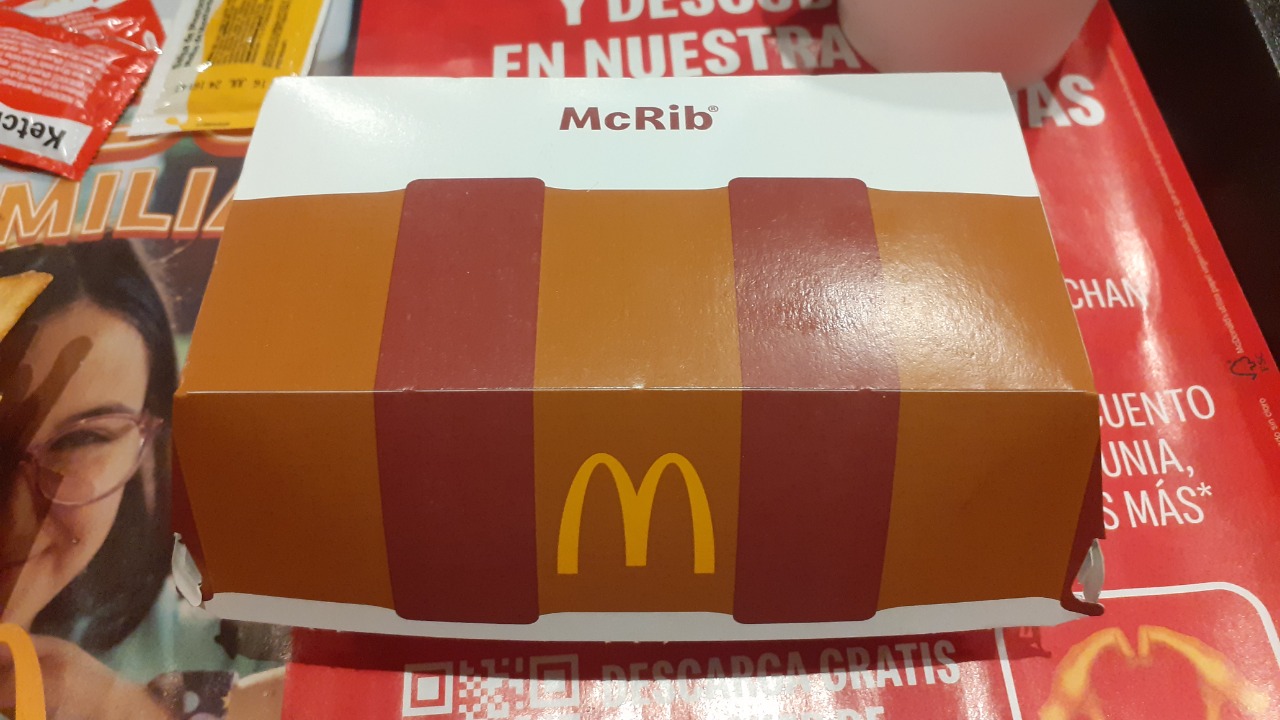

The cult-favorite McRib is back in the spotlight, and not for its limited-time hype. A new class action accuses McDonald’s of misleading customers by selling a sandwich called the McRib that allegedly contains no actual rib meat, despite its saucy, bone-shaped patty. At stake is more than one menu item: the case tests how far fast-food marketing can lean on suggestion and nostalgia before it crosses into what plaintiffs call outright deception.
The lawsuit argues that the Chicago-based chain built an entire brand around the idea of a rib sandwich while quietly relying on cheaper pork parts instead. McDonald’s, through McDonald’s USA, has already pushed back, calling the complaint inaccurate and insisting it is transparent about ingredients. I see a clash emerging between the emotional pull of a beloved product and a growing legal and cultural demand for literal truth in food advertising.
The class action that says the McRib has “no rib” at all
The case is framed as a federal class action that targets McDonald’s marketing of the McRib as a rib-based sandwich when, according to the complaint, the patty contains no meaningful quantity of rib meat. The filing argues that consumers are led to believe they are buying a rib sandwich because of the product’s name, its molded rib-like shape, and the way it is presented on menus and in ads, even though the patty is allegedly made from other pork cuts and organ meat instead of ribs. In the plaintiffs’ telling, the name “McRib” is not just clever branding but a misrepresentation that leaves customers “led to believe they’re getting rib meat when they are not getting any at all,” a claim detailed in the false advertising allegations.
The suit, filed in U.S. District Court in Chicago, positions McDonald’s corporate home as central to the dispute and accuses the Chicago-based company of deception on the grounds that the McRib has no rib meat. By bringing the case in District Court in Chicago and framing it as a nationwide class action, the plaintiffs are signaling that they see this as a systemic issue in how the sandwich is marketed, not a local misunderstanding. The complaint explicitly describes a “Lawsuit” against the Chicago operation and says McDonald’s does this despite knowing the sandwich “does not contain any meaningful quantity of actual pork rib meat,” a charge laid out in the Chicago-based complaint.
What the plaintiffs say is really inside a McRib
At the heart of the case is a blunt question: what is actually in the McRib patty. The plaintiffs say the answer is far from what the name implies. According to the lawsuit, the sandwich is made from a blend of pork heart, tripe, stomach, and other non-rib cuts that are processed and molded into a patty that looks like a small rack of ribs. The filing argues that this mixture is cheaper than true rib meat and that McDonald’s chose it to cut costs while still charging a premium price, a claim spelled out in detail in a filing that describes the McRib as containing pork heart, tripe, and stomach rather than ribs, as summarized in the What’s in a McRib description.
The complaint also leans on how McDonald’s itself describes the product. The company’s own materials describe the McRib as a seasoned boneless pork patty smothered in barbecue sauce and served on a bun with onions and pickles, language that, in the plaintiffs’ view, reinforces the impression of a deboned rib cut. The lawsuit counters that the patty is instead made from other pork cuts and organ meat, including heart, tripe, and stomach, and that this composition is not obvious to the average customer. That alleged gap between the company’s description and the patty’s actual ingredients is central to the claim that McDonald’s misleads customers about the type of meat used in the sandwich, a point echoed in a filing that says the patty “comes from other pork cuts” and organ parts, as laid out in the class action description of ingredients.
Who is suing McDonald’s, and what do they want
The plaintiffs are a group of consumers who say they bought the McRib believing it contained rib meat and would have acted differently if they had known otherwise. According to the complaint, Plaintiffs argue that had consumers known the sandwich contained no rib meat, they may not have purchased it or would have paid less for it, which is the classic economic harm theory behind many modern food-labeling suits. The proposed class includes customers from multiple states, and the filing notes that the McRib is “among the most expensive individual items” on the McDonald’s menu, which the plaintiffs say magnifies the financial impact of the alleged deception, a point underscored in a filing where Plaintiffs argue they would have changed their purchasing decisions.
The complaint identifies four consumers from California, New York, Illinois, and Washington, D.C., who say they were misled by the McRib’s name and presentation and now seek to represent a broader class of customers. They are asking the court for damages, restitution, and an order that would force McDonald’s to change how it markets the sandwich to prevent what they call future “deceptive marketing.” The plaintiffs also want the company to clarify the ingredients and composition of the patty so that customers can make informed choices, a request that aligns with a proposed class action in which consumers from California, New York, Illinois, and Washington, D.C., seek to stop what they describe as deceptive marketing practices, as outlined in the proposed class action suit.
How McDonald’s is defending the McRib
McDonald’s has not stayed silent. McDonald’s USA issued a statement calling the lawsuit inaccurate and saying that many of the claims distort the facts. The company argues that it provides ingredient information so customers can decide whether the McRib is the right choice for them and that its marketing does not promise specific cuts of meat beyond describing the patty as seasoned boneless pork. In its response, McDonald’s USA said the lawsuit “distorts the facts” and that many of the claims are inaccurate, a position laid out in a statement that defends the company’s transparency and ingredient disclosures, as reflected in the McRib lawsuit response.
In a separate statement, McDonald’s reiterated that it stands by the quality of its food and the accuracy of its menu descriptions, emphasizing that it lists ingredients across its entire menu and that customers can review them before ordering. The company framed the McRib as a seasoned boneless pork patty that has been appearing on and off the menu for decades, served on a bun with onions and pickles, and suggested that the lawsuit mischaracterizes both the product and its marketing. McDonald’s also stressed that it believes the class action is without merit and that it will vigorously defend itself, a stance echoed in a statement that says the company provides ingredient information so customers can decide if the McRib is the right choice for them, as described in a response to the class action.
Why this fight matters beyond one sandwich
For all the focus on pork heart and tripe, the McRib case is really about the line between clever branding and misleading claims in a fast-food industry that leans heavily on nostalgia and suggestion. The plaintiffs say the name “McRib” is a deliberate sleight of hand that capitalizes on the cultural cachet of ribs while delivering something else entirely, and they argue that McDonald’s does this despite knowing the sandwich does not contain any meaningful quantity of actual pork rib meat. That accusation goes to the heart of modern consumer protection law, which increasingly scrutinizes whether product names and imagery create a false impression, a concern captured in a filing that says “McDonald’s does this despite knowing” the patty lacks real rib meat, as detailed in the false advertising claims.
The case also lands at a moment when fast-food chains are facing a wave of litigation over everything from portion sizes to ingredient lists, and it could influence how aggressively companies lean on evocative names in the future. McDonald’s is already defending itself in a broader public conversation about transparency, with critics pointing to the McRib’s status as a limited-time, heavily marketed item that has been “popping” on and off the menu for years, while supporters note that the company publishes ingredient lists and nutritional information. The lawsuit’s framing of the McRib as “among the most expensive individual items” on the menu adds a pricing dimension that could resonate with judges and juries who are increasingly sensitive to perceived food-price gouging, a context that sits alongside descriptions of the McRib as a seasoned boneless pork patty on a bun with onions and pickles that has returned periodically over the years, as outlined in a broader look at the sandwich.
What comes next for McDonald’s and the McRib
Legally, the next steps will revolve around whether the court allows the case to proceed as a class action and how it interprets the gap between the McRib’s name and its ingredient list. McDonald’s is expected to argue that reasonable consumers understand that a fast-food sandwich called “McRib” is a branded product, not a butcher’s label, and that its disclosures are sufficient. The plaintiffs will counter that the combination of the name, the rib-shaped patty, and the marketing language crosses the line into deception, especially when the sandwich allegedly contains pork heart, tripe, and stomach instead of ribs, a dispute summarized in a briefing that describes how McDonald’s is being sued over claims that the McRib does not contain actual rib meat and that its marketing misleads consumers, as laid out in The Brief on the lawsuit.
Whatever the outcome, the case is likely to reverberate through the fast-food world, where products like the McRib are as much about story as substance. If the plaintiffs succeed, chains may be pushed to retire or rebrand items whose names lean too heavily on cuts of meat or ingredients they do not actually contain, or to add clarifying language that spells out what is in the patty or nugget in question. Even if McDonald’s ultimately prevails, the scrutiny alone may nudge companies to tighten their labels and marketing copy, especially for high-profile, limited-time offerings that command premium prices and intense fan attention, a dynamic already visible in coverage that notes how McDonald’s released statements after the lawsuit and how the McRib’s marketing has drawn national focus from cities like Chicago, New York, and Washington, D.C., as reflected in a report on how Stream NBC covered the company’s response.
More from Morning Overview