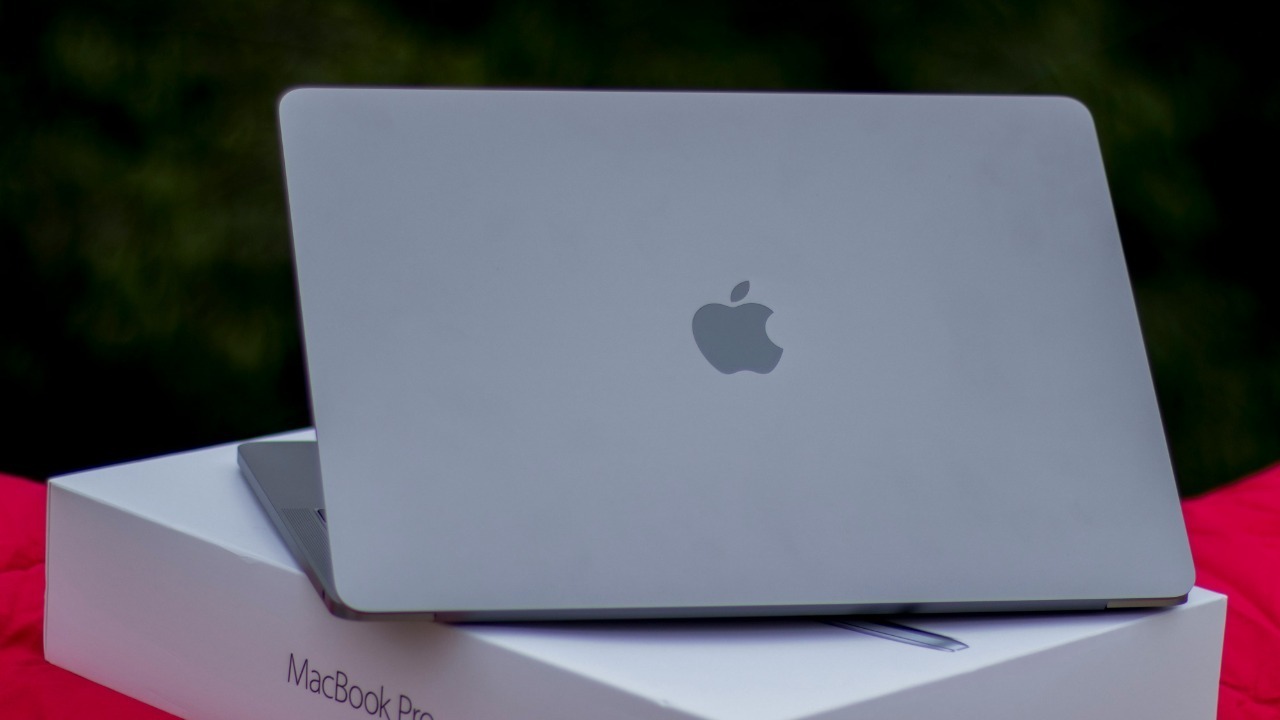

Apple’s MacBook Pro has become a shorthand for “serious laptop,” but its price now pushes a lot of buyers to the sidelines. The good news is that several rival machines, and even some of Apple’s own hardware, deliver comparable performance, premium screens, and long battery life for less money. If the MacBook Pro is out of reach, there are at least four compelling alternatives that can handle creative work, coding, and everyday productivity without wrecking your budget.
I am looking at options that either undercut the MacBook Pro on price, or offer more flexibility and upgradability for similar money, while still feeling like a long‑term investment. From slim Windows ultrabooks to modular designs and a more affordable Mac, the current crop of laptops gives you real leverage to walk away from Apple’s flagship and still get a machine that feels fast and modern.
Why the MacBook Pro feels overpriced right now
The MacBook Pro has always been a premium device, but the gap between its price and what you can get elsewhere has widened. Windows manufacturers now ship thin, metal‑clad laptops with high refresh displays, strong processors, and solid battery life that directly target Apple’s audience at lower starting prices. Reporting on cheaper options notes that several of these machines now compete head‑on with the MacBook Pro’s performance profile while trimming hundreds of dollars off the bill.
At the same time, Apple’s own lineup has blurred the value proposition. The MacBook Air, especially in its latest form, delivers enough power for photo editing, light video work, and software development, which used to be the MacBook Pro’s exclusive territory. One analysis of cheaper alternatives explicitly calls out the MacBook Air as a more affordable way into macOS for people who do not need the absolute top tier of performance. When your own midrange model is “good enough” for most users, the premium you pay for the Pro starts to look like a tax on peace of mind rather than a necessity.
MacBook Air: the cheaper Mac that covers most people’s needs
If you like macOS and Apple’s ecosystem, the most straightforward way to save money is to skip the Pro and buy a MacBook Air. The Air has evolved from a travel‑only machine into a genuinely capable daily driver that can handle browser‑heavy workflows, office suites, and creative apps like Lightroom or Logic for many users. In coverage of cheaper MacBook Pro alternatives, the Air is singled out as a cheaper starting point that still feels like a premium Apple laptop, with the same tight integration with iPhone and iPad and the same access to pro‑grade software.
The trade‑offs are real but manageable. You typically get fewer ports, slightly lower sustained performance under heavy, prolonged loads, and less headroom for things like 8K video timelines or massive 3D scenes. For a lot of buyers, that is a fair compromise for a lower entry price and a lighter chassis. When I weigh the options, the MacBook Air looks like the default choice for students, writers, and even many developers who want Apple hardware but cannot justify MacBook Pro pricing, especially when other reporting notes that several of the non‑Apple competitors are now matching Pro‑level performance anyway.
ASUS Vivobook S 15: the Windows all‑rounder that feels like a MacBook rival
On the Windows side, the ASUS Vivobook S 15 has emerged as one of the clearest MacBook Pro stand‑ins. It is pitched as a slim, metal‑finished laptop with enough power for creative work, coding, and multitasking, but at a price that undercuts Apple’s flagship. One breakdown of cheaper MacBook Pro rivals highlights the ASUS Vivobook S 15 as a Windows‑based alternative that behaves a lot like the MacBook Pro in day‑to‑day use, with strong performance across a number of applications and a design that does not feel like a compromise.
Independent laptop roundups echo that positioning. A separate guide to people who cannot afford a MacBook Pro names the ASUS Vivobook S15 (S5507) as the best MacBook Pro alternative overall, citing its balance of CPU power, display quality, and portability. When I look at that combination, the Vivobook S 15 stands out as the machine for users who want a MacBook‑style experience but are comfortable in Windows: you get a modern processor, a bright screen suitable for design work, and a chassis that looks at home in a studio or office, all while keeping the price in check compared with Apple’s Pro line.
Lenovo Yoga 9i 2‑in‑1 (Aura Edition): premium flexibility for less
Convertible laptops have matured into serious productivity tools, and Lenovo’s Yoga line is a prime example. The Lenovo Yoga 9i 2‑in‑1 (Aura Edition) is positioned as a top‑tier Windows laptop that can flip into tablet mode, tent mode for watching video, or stand mode for presentations, without giving up the performance you would expect from a traditional clamshell. In a broad survey of current machines, the Lenovo Yoga 9i 2‑in‑1 (Aura Edition) is listed as the best laptop overall, which is a strong signal that you are not settling for second best just because you are avoiding a MacBook Pro.
What makes the Yoga 9i compelling as a MacBook alternative is the combination of premium build and versatility. You still get a sharp display, a responsive keyboard, and enough horsepower for creative apps, but you also gain pen support and multiple usage modes that Apple’s laptops simply do not offer. For illustrators, note‑takers, or anyone who likes to mark up documents directly on screen, that flexibility can be more valuable than a marginal performance edge. When I compare it with Apple’s lineup, the Yoga 9i 2‑in‑1 (Aura Edition) feels like a way to get a “best in class” laptop that also doubles as a tablet, without paying MacBook Pro prices.
Framework Laptop 13 (2025): a modular answer to Apple’s sealed design
One of the biggest frustrations with the MacBook Pro is how little you can change after purchase. Storage and memory are soldered, repairs are tightly controlled, and you are effectively locked into whatever configuration you could afford on day one. The Framework Laptop 13 (2025) takes the opposite approach, with a modular design that lets you swap ports, upgrade components, and repair parts yourself. In the same overview that praises the Lenovo Yoga 9i, the Framework Laptop 13 (2025) is also reviewed, underscoring that this is not a niche experiment but a serious contender in the broader laptop market.
From a value perspective, that modularity changes the math. Instead of paying a premium for maximum storage or RAM up front, you can start with a more modest configuration and upgrade as your needs grow or as prices fall. For developers, tinkerers, and sustainability‑minded buyers, the ability to replace a keyboard, battery, or even the mainboard without discarding the entire machine is a powerful argument against the MacBook Pro’s sealed chassis. When I factor in the long‑term cost of ownership, a repairable and upgradable laptop like the Framework 13 can end up cheaper over a five‑year span than a MacBook Pro that has to be replaced outright when it no longer keeps up.
Dell and other Windows ultrabooks: Pro‑level power at midrange prices
Beyond headline models like the Vivobook and Yoga, a wave of Windows ultrabooks now target the same creative and professional crowd as the MacBook Pro. Dell’s premium lines, in particular, have been tuned to compete directly with Apple on performance, display quality, and build, while often starting at lower prices. Coverage of cheaper MacBook Pro alternatives notes that the Dell Pro now competes with the MacBook Pro in both performance and design, which reflects how aggressively PC makers have moved into this space.
These machines typically offer high‑resolution displays, modern CPUs, and fast SSDs, with configurations that start at 256 GB of storage and scale up from there. One breakdown of alternatives points out that a Dell model with a 256 GB SSD can serve as a capable daily driver for creative work, while still undercutting Apple’s pricing on comparable storage tiers, with the capacity of 256GB highlighted as a baseline. When I look across the Windows ecosystem, the pattern is clear: you can now get MacBook Pro‑like specs, including thin designs and strong performance, in multiple brands and form factors without paying Apple’s premium.
Apple’s own roadmap: a cheaper A18 Pro MacBook and sub‑$1,000 model
Ironically, Apple itself seems to recognize that MacBook Pro pricing leaves a gap in the market. According to reporting on upcoming hardware, Apple is expected to launch an A18 Pro MacBook device in 2026 that targets a lower price tier. One leak, attributed to Apple planning, suggests this A18 Pro MacBook would arrive amidst an ongoing memory crisis and at a price point lower than the MacBook Air, which would mark a significant shift in Apple’s laptop strategy.
Separate reporting outlines an even more aggressive move: a MacBook under 1,000 dollars aimed at competing directly with Chromebooks in education and budget‑conscious markets. That roadmap describes Apple planning a sub‑$1,000 MacBook alongside higher‑end MacBooks, including an updated MacBook Air and Pro with M5 chips and a MacBook with an OLED display targeted for late 2026 or 2027. If those devices materialize, they will not just pressure Windows rivals, they will also undercut the current MacBook Pro from within Apple’s own lineup, reinforcing the idea that you do not need to spend Pro money to get a capable Mac.
How to choose among the four main alternatives
With so many credible options, the real challenge is matching a laptop to your workflow and budget. If you are locked into macOS apps or rely heavily on features like AirDrop and iCloud Keychain, the MacBook Air is the most straightforward way to save money while staying in Apple’s world, and future devices like the A18 Pro MacBook or a sub‑$1,000 MacBook could push prices even lower if you are willing to wait. For users who are platform‑agnostic, the ASUS Vivobook S 15 and Lenovo Yoga 9i 2‑in‑1 (Aura Edition) offer premium Windows experiences that rival or surpass the MacBook Pro in flexibility, with the ASUS Vivobook S15 (S5507) even being described as the best MacBook Pro alternative overall.
If long‑term value and repairability matter most, the Framework Laptop 13 (2025) stands apart. Its modular design, highlighted alongside the Best laptop overall, lets you extend the life of your machine in ways that Apple’s sealed MacBook Pro simply cannot match. Meanwhile, Dell’s Pro‑class ultrabooks and similar Windows machines give you yet another path to MacBook‑level performance at midrange prices, with configurations like a 256 GB SSD already positioned as practical daily drivers. When I step back and look at the landscape, the pattern is clear: the MacBook Pro is no longer the only serious option for demanding users, and in many cases it is not even the smartest buy.
What the generic product listings tell us about pricing pressure
Beyond the headline models, a quick scan of mainstream laptop listings shows how crowded the midrange has become. Multiple configurations now bundle modern processors, solid‑state storage, and high‑resolution displays at prices that undercut Apple’s Pro line, which puts constant pressure on what counts as “good value.” Generic product entries, such as one detailed product listing, show how features that were once reserved for high‑end machines have filtered down into more affordable tiers.
Other catalog entries reinforce the same trend. One product page highlights how even midrange laptops now ship with fast SSDs and modern CPUs, while another product listing underscores how varied the configurations have become. Additional catalog entries, such as a separate product and another product entry, illustrate just how many choices sit between budget Chromebooks and high‑end MacBook Pros. When I factor in that breadth of competition, it becomes even harder to justify paying top dollar for Apple’s Pro unless you have a very specific need that only it can meet.
More from MorningOverview