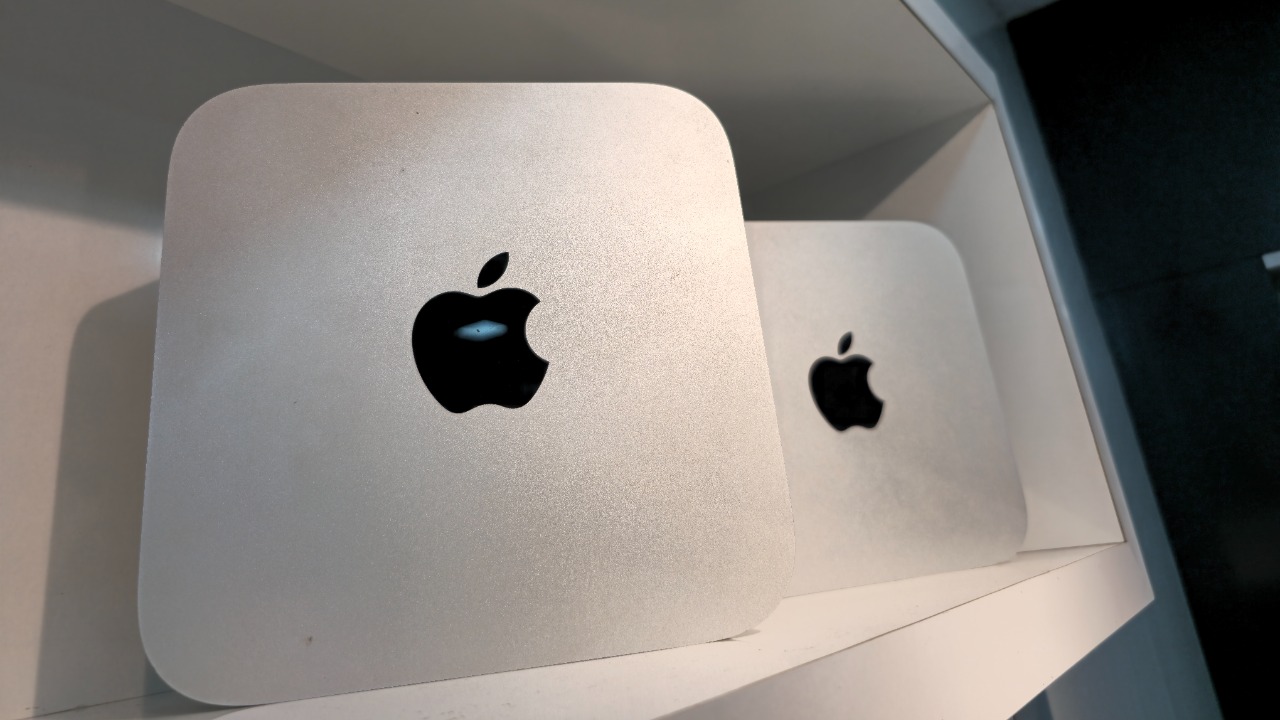

The next Mac mini looks set to be more than a routine refresh, with a wave of M5 leaks pointing to a desktop that leans harder into performance, efficiency, and pro‑grade workflows. Early identifiers, chip rumors, and timing chatter all suggest Apple is preparing a substantial internal overhaul that keeps the familiar box but changes what it can realistically replace on a desk. If the current trajectory holds, the M5 generation could shift the Mac mini from “entry desktop” to a far more central role in Apple’s Mac strategy.
What the latest M5 Mac mini leak actually tells us
The clearest sign that the M5 Mac mini is real comes from internal identifiers that have started to surface for upcoming Macs. People familiar with Apple’s test hardware have pointed to a Mac with the identifier J873s, described as part of an M5 family that is expected to launch in a coordinated wave, and that detail lines up with how Apple has historically staged its silicon rollouts across desktop and laptop lines. As the current M4 Pro Mac has already moved the bar for performance and efficiency, the appearance of a new code name in that same internal catalog strongly suggests the next step is an M5‑equipped desktop that follows the same pattern of incremental but meaningful chip advances anchored to specific model numbers, rather than a speculative one‑off.
Those identifiers matter because they have quietly preceded every Mac release through 2026 in internal databases, and the J873s label now sits alongside other machines that are already known to be in development, which gives this leak more weight than a stray rumor. When I look at how these product identifiers have lined up with shipping Macs in the past, the pattern is consistent enough that treating J873s as an early M5 Mac mini prototype is reasonable, even if Apple has not confirmed the name or final configuration. Unverified based on available sources are any claims about exact core counts or GPU units, but the existence of the identifier alone is a strong signal that Apple is already testing desktop hardware around the next‑generation chip.
Release timing: early 2026 or a summer wait?
For buyers trying to decide whether to grab an M4 Mac mini or hold out, the biggest practical question is when the M5 version will actually arrive. Discussion among Mac mini owners has focused on whether Apple will push the new desktop out in early 2026 or hold it for a summer window, with some users explicitly weighing that timing against the M4 model that arrived in November 2024. One detailed thread lays out key details regarding the M5 Mac mini, citing Bloomberg News and other reports, and frames the debate around whether Apple wants to keep a roughly 18‑month cadence between major chip generations or stretch the cycle to give the M4 more time in the spotlight.
In that conversation, the user Dec highlights “Key details regarding the M5 Mac mini, as reported in the Bloomberg News and other reports,” and zeroes in on “Release Timing” as the hinge for upgrade decisions, especially for people who skipped the M2 and M2 Pro machines. The same thread notes that the M4 model in November 2024 reset expectations for how quickly Apple could move its desktop chips forward, which is why some now expect an earlier 2026 follow‑up, while others are bracing for a later summer slot that lines up with broader M5 family launches. I see that tension clearly in the Mac mini timing debate, and until Apple sets a date, the only safe conclusion is that the window runs from the first half of 2026 into mid‑year, not earlier.
Chip expectations: how big a leap is M5 over M4?
Even without official specifications, the move from M4 to M5 is widely expected to be the single biggest upgrade for the 2026 Mac mini. One detailed breakdown of the upcoming desktop describes the “biggest and most notable upgrade” as the shift from the M4 to the M5 generation, with the clear implication that Apple will use the new silicon to push both raw performance and efficiency. In that analysis, the presenter Dec frames the 2026 Mac Mini as a “value king” precisely because the M5 chip should inherit architectural gains from the broader M5 family, including faster CPU cores, more capable integrated graphics, and improved neural processing for on‑device machine learning tasks.
From my perspective, the most important part of that argument is not a specific benchmark claim, which remains unverified based on available sources, but the way it positions the Mac mini as the most affordable way to access the full M5 desktop experience. If Apple repeats its usual pattern, the base M5 Mac mini will share core technology with more expensive laptops and all‑in‑one machines, which means buyers could get the same generation of chip in a cheaper box that they can pair with any display. That is why the framing of the M5 Mac Mini as a “value king” in the 2026 Mac Mini preview resonates: it captures how a relatively modest chassis can become a serious workstation once the internal silicon jumps a full generation.
M5 Pro and the push toward pro‑grade workflows
The leaks do not stop at a single M5 configuration, and that is where the story gets more interesting for creative and technical users. Reporting on Apple’s 2026 desktop roadmap indicates that the company plans to release Mac mini models with both M5 and M5 Pro chips, following the same split that currently separates entry‑level and higher‑end versions of the machine. In that view, the standard M5 would target everyday productivity, light creative work, and general home use, while the M5 Pro variant would be tuned for heavier workloads like 4K video editing in Final Cut Pro, large Logic Pro sessions, and multi‑monitor setups that lean on more GPU bandwidth.
That dual‑chip strategy would keep the Mac mini aligned with the rest of the Mac lineup, where Pro‑branded silicon has become the default for users who need more memory bandwidth and additional performance cores. I see a clear throughline in the way one detailed overview describes Apple’s plan to make the 2026 Mac mini “a mighty machine,” with the M5 Pro configuration effectively turning the tiny desktop into a compact alternative to larger towers for many studios and small businesses. If Apple follows through on that plan, as outlined in the 2026 Mac mini M5 and M5 Pro roadmap, the gap between the mini and more expensive desktops could narrow even further, especially for users who already own high‑quality external displays.
Design: familiar box, refined internals
Anyone hoping for a radical new look is likely to be disappointed, because the most credible leaks so far point to a conservative approach on the outside. One detailed report on Apple’s internal testing says that for those hoping for a new look, it is anticipated that the M5 generation Mac mini will not feature significant design changes, and that a redesign of the chassis is not on the cards. Instead, the focus appears to be on refining what sits inside the existing aluminum shell, which has already proven itself in terms of thermals, port layout, and compatibility with everything from studio monitors to compact VESA mounts.
From a practical standpoint, I think that is a sensible trade‑off, because it lets Apple concentrate on cooling and power delivery for the new chips without forcing users to buy new accessories or adjust their setups. The same report that mentions the lack of a major redesign also highlights that Apple is testing Mac mini hardware with both M5 and M5 Pro chips, which suggests the company is confident the current chassis can handle the thermal load of the new silicon. That aligns with Apple’s long‑standing emphasis on energy efficiency and environmental performance in its desktops, a theme that dates back to earlier Mac announcements and is echoed in official language about how its designs balance performance with power use. The expectation of a stable exterior and upgraded internals is laid out clearly in the leaked identifiers for the new Mac, which frame the M5 mini as an evolution rather than a visual reboot.
How the M5 mini fits into Apple’s broader Mac strategy
To understand why Apple might be content to keep the Mac mini’s design steady while overhauling its internals, it helps to look at how the company has historically positioned its desktops. In earlier product cycles, Apple has described its Macs as combining “stunning design” with “brilliant display” technology and faster performance, while also stressing that its notebooks and desktops are designed with energy efficiency and environmental impact in mind. That philosophy is reflected in official materials that direct users to the Mac mini’s feature pages for more information, and in a prominent Claim that Apple’s machines meet specific energy efficiency categories and product environmental performance standards.
I see the M5 Mac mini as a continuation of that strategy, where the small desktop serves as a flexible anchor for users who want Apple silicon performance without committing to an all‑in‑one display or a laptop form factor. By keeping the chassis familiar and focusing on a new chip generation that should deliver better performance per watt, Apple can reinforce its narrative about efficient, powerful desktops while also giving developers, small studios, and home users a relatively affordable entry point into the latest Mac ecosystem. The company’s own language about energy efficiency and environmental performance in its desktop Claim suggests that any M5 upgrade will be framed not just as faster, but as a smarter use of power in a familiar package.
Why upgraders and tinkerers are watching closely
The Mac mini has always had a special place among users who like to stretch their hardware, and the M5 generation is unlikely to change that dynamic even if internal upgrades remain locked down. Enthusiast guides that walk people through getting more life out of older Macs often point to the Mac Mini page as a starting point for exploring all the possible upgrades, including RAM, storage, and external accessories. One such guide explicitly says, “Maybe you want to see all the possible upgrades, including RAM, start on our Mac Mini page,” which captures how the mini has become shorthand for a machine that can be tailored with external gear even when its internal components are soldered.
From my vantage point, that culture of tinkering is exactly why leaks about the M5 Mac mini attract so much attention: people are not just thinking about the base configuration, they are imagining how it will behave once paired with fast external SSDs, Thunderbolt docks, and high‑refresh‑rate monitors. Even if Apple keeps the internal memory and storage fixed at purchase, the combination of a more powerful chip and the mini’s flexible port layout will give power users plenty of room to build out custom setups. The ongoing focus on “Maybe” exploring every possible upgrade path, especially around RAM and external expansion, in resources like the Mac Mini upgrade guide shows how the community is already primed to push whatever M5 hardware Apple ships to its limits.
Signals from the wider M5 ecosystem
The Mac mini does not exist in isolation, and the broader M5 ecosystem leaks help frame what to expect from the smallest desktop. People tracking Apple’s internal test matrix have noted that the M5 family is expected to launch across multiple Macs, with identifiers like J873s sitting alongside other machines that will share the same silicon generation. As the current M4 Pro Ma class of devices has already demonstrated, Apple tends to roll out new chips in waves that touch both portable and desktop hardware, which means the M5 Mac mini will likely arrive as part of a coordinated push rather than a lone announcement.
That context matters because it suggests the M5 mini will benefit from the same software optimizations and developer attention that follow any major chip launch, from updated versions of Xcode to pro apps that tap into new GPU and neural engine capabilities. I read the references to Jul, People, Apple, Mac, As the, and Pro Ma in the internal reporting as a reminder that the Mac mini is one node in a larger network of M5 devices, all of which will shape how quickly developers adopt new APIs and performance features. The way those M5 family identifiers cluster around a shared launch window reinforces the idea that the mini’s upgrades will be part of a platform‑wide shift, not a niche experiment.
Why the “value king” label matters for buyers
When commentators describe the upcoming M5 Mac Mini as a “value king,” they are tapping into a specific kind of buyer calculus that has defined the product for years. The idea is simple: if Apple delivers the same M5 and M5 Pro silicon found in more expensive Macs inside a relatively inexpensive desktop, then the mini becomes the most cost‑effective way to access that performance, especially for people who already own a good monitor and keyboard. In one detailed video analysis, the presenter Dec leans into that framing, arguing that the 2026 Mac Mini will be the standout option for users who want M5 power without paying for a laptop battery or an integrated display.
I think that label matters because it shapes how people plan their budgets and upgrade paths over multiple years. A freelancer who edits 4K footage in DaVinci Resolve, for example, might pair an M5 Pro Mac mini with an existing 27‑inch display and a fast external SSD, rather than buying a more expensive all‑in‑one. That kind of scenario is exactly what drives interest in the M5 Mac Mini “value king” discussion, where the focus is less on flashy design changes and more on how much performance per dollar the new chip generation can deliver in a compact box.
The remaining unknowns and what to watch next
For all the detail in the current leaks, several important questions about the M5 Mac mini remain unanswered. Storage tiers, RAM ceilings, and exact GPU configurations are still unverified based on available sources, and Apple’s recent history of tying certain features to higher‑end models means buyers will need to pay close attention once official specs arrive. There is also the open question of whether Apple will adjust pricing in light of broader economic conditions and component costs, or hold the line to keep the mini firmly in “value” territory relative to MacBook Pro and iMac configurations.
In the meantime, the most reliable signals will continue to come from internal identifiers, supply chain hints, and coordinated reporting on the wider M5 family. New reports and insider leaks have already suggested that Apple’s smallest desktop might not arrive until mid‑2026, with the reason being a desire to align the Mac mini with other M5 launches rather than rushing it out on its own. I will be watching for any shift in that narrative, especially if additional identifiers surface or if production timelines tighten. For now, the best guide to Apple’s thinking is the pattern described in the New reports and insider leaks, which frame the M5 Mac mini as a carefully timed piece of a larger 2026 Mac puzzle rather than a standalone curiosity.
What this means for anyone buying a Mac mini today
All of this leaves current buyers in a familiar but tricky spot: buy now, or wait. If you need a desktop immediately for work, studies, or creative projects, the M4 Mac mini that arrived in November 2024 is still a strong machine, and there is no guarantee that the M5 version will land early enough in 2026 to justify months of delay. On the other hand, if your current setup is holding up and you can afford to wait, the combination of M5 and M5 Pro options, a likely focus on efficiency, and the absence of a major chassis redesign suggest that patience could be rewarded with a more capable machine that drops into the same physical footprint.
In my view, the smartest approach is to treat the M5 Mac mini as the next logical step in a product line that has consistently punched above its weight, rather than as a radical reinvention that will make current models obsolete overnight. The leaks around identifiers like J873s, the emphasis on M5 and M5 Pro chips, and the expectation of a stable design all point to a desktop that refines a proven formula instead of discarding it. For anyone comparing configurations or browsing a generic Mac mini product listing, the key is to weigh how urgently you need a machine today against how much you value being on the leading edge of Apple’s silicon roadmap when the M5 mini finally arrives.
More from Morning Overview