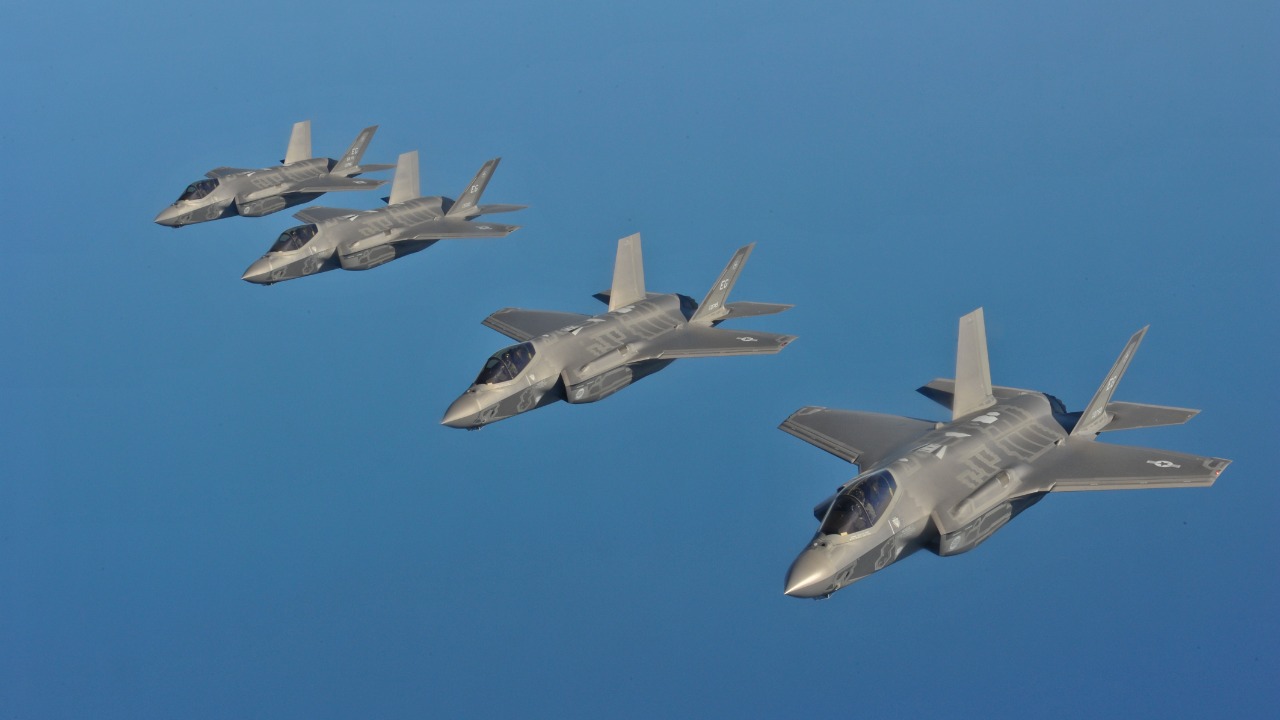

Lockheed Martin has pushed the F-35 program into a new phase of maturity, closing 2025 with a record 191 aircraft delivered to customers around the world. That figure is more than a production milestone, it signals how deeply the fifth generation fighter is now embedded in allied airpower planning and how quickly the industrial base has been forced to adapt. As global tensions sharpen and air forces look for long term deterrence, the scale and pace of these deliveries are reshaping expectations for what modern combat aviation can provide.
The 191 figure also caps a year in which the F-35 moved from being a controversial acquisition story to a workhorse of day to day operations and planning. With Nearly 1,300 jets now in service and more nations bringing the aircraft into frontline squadrons, the program has shifted decisively from development drama to questions about sustainment, upgrades, and long term affordability.
From backlog to record output
The most striking aspect of the 191 deliveries is how quickly Lockheed Martin ramped up from earlier production ceilings while clearing a backlog that had built up during previous years of software delays and quality holds. Company figures show that annual F-35 production has climbed to this new level as part of a broader effort to stabilize the line and keep Nearly 1,300 aircraft operational across 12 countries, a scale that would have been hard to imagine when the jet first entered service worldwide. The 191 total is now the benchmark against which future years will be judged, and it reflects a deliberate push to normalize high tempo output rather than treat 2025 as a one off surge.
That surge is even more notable when set against the previous high of 142 jets, a record that stood until the latest ramp up. The new delivery total greatly exceeds that 142 mark, helped by a wave of aircraft that had been built but not yet handed over while software and certification issues were resolved, and by customers who had already budgeted for the jets and were pressing to receive them on time. In practical terms, that meant the production line in FORT WORTH was not just building new aircraft but also pushing stored airframes through final acceptance, a dual track effort that tested both the workforce and the broader supply chain.
Global demand and European milestones
The record output is inseparable from the surge in global demand that has turned the F-35 into the default choice for many allied air forces. Lockheed Martin has framed the 191 deliveries as a response to rising orders from both long standing partners and newer customers, with European states in particular accelerating their transition plans as they look to replace aging fourth generation fleets across the continent. For those governments, the F-35 is not just another fighter purchase, it is a political and strategic signal about alignment with the United States and the broader NATO architecture.
Within Europe, several air forces hit symbolic milestones as their first locally based squadrons stood up and pilots completed conversion training on the Lightning II. Lockheed Martin has highlighted how these European achievements sit within a wider Record year of 191 deliveries, arguing that the program has moved beyond early teething problems into a phase where Comba readiness and interoperability are the primary focus for partners. As more European bases receive jets and supporting infrastructure, the F-35 network across the region is beginning to look less like a collection of national programs and more like a shared, distributed capability.
Operational maturity and combat credibility
Production numbers only matter if the aircraft are proving their worth in real operations, and 2025 was also the year in which the F-35’s combat record became a central part of Lockheed Martin’s narrative. Company statements have stressed that as warfighters continue to employ the jet to protect the interests of America and its allies around the world, the platform’s mix of stealth, sensors, and data fusion is no longer theoretical but part of daily mission planning for deployed units. That operational credibility has helped blunt some of the long running criticism about cost and complexity, even as sustainment debates continue.
Lockheed Martin’s own messaging has leaned heavily on the idea that the F-35 Breaks Delivery Record, Continues Combat Success, tying the 191 figure directly to a narrative of battlefield performance and reliability across theaters. From my perspective, that linkage is deliberate, it positions the jet not just as a procurement story but as a proven asset that justifies continued investment even as budgets tighten and competing priorities, from drones to hypersonic weapons, crowd the agenda.
Contracts, lots, and the industrial base
Behind the headline delivery figure sits a complex web of contracts and production lots that will shape the F-35 enterprise for years. In September, the F-35 Joint Program Office and Lockheed Martin reached final agreement on Lots 18 and 19, a deal that locks in pricing and quantities for a significant tranche of future aircraft and gives suppliers clearer visibility on demand across the chain. That agreement is central to sustaining the tempo that produced 191 jets in 2025, since it underpins investments in tooling, workforce, and long lead components.
Lockheed Martin has also emphasized that the F-35 Breaks Delivery Record, Continues Combat Success message is tied to a broader industrial strategy that keeps FORT WORTH, Texas at the heart of the program while also relying on international final assembly and component production for key partners. From my vantage point, the Lots 18 and 19 framework is as important as the 191 figure itself, because it signals that the program is settling into a predictable rhythm that suppliers and governments can plan around, rather than lurching from one annual negotiation to the next.
Program perception and future trajectory
The narrative around the F-35 program has shifted noticeably as 2025’s results have filtered through the defense community. Where critics once focused almost exclusively on cost overruns and delays, customers now point to continued confidence in the jet and the way their air forces are reshaping tactics around its capabilities, including the ability to network with older platforms and unmanned systems across mixed fleets. That does not erase the program’s history, but it does mean the debate is now more about how to optimize a fielded capability than whether the aircraft should have been bought at all.
Public facing messaging has mirrored that shift, with official channels declaring that 2025 raised the bar with a record 191 F-35s delivered, milestones exceeded, and operational capability proven in multiple regions over the year. I see that framing as part celebration and part signaling to future buyers that the program has turned a corner, inviting them to join a club that now includes air forces from Florida Air National Guard units to new European operators who are already flying Fighters in frontline roles around the globe.
Why 191 matters beyond the headline
For all the focus on the raw number, the 191 deliveries matter most because they crystallize how the F-35 has become a central pillar of allied airpower planning. Lockheed Martin Delivered Record output in a year when geopolitical risk was rising, and the fact that 35 partner and customer fleets are now converging on a common platform gives the United States and its allies a level of interoperability that older, more fragmented fighter inventories could not match in previous eras. That shared baseline will shape everything from joint exercises to munitions stockpiles and software upgrade cycles.
The record year has also been framed as a program level achievement, with the F‑35 programme setting a new record with 191 jets delivered in 2025 and reinforcing Lockheed Martin’s argument that the aircraft offers unmatched reliability and lethality for customers who commit to the long haul of ownership. As I look at the trajectory, the key question is no longer whether the F-35 will dominate allied fighter fleets, that outcome is effectively locked in, but how efficiently the program can sustain and upgrade Nearly 1,300 and counting aircraft while keeping both taxpayers and front line pilots convinced that the jet remains worth the investment.
Supporting sources: Lockheed Martin Delivered.
More from Morning Overview