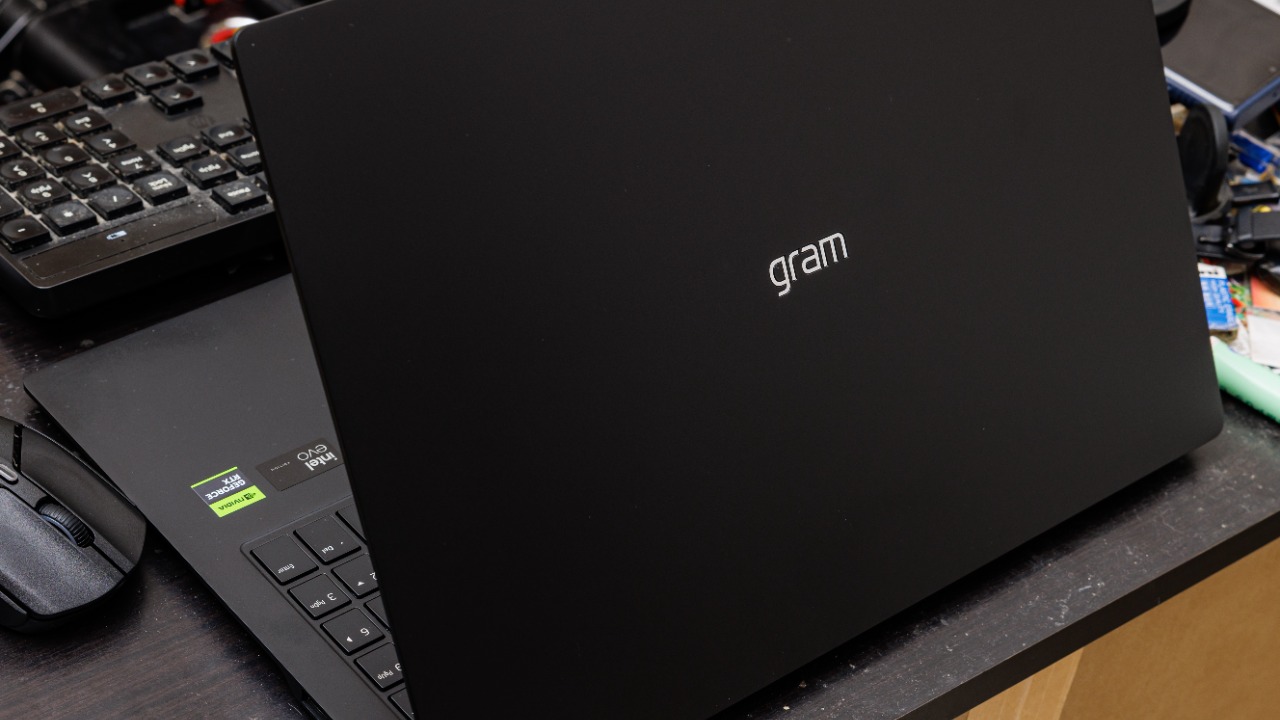

The 2026 LG gram family arrives with a clear mission: use exotic materials and aggressive weight savings to challenge the MacBook Air’s grip on the thin‑and‑light laptop market. LG is leaning on a new Aerominum chassis, dual AI features, and a spread of sizes that stretch from ultraportable clamshells to RTX‑equipped 17‑inch machines, all aimed at people who want Air‑like portability without living inside Apple’s ecosystem.
Instead of chasing Apple on branding or ecosystem lock‑in, LG is trying to win on physics and flexibility, promising some of the lightest full‑size laptops available while still offering discrete graphics, more ports, and Windows‑first AI features. The question is whether those material and design bets are enough to pull buyers away from the familiar comfort of the MacBook Air.
LG’s 2026 Gram strategy: lighter than light, broader than Air
LG is not treating the 2026 refresh as a minor spec bump, it is positioning the new gram lineup as a statement about what an ultraportable Windows laptop can be. The company is expanding the family into distinct ranges, including the LG gram Pro 16 and the LG gram Pro 17, and is explicitly targeting users who want extreme portability without giving up screen size or performance. In official materials, LG describes the 17Z90UR as “The World’s Lightest 17-inch RTX Laptop,” a claim that underscores how central weight is to the brand’s identity in 2026.
That strategy is backed up by a full slate of models that will be shown at CES, where LG Electronics plans to present the 2026 LG gram lineup as an evolution of its long pursuit of portability and performance. The company highlights that the LG gram Pro 17 packs the performance of a 17‑inch RTX laptop into a chassis that still qualifies as ultra‑light, and it frames the entire range as the latest step in a “long pursuit of ultimate portability” for the gram series, including the 17Z90UR and its RTX configuration.
Aerominum: the aerospace material at the heart of LG’s bet
The most striking change in 2026 is LG’s adoption of Aerominum, a next‑generation material that the company says is commonly used in the aerospace industry. By moving key gram Pro models to this alloy, LG is trying to solve the classic ultraportable dilemma: how to keep weight down without sacrificing rigidity or thermal headroom. The Gram Pro series is explicitly described as using Aerominum, which signals that LG sees this as a flagship differentiator rather than a quiet internal tweak.
LG’s own description of Aerominum emphasizes both strength and lightness, and it ties the material directly to the gram Pro 16 and gram Pro 17 designs. The company notes that the 2026 LG gram lineup is “elevated by Aerominum,” and that the LG gram Pro 16 in particular is built around this chassis to deliver a combination of low weight and high performance that is meant to stand out in the Windows market. In its global newsroom, LG Electronics presents Aerominum as a core part of the gram identity for 2026, positioning the LG gram Pro 16 as a showcase for the material.
Dual AI and Exaone: LG’s answer to Apple’s on‑device smarts
Apple has been steadily weaving more intelligence into macOS and its own silicon, and LG is responding by putting AI front and center in the 2026 gram Pro range. The company is talking about “dual AI” in the LG gram Pro 16 and other select models, combining local capabilities with cloud‑based intelligence. That dual approach is meant to give users both quick, on‑device assistance and more powerful remote processing when they are connected, a structure that mirrors how many modern productivity and creative tools already work.
LG is also tying the new laptops to its Exaone AI and a platform it calls LG Grambook AI, which are described as part of the experience on the upcoming gram machines. Reporting on the CES plans notes that the Gram Pro series will feature this next‑generation material Aerominum alongside Exaone AI and LG Grambook AI, suggesting that LG sees AI and materials science as twin pillars of the 2026 lineup. In separate coverage, LG is said to be introducing “dual-AI” functionality in the LG gram Pro 16 and other models, reinforcing that AI is not a side feature but a defining part of the Pro story.
Gram AI Pro and the direct challenge to MacBook Air
LG is not being coy about its target. Coverage of the 2026 range makes clear that the company “plans to take on the MacBook Air in 2026,” with a particular focus on a model called the Gram AI Pro. That machine is described as having “serious Air vibes,” including a slim profile and a design that looks like a 16‑inch format, which puts it squarely in the same conversation as Apple’s 13‑ and 15‑inch MacBook Air models. The intent is obvious: offer something that feels as light and refined as an Air but runs Windows and leans on LG’s own AI stack.
Under the hood, LG is equipping these laptops with the latest Intel Core Ultra processors, a detail that matters because Intel is also pushing AI acceleration on its new chips. Reports on the Gram AI Pro note that LG is claiming “the latest Intel Core Ultra” processors for the range, although the exact SKUs are not spelled out, and that the design is meant to appeal to people who like the MacBook Air’s thinness but want a different operating system or port selection. The same coverage emphasizes that LG is explicitly framing the Gram AI Pro as a rival to the MacBook Air, not just another Windows ultrabook.
RTX power in a featherweight 17‑inch shell
Where LG pulls furthest away from Apple’s playbook is at the big‑screen end of the lineup. The company is pairing Nvidia RTX graphics with a 17‑inch display in a laptop it still calls the world’s lightest in its class, a combination that Apple simply does not offer in the MacBook Air family. For users who want a large canvas for editing, gaming, or multitasking but refuse to carry a heavy workstation, that claim is likely to be compelling.
Reports on the 2026 gram lineup describe an “Ultra-light Aerominum chassis with RTX power and dual AI,” highlighting that LG is not just shaving grams but also pushing performance. The 17‑inch RTX configuration is presented as part of a broader 2026 gram family that includes both traditional clamshells and gram Pro variants, all built around the same obsession with low weight. Coverage notes that LG has “just revealed its 2026 Gram lineup” with this Aerominum chassis and RTX graphics, positioning the 17‑inch RTX model as a flagship example of how the Gram brand is evolving.
Connectivity and Gram Link: LG’s ecosystem play
Apple’s ecosystem advantage has always been one of the MacBook Air’s strongest selling points, so LG is trying to close that gap with its own cross‑device tools. The 2026 gram models feature an improved Gram Link function that is designed to increase cross‑platform connectivity, allowing users to move content and control between their laptop and other devices more fluidly. That is a direct attempt to mirror some of the continuity features that tie macOS, iOS, and iPadOS together.
Reporting on the 2026 LG gram laptops notes that Gram Link now allows more seamless interaction across platforms, and that this feature is part of the broader gram series that LG is bringing to CES 2026. The same coverage highlights that the 2026 models are being unveiled with this upgraded Gram Link capability, which is framed as a key part of the value proposition for people who might otherwise be tempted by Apple’s ecosystem. In that context, the improved Gram Link is less a nice‑to‑have and more a strategic response to the Air’s tight integration with iPhones and iPads.
Ports, ergonomics, and the everyday experience versus MacBook Air
Beyond raw specs, the daily experience of using an ultraportable often comes down to small design decisions, and here LG has already shown it can outmaneuver Apple in some areas. Earlier hands‑on impressions of the Gram Pro line, which predate the 2026 refresh, pointed out that LG made better use of physical space than the MacBook Air, fitting in more ports and maintaining features like HDMI that Apple has removed from its thinnest machines. Those observations matter because they show a design philosophy that prioritizes practical connectivity over extreme minimalism.
One detailed comparison described how the curvatures of the LG Gram Pro edges allowed the company to fit more ports into the chassis, including an HDMI port that made it easier to plug into a hotel TV or external monitor without a dongle. The same account contrasted that with the MacBook Air’s reliance on adapters, and it came from someone who still relies on HDMI when traveling. While that review focused on earlier Gram Pro models, not the 2026 Aerominum machines, it illustrates how LG has historically approached space and ports in a way that many Windows users prefer, as seen in the Gram Pro comparison.
Performance, Intel Core Ultra, and how far LG can push thin‑and‑light
Performance is where the MacBook Air has historically punched above its weight, thanks to Apple’s custom silicon, so LG’s choice of processors is critical. The 2026 gram range is described as using the latest Intel Core Ultra chips, which are designed to bring stronger integrated graphics and dedicated AI acceleration to thin‑and‑light Windows laptops. That combination should help close some of the gap in everyday responsiveness and battery‑efficient performance that has favored Apple in recent years.
Coverage of the Gram AI Pro and its siblings notes that LG is claiming “the latest Intel Core Ultra” processors for these machines, although it does not list specific model numbers. The same reporting frames these chips as part of LG’s broader attempt to take on the MacBook Air in 2026, pairing modern Intel silicon with Aerominum chassis and AI features. For buyers comparing spec sheets, the presence of Intel Core Ultra in the Intel Core Ultra‑equipped grams will be a key factor in judging whether LG can match or exceed the Air’s balance of speed and efficiency.
How the wider Gram family and past models set the stage
The 2026 lineup does not exist in a vacuum, it builds on several generations of gram and gram Pro machines that have already carved out a niche among users who care more about weight than about brand prestige. Earlier models like the LG gram Pro were often compared directly with Apple’s laptops, including the M3 MacBook Air, and those comparisons helped define where LG was already strong and where it needed to improve. Reviewers who had used multiple LG Grahams, including the Graham Pro, often praised the lightness and port selection while calling for more polish in areas like trackpad feel and speaker quality.
One detailed video comparison looked at how the 15‑inch M3 MacBook Air stacked up against the new LG Graham Pro at the time, drawing on experience with several LG Grahams to highlight trade‑offs in display, keyboard, and thermals. While that video predates the 2026 Aerominum redesign and does not cover Exaone AI or Gram AI Pro features, it shows how LG has been iterating toward a more credible MacBook Air alternative over multiple product cycles. Those earlier impressions of the Graham Pro and other Grahams help explain why LG is confident enough in 2026 to position the gram family as a direct challenger.
The stakes for LG, and what buyers should watch next
For LG, the 2026 gram push is about more than winning a few spec‑sheet battles, it is a test of whether a Windows OEM can use materials science and AI branding to break through Apple’s narrative dominance in the ultraportable space. By combining Aerominum, dual AI, RTX options, and Intel Core Ultra processors, LG is trying to offer a spectrum of choices that the MacBook Air lineup simply does not cover, from featherweight 17‑inch RTX laptops to AI‑focused clamshells that still undercut many rivals on weight.
For buyers, the key questions will be how these machines feel in hand, how well the AI features like Exaone and LG Grambook AI integrate into daily workflows, and whether the promised weight savings and battery life hold up outside of marketing copy. As the 2026 LG gram lineup rolls out, shoppers will be able to compare real‑world prices and configurations through retail listings for each product, and at that point the grams will have to prove that their new materials and AI ambitions translate into a better everyday laptop than the MacBook Air.
More from MorningOverview