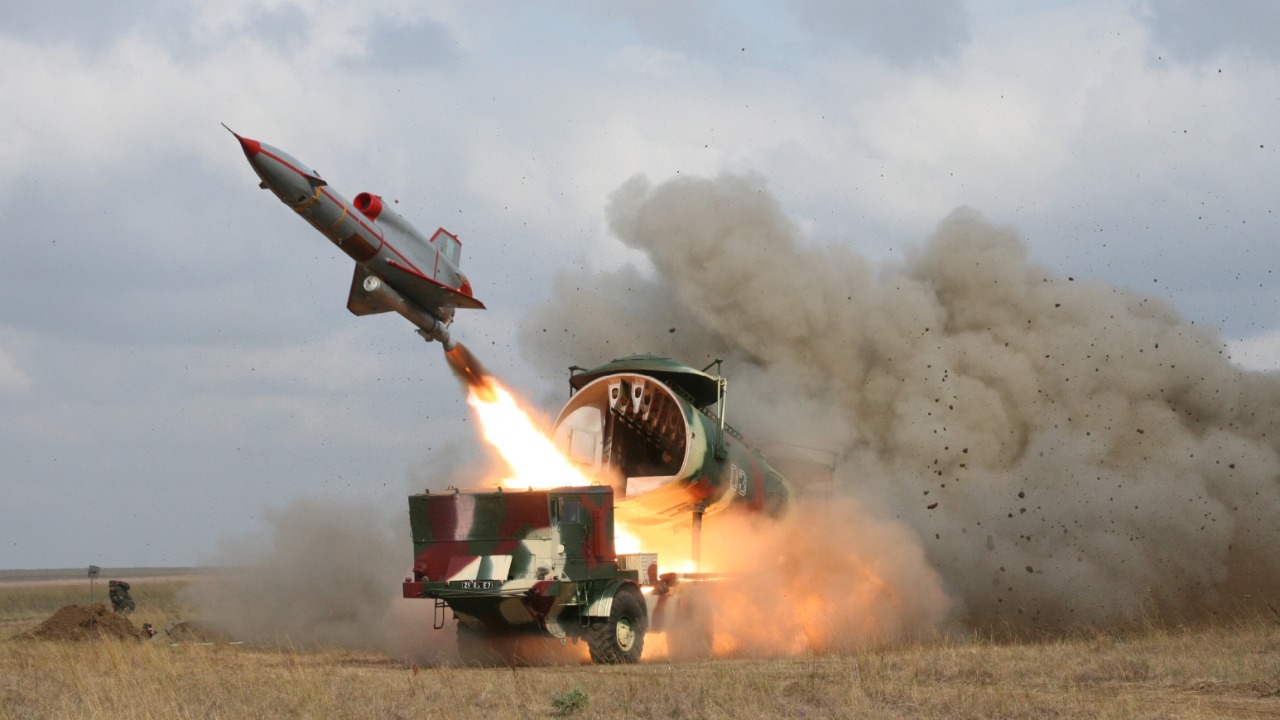

The discovery of Soviet-designed Tu-143 Reys jets in a Hezbollah warehouse has pushed Lebanon’s fragile security balance into a sharper, more dangerous focus. By seizing these converted reconnaissance drones, the Lebanese army has not only disrupted a specific weapons cache but also exposed how far regional actors are willing to go in repurposing legacy systems for modern conflict. The find ties local Lebanese dynamics to a wider contest involving Israel, Hezbollah, and the evolving role of unmanned systems on the Middle East battlefield.
The Tu-143 Reys, originally built for short-range tactical reconnaissance, was never meant to be a precision strike weapon. Yet Hezbollah’s work on these airframes shows a clear intent to turn a 143 series platform into a crude cruise missile, echoing similar adaptations seen in other war zones. The Lebanese operation that uncovered these jets, and the ammunition around them, now sits at the intersection of domestic state authority, non-state military innovation, and Israel’s own campaign against what it views as an expanding missile and drone threat on its northern border.
Inside the Lebanese raid on Hezbollah’s drone warehouse
The Lebanese army’s move against a large Hezbollah ammunition depot was as much about asserting sovereignty as it was about removing hardware from the battlefield. According to official reporting, The Lebanese forces entered a site described as a major storage point and documented the capture of a significant cache of weapons and munitions, including the Tu-143 Reys jets that had been hidden alongside other systems. In the same sweep, they identified equipment associated with multiple launch rocket systems, including references to the BM-21 Grad MLRS, underscoring that this was not a minor stash but a core logistics node for future attacks.
What makes this seizure stand out is the mix of old and new embedded in the depot. The Tu-143 Reys, a Cold War era jet-powered drone, sat in the same space as more contemporary artillery rockets and ammunition, suggesting Hezbollah had integrated the platform into its broader strike architecture rather than treating it as a one-off experiment. Lebanese statements about the depot, shared through channels that highlighted how The Lebanese army reported the capture of a large Hezbo ammunition site, point to a deliberate effort to show the public that state forces can still penetrate and dismantle such fortified stockpiles, even when they belong to one of the country’s most powerful armed groups, and that they can do so without triggering immediate internal confrontation.
How Hezbollah turned Tu-143 Reys jets into strike weapons
From a technical perspective, the most consequential detail is not that Hezbollah possessed Tu-143 Reys jets, but that it had begun converting them from reconnaissance tools into offensive cruise missiles. Earlier analysis from regional militaries described how Hezbollah Converted Soviet Tu, a 143 Jet Recon Drone Into Cruise Missile Says IDF, Just Like Ukraine, with Israel distributing imagery that showed modified airframes and altered payload sections. The Tu-143 was originally designed to fly preprogrammed routes and return film canisters, but by replacing the sensor package with an explosive warhead and adjusting the guidance, it can be turned into a one-way attack vehicle, even if its accuracy and survivability lag behind purpose-built cruise missiles.
I see this adaptation as part of a broader pattern in which non-state actors squeeze new value out of aging Soviet and Russian hardware. The same reporting that highlighted the Tu-143 modifications also noted that The Israeli Defense Forces had previously encountered Russian systems in Hezbollah’s hands, including when The Israeli Troops Seize Russian, Made Weapons at Hezbollah Positions Source, a reminder that the group’s arsenal is not limited to Iranian designs. In that context, the Lebanese army’s discovery of Tu-143 Reys jets in a domestic warehouse is less an isolated surprise and more a confirmation that Hezbollah has been systematically experimenting with legacy platforms, looking for ways to complicate Israeli air defenses and add another layer to its deterrent posture.
Visual proof and the role of Lebanese media
Public understanding of the Tu-143 story has been shaped heavily by images broadcast inside Lebanon. Footage aired by local television showed multiple airframes laid out in a hangar-like space, with their distinctive intakes and swept wings clearly visible. Those images, carried by Lebanon’s Al Jadeed channel, were later summarized in regional coverage that opened with the phrase Getting your Trinity Audio player ready before describing how the drones were found in an area south of the Litani River, a zone that has long been central to debates over Hezbollah’s deployment patterns. The visuals gave Lebanese viewers a rare, unfiltered look at the scale and sophistication of the group’s stockpiles, and at the army’s willingness to document what it had seized.
Internationally, specialist outlets amplified the story by focusing on the aviation and missile aspects. One detailed account of how the Lebanese Army Captures Hezbollah, Reys Jet Drones highlighted the airframe’s performance envelope and the implications of turning a reconnaissance jet into a low-flying strike asset. Another technical breakdown of the Lebanese military finds Tu-143 Reis UAVs converted to cruise missiles at a Hezbollah warehouse described how the airframes had been adapted, and noted that Jan and other identifiers appeared in the documentation, tying the discovery to a broader pattern of regional drone innovation. By combining local television footage with expert analysis, these reports helped move the discussion beyond political talking points and into the concrete realities of what was actually sitting on the warehouse floor.
Linking the seizure to Israel’s wider campaign against Hezbollah
The Lebanese army’s operation unfolded against the backdrop of a much larger confrontation between Hezbollah and Israel. Over the past year, The IDF has launched a series of strikes in Lebanon that, according to one detailed account, left nearly 500 dead and were framed as part of Operation Northern Arrows, with commanders still assessing whether key figures like Karaki had been killed. In response, Hezbollah announced that it had mobilized additional units and threatened further escalation, while Israel signaled that it was prepared to send more troops to the Middle East if rocket and drone attacks continued. Within that context, the discovery of Tu-143 Reys jets in a Hezbollah depot is not an isolated domestic policing action, but a development that directly intersects with Israel’s justification for its cross-border operations.
Israel has long argued that Hezbollah’s accumulation of precision and quasi-precision weapons in southern Lebanon represents an unacceptable threat to its northern cities and critical infrastructure. Earlier reporting on Israeli Troops Seize Russian, Made Weapons at Hezbollah Positions described how The Israeli Defense Forces uncovered Russian systems and ammunition in forward positions, reinforcing the narrative that Hezbollah is steadily upgrading its arsenal. When I connect that pattern to the Lebanese army’s seizure of Tu-143 Reys jets, I see a convergence of interests that is rarely acknowledged in public rhetoric: both Israel and the Lebanese state have reasons to limit Hezbollah’s access to advanced strike platforms, even if they pursue that goal for very different political reasons and under very different constraints.
Regional arms flows, domestic politics, and what comes next
The Tu-143 episode also sheds light on the complex web of arms transfers feeding the Hezbollah arsenal. Earlier coverage of Israeli Troops Seize Russian, Made Weapons at Hezbollah Positions noted that Sep and other markers tied some of the captured equipment back to Russian design and manufacture, while separate reporting on Israeli Troops Seize Russian, Made Weapons at Hezbollah Positions highlighted how the USA had Deploys a U-28A Draco Reconnaissance Aircraft to the UK as part of a broader repositioning of surveillance assets. Taken together, these details point to a region in which Russian-origin systems, Western reconnaissance platforms, and locally modified drones coexist in a crowded, contested airspace. The Tu-143 Reys jets in the Lebanese warehouse are one node in that network, but they symbolize a larger trend in which older Soviet designs are repurposed and recirculated through proxy forces.
Inside Lebanon, the political implications are just as significant as the technical ones. The Lebanese army’s decision to publicize the seizure, including references to Jan and to the scale of the Hezbo depot, suggests a calculated effort to show that state institutions are not entirely sidelined by Hezbollah’s military wing. At the same time, social media posts that referenced 01.10 and linked the discovery to earlier footage of Israeli Troops Seize Russian, Made Weapons at Hezbollah Positions Source, shared by MILITARNYI with an embedded Video, underscored how quickly such events are folded into competing narratives about sovereignty and resistance. As I weigh these threads, I see the Tu-143 Reys seizure less as a one-off headline and more as a signpost: a moment when the Lebanese state briefly reasserted itself in the shadow of a powerful non-state actor, and when the evolving technology of war, from cruise-converted drones to Draco Reconnaissance Aircraft, made that assertion both more urgent and more precarious.
More from Morning Overview