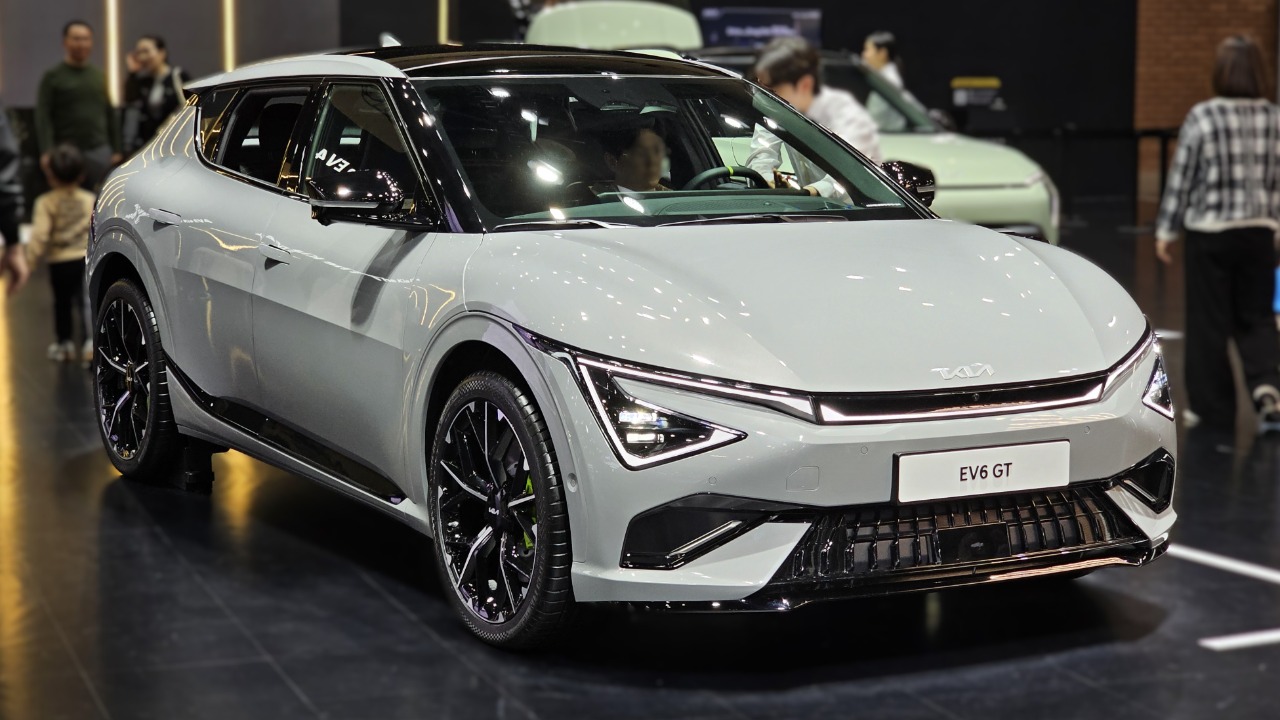

Kia is leaning hard into the idea that electric cars should feel exciting as well as efficient, and it is starting with its most attainable models. The brand is pairing stronger dual-motor powertrains with playful software tricks that mimic the drama of a manual gearbox, bringing more punch and fake shifts to EVs that sit well below halo cars like the EV6 GT. It is a calculated bet that character and engagement, not just range and price, will decide who wins the mass-market EV race.
Instead of reserving its most entertaining tech for six-figure flagships, Kia is pushing performance and immersion down into compact crossovers and hatchbacks. That strategy is turning the EV3, EV4 and EV5 into a family of relatively cheap electric cars that promise hot-hatch attitude, simulated gear changes and, in some cases, power figures that would have looked wild on a petrol hot hatch not long ago.
Simulated shifting moves from niche gimmick to core feature
The clearest sign of Kia’s new philosophy is the way it is baking pretend shifting into the EV4 from the ground up. Every version of the compact EV4 crossover, even the base car, is set to use software that imitates the stepped acceleration and torque interruptions of a traditional gearbox, a move that takes cues from the Ioniq 5 N but applies them to a far cheaper model, as detailed in early previews of the Kia. Rather than leaving drivers with a single-speed surge, the system layers in virtual ratios and paddle-controlled “upshifts” that give the EV4 a more familiar rhythm for anyone coming out of a manual hatchback.
That commitment goes further in the performance variants. Reporting on the EV4 confirms that Kia will equip every version with a simulated manual gearshift, but only the GT model will add a fake rev limiter that cuts power at the top of each virtual gear to heighten the illusion of a combustion engine hitting its redline, a detail spelled out in coverage of Chris Chilton. A separate walkaround video shows how every single Kia EV4 is going to get this feature set, including a pretend manual shifter, a rev counter and fake engine sounds that respond to driver inputs, with the presenter in Feb openly surprised that such theatrics are standard rather than an expensive option.
More power for the affordable EV3, EV4 and EV5
The fake shifting would be a hollow party trick if the underlying hardware stayed modest, but Kia is also turning up the wick on its cheaper EVs. The company has introduced more powerful dual-motor versions of its affordable electric models, including the EV3, EV4 and EV5, giving them all-wheel-drive traction and a serious bump in output compared with the existing single-motor cars, according to detailed breakdowns of how Kia Just Gave. These upgrades are not just about straight-line speed, they also bring chassis tweaks and exterior design changes that visually separate the hotter versions from the standard range.
Within that trio, the EV5 GT stands out as the largest and most powerful expression of the formula. Larger than the EV3 and EV4, the EV5 GT measures 4,610mm in length and 1,875mm in width, and it uses the E-GMP platform with a dual-motor setup producing a total of 301bhp, figures laid out in coverage that describes how Larger. At the smaller end, the 2026 EV3 is also being prepared with all-wheel-drive versions, including the GT-Line and the top GT trim, which will use dual motors to enhance both power and handling, a plan spelled out by Kia. Together, these moves show Kia treating performance as a family trait across its cheaper EVs rather than a one-off halo exercise.
GT tuning brings hot-hatch attitude to crossovers
Power alone does not make a car feel sporty, so Kia is also reshaping how its GT-badged EVs drive. The EV3 GT, EV4 GT and EV5 GT all receive dedicated chassis work, with the brand fine-tuning the electronically controlled suspension, adding 20-inch alloy wheels and performance tyres, and calibrating the steering to deliver what it describes as the feeling of a sports car, according to technical details on how Kia has approached the trio. The EV4 GT in particular is being pitched as a hot hatch alternative, with a lower, more aggressive stance and a focus on driver engagement rather than just practicality.
That intent shows up in the body styles and drive modes as well. The EV4 GT is available in both Hatchback and Fastback body styles, and it features a dedicated GT drive mode that tweaks power delivery, steering weight and stability control thresholds to make the car feel more alive on a twisty road, a configuration described in detail where the Hatchback and Fastback are set out. Earlier looks at the EV4 GT-Line, which features sportier interior and exterior appointments over the standard EV4 but no performance upgrade, underline how Kia is now layering its range, with cosmetic Line trims sitting below full-fat GT models that bring the real hardware changes, a distinction highlighted in coverage of the EV4 GT-Line.
EV4 GT targets traditional hot hatches with serious output
If the regular EV4 is about making electric driving feel familiar, the EV4 GT is about taking on established performance benchmarks. Beneath the skin, instead of the regular Kia EV4’s 150kW e-motor, the hotter GT version will gain a new dual-motor powertrain that will see it produce upwards of 300kW, a figure that puts it squarely in the territory of all-wheel-drive petrol hot hatches like the Volkswagen Golf R, as outlined in technical previews that start with the phrase Beneath the. That kind of output, combined with all-wheel drive and the simulated manual shifting, positions the EV4 GT as a genuine performance car rather than a styling exercise.
The broader GT strategy also draws a straight line from Kia’s earlier high-performance efforts to its new affordable models. Like the EV6 GT, Kia’s midsize electric SUV is expected to arrive with a dual-motor, AWD powertrain packing over 600 horsepower and capable of a 0 to 100 km/h sprint in about 3.5 seconds, a template that shows how the brand uses its most extreme models to develop technology that can later filter down, as described in previews that open with the phrase Like the. By echoing that approach in the EV3, EV4 and EV5 GT, Kia is effectively shrinking the EV6 GT’s wild side into packages that are smaller, cheaper and more likely to end up in suburban driveways.
Fake gears, real debate about what makes an EV fun
Underpinning all of this hardware is a philosophical question about what makes an electric car engaging. Some enthusiasts argue that EVs should lean into their seamless torque and silence, while others miss the rhythm and feedback of shifting through gears. The GT’s new Virtual Gear Shift feature, which enhances driving immersion by simulating gear shifts with visuals, engine sounds and torque modulation, has already sparked debate about whether fake shifting can deliver real fun, with one early impression concluding bluntly, “It’s that good,” in coverage that dissects how The GT uses the system. Kia’s decision to roll similar tech into the EV4, and to make it standard, suggests the company believes the second camp is large enough to matter.
From my perspective, the more interesting point is not whether the fake shifts perfectly mimic a manual gearbox, but how they change the way drivers interact with their cars. By giving even a relatively cheap EV4 a pretend manual shifter, a rev counter and a fake rev limiter, Kia is inviting owners to think about timing, anticipation and mechanical sympathy again, even if the mechanics are virtual. Combined with the dual-motor punch of the EV3, EV4 and EV5 GT, the fine-tuned chassis work on the sporty SUVs and hot hatch, and the trickle-down from 600 horsepower flagships, Kia is betting that characterful software and serious hardware together can make its affordable EVs feel less like appliances and more like proper driver’s cars.
More from Morning Overview