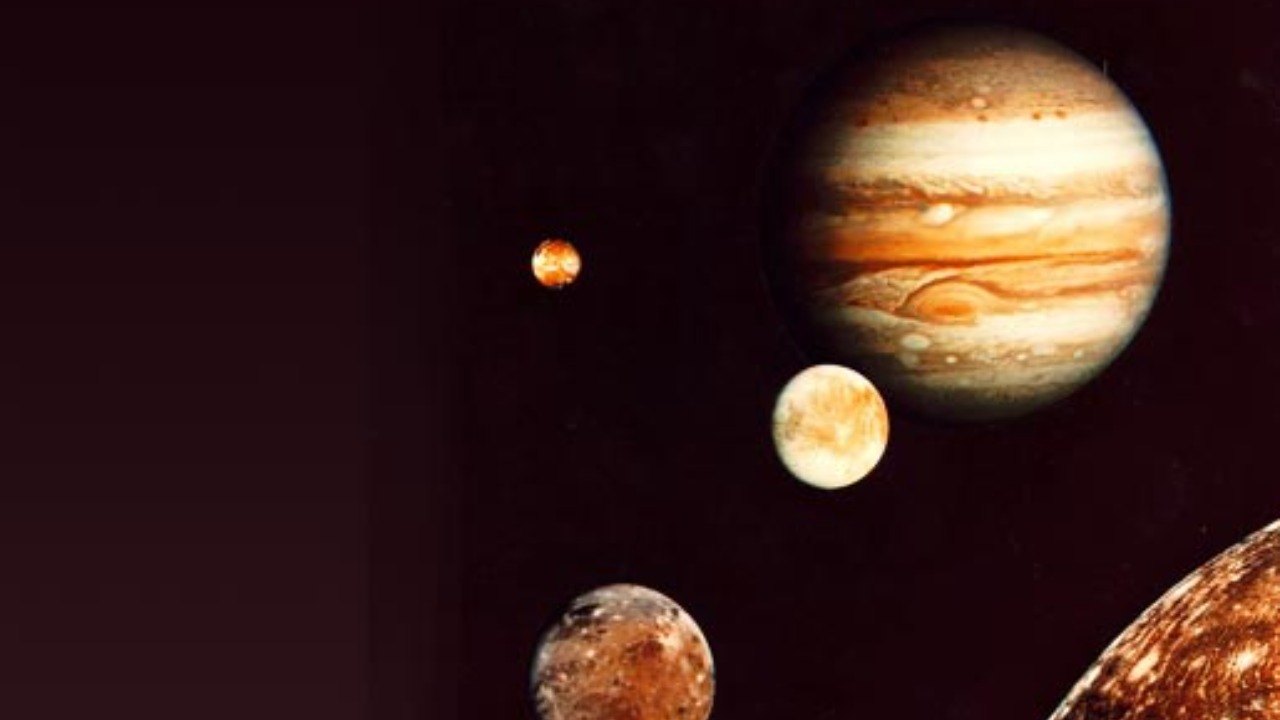

Jupiter is about to dominate the midwinter sky, turning January evenings into a showcase for the biggest planet in the solar system. As Earth lines up almost perfectly with Jupiter and the sun, the gas giant will shine at its brightest and stay visible all night, offering a rare stretch of easy, backyard observing. For anyone willing to step outside after dark, this is the month when Jupiter stops being an abstract textbook world and becomes a vivid, silver‑white presence overhead.
Why Jupiter is so dazzling this month
Jupiter’s surge in brightness is not a trick of the atmosphere, it is geometry. As Earth sweeps between Jupiter and the sun, the giant planet is nearly opposite the sun in our sky, so sunlight hits its cloud tops head on and reflects straight back toward us. That alignment also puts Jupiter relatively close to Earth in its long orbit, so its apparent size grows and its disk looks sharper and more substantial than at other times of year.
Earlier in the 2025–2026 observing season, Earth began closing the gap on Jupiter, and by the time Earth flies between Jupiter and the sun the planet reveals a bright disk that stands out even in light polluted cities. That same orbital dance is why Jupiter’s brightness will feel unusually intense this January, with the planet outshining every star and presenting a clean, steady point of light that resists the twinkling that gives away more distant suns.
The key date: opposition on January 10
The centerpiece of this show arrives when Jupiter reaches opposition, the moment it sits almost exactly opposite the sun in the sky. Around that date, the planet rises near sunset, climbs high through the night, and sets near sunrise, giving observers a full window to watch it drift from east to west. For practical skywatching, that is the night when Jupiter is both at its brightest and most conveniently placed for long, unhurried viewing sessions.
Guides to the 2026 sky highlight that on Jan. 10 Jupiter reaches opposition and becomes an evening object for the rest of the season, shifting from pre‑dawn to post‑sunset visibility as it crosses that threshold. One detailed planet roundup notes that January 10: Jupiter reaches opposition and is visible all night from wherever you are on Earth, while a separate overview of major 2026 events singles out January 10: Jupiter at opposition as an early‑year alignment of Jupiter and Earth that deserves a spot on any observing calendar.
How the nights build toward peak brightness
Although opposition is the headline, Jupiter’s performance is not confined to a single night. In the days leading up to Jan. 10, the planet is already blazing in the evening sky, rising earlier each day and climbing higher as darkness deepens. For casual observers, that gradual brightening can be more important than the exact moment of opposition, because it turns Jupiter into a familiar landmark that is easy to find night after night.
One detailed sky guide notes that Jupiter is a morning object from Jan. 1 to Jan. 9, then becomes an evening fixture from Jan. 10 through early July, with the planet described as a giant world with a bright silver‑white luster that dominates the twilight. That same guide explains that Jupiter reaches opposition on Jan. 10 and then slowly shifts toward the west‑northwest at dusk as the months pass, so the first half of January is the moment when its brightness and altitude combine for the most dramatic effect.
Mark your calendar: January 3, 9 and 10
For anyone who likes to plan around specific nights, three dates stand out. On Jan. 3, the bright moon and Jupiter share the sky, creating a striking pairing that is easy to spot even from a city balcony. Later in the month, the nights of Jan. 9 and Jan. 10 frame the exact opposition, with Jupiter already at near‑maximum brilliance and riding high through the darkness.
At dusk on Saturday, Jan. 3, one observing guide advises looking east for the brilliant planet as the bright moon joins Jupiter all night, with the moon lifting above Jupiter as the hours pass, a configuration highlighted in a section on Saturday, Jan. 3, bright moon joins Jupiter. The same guide points to Friday night, Jan. 9, as the moment when Jupiter peaks at opposition all night, encouraging observers to check the planet every second or third night around that window to watch its slow drift against the background stars.
The Full Wolf Moon and Jupiter’s shared stage
Jupiter’s performance unfolds against a backdrop of classic winter sky markers, including January’s Full Wolf Moon. That full moon, also known simply as the Full Moon of the month, brightens the early evening and can both help and hinder planet watching. It makes it easier for newcomers to orient themselves, but its glare can wash out fainter stars that would otherwise help frame Jupiter’s place in the constellations.
An overview of January 2026 astronomy highlights notes that the Full Wolf Moon lights up the evening sky on January 3, just as Jupiter is rising to meet it. That same summary points out that Jupiter at opposition on January 10 is another key highlight, wishing clear skies to all who plan to watch, and by linking those two events it underlines how the Full Moon and the bright planet share the stage in the first ten days of the year.
Why this year’s view is unusually favorable
Not every opposition is created equal, and this year’s geometry gives observers an edge. Jupiter’s path across the sky places it high above the horizon for much of the night, which means its light passes through less of Earth’s atmosphere before reaching your eyes. The higher altitude reduces the shimmering and distortion that can blur planetary detail, especially for people observing from mid‑northern latitudes where winter nights are long and often crisp.
One analysis of the 2026 sky notes that the visibility of Jupiter this month is unusually favorable, with the planet described as benefiting from Rare Clarity Makes Jupiter Shine Like Never Before as it adds fire to the winter sky. Another detailed breakdown of the opposition explains that on 2026, January 10, Jupiter at Opposition Brightens the Night Sky, and that during the next few nights the planet remains in a prime position as it marks the shift to the evening sky, giving observers several chances to catch it under steady, high‑contrast conditions.
What you will (and will not) see with the naked eye
Even without equipment, Jupiter is unmistakable this month. To the unaided eye it appears as a steady, silver‑white point that outshines every star, brighter than any aircraft and free of the color flicker that often betrays planets near the horizon. Under reasonably dark conditions, its brilliance makes it a natural anchor for learning the winter constellations, since you can start with Jupiter and trace outward to nearby star patterns.
At the same time, the broader planetary lineup is relatively sparse. A guide to the brightest planets notes that only two planets shine in January’s night sky to the naked eye, and that Mars, like Mercury and Venus, will not be visible during January, with Mars only emerging around the beginning of dawn for those with very clear horizons. That absence of Mars, Mercury and Venus in the evening makes Jupiter’s dominance even more pronounced, since there are fewer competing bright points to confuse newcomers who are trying to identify the planet for the first time.
How to observe Jupiter from your backyard
For a first look, I recommend starting with nothing more than your eyes. Step outside about an hour after sunset, face the general direction opposite the sun, and scan for the brightest, steadiest point of light that is not the moon. Once you have found Jupiter, give your eyes a few minutes to adapt to the dark, then notice how its color and intensity differ from nearby stars, a simple exercise that can sharpen your overall night‑sky awareness.
Binoculars are the next logical step, and even a basic 8×42 pair sold for birding will reveal Jupiter as a tiny disk flanked by pinpricks of light. Those points are the Galilean moons, and on a steady night you can watch them change position over the course of an hour as they orbit the planet. One social media roundup of early‑year sky events encourages people to mark January 10, noting that Jupiter reaches opposition, shines at its brightest and remains visible all night, calling it the best time to grab binoculars or a small telescope and join the #NightSkyEvents crowd that shares their views online.
Light pollution, weather and how to time your viewing
Urban light pollution will not erase Jupiter, but it can dull the surrounding star field and make it harder to appreciate the planet’s context. To counter that, I suggest finding a spot with a clear view of the eastern and southern sky and shielding your eyes from direct streetlights, even if that just means standing behind a tree or building. If you can travel to a darker park or rural area, the improvement is immediate, with Jupiter blazing against a richer backdrop of stars and the Milky Way faintly visible on the darkest nights.
Weather and local conditions also shape what you see. A New Year’s roundup of astronomical highlights notes that for bright objects, its visibility will depend on its actual magnitude and local light pollution, and that many events can still be enjoyed with the naked eye if skies cooperate. For Jupiter, that means checking forecasts for clear, dry nights around Jan. 9 and Jan. 10, then giving yourself at least a half hour outside so your eyes can adjust and the planet can climb away from the thickest layers of atmosphere near the horizon.
More from MorningOverview