
Humanoid robots that move and work like people have long been a science fiction staple, but Nvidia CEO Jensen Huang now says they are only months away from reality. At CES 2026 he argued that advances in artificial intelligence and hardware will let machines reach human-type capabilities in the physical world, not just in software. His prediction that 2026 will be the year robots cross this threshold has set off a fresh debate about how quickly factories, homes and even national labor markets will need to adapt.
Huang’s forecast matters because Nvidia’s chips already power much of the current AI boom, giving him an unusually close view of what is technically possible. He has framed the next wave as “physical AI”, where robots learn from data and simulation in the same way chatbots learned from text. The question now is not whether humanoid machines are coming, but how far they can really go in the near term and who will benefit first when they arrive.
Inside Huang’s 2026 bet on “physical AI”
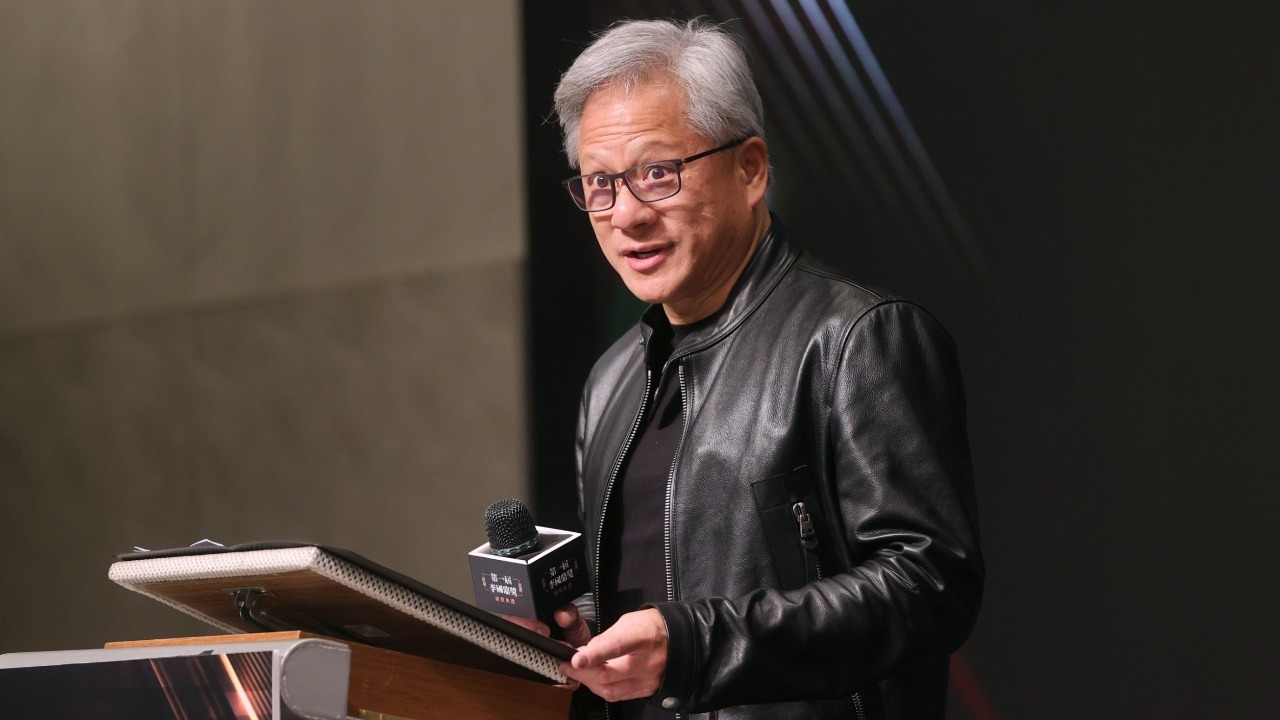
On stage in Las Vegas, Nvidia founder and chief executive Jensen Huang described a future in which robots leave research labs and enter warehouses, hospitals and homes as a new category he calls physical AI. He argued that the same GPU-driven training that made large language models possible can now be applied to bodies, letting machines perceive their surroundings, plan actions and manipulate objects with human-like dexterity. In his view, the key shift is that robots will no longer be preprogrammed for narrow tasks, but will instead learn from vast datasets and simulated environments, then adapt to messy real-world conditions.
Huang has gone further than most executives by putting a specific timeline on this shift, saying that robots could reach. He links that forecast to Nvidia’s own roadmap, which pairs powerful chips with software platforms designed to help developers build and train humanoid machines. In his telling, the industry is at a “ChatGPT moment” for robotics, where a breakthrough in general capability suddenly makes a long-promised technology feel inevitable rather than speculative.
From CES stagecraft to social media hype
Huang’s message has been amplified far beyond the CES keynote hall, turning into a viral talking point across social platforms. A short clip shared on Instagram shows the Nvidia leader explaining that once humanoid robots work in one niche, “it’ll be everywhere”, tagged with #SiliconTribe, #TeslaOptimus, #HumanoidRobots, #JensenHuang and #NVIDIA, and drawing engagement figures such as 57 that hint at how quickly the idea is spreading. The framing in that clip is not cautious; it suggests a tipping point where humanoid machines move from novelty to ubiquity in a short span of time.
Traditional broadcasters have picked up the same theme, highlighting Huang’s claim that robots with human-type. Coverage has stressed that he is not talking about cartoonish gadgets, but about machines that can navigate complex spaces and enter the physical world of work. That framing has helped shift the conversation from speculative futurism to near-term planning, as companies and policymakers start to ask how quickly they need to prepare for robots that can share tasks and spaces with people.
“AI immigrants” and the global labor question
Huang has tried to position these machines not as job destroyers but as helpers that fill gaps in aging and shrinking workforces. He has described future robots as “AI immigrants” that can address labor shortages and do the type of work that maybe people decided not to do anymore or do not do well. In that framing, robots are a new kind of workforce that can take on repetitive, dangerous or undesirable tasks, while humans focus on roles that require creativity, empathy or complex judgment. It is a narrative designed to reassure both workers and governments that the arrival of humanoid machines can be managed as an economic complement rather than a direct threat.
That message has been echoed in short-form video, where Huang is quoted as saying that, according to the CEO, the arrival of advanced robots will create jobs rather than abolish them and that AI is needed to control the environment there. In markets like India, where automation, manufacturing growth and employment concerns intersect sharply, commentators have asked how real this prediction is and how it will play out in practice. One explainer notes that, for India, where automation, manufacturing growth and employment concerns intersect sharply, Nvidia CEO Huang’s statement raises the question of how real this prediction is and what he called “physical AI” might mean for its workforce.
Skeptics, Reddit threads and the limits of today’s robots
Not everyone is convinced that 2026 will deliver robots that truly match human capabilities. In one discussion on r/singularity, a user named ArcaneAccounting complains, “Why is every post here some AI generated summary? So annoying,” while another user, Sockoflegend, questions whether the AI boom can continue without artificial general intelligence or humanoid robots. That exchange captures a broader skepticism that the current wave of machine learning, impressive as it is, can quickly translate into bodies that move with the fluidity, adaptability and resilience of a person.
Reporters who walked the CES floor looking for a “robot butler” came away with a more cautious view. One account notes that a robot butler is still a long way off, even as the hype around physical AI is almost impossible to avoid. The same reporting points out that while prototypes can perform impressive demos, they still struggle with reliability, battery life and the sheer unpredictability of real homes and streets. That gap between stage performance and everyday robustness is the main reason many engineers remain wary of any promise that humanoid robots will match humans across a wide range of tasks in the very near term.
From factories to homes: where humanoids land first
Huang’s own comments suggest that the first wave of human-type robots will not be folding laundry in suburban kitchens, but working in controlled industrial settings. Coverage of his remarks stresses that robots with human-type are expected to enter the physical world in places like warehouses and factories, where tasks are repetitive and environments can be tightly managed. That is where physical AI can deliver immediate value, by letting machines handle heavy lifting, precise assembly or hazardous inspections while people supervise and troubleshoot.
The path into homes looks slower and more uneven. One analysis notes that it has taken more than a century for the vision of domestic robots to materialize and that some pundits now expect humanoid robots to become a household presence closer to 2030. That timeline reflects the complexity of domestic spaces, where stairs, pets, clutter and constant change make navigation and manipulation far harder than in a factory aisle. Even Huang’s own supporters tend to imagine a phased rollout, with early adopters in logistics and manufacturing, followed by hospitals and elder care, and only later a mass-market home assistant that can safely and affordably share living rooms with families.
Why Huang’s prediction still matters
Even if 2026 does not deliver robots that fully match human versatility, Huang’s timeline is already reshaping expectations across the tech industry. His claim that robots with human-type capabilities are coming this year has prompted investors, startups and established manufacturers to accelerate their own plans. Nvidia’s robotics division has amplified that message on social channels, where Nvidia’s CEO, Jensen, is quoted predicting that humanoid robots will soon be everywhere, changing how industries and daily life function. That kind of confident messaging can become self-fulfilling, by drawing talent and capital into the field and speeding up the very progress it predicts.
At the same time, Huang’s framing of this shift as part of physical AI helps connect the dots between today’s software breakthroughs and tomorrow’s hardware. By tying human-like robots to the same GPU infrastructure that powers chatbots and image generators, he is effectively arguing that the next big platform is already here, waiting to be extended into arms and legs. Whether or not 2026 turns out to be the exact year humanoid robots arrive at scale, his bet has made one thing clear: the race to put AI into bodies is no longer a distant dream, but an immediate strategic priority for the companies and countries that hope to lead the next era of computing.
More from Morning Overview