
Nvidia CEO Jensen Huang has no shortage of suitors in the AI world, but when he singles out a smaller partner as a favorite, investors pay attention. His recent praise for sidewalk delivery specialist Serve Robotics has turned a niche robotics player into a closely watched test case for how artificial intelligence might move off the data center floor and into everyday city streets.
Huang’s enthusiasm comes as Wall Street analysts, including Jan Latimore, argue that Serve Robotics’ stock could have substantial upside if its technology scales. I see that endorsement as part of a broader shift in AI, where the next leg of growth may come less from training ever larger models and more from embedding intelligence into physical machines that solve stubborn, real world logistics problems.
Why Jensen Huang is spotlighting Serve Robotics
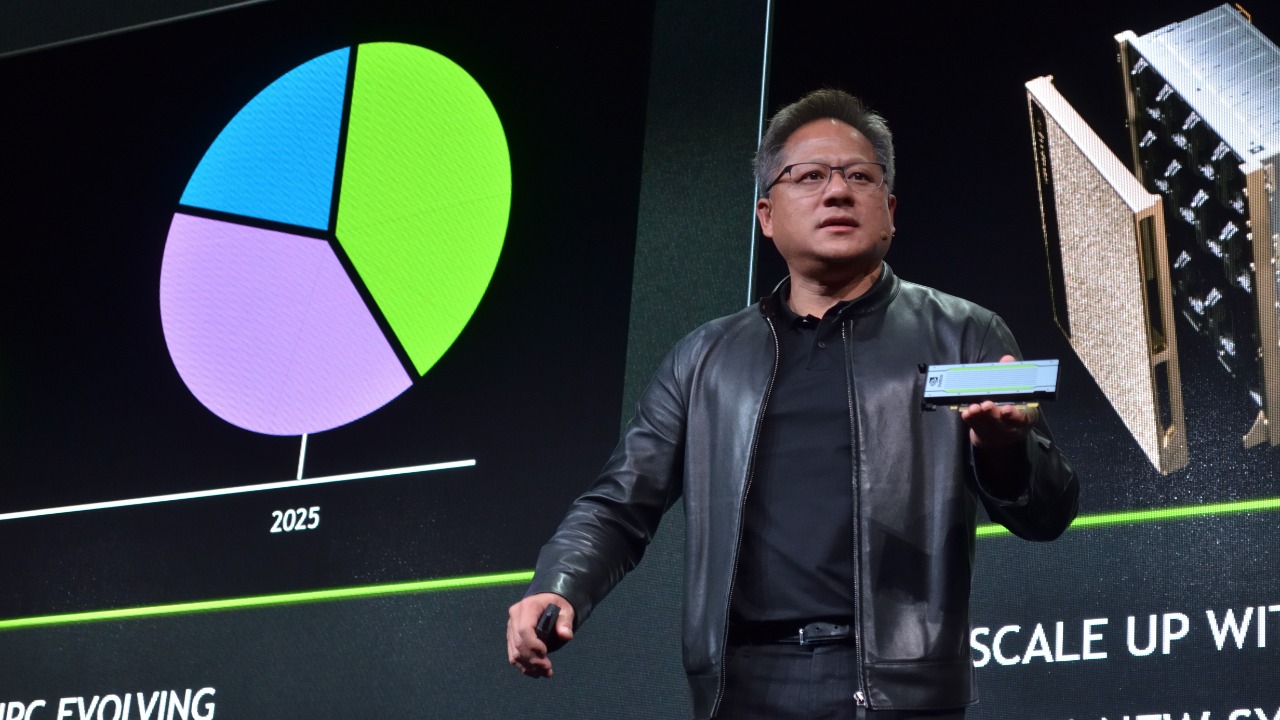
When Nvidia CEO Jensen Huang tells an audience he “loves” a particular AI company, he is doing more than offering a compliment, he is signaling where he thinks the next wave of demand for Nvidia’s own chips will come from. At his keynote at CES, Huang highlighted Serve Robotics as an example of AI moving into the physical world, positioning its sidewalk delivery robots as proof that autonomous systems are finally becoming commercially viable at scale. By putting Serve Robotics on that stage, he effectively elevated the company from a small-cap curiosity to a bellwether for how quickly AI-powered machines can integrate into urban life.
Huang’s remarks were not a passing aside. He used his time at CES, one of the most closely watched technology showcases, to frame a future in which fleets of compact delivery robots navigate neighborhoods, powered by Nvidia hardware and software. In that context, his praise for Serve Robotics was a way to illustrate how Nvidia’s platform can underpin specialized partners that tackle last mile logistics. Coverage of the keynote underscores how he singled out Serve Robotics during his presentation, with one account noting that Nvidia CEO Jensen Huang used the company to personify his vision of AI-enabled machines operating in everyday environments.
Serve Robotics and the sidewalk delivery bet
Serve Robotics is betting that small, low speed robots can solve one of e-commerce’s most expensive problems, the last few blocks between a restaurant or store and a customer’s front door. Its sidewalk delivery robots are designed to trundle along city pavements, avoiding pedestrians and obstacles while carrying food or parcels in a locked compartment. That model depends on sophisticated perception and navigation, but it also hinges on a simple economic promise, if a robot can complete a delivery more cheaply and reliably than a human courier, dense urban markets could see thousands of these machines deployed.
Analysts are starting to treat that scenario as more than science fiction. Jan Latimore and other market watchers have argued that Serve Robotics’ growth prospects justify a bullish stance, with one research note suggesting the company’s shares could nearly double if it executes on its expansion plans. The optimism is rooted in the idea that sidewalk delivery robots can scale across multiple cities and partners once the core technology is proven. Reporting on the company’s outlook highlights how Jan Latimore and other analysts see Serve Robotics as well positioned to capture that opportunity, especially with Nvidia’s public backing reinforcing its technical credibility.
How Serve fits into Nvidia’s AI hardware strategy
From Nvidia’s perspective, Serve Robotics is not just a portfolio company or a friendly partner, it is a showcase for how Nvidia’s chips and software can power edge devices that must make split second decisions in unpredictable environments. Each sidewalk robot effectively becomes a mobile AI computer, running perception models, mapping algorithms and routing logic on board rather than in a distant data center. That kind of workload is exactly what Nvidia has been preparing for as it extends its product line from high end GPUs in the cloud to more compact systems designed for robots, cars and industrial machines.
Huang’s CES keynote made that connection explicit. He outlined a future in which AI “moves,” describing how robots, vehicles and other machines will increasingly rely on Nvidia platforms to interpret sensor data and act autonomously. In that narrative, Serve Robotics is a concrete example of AI leaving the lab and entering the streets, a way to show investors and developers that Nvidia’s ecosystem already underpins real world deployments. One detailed account of the keynote notes how Diana Wolf Torres described Jensen Huang of NVIDIA using CES to argue that such autonomous systems are becoming more viable at scale, with Serve Robotics as one of the examples that brought that thesis to life.
Wall Street’s PRO-level fascination with Huang’s favorite
Huang’s endorsement has not gone unnoticed in financial circles. Professional investors track his public comments closely, in part because Nvidia sits at the center of the AI hardware boom and in part because his partnerships often foreshadow where capital and customers will flow next. When he highlights a smaller AI-related firm in a marquee keynote, it can quickly become a talking point on trading desks and in research notes that try to map out the next wave of beneficiaries from Nvidia’s growth.
That dynamic was on display when a premium research segment flagged Serve Robotics as “a firm that Nvidia CEO loves,” underscoring how Huang’s praise had become an investment thesis in its own right. The segment, labeled as PRO content, emphasized that Nvidia CEO Jensen Huang had singled out the company and that some analysts believed its shares could nearly double if its strategy plays out. A social media post promoting the piece captured the mood, pointing to PRO analysis of a firm that Nvidia CEO Jensen Huang loves and tying that enthusiasm directly to Serve Robotics’ potential upside.
Magnificent Seven context and why a small AI player stands out
The attention on Serve Robotics is unfolding against a backdrop of shifting sentiment around the market’s largest technology names. The group often dubbed the Magnificent Seven, which includes Nvidia, has dominated index performance, but recent trading has shown that leadership is not guaranteed. Reports on the latest market moves note that the S&P 500 and the Dow Jones Industrial Average have both pulled back from highs, a reminder that even the strongest rallies can pause. One daily market wrap pointed out that the S&P 500 and the Dow Jones Industrial Average had snapped winning streaks, framing that move as part of broader “rumbles” within the Magnificent Seven.
Another overview of the same period described how competition within the Magnificent Seven is heating up, with investors scrutinizing which giants can sustain their growth and which might cede ground to newer players. That piece again highlighted the performance of the S&P 500 and the Dow Jones Industrial Average, using those benchmarks to show how concentrated the market’s gains have been. In that environment, a smaller AI company like Serve Robotics can attract outsized interest if it is seen as a way to tap into Nvidia’s ecosystem without paying mega cap valuations. Huang’s public affection for the company, combined with Jan Latimore’s bullish stance, effectively positions Serve Robotics as a satellite play on the same AI forces that have propelled the Magnificent Seven, but with a very different risk and reward profile.
More from Morning Overview