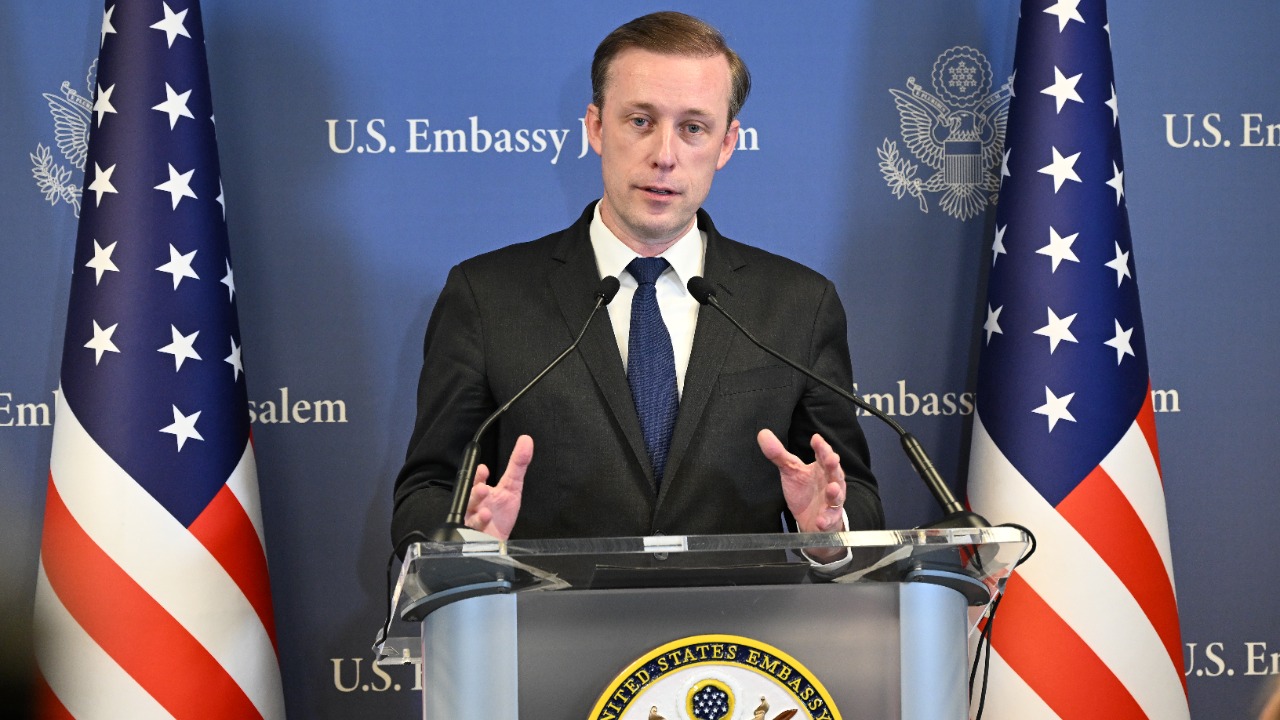

Jake Sullivan spent years trying to turn artificial intelligence into a pillar of American power, only to watch President Donald Trump rip up that blueprint in a matter of months. The clash is not just personal, it is a fight over whether AI will be treated as a tightly controlled strategic asset or a largely deregulated engine of commercial dominance. As Trump rewrites the rules, Sullivan’s anger captures a deeper anxiety inside the national security world about what comes next.
At stake is whether the United States leans into export controls, alliance-building, and guardrails, or instead bets that fewer constraints and aggressive preemption will keep Washington ahead in the global AI race. The result will shape everything from chip supply chains and cloud infrastructure to how much leverage the White House has over rivals that depend on American technology.
The Biden-era AI foreign policy Sullivan built
Jake Sullivan, as President Joe Biden’s national security adviser, treated AI hardware and software as tools of statecraft, not just products of Silicon Valley. His approach centered on using advanced chips and cloud access as leverage, tightening the flow of cutting edge processors to strategic competitors while deepening cooperation with partners that accepted U.S. rules. That strategy turned export controls and licensing into core instruments of foreign policy, especially around Nvidia’s most powerful accelerators and the data centers that run them.
In that role, Sullivan pushed a vision in which Washington would set the pace of global AI development by deciding who could buy which chips, at what performance level, and under what conditions. He saw the semiconductor stack as a chokepoint that could slow adversaries and bind allies closer to the United States, a philosophy that culminated in a sweeping AI foreign policy framework that Trump has now moved to dismantle, leaving Sullivan, in his own telling, furious that the architecture he built has been torn apart.
Why Sullivan is “furious” at Trump’s reversal
Sullivan’s anger is rooted in the speed and scale of Trump’s reversal, which he views as a direct assault on the strategic logic behind Biden’s AI controls. He has described how carefully negotiated limits on Nvidia’s most advanced chips were designed to keep the United States ahead without triggering uncontrolled escalation, only to see those limits scrapped or watered down as Trump prioritized short term commercial wins. For a policymaker who spent years threading the needle between innovation and security, the sense that his work was casually discarded is personal as well as professional.
That frustration is sharpened by Sullivan’s conviction that AI is not optional for national power but central to it. He has warned that loosening restrictions on high end processors risks eroding the very leverage Washington painstakingly built, especially in regions where access to U.S. hardware is the main point of influence. In interviews, he has made clear that he is furious that Trump destroyed his AI foreign policy, arguing that the new direction undercuts both deterrence and diplomacy.
From West Wing to Harvard: Sullivan’s evolving AI crusade
After leaving the White House, Sullivan did not step away from the AI debate, he shifted the battlefield. Now a professor at the Harvard Kennedy School of Government, he has turned his experience into a case study in how technology policy can make or break national strategy. In lectures and public comments, he has framed AI as a generational inflection point, insisting that the choices Washington makes on chips, data, and standards will define U.S. influence for decades.
From that academic perch, Sullivan has become even more explicit about being pro artificial intelligence, but only if it is harnessed with clear rules and a long term plan. He has argued that the United States should embrace AI’s potential while still accepting slower commercial rollout in some markets if that delay preserves strategic advantage. The move to Harvard has freed him to criticize Trump’s course corrections more directly, turning him into a kind of outside conscience for the national security establishment that helped design Biden’s AI agenda.
Trump’s new AI doctrine: preemption and dominance
Trump, for his part, has made clear that he sees AI primarily through the lens of economic competition and regulatory power. His national AI doctrine is anchored in a sweeping directive that puts federal preemption at the center of U.S. strategy, aiming to override a patchwork of state rules in favor of a single national framework. The goal is to give companies one set of standards and to prevent local restrictions from slowing deployment of new models and services.
In that order, Trump explicitly ties preemption to the need to secure U.S. AI dominance, casting deregulation as a competitive weapon in the global race. The message to industry is that Washington will clear legal obstacles rather than add new ones, a sharp contrast with Sullivan’s emphasis on guardrails and export controls. Where Biden’s team saw AI as a strategic asset to be rationed, Trump is betting that unleashing it at home will generate enough momentum to keep the United States ahead abroad.
Executive orders that rewired AI and chip policy
The shift is not just rhetorical, it is embedded in a series of second term directives that have reoriented how the federal government treats AI and the hardware that powers it. Trump’s Term Executive Orders include measures that pull back from some of the most restrictive export controls, streamline licensing for chip sales, and signal a more permissive stance toward cross border data flows. Each Executive Order is cataloged with its Date Issued and a Short Execu summary that underscores how central AI and digital infrastructure have become to the administration’s agenda.
One of the most consequential moves directs the U.S. attorney general to establish enforcement mechanisms aimed at preventing censorship and deceptive practices in AI systems, a mandate that reflects Trump’s long running focus on perceived bias in tech platforms. According to a detailed chart of Trump’s 2025 Term Executive Orders, that directive sits alongside other AI related orders that collectively move policy away from Sullivan’s foreign policy oriented controls and toward a framework centered on domestic speech, competition, and rapid deployment.
How Nvidia and the chip wars became ground zero
Nowhere is the contrast between Sullivan’s strategy and Trump’s reset clearer than in the fight over Nvidia’s most advanced AI chips. Under Biden, Sullivan treated those processors as a strategic bottleneck, tightening rules on which countries could buy top tier accelerators and at what performance thresholds. The idea was to slow the ability of rivals to train frontier models while preserving access for allies that aligned with U.S. security goals, effectively turning Nvidia’s product roadmap into an instrument of foreign policy.
Trump’s team has been more willing to relax those constraints, arguing that U.S. firms need the freedom to sell into lucrative markets if they are to maintain their lead in research and development. That has meant revisiting performance caps, reconsidering licensing delays, and signaling to industry that Washington will not stand in the way of major deals unless there is a clear, immediate security risk. For Sullivan, who once tried to stop Nvidia shipments that he believed would erode U.S. leverage, the new posture looks like a retreat from the chip wars he helped define.
Allies, adversaries, and the cost of scrapping controls
The foreign policy consequences of Trump’s AI reset are still unfolding, but the outlines are already visible. Allies that signed up for tighter coordination on export controls under Biden now face a United States that is less interested in shared sacrifice and more focused on its own commercial gains. That shift complicates efforts to build unified positions on issues like model safety, cross border data access, and joint semiconductor investments, especially in Europe and East Asia where governments had aligned themselves with Sullivan’s more restrictive approach.
Adversaries, meanwhile, are probing the gaps created by looser rules, looking for ways to route purchases through third countries or exploit ambiguities in performance thresholds. By softening the edges of Biden era controls, Trump has made it easier for some of that activity to proceed without triggering automatic red flags, at least in the short term. Sullivan’s warning is that once those channels are open and high end chips are in circulation, it becomes far harder to reassert control, leaving Washington with fewer tools to shape the behavior of states that depend on U.S. technology.
The domestic AI economy Trump wants to unleash
Domestically, Trump’s AI agenda is designed to send a clear signal to developers, cloud providers, and chipmakers that Washington is on their side. By emphasizing federal preemption and limiting the scope of new regulatory burdens, the administration is trying to create a predictable environment for companies building everything from large language models to autonomous driving systems. The bet is that a lighter touch at home will accelerate innovation, attract investment, and keep the United States at the center of the global AI ecosystem.
That approach has obvious appeal for firms that chafed at the compliance costs and export uncertainties of the Biden era, particularly those with complex international supply chains. Yet it also raises questions about whether the rush to scale will outpace the capacity of existing institutions to manage risks, from deepfakes and algorithmic discrimination to the concentration of power in a handful of cloud platforms. Sullivan’s critique is that without a stronger link between domestic policy and foreign strategy, the United States could end up with a booming AI sector that is less useful as a tool of statecraft.
Two competing theories of AI power
At its core, the clash between Sullivan and Trump is a clash between two theories of how AI translates into national power. Sullivan’s model treats chips, data, and models as strategic assets that must be rationed, coordinated with allies, and embedded in a broader diplomatic framework. Trump’s model treats them as engines of economic growth that should be unleashed, with national strength emerging from the sheer scale and speed of domestic innovation rather than from tight control of supply chains.
Both visions acknowledge that AI will define the balance of power in the coming decades, but they diverge on whether the United States should prioritize control or velocity. As Sullivan fumes from his new perch in Cambridge and Trump signs orders from the Oval Office, the outcome of that argument will shape not only how American companies build the next generation of AI, but also how Washington wields that technology in a world where every major power is racing to do the same.
More from Morning Overview