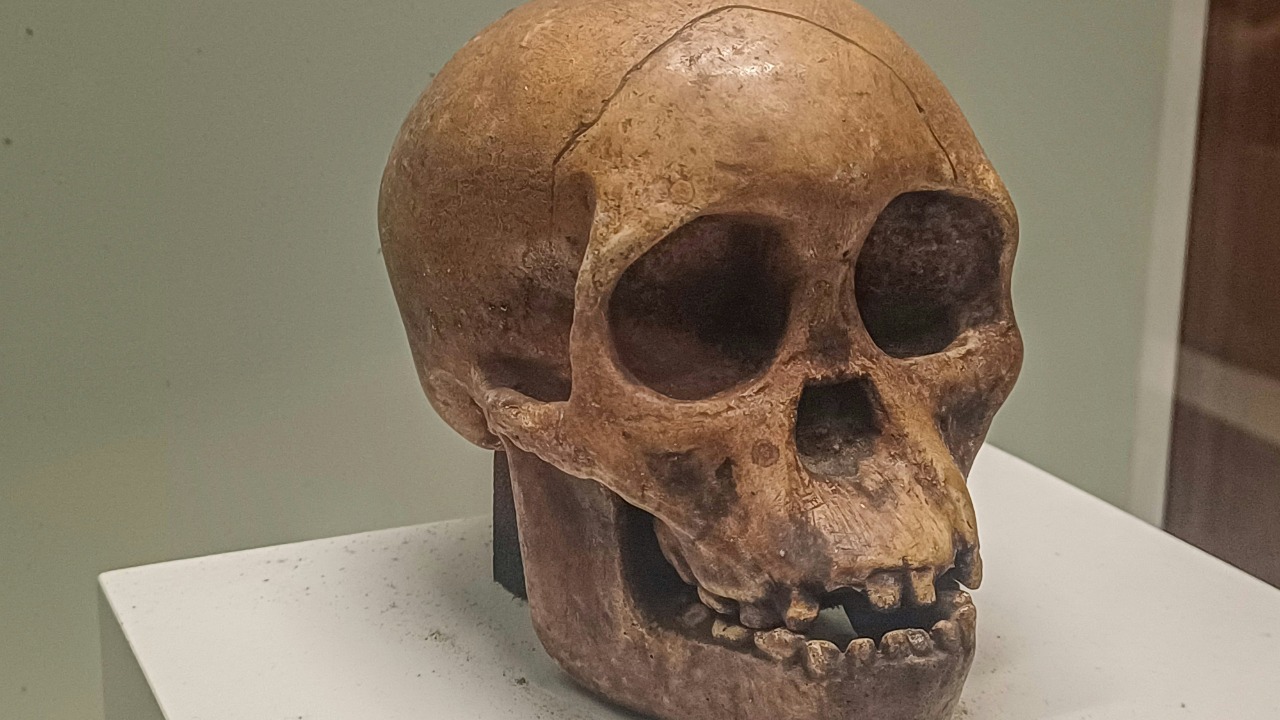

Long before modern medicine named and cataloged human herpesviruses, at least one of them was already quietly embedding itself in our DNA. New work with Iron Age human remains has now traced Human betaherpesvirus 6 back thousands of years, revealing that a viral hitchhiker from that era is still infecting people today. The findings do more than push a disease timeline deeper into the past, they show how a virus can become a permanent passenger in the human genome.
By reconstructing ancient viral genomes and comparing them with modern infections, researchers have pieced together a story of co‑evolution, genetic integration, and long‑term health consequences. I see this as a rare case where archaeology, genomics, and virology converge to show how a pathogen has shadowed our species from the Iron Age into the age of whole‑genome sequencing.
Iron Age skeletons and a modern medical mystery
The central puzzle starts with a simple observation: a significant share of people today carry fragments of Human betaherpesvirus 6, often abbreviated as HHV‑6, inside their chromosomes. For years, scientists suspected that this viral DNA had ancient roots, but they lacked direct evidence from historical human remains. The new research changes that by recovering HHV‑6A and HHV‑6B sequences from individuals who lived in the Iron Age, turning a long‑standing hypothesis into a documented evolutionary timeline.
By showing that HHV‑6 was already present in humans thousands of years ago, the work helps explain why the virus is so deeply entrenched in our biology. The study reports that, for the first time, scientists have reconstructed ancient genomes of Human betaherpesvirus 6A and 6B from archaeological material, confirming that these viral sequences can be preserved alongside the host’s own DNA in skeletal remains, as detailed in the description of ancient HHV‑6 genomes.
Reconstructing a virus from fragments of ancient DNA
Recovering a viral genome from Iron Age bones is not as simple as reading a clean strand of DNA. Ancient material is heavily degraded, broken into short fragments, and mixed with genetic traces from microbes, soil, and handling. To isolate HHV‑6, researchers had to sift through this molecular noise, identify sequences that matched modern HHV‑6A and HHV‑6B, and then computationally stitch those fragments back together into coherent viral genomes that could be compared across time.
That reconstruction effort relied on the same ancient DNA techniques that have transformed our understanding of human migration and ancestry, now applied to a pathogen that integrates into the host genome. The team behind the work, led by the Ancient DNA Laboratory at the University of Vienna and collaborators, used high‑throughput sequencing and targeted analysis to pull HHV‑6 reads out of human genomic data, then aligned those reads to reference sequences to reconstruct the ancient viral genomes with enough resolution to track their evolution.
University of Vienna and University of Tartu connect deep history to living patients
What makes this study stand out is not only the technical feat but the institutional collaboration that tied archaeology to clinical relevance. The project was led by the University of Vienna and University of Tartu, Estonia, bringing together expertise in ancient DNA, population genetics, and medical virology. By combining skeletal material from historical contexts with modern genomic datasets, the team could show that the same viral lineages present in Iron Age individuals still circulate in people today.
According to the project summary, the University of Vienna and University of Tartu, Estonia, coordinated sampling, sequencing, and evolutionary analysis to document how HHV‑6A and HHV‑6B have persisted in human populations over millennia, a connection highlighted in the report on Iron Age origins of the virus. I see that institutional pairing as crucial, because it allowed the researchers to treat the virus not just as an archaeological curiosity but as a living pathogen with direct implications for present‑day health.
HHV‑6A, HHV‑6B, and the habit of hiding in human chromosomes
Human betaherpesvirus 6 actually refers to two closely related viruses, HHV‑6A and HHV‑6B, that share a remarkable ability to integrate into human chromosomes. Unlike viruses that simply infect cells and then disappear, HHV‑6 can insert its genetic material into the telomeric regions of host DNA, effectively becoming part of the person’s genome. Once that happens in reproductive cells, the integrated virus can be passed down like any other genetic variant, turning a one‑time infection into a heritable trait.
The new work confirms that this integration behavior is not a recent quirk but a long‑standing feature of HHV‑6 biology. The study reports that the discovery of these ancient HHV‑6A and HHV‑6B genomes documents a deep history of viral integration in the human past, showing that the virus has been embedding itself in chromosomes for thousands of years, as emphasized in the description of their deep history with humans. That long timeline helps explain why integrated HHV‑6 is now found across diverse populations rather than confined to a single region or lineage.
From Iron Age genomes to today’s inherited infections
One of the most striking findings is how common integrated HHV‑6 is in living people. The researchers report that about one percent of people today carry HHV‑6 sequences that are fully embedded in their chromosomes, a direct legacy of ancient integration events. In those individuals, every cell in the body contains a copy of the viral genome, inherited from a parent rather than acquired through a recent infection.
By comparing the ancient HHV‑6A and HHV‑6B genomes to modern integrated sequences, the team could show that some of the viral lineages present in Iron Age individuals are closely related to those found in people now, indicating continuity across thousands of years. That continuity is underscored in the summary of the first ancient human herpesvirus genomes, which notes that earlier ideas about ancient integration are now backed by direct genetic evidence. For me, that link between an Iron Age skeleton and a modern patient’s genome is the clearest sign of how deeply this virus has woven itself into human heredity.
Co‑evolution: a virus and its host adapt to each other
When a virus persists in a host population for thousands of years, it does not remain static. Both the pathogen and the host immune system adapt, shaping each other’s evolution. In the case of HHV‑6, the new data support the idea that these herpesviruses have co‑evolved with humans, fine‑tuning their ability to establish lifelong infections while avoiding immediate elimination by immune defenses. That co‑evolutionary dance helps explain why HHV‑6 can remain latent for decades and then reactivate under certain conditions.
The study notes that ancient DNA data have helped identify how herpesviruses, including HHV‑6A and HHV‑6B, have co‑evolved with humans for thousands of years, maintaining the ability to stay in the body for life, as described in the report that a study confirms co‑evolution. I read that as evidence that HHV‑6 is not just an opportunistic invader but a long‑term companion species, one that has learned to exploit the human genome as a stable refuge.
What the Science Advances paper adds to the herpesvirus story
The work is not just a technical demonstration, it also reframes how I think about herpesviruses as a group. By placing HHV‑6A and HHV‑6B in an Iron Age context, the Science Advances paper shows that chronic, latent infections are not a modern byproduct of crowded cities or contemporary lifestyles. Instead, they are part of a much older pattern in which herpesviruses establish enduring relationships with their hosts, sometimes integrating into chromosomes and sometimes persisting as latent infections in specific cell types.
The study, led by the University of Vienna and University of Tartu, Estonia, and published in Science Advances, confirms that HHV‑6A and HHV‑6B have a documented deep history with humans and that integrated forms of the virus are present in about one percent of people today, as summarized in the overview of the first ancient human herpesvirus genomes. That combination of deep time perspective and precise modern prevalence gives clinicians and geneticists a clearer framework for interpreting HHV‑6 findings in patient genomes.
Iron Age DNA reveals a virus that never really left
For non‑specialists, the most compelling part of this story is the continuity between an Iron Age infection and a virus that still causes disease today. The new analysis of Iron Age DNA shows that HHV‑6 has been infecting humans for thousands of years, and that some of the viral lineages present in those ancient individuals are closely related to strains that continue to circulate now. In other words, the virus that once infected people who lived in a world of iron tools and oral traditions is essentially the same one that pediatricians and neurologists encounter in modern clinics.
Reporting on the study notes that Iron Age DNA reveals a herpesvirus that still infects humans today, and that learning how ancient DNA from human remains provided this insight helps trace how the virus’s relationship with humans stretches back thousands of years, as described in the feature on Iron Age DNA and herpesvirus. I find that continuity striking because it shows that, despite enormous changes in human culture and environment, some microbial relationships have remained remarkably stable.
Health implications: from childhood fevers to lifelong latency
HHV‑6 is not just a genomic curiosity, it has concrete clinical consequences. HHV‑6B is best known as a cause of roseola, a common childhood illness marked by high fever and rash, while both HHV‑6A and HHV‑6B have been linked to complications in immunocompromised patients and possible roles in neurological conditions. The virus’s ability to remain latent and then reactivate means that an infection acquired early in life can have health implications decades later, particularly when the immune system is weakened.
The new study underscores that HHV‑6 can stay in the body after the initial infection, persisting as integrated DNA or latent virus, a point highlighted in the explanation that a new study shows lifelong presence. Knowing that this capacity for lifelong persistence has been part of HHV‑6 biology since at least the Iron Age suggests that medicine is dealing with a deeply entrenched feature of the virus, not a recent adaptation, which in my view raises the stakes for understanding how integrated HHV‑6 might influence gene regulation, immune responses, or disease risk across a person’s lifetime.
More from Morning Overview