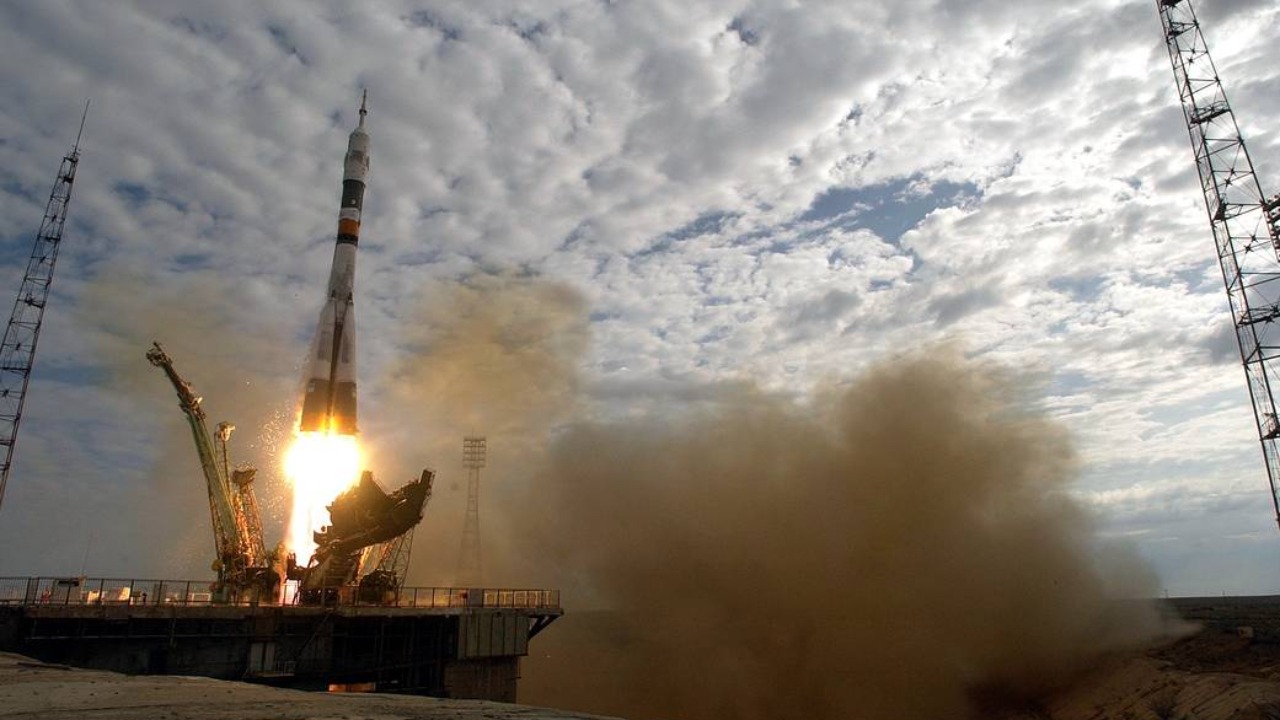

Iran’s decision to launch three Earth-imaging satellites on a Russian Soyuz rocket marks a new phase in its space program, blending foreign launch capacity with domestically built hardware. The move follows earlier cooperation on orbital missions, the unveiling of new homegrown satellites, and public vows to accelerate launches and infrastructure, all of which signal that Tehran intends to be a long-term player in low-Earth orbit.
The Successful Launch of Iran’s Latest Satellite via Russian Partnership
The Successful Launch of Iran’s Latest Satellite via Russian Partnership is best understood as the culmination of a growing collaboration that put Three Iranian satellites, Zafar-2, Paya and Kowsar 1.5, into orbit on a Russian Soyuz rocket from the Vostochny Cosmodrome in Russia. Iranian state television, cited in regional coverage, specified that “Three Iranian satellites, Zafar-2, Paya and Kowsar 1.5, were launched into space by a Soyuz rocket from the Vostochny Cosmodrome in Russia,” a formulation that underscores both the domestic origin of the spacecraft and the reliance on Russian launch infrastructure for access to Earth orbit. The same reports describe the mission as a low Earth orbit deployment, with a separate account noting that a Russian rocket sent the satellites to circle the Earth on a 500-kilometer, 310-mile orbit from the Vostochny launchpad, a typical altitude for Earth-imaging and environmental monitoring missions that require frequent revisits over the same ground tracks. By pairing its own hardware with a proven Russian launcher, Iran effectively sidestepped the reliability and capacity constraints that have dogged its indigenous rockets, while still claiming a technological win at the spacecraft level.
The partnership did not emerge in a vacuum, and earlier reporting on Iran’s use of foreign launchers helps frame the significance of this latest Soyuz ride. A previous mission highlighted in a rocket report described how Iran had already turned to a Russian Soyuz rocket to orbit one of its satellites, signaling that Moscow was willing to provide commercial or state-backed launch services despite Western pressure over dual-use technologies. The new flight from the Vostochny Cosmodrome in Russia, which again relied on Soyuz, deepens that cooperation and suggests a pattern in which Iran focuses on building satellites such as Zafar-2, Paya and Kowsar 1.5 while outsourcing the most technically demanding and sanction-sensitive part of the stack, the orbital-class launcher. From a geopolitical perspective, the fact that Three Iranian satellites now circle Earth on a Russian vehicle reinforces the alignment between Tehran and Moscow at a time when both face isolation from Western space markets, and it raises the stakes for regional rivals who must now factor persistent Iranian imaging capability into their security calculations. For Iran’s own planners, the success of a Sunday launch that placed domestically produced satellites into low Earth orbit validates years of investment in small-satellite engineering and gives political leaders a tangible symbol of technological progress to showcase at home.
Unveiling of Three Indigenous Earth-Imaging Satellites
Unveiling of Three Indigenous Earth-Imaging Satellites captures the domestic engineering push that preceded the Soyuz mission, when Iranian officials publicly presented a trio of homegrown spacecraft designed for observation and research. In that earlier event, authorities showcased three new satellites as indigenous products, emphasizing that they were built inside Iran’s own industrial and academic ecosystem rather than imported from abroad. Coverage of the announcement stressed that these were homegrown satellites intended for Earth-imaging and related applications, a description that aligns closely with the later confirmation that Three Iranian satellites, Zafar-2, Paya and Kowsar 1.5, were domestically produced and tailored for agriculture and environmental research. Another account of the launch from Vostochny noted that Iran on Sunday successfully placed three domestically produced satellites into space for agriculture and environmental research, reinforcing the idea that the hardware unveiled at home was not a mere prototype display but part of a concrete plan to generate usable data on crops, water resources and land use. By tying the unveiling to specific missions such as Zafar-2, Paya and Kowsar 1.5, Iranian officials could argue that the country was moving beyond symbolic space shots toward operational Earth observation.
Technical details in the launch coverage help explain why these satellites matter for Iran’s broader strategy. One report on how Iran puts 3 homegrown satellites in orbit on a Russian Soyuz rocket specified that the craft were inserted into low-Earth orbit, a regime that is particularly well suited to high resolution imaging and frequent passes over national territory. Another account highlighted that the satellites were intended for agriculture and environmental research, which suggests that their payloads likely include multispectral or high-resolution cameras capable of tracking vegetation health, soil moisture proxies and surface water changes across Iran’s varied climate zones. Even without detailed sensor specifications, the combination of low Earth orbit, an altitude on the order of a 500-kilometer, 310-mile track around Earth, and a stated focus on environmental monitoring implies that the satellites can feed into crop yield forecasts, drought early warning systems and land management policies. For stakeholders inside Iran, that capability could improve food security planning and disaster response, while for neighboring states and external observers, it signals that Tehran is building a sovereign data stream that reduces its dependence on foreign imagery providers. The unveiling of three indigenous Earth-imaging satellites therefore marks not just a technological milestone but a shift in how Iran intends to gather and control strategic information about its own territory and surrounding regions.
Ambitious Plans for Four More Launches and a New Spaceport by March
Ambitious Plans for Four More Launches and a New Spaceport by March show how Iran is trying to turn individual satellite successes into a sustained program with its own infrastructure. In public comments that preceded the latest Soyuz mission, Iranian officials vowed that the country would launch four satellites and open a new spaceport by March, setting a clear near-term benchmark for both orbital activity and ground facilities. Reporting on those statements noted that Iran had pledged to send four additional satellites into space and to inaugurate a new launch site within that timeframe, framing the goal as part of a broader effort to expand national space capabilities. The commitment to a new spaceport was described in detail in coverage that explained how Iran vows to launch four satellites and open a new spaceport by March, with the new facility presented as a way to reduce reliance on foreign launchpads and to support a higher cadence of missions. By articulating a specific number of satellites and a concrete deadline, Iranian planners signaled that they view the recent Soyuz flight not as an isolated achievement but as a stepping stone toward a more autonomous and frequent presence in low Earth orbit.
The subsequent confirmation that Iran on Sunday launched three domestically built satellites into low Earth orbit aboard a Russian Soyuz rocket, as described in a report that detailed how Iran launches three satellites from Russia in joint Soyuz cooperation, gives those earlier promises added weight. That account emphasized that Iran on Sunday launched three domestically built satellites into low Earth orbit aboard a Russian Soyuz rocket, deepening space cooperation and demonstrating that the country can already field multiple spacecraft at once when launch services are available. Another report, which stated that Three Iranian satellites, Zafar-2, Paya and Kowsar 1.5, were launched into space by a Soyuz rocket from the Vostochny Cosmodrome in Russia, underlined the operational reality behind the rhetoric. When read alongside the earlier pledge that Iran vows to launch four satellites and open a new spaceport by March, available at a detailed account of those plans, the Sunday launch appears as the first concrete installment in a multi-mission roadmap. If Iran can follow through by orbiting four more satellites and bringing a new spaceport online, it will have moved from occasional, externally launched missions to a more regular schedule that blends domestic infrastructure with continued Russian cooperation. For regional security planners and commercial satellite operators, that trajectory suggests that Iran’s presence in low Earth orbit will become more persistent and diversified, with implications for everything from military surveillance to environmental monitoring and telecommunications.
Supporting sources: Iran launches 3 satellites into space from Russia.
More from MorningOverview