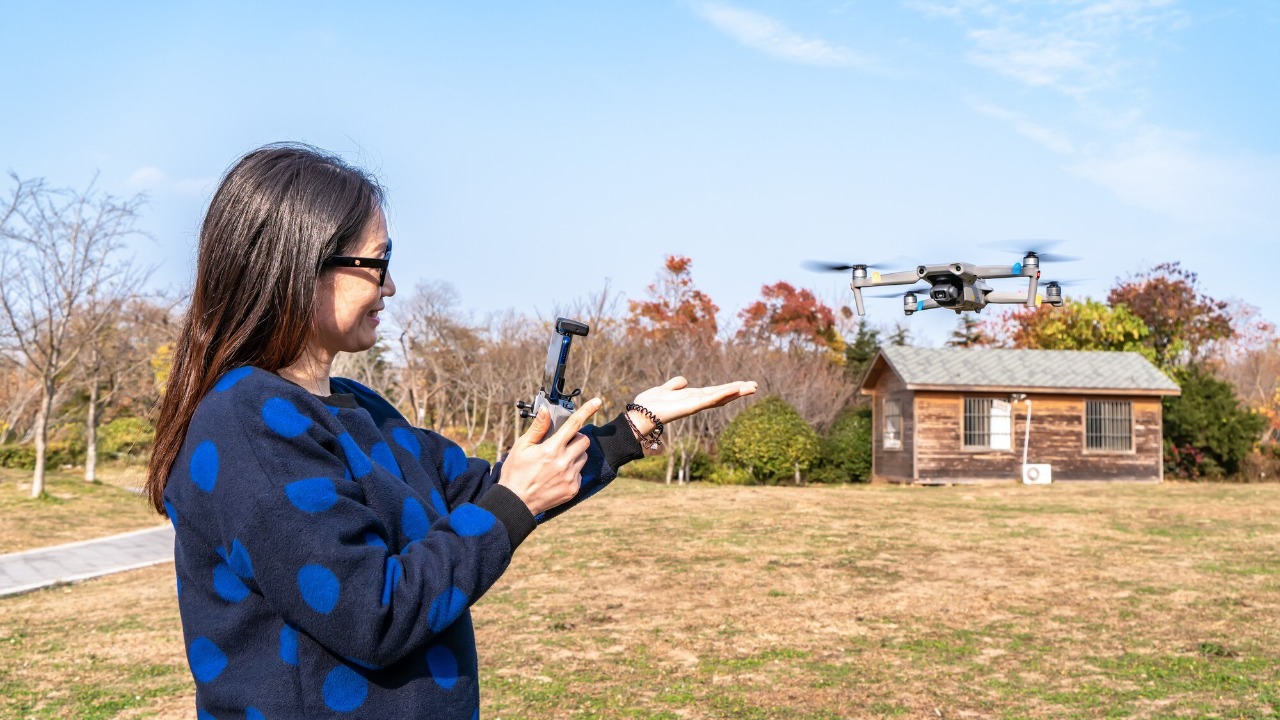

Homeowners across the country are discovering that the next threat to their coverage is not a storm or a fire, but a camera hovering overhead. Insurers are increasingly relying on drone and aerial photos to flag perceived risks, then using those images to raise premiums, refuse renewals, or cancel policies outright. I am seeing a quiet shift in power, where a single snapshot can outweigh years of on‑time payments and spotless claims histories.
What began as a niche inspection tool has turned into a mass surveillance system for the property market, with little transparency about how images are captured, interpreted, or challenged. The result is a growing backlash from regulators, consumer advocates, and homeowners who say they never consented to being watched from the sky.
The new aerial playbook for home insurers
Insurers describe drones, high‑resolution satellites, and flyovers as efficient ways to assess risk without sending adjusters up ladders. In practice, those tools now feed automated systems that scan roofs, yards, and driveways for anything that looks like deterioration or liability. Industry representatives have acknowledged that companies are using aerial imagery to decide whether to renew home coverage and that this kind of remote inspection will only become more common, a shift that moves key underwriting decisions away from in‑person judgment and toward algorithmic review of pixels on a screen, as recent reporting from Insurance has underscored.
Consumer advocates say that shift has coincided with a dramatic rise in complaints from people who were dropped or penalized based on overhead photos that allegedly showed everything from worn shingles to cluttered yards. One advocacy group reports a surge in cases where insurers used images to justify non‑renewals for issues as minor as a few branches on a roof, toys in the grass, or undeclared trampolines, describing a pattern of companies “spying” on houses via aerial imagery and then combing the pictures for reasons to cancel coverage, a trend detailed in a recent analysis of how insurers now scour everything from roofing to yard clutter and undeclared trampolines in order to cut customers loose, as documented in reports.
Real people, real cancellations
The abstract debate over drones becomes very concrete when a homeowner receives a non‑renewal notice tied to an image they never knew existed. In Massachusetts, a woman in Topsfield learned that her insurer had flown a drone over her property without warning, then cited the footage to challenge her coverage. She told investigators that she had no idea a device was hovering above her home until she was confronted with the images, a case that prompted chief investigative reporter Cheryl Fiandaca of WBZ’s I‑Team to dig into how companies are using this technology on unsuspecting customers, as detailed in a televised probe into Lynne Schueler and her policy.
Another Furious Massachusetts homeowner blasted her carrier after discovering that a drone inspection she never consented to had led to a refused renewal over what she described as a single minor issue. In that case, the homeowner said the company relied on aerial images to claim her property posed a risk, even though she had not filed any recent claims and believed the house was in good condition. These stories echo a broader pattern in which people only learn about aerial surveillance when it is used against them, often with little chance to correct or contextualize what the images show.
From blurry pixels to life‑altering decisions
What makes this surveillance particularly fraught is how often the images themselves are flawed or ambiguous. Consumer advocates who have reviewed cancellation files say that “Sometimes, these images are blurry,” and that companies are still treating them as definitive proof of hazards, even when it is hard to tell whether a dark patch is a shadow or actual roof damage. One homeowner who claimed her insurer used a drone to spy on her property before dropping her from a plan said there was “no freaking way” the supposed defect was real, arguing that the company misread the footage and never gave her a fair chance to respond, according to a detailed account of how Sometimes the technology gets it wrong.
Former insiders have raised similar alarms. But Nichole Brink, a former Farmers Insurance agent who quit in protest over surveillance policies, has described cases where aerial systems flagged supposed tree branches on roofs that turned out to be nothing more than shadows. In her telling, adjusters were pressured to trust the software and the images over their own judgment, even when homeowners insisted the photos were misleading. That dynamic, where a blurry overhead shot can outweigh on‑the‑ground reality, is what makes this technology so destabilizing for people who depend on predictable coverage.
States and regulators start to push back
Regulators are beginning to recognize that letting insurers rely solely on aerial photos to cut customers loose is a recipe for abuse. In New Hampshire, the department that oversees private insurance has warned companies that it takes more than an aerial photo or two to justify canceling or refusing to renew a home policy. The agency made clear that insurers cannot simply point to a drone image of a roof and demand expensive repairs without additional evidence, a stance that followed a high‑profile dispute over roof damage allegedly captured from above, as reported in the state ruling that has rallied consumer advocates.
Other states are moving in the same direction. One consumer group has highlighted how insurance departments in multiple jurisdictions, including Massachusetts, have issued statements limiting the use of aerial photos, warning companies not to base cancellations solely on overhead images or to mistake shadows for roof damage. These moves mirror a broader regulatory trend in which states are asserting that technology can inform underwriting but cannot replace fair investigation or due process. Even as lawmakers in places like Even California and Delaware consider new transparency rules for corporate ownership, insurance regulators are carving out their own expectations for transparency in how companies watch and judge private homes.
When surveillance meets climate risk and corporate strategy
Insurers argue that aerial monitoring is a rational response to rising climate risk and construction costs, but the way it is being deployed reveals a deeper strategic shift. In Texas, where extreme weather and rapid growth have strained the market, homeowners in Austin and San Antonio have reported surprise non‑renewals and sharply different renewal offers after companies reviewed overhead images of their properties. One San Antonio homeowner who had been with the same insurer for at least 20 years said a drone inspection of her roof triggered a sudden change in coverage terms, illustrating how a single flyover can upend decades of stable protection, according to a detailed account of how In Texas insurers are watching homes from above.
Nationally, reports have documented how companies are not just using drones but also high‑altitude balloons, manned airplanes, and services like Google Earth to scan neighborhoods for risk factors. Angry homeowners have described losing coverage after insurers cited damaged roof shingles, debris in backyards, or unapproved features like pools and trampolines, all spotted from the sky, as detailed in coverage of how Angry policyholders reacted. One San Francisco homeowner said She was dropped in May because, according to aerial footage, Liberty Mutual cited concerns of “algae & mold” on her roof, a finding she spent $42,000 to challenge. These cases show how aerial tools, once marketed as neutral data sources, have become levers in a broader effort to shed risk and reshape insurers’ books of business.
Secret flyovers, legal gray zones, and what homeowners can do
For many homeowners, the most unsettling part of this trend is the secrecy. Investigations have found that US insurers are using drones to inspect homes without owners knowing, then using the footage to justify policy cancellation over what customers see as trivial matters like minor clutter or cosmetic wear. One analysis of US insurers described how a homeowner’s policy can be at risk over seemingly small issues once a drone camera captures them. Another report chronicled how companies are sending drones to “spy” on homeowners, find defects, and cancel policies, arguing that the technology gives insurers more power to spot problems but also more opportunity to misinterpret them, a pattern laid out in a detailed review of how Insurance Companies Sending has become a flashpoint.
Homeowners who push back often face an uphill battle. One renovation contractor described how an insurer used a drone to spy on a home renovation project and then moved to cancel the policy, a case that has been cited as an example of how even permitted work can trigger surveillance‑driven penalties, as detailed in a report on how an Insurance Company Uses to cancellation. Photography specialists have also documented how insurers are secretly flying drones and taking photos of homes, noting that the aerial camera technology itself is often flawed and that US companies have dropped customers based on images that misrepresented the true condition of their properties, as explored in a detailed look at how However the systems can fail. Advocacy groups have collected stories of fury as home insurance companies cancel coverage after secretly taking pictures of owners’ properties using drones, high‑altitude balloons, and even manned airplanes, underscoring how far some carriers are willing to go to scan for risk, as described in a roundup of fury from policyholders.
Aerial oversight is coming, but not fast enough
Regulatory guardrails are emerging, but they lag far behind the technology. Consumer advocates have urged state insurance departments to set clear rules on when and how aerial imagery can be used, arguing that companies should not be allowed to cancel policies based solely on overhead photos or to rely on images that may be outdated or distorted. Some states have begun to respond, with one detailed policy analysis noting that regulators are warning insurers against overreliance on aerial images or mistaking shadows for roof damage, and that they are insisting on corroborating evidence before coverage is pulled, as outlined in new guidance that state home insurance companies cannot cancel policies based solely on aerial photos.
Yet the surveillance infrastructure is already entrenched. Photography and consumer‑rights reporting has shown that insurers are quietly building vast libraries of overhead images, often contracting with third‑party vendors that specialize in scanning neighborhoods for risk factors, a trend that has been documented in visual investigations into how insurance companies are secretly flying drones. At the same time, broader corporate transparency debates, including those around the New York LLC Transparency Act taking effect in Janua, show that policymakers are increasingly willing to demand more openness from powerful private actors. The question now is whether that appetite for oversight will extend to the skies above people’s homes, before another wave of homeowners learns about drone photos only when their coverage disappears.
More from Morning Overview