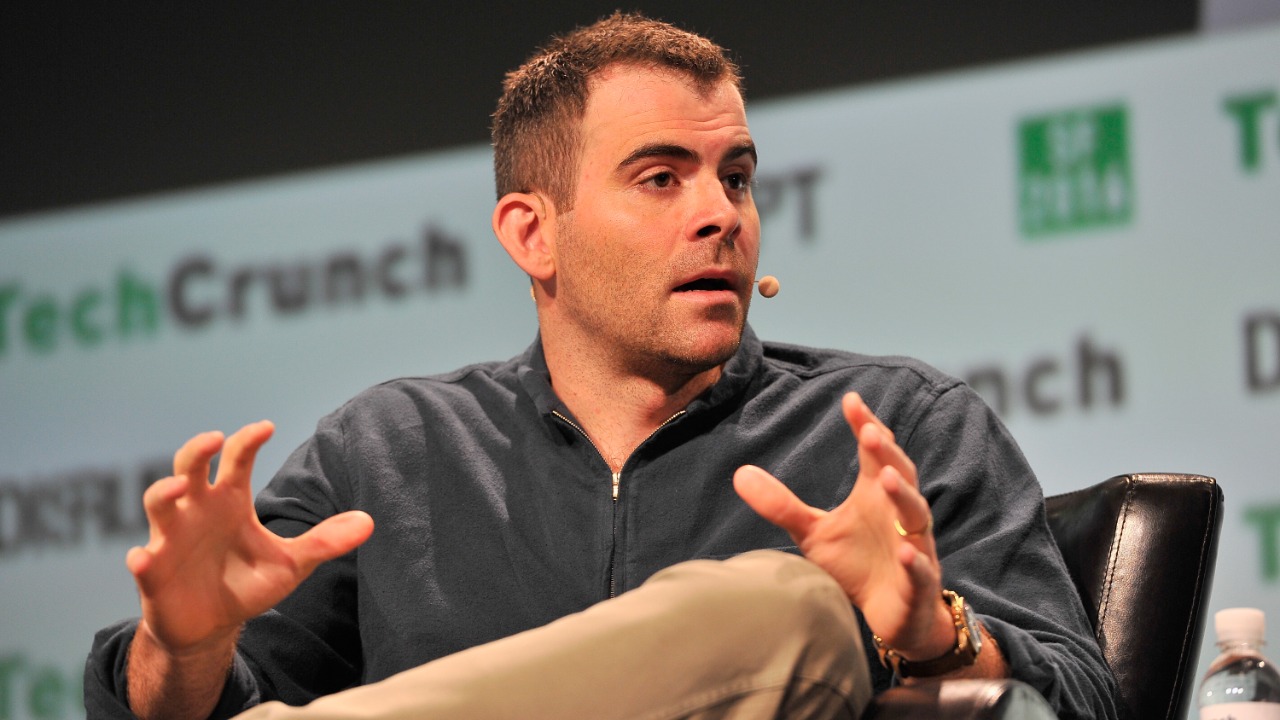

Instagram’s top executive is trying to flip the script on how social media handles artificial intelligence. Instead of endlessly chasing deepfakes and synthetic images, Adam Mosseri now argues that the more realistic solution is to clearly mark what is real, asking platforms, device makers, and creators to help fingerprint authentic photos and videos before feeds are saturated with AI.
His push comes as AI tools become so powerful and accessible that even experts struggle to tell human-made work from machine output. By calling for labels on genuine content rather than only on AI, Mosseri is effectively admitting that the old trust signals on Instagram are breaking, and that the next phase of social media will depend on visible proof of provenance as much as on likes or followers.
Why Mosseri wants reality, not AI, to carry the label
Adam Mosseri’s argument starts from a blunt premise: AI is about to be everywhere, and trying to spot every fake will not scale. In his recent reflections on the future of Instagram, he suggests that the “smartest” way to keep feeds trustworthy is to mark posts that are verifiably real, rather than rely on imperfect detection systems that will always lag behind new generative tools. That is the core of his call to “label reality,” a shift that reframes authenticity as something that must be actively proven, not passively assumed.
In that vision, a photo from a protest, a video from a flood, or a behind-the-scenes clip from a film set would carry a subtle but robust signal that it came from a physical camera operated by a human at a specific time and place. Mosseri’s stance, laid out in detail in his comments on why it might be better to label reality than chase fakes, reflects a broader industry recognition that provenance, not just moderation, will define the next era of content integrity.
AI “slop” and the limits of detection
Behind Mosseri’s pivot is a sober assessment of how quickly AI is eroding traditional signals of trust. He has warned that as generative models improve, social platforms will “struggle to spot AI slop,” acknowledging that even sophisticated classifiers will miss a growing share of synthetic posts. In his year-end reflections, he describes a bar that is “shifting” from trying to detect every manipulated asset to building systems that can reliably confirm when something is not synthetic at all.
That shift is not just philosophical, it is practical. Mosseri notes that as AI content becomes more prevalent, social networks will come under mounting pressure to identify and label it, yet many of the most advanced tools will remain undetectable by historical methods. His argument, captured in his warning that platforms will struggle to spot AI slop as tech improves, is that detection alone cannot carry the weight of public trust once synthetic media becomes the default rather than the exception.
From AI labels to “Made with” disclaimers
Instagram has already experimented with the more familiar approach: labeling AI content itself. The platform introduced a “Made with AI” tag that can appear on posts when its systems detect generative elements or when creators self-report their use of tools. That move was meant to give users a quick visual cue that a glossy product shot or surreal landscape might not depict a real scene, and to nudge brands and influencers toward more transparent disclosure.
The early rollout, however, exposed the limits of this strategy. Some creators complained that the label appeared on lightly edited photos, while others found ways to avoid it entirely. External observers noted that the company’s own documentation acknowledged that it “can’t label content as required” in every case, a gap highlighted in explanations of what the new AI label on Instagram actually does. Mosseri’s newer emphasis on marking real content suggests he sees AI tags as necessary but insufficient, a first draft rather than a final answer.
AI has “killed” creativity, and why that matters for labels
Mosseri’s push for authenticity labels is not only about misinformation, it is also about culture on the app. He has argued that AI has “killed” creativity on Instagram, warning that feeds risk turning into a blur of synthetic perfection that flattens human originality. In a pointed message to users, he urged people to prioritize “originality” over synthetic polish, effectively telling creators that the platform’s future success depends on content that feels grounded in lived experience rather than algorithmic remixing.
That critique matters because it reframes labels as a way to reward human effort, not just to police abuse. If the app can reliably highlight posts that come from real cameras and real moments, those posts can be surfaced, recommended, and monetized differently from AI-heavy composites. Mosseri’s comments, captured in coverage of how the Instagram head says AI has “killed” creativity, hint at a future where authenticity labels could feed directly into ranking systems, giving human-made work a structural edge.
“Authentic content” and the fear of synthetic feeds
In his year-end letter, Mosseri went further, warning that AI poses a direct threat to what he calls “authentic content.” He described a near-term future in which feeds could “fill up with synthetic everything,” from fake travel diaries to AI-generated influencers, unless platforms change course. That is a stark admission from the person responsible for Instagram’s product direction, and it underscores why he now frames authenticity as the single factor on which the app’s long-term success will hinge.
By tying Instagram’s fate to authenticity, Mosseri is also signaling to advertisers and public figures that the company understands the reputational risk of being seen as a home for AI spam. His comments, summarized in reports that the Instagram head admits AI poses threat to “authentic content”, frame labeling real media as a defensive move to keep both users and brands from drifting to platforms that can offer clearer guarantees about what they are seeing.
Fingerprinting real media, from Camera to feed
To make labels on real content work, Mosseri argues that Instagram cannot act alone. He has called on camera makers, including both phone manufacturers and dedicated Camera companies, to build systems that can “fingerprint” photos and videos at the point of capture. The idea is that devices would embed cryptographic signatures or metadata that prove an image was recorded in the physical world, which platforms like Instagram could then read and display as a trust badge.
That approach would effectively create a chain of custody for authenticity, stretching from the lens of a smartphone to the scroll of a social feed. It mirrors broader industry efforts to standardize content provenance, including initiatives like the C2PA technical framework that aims to define how cameras, editing tools, and platforms can share tamper-evident information about media. Mosseri’s suggestion that it will be more practical to fingerprint real media rather than fake media aligns Instagram with that technical push, even as the details of implementation remain unsettled.
Instagram’s own admission: failing to keep up
Mosseri’s call for labeling real content is also a candid acknowledgment that Instagram is struggling to keep pace with the speed of change. He has admitted that as the world changes more quickly, Instagram is “failing” to adapt in some areas, particularly around the explosion of synthetic media. That kind of public self-critique is rare from a major platform executive, and it reflects the scale of the challenge he sees ahead.
In the same breath, he warns that AI-generated content will flood feeds, raising user skepticism and making it harder for people to trust what they see. Reports on how Instagram’s chief Adam Mosseri admits the app is failing capture a leader who is trying to reset expectations, telling users and policymakers that the platform will need time, new tools, and industry partnerships to rebuild a sense of authenticity in the feed.
How Instagram is rethinking identity and provenance
Labeling real content is only one part of Mosseri’s broader rethink of authenticity. He has also outlined plans to strengthen signals around who is behind each account, suggesting that identity verification, account history, and behavioral patterns will all play a larger role in how Instagram evaluates trust. In his public posts, he sketches a future where provenance is not just about the media file, but about the person or organization that publishes it.
That direction builds on Instagram’s existing verification systems, which already give blue badges to accounts that meet certain criteria. While those verification criteria have evolved over time, the underlying principle remains that users should have clearer signals about which accounts are legitimate and which are not. Guidance on how to get verified on Instagram shows how identity has long been a trust layer; Mosseri’s new focus suggests that content-level labels will now sit alongside account-level verification as twin pillars of authenticity.
Creators, brands, and the economics of “real”
For creators and advertisers, Mosseri’s stance is both a warning and an opportunity. On one hand, he is signaling that feeds filled with AI-generated “slop” will face more scrutiny and potentially less reach, especially as user skepticism rises. On the other, he is effectively promising that those who invest in original, camera-first storytelling will be better positioned in a future where authenticity labels and provenance signals feed directly into recommendation algorithms and brand safety tools.
That economic dimension is already visible in the way Mosseri talks about the year ahead for Instagram. He has outlined the challenges of AI content and suggested that success will depend on giving users more context about who is behind each account and what tools were used to create a post. Coverage of how Mosseri outlines the challenges of AI content and how platform policies are evolving on AI and authenticity both point to a future where “real” becomes a measurable, monetizable asset, not just a marketing slogan.
What happens when AI floods the feed anyway
Even with labels on real content and stronger identity checks, Mosseri is clear that AI will still flood social media. He has flagged that content creation and consumption are likely to move away from highly polished visuals toward a mix of rough, real-time clips and hyper-synthetic scenes, as generative tools become increasingly sophisticated and widespread. That hybrid reality will test whether users actually value authenticity enough to seek out labeled real posts, or whether convenience and spectacle win out.
In that context, his insistence that social media platforms will face growing pressure to identify and label AI-generated content is less a prediction than a statement of current political and cultural reality. Reports on how Mosseri makes a big disclosure about AI content on the app and how the Instagram chief warns AI-generated content will flood feeds both underscore that his proposal to label real content is not a silver bullet. It is a bet that in a world of infinite synthetic images, the rarest and most valuable commodity on Instagram will be proof that something actually happened.
More from MorningOverview