
Car technology is shifting from incremental upgrades to a wholesale rethink of what a vehicle is for. Instead of simply getting us from A to B, tomorrow’s rides are being built as rolling computers, social spaces, and energy nodes in a wider networked city. The result is a high‑stakes race between legacy manufacturers and software‑first challengers to define how we will move, work, and even play on the road.
From autonomous driving and vehicle‑to‑everything links to immersive cabins and the end of petrol sales, the next decade of mobility is being set now. I see a clear pattern emerging: the winners will be the companies that treat the car as a connected device in a larger ecosystem, not a sealed product that leaves the factory and stays frozen in time.
Autonomous driving moves from hype to hard engineering
Autonomous driving has long been framed as a distant dream, but the underlying stack is maturing fast. Modern systems combine layered Autonomous control software with dense sensor arrays that fuse radar, lidar, and cameras into a single model of the road. The core idea is simple: if you can give the car a richer, faster picture of its surroundings than a human driver has, you can start to reduce the accidents caused by human error that still dominate crash statistics. One of the key developments highlighted in recent reporting is an autonomous driving system that uses smart algorithms to anticipate hazards and intervene before a distracted driver would react, a shift that is explicitly framed as One of the most important safety advances on the road.
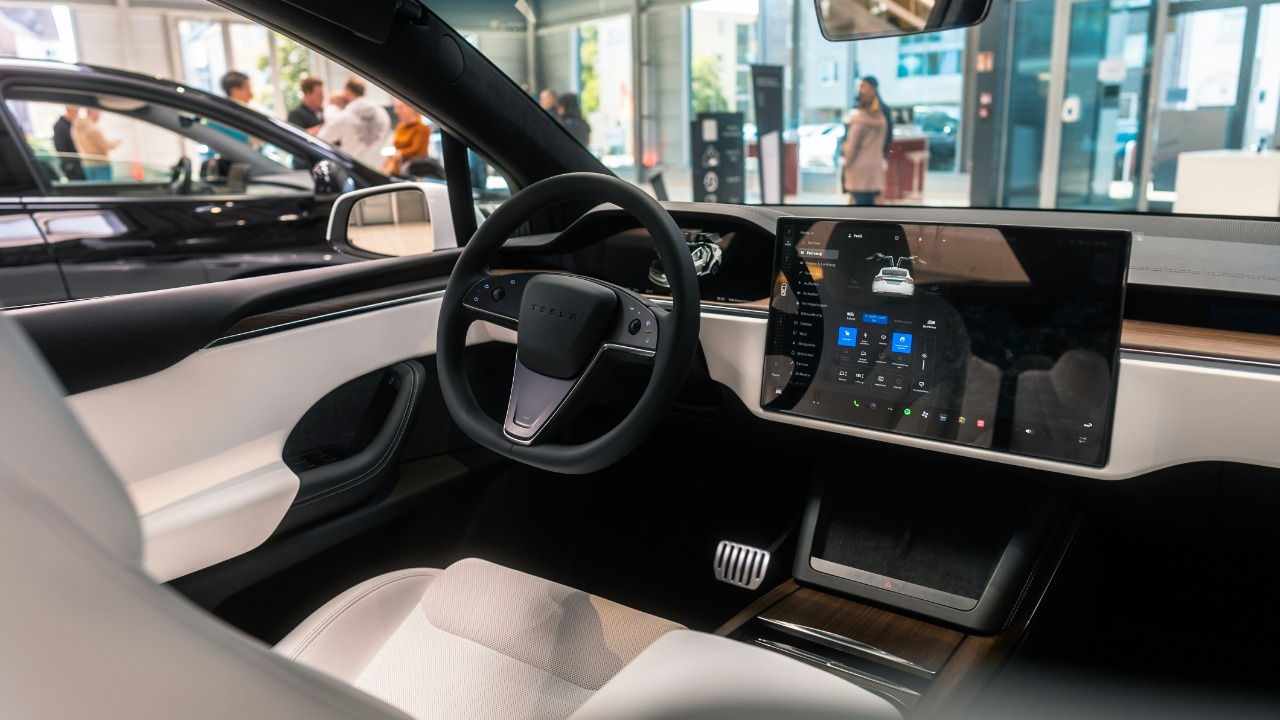
The technology behind these systems is no longer a black box. Detailed breakdowns of Technology Behind Autonomous describe how each sensor type contributes a different strength, from long‑range radar that sees through bad weather to high‑resolution cameras that read lane markings and traffic lights. Vehicles are now much more than mechanical platforms, they are software‑defined Vehicles whose behavior can be updated over the air as algorithms improve. That shift is visible in the way companies like Tesla treat the car as a continuously evolving product, with the Tesla Model S widely cited as one of the most advanced examples of this approach, and in the way analysts describe a future where autonomous robotaxis are prepared to navigate complex urban traffic without a human at the wheel.
From computers on wheels to cars in conversation
The industry is splitting between incumbents that still see the car as a refined machine and tech players that see it as a rolling server. One analysis captures this tension bluntly, noting that Traditional car companies will try the evolutionary approach AND just build a better car, while tech companies aim to build a computer on wheels. That framing matters because it dictates investment: a hardware‑first mindset optimizes engines and chassis, while a software‑first mindset prioritizes chips, operating systems, and app ecosystems. I see the most aggressive bets coming from the latter camp, where over‑the‑air updates, subscription features, and data‑driven services are treated as core revenue streams rather than add‑ons.
Connectivity is the glue that makes this strategy viable. Analysts of the connected car market point to What Drives the, highlighting how Embedded Modems and built‑in cellular links, including 4G LTE, turn vehicles into always‑online devices. Many of the newest models ship with these capabilities as standard, enabling real‑time diagnostics, remote locking, and cloud‑based navigation that learns from fleet‑wide data. At the same time, the broader V2X ecosystem is taking shape, with Automotive suppliers like Qualcomm, Bosch, and Mitsubishi Electric all cited as key players in Automotive communication. Their work on low‑latency links between cars, traffic lights, and infrastructure is what will eventually let vehicles “talk” their way through intersections instead of relying solely on line‑of‑sight sensors.
Cabins become immersive, personalized digital spaces
As driving tasks are gradually automated, the interior is becoming the main battleground for differentiation. Designers now talk about the inside of the car as a living room or office on wheels, a shift that is vividly illustrated by concept vehicles like the Mercedes AVTR. The Inside: A Look at the Mercedes AVTR With its many technological features shows how far this thinking goes, from biometric controls that respond to a driver’s heartbeat to seats and child seat interfaces that connect seamlessly with the rest of the cabin. The Mercedes AVTR is designed to be an immersive experience rather than a conventional cockpit, and that philosophy is spreading into mainstream models through large screens, ambient lighting, and adaptive soundscapes.
Entertainment is evolving just as quickly. One striking example is Valeo Racer, which promises to turn every ride into an XR adventure and is billed as the first business for a unique in‑car gaming experience that has never been offered before. That kind of product only makes sense in a world where passengers are free to look away from the road, and where the car’s compute power rivals a game console. At the same time, more conventional infotainment and connectivity features are becoming table stakes, from user profiles that remember climate and seat settings to app‑like interfaces that mirror the smartphone screen in our digital lives, a trend captured in reporting that notes how Cars are becoming smart devices in their own right.
Robotaxis, shared rides, and the end of petrol
The shift to smarter vehicles is colliding with a parallel transformation in how we own and use them. Self‑driving fleets are being positioned as a way to squeeze more value out of each vehicle, with analysts arguing that by promoting ride‑sharing and pooling, self‑driving vehicles can maximize occupancy rates and minimize the number of vehicles on the road, cutting congestion and environmental impact in one move. That logic is laid out clearly in assessments of how autonomous services could reshape urban mobility, including one that notes how shared fleets can deliver a more eco‑conscious, environmental impact than today’s one‑driver‑per‑car norm. I see that thesis being tested in real time in cities where robotaxi pilots are moving from demo to deployment.
One of the most closely watched experiments is unfolding in Austin, where tesla’s robotaxi service prepares to launch and investors are openly asking whether AI can truly navigate one of Texas’s worst traffic nightmares. The debate around Austin and Texas captures both the promise and the anxiety of this transition: if robotaxis can handle chaotic downtown grids, they could accelerate a shift away from private car ownership, but failures will be highly visible and politically charged. Overlaying all of this is the looming deadline for the end of new petrol and diesel sales in key markets. Analysts of the United Kingdom’s policy, for example, stress that While 2035 may seem distant, the deadline for manufacturers to cease sales of petrol and diesel cars, shifting exclusively to electric vehicles, draws nearer every year, a point underscored in guidance that opens with While 2035 may seem distant. That regulatory pressure is forcing automakers to invest in electric platforms that pair naturally with autonomous and connected features.
CES and the race to define the software‑first car
If there is a single stage where this car tech revolution is being choreographed in public, it is CES. Counterpoint analysts tracking the automotive presence at CES reported that This year, Counterpoint tracked over 60 automotive announcements to uncover key industry trends, a figure that underlines how central the show has become to the sector. CES 2026 is described as a turning point for car tech because the industry is finally syncing up around one idea, that the car is now a connected, AI‑driven device rather than a static product, a theme that runs through coverage of CES and through newsletters that note how CES, which runs from Jan. 6, reflects a growing focus on automotive AI tech and self‑driving cars. I read those signals as confirmation that software, not sheet metal, is now the main story in Las Vegas.
Behind the splashy demos, a quieter ecosystem is taking shape. Briefings like Auto Intelligence, introduced with a “good morning and welcome to Auto Intelligence” greeting in a Jun update, walk through the startups and technologies driving the sector, from AI perception stacks to new battery chemistries, and show how capital is flowing into every layer of the stack, as seen in Auto Intelligence coverage. At the same time, consumer‑facing explainers highlight how a car that can navigate traffic and manage work can allow passengers to relax or make better use of their time, capturing the appeal of vehicles where autonomy, connectivity, and cutting‑edge technology converge, a vision laid out in analyses that open with At the intersection of these trends. Put together with assessments that call the Tesla Model S arguably the most advanced car on the road today and certainly the most advanced of the autonomous driving cars so far, a point made explicitly in a review that begins with All of this technology makes the Tesla Model S stand out, the direction of travel is clear. The companies that treat the car as a node in a larger digital and energy network are already pulling ahead, and the rest of the industry is racing to catch up.
That race is not just about gadgets. It is about how safely human drivers can hand control to machines, how fairly robotaxis will share city streets, and how quickly petrol can be phased out without stranding drivers. As CES spotlights the latest prototypes and as cities like Austin test the limits of autonomous services, the car tech revolution is moving from concept videos to everyday commutes, one software update at a time.
More from Morning Overview