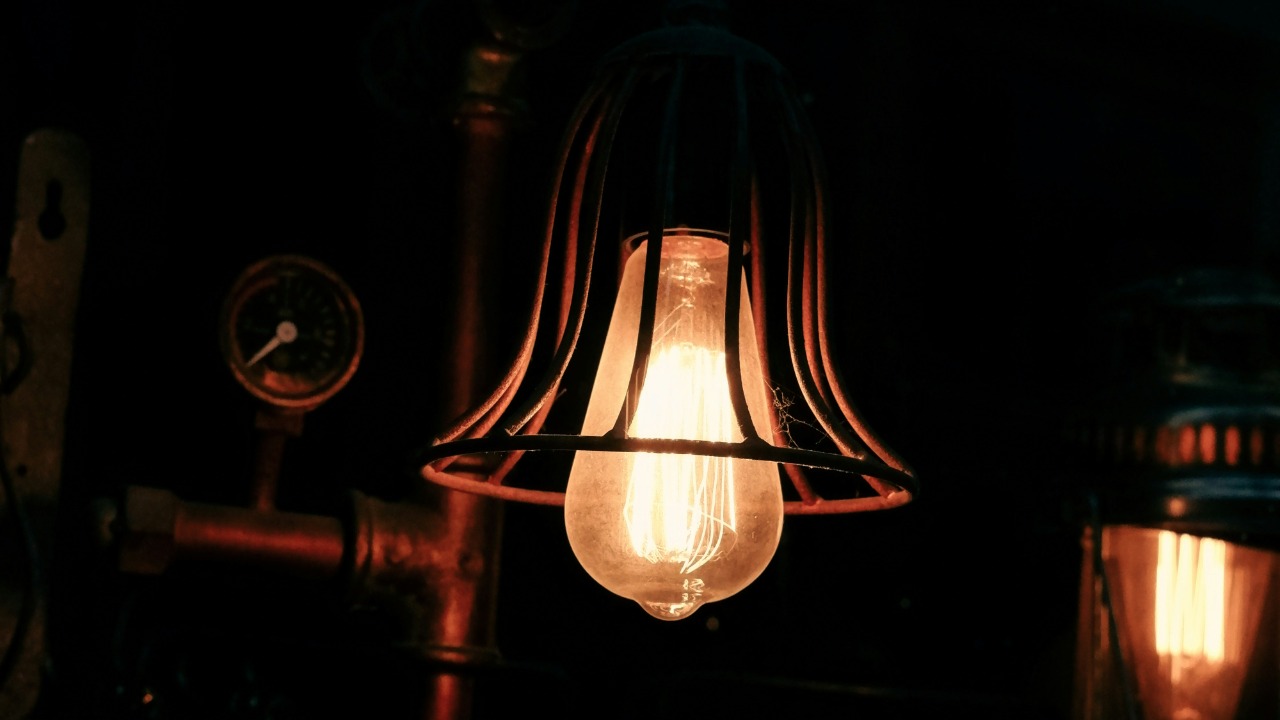

Incandescent bulbs were supposed to fade quietly into history, replaced by efficient LEDs and smart lighting systems. Instead, they are reappearing in online shopping carts, design catalogs, and holiday displays for reasons that go far beyond simple sentimentality. I see a convergence of health concerns, aesthetic preferences, and market dynamics that is giving this old technology a surprisingly modern second act.
The return of the filament glow is not a wholesale rejection of efficiency or climate goals, but a targeted pushback against the compromises that came with the first generation of solid-state lighting. As people scrutinize how light affects their bodies, their homes, and even their sense of tradition, the humble incandescent is being recast as a niche tool rather than a default appliance.
The long arc from dominance to “Revival”
For most of the twentieth century, the incandescent bulb was not a lifestyle choice, it was simply how electric light worked. By the middle of that century, it had become so ubiquitous that, as one historical overview of The Rise and Fall (and Revival) of the Incandescent Bulb notes, “By the 1950s, nearly every American home was lit by them,” a reminder that this technology shaped how entire generations experienced nighttime indoors. That scale of adoption created a baseline expectation of what artificial light should look and feel like, from the warm color of a living room lamp to the way a kitchen looked at dinner.
When compact fluorescents and then LEDs arrived, they were framed as a clean break from that past, promising lower bills and lower emissions in exchange for a different visual and sensory experience. The early versions often delivered harsh color, awkward dimming, and unfamiliar flicker patterns, which made the transition feel less like a simple upgrade and more like a trade-off. As efficiency standards tightened and “normal” bulbs were regulated out of many store shelves, the incandescent slipped from default to specialty item, setting the stage for a later Revival that would be driven by more selective, intentional use rather than mass ubiquity, as the same historical analysis makes clear.
Why the comeback is about comfort, not just memory
When I talk to lighting designers and homeowners, nostalgia does come up, but it is rarely the whole story. People describe incandescent light as “easier on the eyes,” “less clinical,” or simply “more human,” language that points to comfort and well-being rather than a desire to recreate a midcentury living room. That distinction matters, because it explains why the bulbs are reappearing in specific rooms and tasks, such as bedside lamps or reading corners, instead of reclaiming every ceiling fixture.
Health-focused reporting backs up some of those instincts, especially around how different technologies behave at a microscopic level. One detailed review of lighting and human well-being notes that the absence of flicker in traditional filament bulbs is considered beneficial for eye health, reducing the potential for eye strain, headaches, and other discomfort compared with some blue-rich LED lighting that can pulse at imperceptible frequencies. That analysis of the impact of incandescent and LED lighting helps explain why certain users, from migraine sufferers to people who spend long nights at a desk, are deliberately seeking out old-style bulbs for targeted relief.
The health and “Your Health” argument
Alongside comfort, there is a more explicit health narrative emerging around incandescent light, one that I see gaining traction in wellness circles and among skeptical consumers. Advocates argue that the spectral profile of a filament bulb, with its relatively low blue content and continuous output, aligns more closely with firelight and other sources humans evolved around. In their view, that makes it less disruptive to circadian rhythms than some high-intensity, cool-white LEDs that pack a lot of short-wavelength energy into a compact package.
Some of this rhetoric veers into marketing, but there are also more grounded critiques of how quickly regulations and subsidies pushed households toward technologies whose long-term biological effects were still being studied. One widely shared commentary on Why Incandescent Bulbs Are Making a Comeback and Why You Should Care frames the shift as a Win for Market Competition and Your Health, arguing that consumers should have the option to choose a light source that prioritizes comfort and perceived safety even if it uses more power. That argument, captured in the discussion of Why Incandescent Bulbs Are Making, Comeback, Why You Should Care, does not dismiss efficiency, but it insists that health and personal preference belong in the same conversation as kilowatt-hours.
Holiday lights and “The Unmatched Warmth and Light Quality”
The most visible front in this quiet resurgence is seasonal, not everyday, lighting. Walk through a neighborhood in December and it is easy to spot the difference between a house wrapped in tiny, icy LEDs and one lined with larger, glowing glass bulbs that look like they could have hung there in the 1960s. People who choose the latter often talk about atmosphere first, describing a sense of depth, sparkle, and warmth that they do not feel from the cooler, more uniform glow of many LED strings.
That subjective language is echoed in reporting on Why Do People Still Use Incandescent Christmas Bulbs Despite Inefficiency, which highlights The Unmatched Warmth and Light Quality that Inc holiday strings provide for some decorators. The same analysis notes how these choices function as cultural infrastructure, anchoring family rituals and neighborhood displays that have been repeated for decades. In that context, the decision to keep buying glass bulbs that run hotter and draw more power is less about resisting change and more about preserving a specific sensory experience that newer products have not fully replicated, as the discussion of Why Do People Still Use Incandescent Christmas Bulbs Despite Inefficiency makes clear.
Vintage aesthetics and “Why Are Vintage Christmas Bulb Lights Becoming Popular Again”
Beyond the holidays, there is a broader design trend that treats incandescent bulbs as decorative objects rather than invisible hardware. Exposed filaments in clear glass, tinted “Edison” shapes, and oversized globes are now staples in coffee shops, boutique hotels, and Instagram-ready home renovations. In an age of smart lighting and programmable LED displays, the appeal of a simple glowing wire inside a glass envelope is partly visual and partly symbolic, signaling a slower, more analog sensibility in spaces that might otherwise feel overdesigned.
Reporting on Why Are Vintage Christmas Bulb Lights Becoming Popular Again notes that, even as LED technology dominates the mass market, these older forms are being used to create symbolic continuity with past traditions and to stand out from the uniform look of many modern fixtures. That same instinct shows up in the growing market for reproduction fixtures and accessories that pair new wiring with old-school bulbs, allowing homeowners to layer a sense of history into their spaces. The analysis of Why Are Vintage Christmas Bulb Lights Becoming Popular Again underscores how this aesthetic is less about rejecting technology and more about choosing a particular visual language.
From “Product” data to niche bestsellers
One reason I can say with confidence that incandescent bulbs are not disappearing is that they continue to show up in the very systems that track what people actually buy. Large retail platforms ingest vast amounts of Product information from brands, stores, and other content providers, then use that Shopping Graph to map relationships between items, searches, and user behavior. When filament bulbs, especially decorative and specialty versions, keep surfacing in recommendation carousels and “frequently bought together” lists, it is a sign that they are not just languishing in clearance bins.
Google’s own explanation of how its Shopping Graph works describes how Product data is aggregated and connected so that shoppers can discover items that match their intent, whether that is a smart LED panel or a retro filament lamp. The presence of incandescent SKUs in that ecosystem, and their continued optimization by sellers, suggests a stable if narrower demand curve. The underlying mechanics, outlined in the overview of Product information, help explain why even a technology that regulators have tried to phase out can persist in algorithmic marketplaces as long as enough people keep searching for it.
Inside the catalog: the “Incandescent Antique Dimmable Light Bulb”
To see how this plays out at the level of a single item, it helps to look at a specific product listing rather than abstract trends. One example is the Bulbrite 60 Watt Dimmable Antique A19 Incandescent Light Bulb, a lamp that is marketed as much for its appearance as for its output. The description invites shoppers to Illuminate their space with the authentic charm of this 60 Watt Incandescent Antique Dimmable Light Bulb, emphasizing the warm glow and vintage styling that make it suitable for open fixtures and decorative sockets where the bulb itself is on display.
The fact that a 60 Watt incandescent is still being promoted in mainstream search results, complete with lifestyle photography and compatibility notes, shows how manufacturers have repositioned these products as premium accessories rather than generic consumables. One Shopping entry for the same Bulbrite model repeats the promise to Illuminate a room with a 60 Watt Incandescent Antique Dimmable Light Bulb, reinforcing the idea that what is being sold is not just lumens but a particular mood. Both the detailed product card and the parallel listing in a separate Shopping view, accessible through Illuminate Watt Incandescent Antique Dimmable Light Bulb, underline how the market has carved out a niche where higher energy use is tolerated in exchange for a specific aesthetic payoff.
Online debates and the “Incandescent” as heater
While retailers quietly adapt, the cultural debate over incandescent bulbs plays out more loudly in online forums, where technologists, environmentalists, and hobbyists argue over what should count as a light and what should count as a heater. One widely circulated thread on a technology subreddit, titled The incandescent light bulb still isn’t dead but ‘normal’ ones are, captures this tension. Commenters point out that even if general-service bulbs are restricted, there is still a bright future for Incandescent devices that are sold primarily as heating elements, such as those used in lava lamps, reptile enclosures, or food warmers.
In that discussion, a user named Radioiron quips that it is Hard to really kill a technology that can be reclassified and repurposed, especially when it fills niches that newer products do not address as well. The thread, which centers on Incandescent Radioiron Hard, illustrates how regulatory language and product labeling can shape what remains available, and how enthusiasts exploit those gaps to keep buying what they want. It also highlights a broader point: even if every living room lamp switched to LEDs, the filament bulb would still survive in corners of the market where its heat and simplicity are assets rather than liabilities.
Nostalgia as infrastructure, not just a feeling
Underneath the technical and regulatory arguments, there is a quieter story about how lighting becomes part of the architecture of memory. When people insist on using a particular kind of bulb for a holiday display, a family dining room, or a neighborhood bar, they are not only chasing a look, they are preserving a pattern of light that has framed their experiences for years. I see this most clearly in multigenerational households where older relatives notice and comment on the “different” feel of new fixtures, even when the color temperature is carefully matched.
Analysts who study holiday lighting trends describe this as nostalgia functioning as cultural infrastructure, a set of shared sensory cues that help communities recognize and reproduce their own traditions. That framing appears explicitly in the examination of why some decorators cling to older strings, which notes how small, familiar details like the shape and glow of a bulb can anchor rituals that then expand to larger displays. The reporting on Nostalgia as Cultural Infrastructure suggests that, in this context, incandescent bulbs are less about longing for the past and more about maintaining continuity in the present.
Where LEDs still win, and how the balance is shifting
None of this means that LEDs are losing their dominant position. For most general lighting tasks, from office ceilings to street lamps, solid-state fixtures deliver clear advantages in efficiency, longevity, and controllability. Smart bulbs that can change color, sync with music, or respond to voice commands have opened creative possibilities that a simple filament could never match. In large commercial and municipal projects, the energy savings are too significant to ignore, and the economics overwhelmingly favor LED retrofits.
What is changing is not the overall direction of the market but the nuance in how people allocate different technologies to different roles. I see more households adopting a hybrid strategy: LEDs for overhead and task lighting where efficiency and brightness matter most, and incandescent or incandescent-style bulbs for accent lamps, dining tables, or occasional-use fixtures where warmth and comfort take priority. That pattern aligns with the way retailers now segment their offerings, with entire sections devoted to decorative filaments alongside rows of high-efficiency options, as reflected in the variety of listings surfaced when searching for a specific product like a vintage-style bulb.
The future of a “Revival” technology
Looking ahead, I expect incandescent bulbs to settle into a role similar to that of vinyl records or mechanical watches: a mature technology that survives not in spite of its inefficiencies but because of them, as part of a deliberate choice to value certain qualities over raw performance. Regulatory pressure will continue to limit their use in mass-market applications, and rising energy costs will nudge many remaining holdouts toward more efficient options. Yet as long as there are niches where their particular blend of spectrum, warmth, and simplicity is prized, they are unlikely to vanish entirely.
The more interesting question, to my mind, is how much their continued presence will influence the evolution of newer lighting technologies. Already, LED manufacturers are racing to mimic the look and feel of filament bulbs, from “warm dim” features that shift color as they dim to intricate faux-filament designs inside glass envelopes. In that sense, the Revival of the incandescent is not just about bringing back an old product, it is about forcing the entire lighting industry to reckon with what people actually want from the light that fills their homes, beyond the numbers on an energy label.
More from MorningOverview