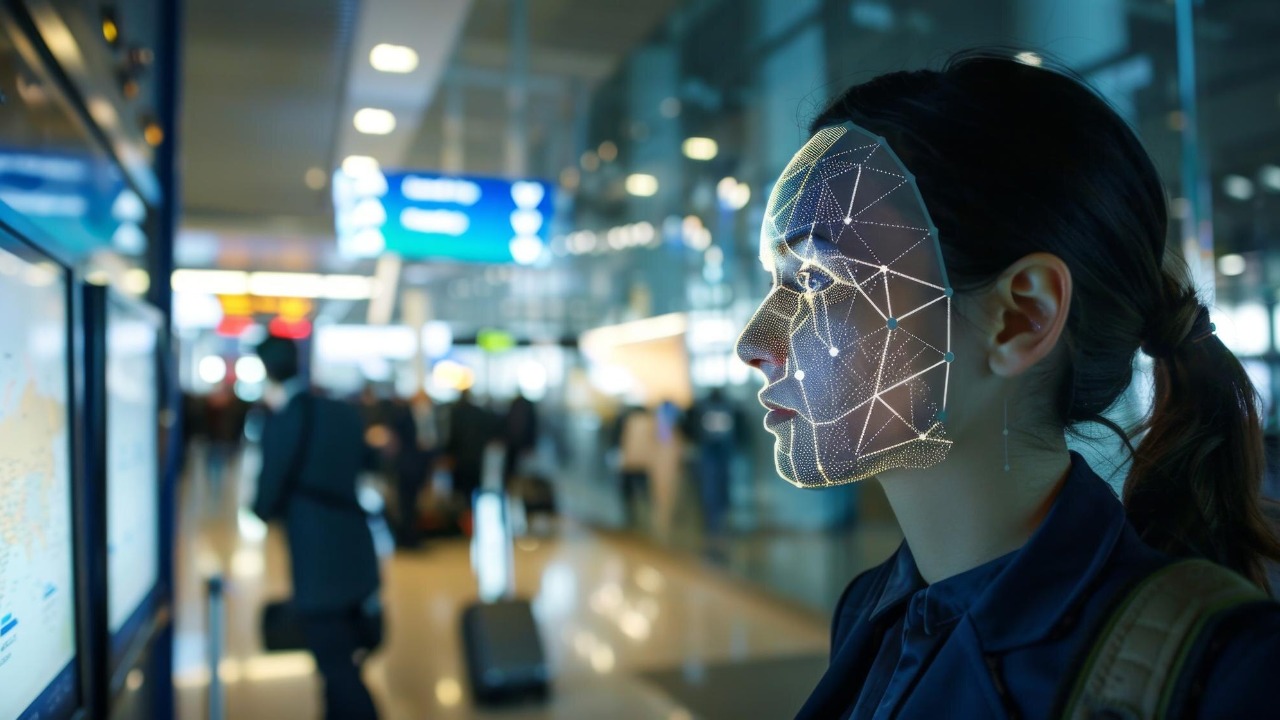

Immigration and Customs Enforcement has quietly turned facial recognition into a frontline tool, letting agents move from a snapshot to a knock on the door in minutes instead of days. What began as back‑office database searches is now embedded in mobile apps, sprawling data systems, and artificial intelligence that can flag a “possible overstay” or a protester with the same automated ease.
As these systems spread from federal servers to local police phones, the line between targeted immigration enforcement and a general surveillance net over daily American life is eroding. I see a new enforcement model taking shape, one where speed and scale are prized over accuracy and due process, and where the faces of citizens and noncitizens alike are swept into a permanent investigative pool.
From databases to dragnet: how ICE built its facial recognition machine
Long before agents started pointing phones at people’s faces on the street, Immigration and Customs Enforcement was quietly wiring itself into the country’s most basic identity systems. In 16 states and the District of Columbia, undocumented residents can obtain driver’s licenses, and in six of those states, motor vehicle agencies have given ICE access to Department of Motor Vehicles data that includes license photos, effectively turning routine licensing into a pipeline for immigration checks linked to facial recognition searches of DMV records. Those images sit alongside mugshots, booking photos, and other biometric files in large federal repositories that agents can query with a single face scan.
At the same time, Homeland Security Surveillance programs have given Immigration and Customs Enforcement access to a growing array of commercial and government databases that store photographs, home addresses, Social Security numbers, and dates of birth for U.S. citizens and noncitizens alike, often without a warrant requirement for agents who want to run a search across these combined datasets. By the time facial recognition algorithms were layered on top of this infrastructure, ICE had already assembled what critics describe as a “surveillance dragnet,” where a face is simply another key to unlock a person’s entire documented life.
Rapid field scans: the new face of street‑level enforcement
The most dramatic shift is happening in the field, where ICE agents now carry facial recognition in their pockets. Earlier this year, Nov reporting showed that ICE began deploying mobile tools that let officers snap a photo of someone they encounter and instantly compare it against immigration and criminal databases, a sharp break from past practice when agents relied on fingerprints or documents and could not immediately confirm whether “the person is an alien” using a face‑matching app. That speed turns a casual stop into a high‑stakes moment, because a single scan can trigger an arrest order in real time.
According to Nov coverage of Homeland Security Surveillance, Immigration and Customs Enforcement is also acquiring powerful new systems that can automatically flag “Possible Overstay Status” and other immigration categories when a face is matched, giving agents a near‑instant readout of who might be deportable once they upload an image into these tracking tools. In practice, that means a person pulled aside on a sidewalk or outside a workplace can go from anonymous passerby to targeted arrest in the time it takes an app to return a match.
Local cops, federal apps: extending ICE’s reach through Mobile Fortify
One of the most consequential developments is the quiet spread of federal face‑scanning apps into local police work. The Department of Homeland Security has given local officers a facial recognition tool that lets them photograph someone during a traffic stop or street encounter and immediately check whether that person has an immigration record or a deportation order, effectively turning municipal patrols into front‑end collectors for DHS enforcement. The news follows Immigration and Customs Enforcement’s use of another internal Department of Homeland Security app called Mobile Fortify, which similarly leverages facial recognition to let agents and partner officers identify people in the field and check whether they have been given an order of deportation.
Separate reporting indicates that U.S. immigration enforcement has apparently provided facial scanning technology to local cops through Mobile Fortify, which allows officers to upload a photo and run it against federal databases using the same facial recognition technology that underpins ICE’s own Mobile Fortify system. When local departments adopt these tools, the boundary between community policing and federal immigration surveillance blurs, and residents who thought they were dealing with a city officer may find their face routed into a national immigration check without any clear notice or consent.
Clearview AI, 404 M, and the private vendors behind the scans
Behind the scenes, private companies are helping ICE supercharge its ability to identify people from a single image. A recent contract shows that ICE is spending millions on Clearview AI facial recognition, explicitly buying the technology to investigate “assaults against law enforcement officers,” which gives agents access to a massive scraped database of faces that can be queried whenever they upload a photo into the Clearview AI system. That same infrastructure can be repurposed to locate immigration targets, even if the official justification centers on officer safety.
At the same time, 404 M reporting has highlighted how federal agents with ICE and CBP are actively using facial recognition technology to identify immigration status, relying on tools that can scan faces from photos, surveillance cameras, or social media and then cross‑reference them with immigration records to identity immigration status. When private vendors sit between the government and the public in this way, the technical details and error rates of their algorithms are often shielded from scrutiny, even as their outputs drive real‑world arrests.
AI everywhere: The DHS AI Use Case inventory and automated targeting
Facial recognition is only one piece of a broader artificial intelligence build‑out inside immigration enforcement. The DHS AI Use Case inventory lists a growing web of specialized programs and big data platforms that Immigration and Customs Enforcement uses to power immigration enforcement and surveillance, from tools that fuse facial recognition with license plate readers to systems that integrate iris scanners in field operations and predictive analytics that flag people for further AI‑driven scrutiny. In this environment, a face scan is not just a one‑off check, it can become an input into a larger risk score that follows a person across multiple databases.
Under President Donald Trump, facial recognition has also been folded into a wider surveillance push that includes camera networks and automated monitoring of public spaces, with Customs and Border Protection requesting pitches from technology firms to expand their use of face‑scanning systems that can track people through airports and land crossings and potentially feed those images into ICE’s facial recognition pipeline. As these AI tools proliferate, the risk is that immigration enforcement becomes less about individual suspicion and more about what an algorithm infers from a pattern of data points, with little transparency about how those inferences are made.
Misidentification and mission creep: when citizens get scanned
The speed and reach of these systems are already colliding with basic civil liberties. A recent case detailed how a U.S. citizen was scanned with ICE’s facial recognition technology when agents used a mobile biometrics app in ways its developers at CBP never intended or tested, a practice one critic called “frightening” and “repugnant” because it subjected an American to an invasive biometric check without clear cause or meaningful safeguards. That episode underscores how easily these tools can spill beyond their stated immigration focus and sweep in people who are not even subject to deportation laws.
Oct reporting on ICE’s “frightening” facial recognition app found that agents frequently conduct stops that seem to have little justification beyond the color of someone’s skin, then run their faces through systems where the resulting biometric data can be stored for 15 years, even if the person is a U.S. citizen who did nothing wrong during the initial encounter. When misidentifications or biased stops feed into long‑term biometric retention, the harm is not just a single bad match, it is the creation of a permanent record that can be revisited by future agents and algorithms.
Guardrails missing: constitutional questions and the push for limits
Legal scholars are increasingly warning that ICE and CBP’s use of facial recognition technology needs guardrails, now, before it becomes entrenched as a default investigative step. Critics argue that immigration enforcement’s reliance on face scans risks sidestepping the Constitution’s protections against unreasonable searches, especially when agents run images through vast databases without warrants or individualized suspicion, and they point to incidents like a February 2025 operation in New Mexico as evidence that current practices lack clear statutory guardrails in the field. Without explicit limits from Congress or the courts, the agencies themselves are effectively writing the rules as they go.
At the same time, ICE’s appetite for data is expanding beyond immigration cases into broader surveillance of dissent. One analysis of how ICE wants to go after dissenters as well as immigrants notes that it is nothing new for ICE to use commercial and government databases to find people to deport, but warns that the wide‑ranging capture of Americans’ personal data, including information about political activity, raises serious concerns about how these tools could be turned against protesters and activists whose only “offense” is exercising their rights in public life. When facial recognition is layered on top of that data, it becomes far easier to identify and track people at demonstrations or community meetings, even if they have no connection to immigration violations.
Beyond faces: Weblocs, social media, and the expanding surveillance stack
Facial recognition does not operate in a vacuum, it is part of a broader surveillance stack that ICE is assembling to monitor both immigrants and perceived political threats. Oct reporting on ICE’s surveillance powers describes how the agency has used a tool called Weblocs that allows clients to track the mobile phone location data of targeted individuals, information that government officials can combine with face scans and other identifiers to build a detailed picture of a person’s movements and daily routines. When a face captured on camera can be linked to a phone’s travel history, the result is a powerful tracking capability that extends far beyond a single encounter.
ICE is also looking to automate its monitoring of online spaces. Oct coverage of a proposed contract shows that ICE wants to build out a 24/7 social media surveillance team, following Earlier revelations from The Intercept that the agency had floated plans for a system that could automatically scan social media posts and flag potential targets, further automating the process of identifying people for enforcement action. When social media monitoring is combined with facial recognition that can match profile photos or protest images to real‑world identities, the result is a surveillance regime that reaches from the street to the smartphone screen.
What “rapid arrests” mean for everyday life
Put together, these technologies are transforming what an immigration stop looks like in practice. Instead of a drawn‑out investigation, an agent or local officer can use a DHS app to scan a face, query DMV photos from the District of Columbia and multiple states, tap into Clearview AI’s scraped image trove, and cross‑check immigration databases, all before a person has time to call a lawyer or even fully understand what is happening in the interaction itself. That acceleration is precisely what makes the system so effective for ICE, and so destabilizing for the people caught in its path.
For communities, the message is clear: any routine moment, from renewing a license to attending a protest, can feed into a biometric profile that agents can later use to make rapid arrests. Under Jun reporting on how facial recognition is getting more invasive under Trump, critics warn that mistakes in these systems can still get you jailed or even deported, especially when agents treat algorithmic matches as hard evidence rather than probabilistic guesses rooted in imperfect data. As ICE leans further into this model, the stakes of simply having your face in a database keep rising, whether you are an undocumented worker, a lawful permanent resident, or a citizen who happens to be in the wrong frame at the wrong time.
More from MorningOverview