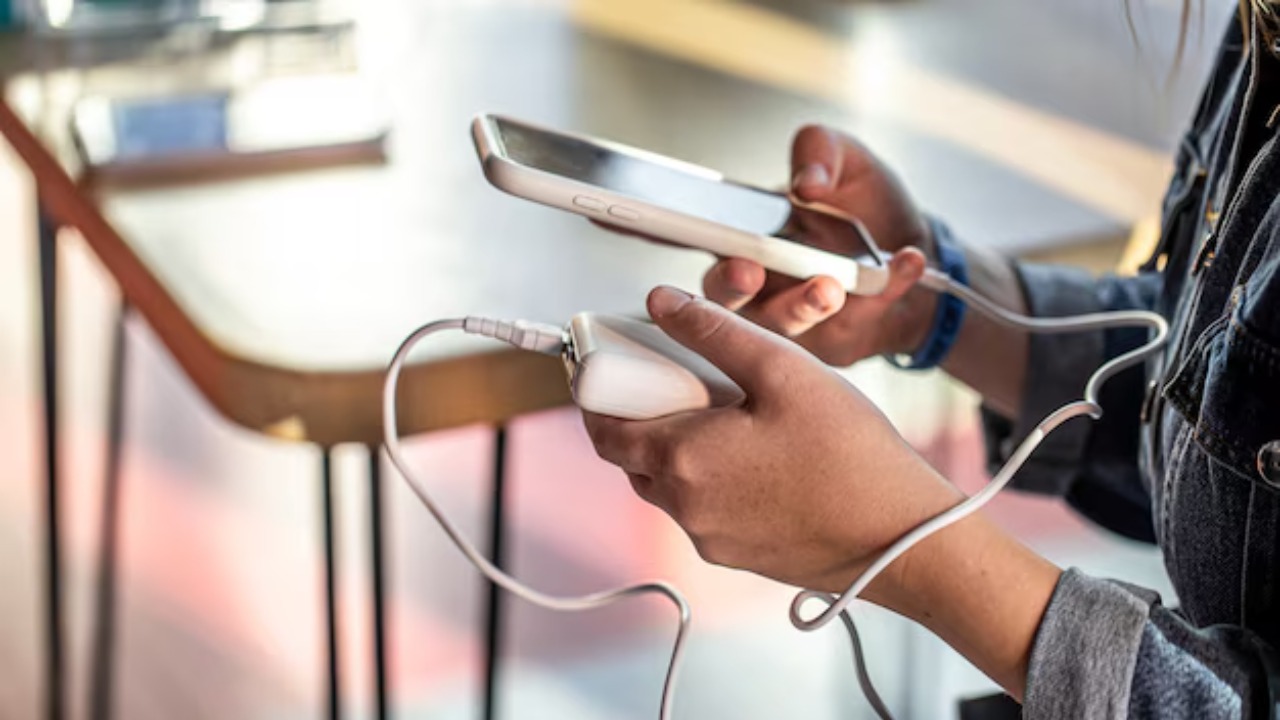

Battery tech at CES 2026 did not feel like another incremental spec bump. It felt like the moment portable power finally started catching up with the rest of our devices, from phones and laptops to motorcycles and drones. After a week on the show floor, I walked away convinced enough in these “future batteries” that my old stack of power banks is now gathering dust at home.
What changed my mind was not a single miracle cell, but a wave of solid-state packs, sodium-ion stations, plant-based prototypes, and even mobile batteries on wheels that collectively pointed to a different relationship with power. Instead of constantly hunting for outlets, I found myself trusting that the batteries around me could charge faster, last longer, and in some cases quietly recharge themselves.
Solid-state goes from slide deck to show floor
The most striking shift at CES 2026 was how solid-state batteries moved from lab promise to hardware I could actually touch. Finnish startup Donut Lab was the clearest example, unveiling what it calls the world’s first production-ready all-solid battery system designed for vehicles such as cars and LCVs. The company’s pack uses solid electrolytes instead of flammable liquid, a design that aims to cut fire risk while enabling higher energy density and faster charging, and it was presented not as a distant roadmap but as a unit ready to be integrated into real fleets.
Elsewhere on the floor, solid-state tech was already bolted into machines. The Verge Motorcycles TS Pro, highlighted in coverage of Verge Motorcycles TS, uses a solid-state battery pack that can charge from 20 percent to nearly full in less than 10 minutes, a figure that would have sounded like fantasy a few years ago. That same reporting notes that motorcycles and energy storage tech are now signaling a broader shift in electric power, even as skepticism remains about cost and manufacturing scale. Standing next to the TS Pro, watching a demo reel of that sub-10-minute top-up, it was hard not to imagine a near future where “range anxiety” is a historical term.
From drones to defense, batteries get mission-critical
Solid-state cells were not just pitched for commuters. In one of the more consequential debuts, Donut Lab also appeared in aerospace reporting as the supplier behind what was described as the world’s first solid-state battery to be integrated into a defence drone. At CES, At CES the company detailed an all-solid pack with no liquid electrolytes, no metallic dendrites, and a design that avoids critical materials supply chains, a combination that matters when a battery is flying over hostile terrain instead of sitting in a pocket.
That same push toward more resilient power showed up in broader energy demos. Aalyia Shaukat’s overview of power innovations at the show highlighted chip-scale cooling, battery-free AI vision sensors, and an “adaptive energy ecosystem” that treats storage, generation, and consumption as a coordinated system rather than isolated gadgets. Walking through those booths, it was clear that batteries are no longer just accessories; they are infrastructure, and the companies building them are thinking in terms of grids, fleets, and mission profiles, not just phone cycles.
Portable power grows up: sodium-ion, split packs, and rolling banks
On the consumer side, the most practical sign that my power banks were becoming obsolete came from a new generation of portable stations and smarter packs. Bluetti, a Shenzen-based company, drew crowds with its Pioneer Na Sodium‑Ion Portable Power Sta, a unit that swaps lithium for sodium to reduce reliance on scarcer materials while still delivering serious capacity. Reporting on Bluetti noted how this sodium-ion station fits into a broader wave of Chinese energy and solar power innovations, and in person the appeal was obvious: a rugged box that could keep a campsite, home office, or emergency kit running without the lithium price tag.
Even traditional power banks are being rethought. Nimble showed a split pack that literally comes apart into two halves so you can charge two phones at once, with one section keeping an integrated USB-C cable and the other adding a fold-out plug. Coverage of Nimble emphasized how this design makes shared charging far less inconvenient, and after watching attendees snap the pack apart and hand one side to a friend, it was hard to look at my single-brick bank the same way.
Then there was the power bank that literally chased the sun. A Russian-language report described how, at CES 2026, a company presented a paуэрбанк на колёсах, a battery on wheels that autonomously seeks out light for charging and then returns to its owner to share the harvested energy. The piece on CES described how this device scans for bright spots, positions its solar panels, and then adheres to surfaces to deliver power. Watching a prototype quietly roll toward a patch of sunlight in a crowded hall, I realized that my old habit of babysitting a power bank near a wall outlet was starting to feel outdated.
Weird, wonderful form factors: from golf-cart batteries to paper cells
Some of the most memorable power demos at CES 2026 were also the strangest. One standout was a 5 kWh backup battery with retractable wheels and a handle that looked more like a piece of luggage than a generator. A live report on the coolest tech at the show described this “Power that putters after you” unit as a mobile pack that can follow you around and then plug into a standard two- or three-prong device. Seeing this rolling battery in person, as detailed in the Power coverage, made it clear that backup energy is being redesigned for movement, not just storage in a garage.
At the other end of the spectrum, plant-based cells hinted at a future where disposable batteries might be compostable rather than toxic. On the show floor, Flint Paper Batteries powered model trains at the company’s booth, a small but vivid proof that thin, flexible paper cells can deliver enough current for real devices. Reporting on Plant noted that sustainable batteries are moving from lab curiosity to products we can expect to see on store shelves, and the trains circling their tiny track were a surprisingly persuasive argument that “paper power” is more than a gimmick.
Faster charging, cleaner energy, and why my old banks stay home
Underpinning all of this is a simple but transformative promise: less time tethered to outlets. One detailed hands-on account of CES 2026 batteries described how charging from 20 percent to nearly full on the TS Pro can take less than 10 minutes, while also noting that the premium tech currently carries a price of about 80,000 dollars and that widespread adoption remains uncertain. That same report on Charging framed motorcycles and energy storage tech as early indicators of how quickly fast-charge expectations could spread once costs fall. After watching those demos, I started to see my old 18 W bricks as relics from a slower era.
At the consumer gadget level, the same theme kept surfacing. A detailed walk-through of future batteries at CES argued that, at the very least, we could see a dramatic increase in charging speeds and battery life, and that the battery revolution is coming to a swift and decisive end for today’s compromises. That perspective on At the experience matched what I saw: phones topping up in minutes, laptops sipping from more efficient cells, and accessories that barely seemed to dent their charge indicators over a full day of use.
There is also a growing effort to make all this power cleaner and more inclusive. A panel titled “Innovate for All: Enabling More Diverse Lifestyles The” focused on “Clean Energy for All,” bringing together Bluetti, TI, Covestro, and Leave No Trace to talk about sustainable energy solutions that balance innovation with environmental responsibility. The discussion, captured in coverage of Innovate for All, underscored that the next wave of batteries is being designed not just for speed and capacity, but for broader access and lower environmental impact. After a week immersed in that ecosystem, my old lithium power banks, with their slow ports and opaque sourcing, felt like a fallback rather than a default. I still own them, but after CES 2026, they mostly stay in a drawer while I look for devices that reflect the faster, cleaner, and frankly smarter approach to power that the show put on display.
More from Morning Overview