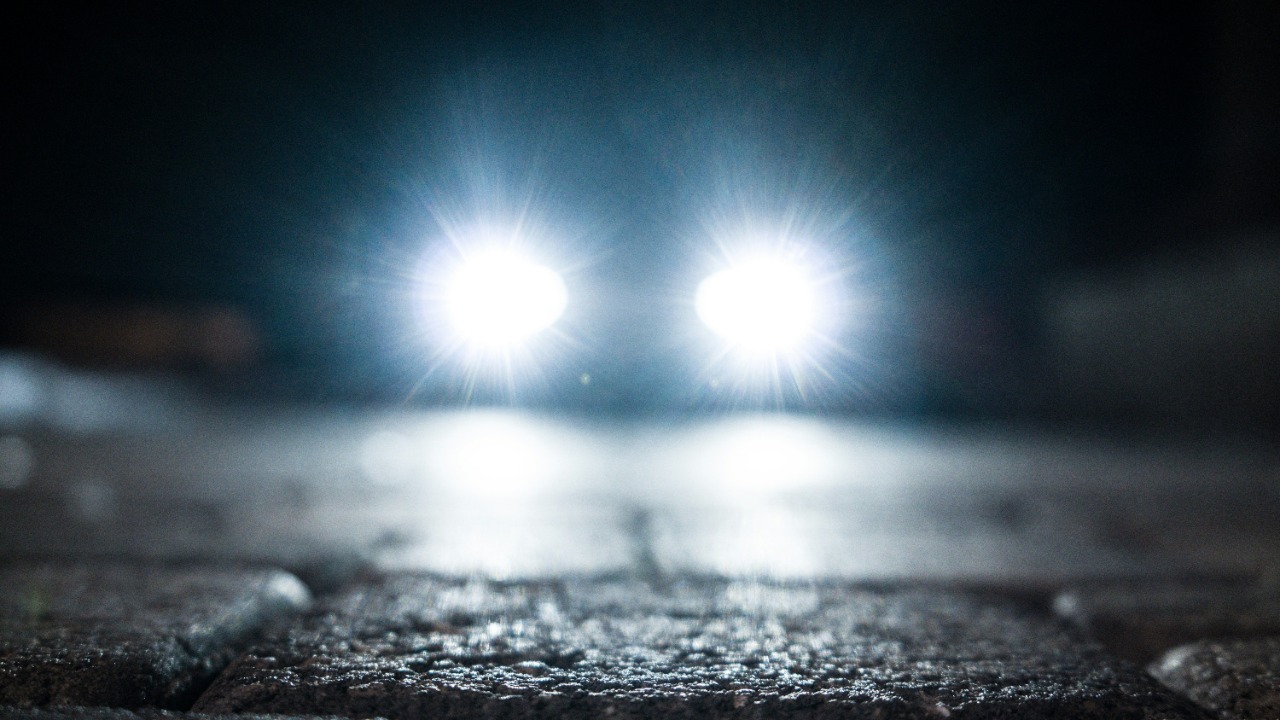

Night driving has quietly turned into a high‑stakes stress test for the human eye. As automakers have chased brighter beams and a high-tech look, regulators have clung to aging rules that measure light on paper better than on pavement, and the result is a wave of glare that leaves ordinary drivers squinting, slowing and sometimes swerving. I set out to trace how ultra-bright headlights slipped through the rulebook and into everyday traffic, and why the people most dazzled by them have been left to improvise their own defenses.
The lived reality of being dazzled
For many drivers, the problem is not abstract, it is the nightly moment when a wall of white or blue light fills the windshield and everything else disappears. In one widely shared video, Jun describes how these obnoxiously bright headlights are now linked to dangerous car accidents, with people reporting that they are effectively driving blind for crucial seconds after a vehicle passes in the opposite lane or pulls up behind them at a light, a pattern that matches what I hear from motorists across the country who say they are being regularly left dazzled by modern beams. That sense of being overwhelmed is not limited to rural highways, it shows up in suburban traffic, on city arterials and even in parking lots where the combination of reflective surfaces and high-intensity lamps can turn a simple turn across traffic into a leap of faith.
In online communities, the language is even more blunt, with one group dedicated to banning blinding lamps describing how driving at night in Ohio has become a gauntlet because Modern vehicles vary so much in height that the brightest part of a headlight beam often lands directly at eye level instead of on the road. I see the same frustration in social posts where people complain that there is nothing worse than driving at night and getting beamed in the rearview mirror, a sentiment captured in a rant shared by Feb on a popular page that notes how that intense light bounces straight into the mirror and forces the driver to squint and look away from the road ahead.
How LEDs and color temperature changed the game
The technology behind this shift is not mysterious, it is the rapid replacement of older incandescent and halogen bulbs with LED and xenon systems that produce a bluer, more piercing light. One analysis notes that the older incandescent bulbs with their yellowish tone are being swapped out for LED or xenon lights that are blue-white and more intense, a change that makes road signs and lane markings pop for the person behind the wheel but also makes the beam feel harsher and more intrusive to everyone else. Another breakdown of why headlights seem so bright concludes that the most important factor has been the shift from halogen bulbs to those that use LEDs, which emit a bluer light than halogens and interact differently with the human eye and with wet or reflective surfaces.
That spectral difference matters because our vision is more sensitive to certain wavelengths, and as more sources with discontinuous spectrum such as fluorescents and now LEDs have been deployed, lighting experts have warned that these sources can feel brighter and more uncomfortable than their light meters indicate. The result is a mismatch between what regulators think is an acceptable intensity and what people actually experience when a tall SUV with crisp LED projectors crests a hill toward them, a gap that helps explain why Motorists claim to being regularly left dazzled by modern vehicle headlights even when those lights are technically dipped and legal.
Why glare is worse in the United States
Although complaints about glare show up in the United Kingdom, Europe and elsewhere, the problem is particularly acute in the United States, where the regulatory framework and vehicle mix have combined to create a perfect storm. A detailed look at the issue explains that headlights are blinding us and then asks why it is mostly an American problem, pointing to the way U.S. rules have historically limited the use of advanced beam-shaping technology that is common in other markets and to the popularity of taller trucks and sport-utility vehicles that put their lamps at the same height as the average driver’s eyes. That same piece notes that when one car’s lights are too bright, it is not only that driver who can see better, it is everyone else on the road who suddenly cannot see at all.
On enthusiast forums, Feb users dissect this imbalance with a mix of sarcasm and exasperation, with one thread titled “Headlights are blinding us, here is why it is mostly an American problem” that complains about Making sure that Audi models cannot use dynamic turn signals in the United States while Also mandating older beam patterns that do not take advantage of newer adaptive technology. Another discussion, posted in Oct, pushes back on the idea that lamps are too bright by arguing that They hinder illumination if they are dimmed too much, but even there the top comments concede that the current setup makes it easier for everyone else who has to face your lights to be dazzled, especially when those lights sit high on lifted pickups or large crossovers.
Old rules, new beams: how regulation fell behind
At the heart of the story is a set of federal standards that were written for a different era and then effectively frozen in place. Headlight regulations are handled by the National Highway Transportation Safety Administration, or NHTSA, and on paper that seems standard until you look at the regulations themselves and see how they lock in specific beam patterns and test procedures that were designed around sealed-beam and early halogen technology. A policy review notes that, However well intentioned, this approach has had the effect of locking outdated standards into law, which can then deny producers and consumers the benefits of newer systems known as adaptive driving beam headlamps that can shape light around other road users instead of simply blasting a fixed cone forward.
Congress eventually tried to force an update, and In February lawmakers used the Bipartisan Infrastructure Law to require the National Highway Traffic Safety Administ to write rules that would finally allow adaptive driving beam headlights onto new vehicles, but the implementation has been slow and cautious. In the meantime, NHTSA (The National Highway Traffic Safety Administration) is developing ADB testing standards that appear to be more restrictive than the frameworks that the European Union and United Nations have created, which means that even when adaptive systems arrive in volume, they may be hobbled by conservative assumptions about how much light is acceptable rather than tuned to minimize real-world glare.
How automakers maximized brightness inside the lines
Automakers did not have to break the rules to create the retina-searing effect so many drivers describe, they simply had to push every allowable parameter to its limit. One industry study found that the difference between the top and bottom rated models for a driver’s ability to see down a dark road was substantial, a gap that reflected how some manufacturers optimized their lamps for long-range visibility while others settled for middling performance, and that same testing, conducted by an industry-funded organization that evaluates automotive safety, showed that even within the legal envelope, beam patterns could vary dramatically in how much glare they produced. The Insurance Institute for Highway Safety picked up that thread and now tests and rates headlights for visibility and glare, a move that has nudged some brands to improve their designs but has not yet solved the systemic problem of excessive intensity at eye level.
In practice, the combination of brighter sources and taller vehicles has created a new normal in which Drivers are facing intense glare, often directly at eye level, thanks to the combination of brighter lights and elevated vehicle designs that lift the lamp modules higher off the ground. A promotional page for Drive Bright Side Effects The modern driving landscape even boasts that high-intensity systems are becoming the industry standard for new vehicles, framing that shift as a safety upgrade without grappling with the side effects for everyone else in traffic. On social media, one viral clip from a member of Congress bluntly states that Car headlights have gotten absurdly bright, roughly doubling in recent years, and calls on the House Transportation and Infrastructure Committee to set better maximum brightness standards in its next infrastructure bill, a sign that political pressure is finally catching up to what drivers have been saying for years.
Misalignment, retrofits and the aftermarket wild west
Even when factory systems are carefully engineered, the real world introduces a host of variables that the rulebook barely contemplates. Enthusiast threads are full of warnings that Reflector housings designed for halogen bulbs expect the light to come from a very specific point, and that dropping an LED replacement into that same shell can scatter light in ways that create glare instead of a clean cutoff. In one Jan discussion, a frustrated poster writes that Blinded by those ultra-bright low beams, people are quick to blame aftermarket bulbs and misalignment, but the biggest problem is that most new OEM setups are already so intense that any deviation from perfect aim turns them into weapons, especially in the absence of strict regulations on brightness or intensity.
Grassroots groups have seized on this gap, with one Jan post in a community called Ban Blinding LEDs arguing that Modern cars vary wildly in height, which means that even a correctly aimed lamp on a lifted truck can hit the eyes of someone in a compact sedan, and that many headlights could be aimed improperly after minor collisions or suspension changes. Another Facebook thread that begins with the line You might wonder if there is a limit on how bright headlights can be captures a long chain of comments in which people trade coping strategies, from tilting mirrors to wearing lightly tinted glasses, while others insist that these LED systems are so bright they must be visible from outer space, a hyperbolic echo of a separate group where members complain that These new LED and Super Halogen lights should be outlawed because They are way too bright and create a definite hazard to oncoming traffic.
What the science and safety data actually say
Supporters of brighter lamps often point to research suggesting that more light equals more safety, but the picture is more complicated once glare is factored in. One report notes that While brighter headlights increase the amount of roadway drivers can see at night, they fail to provide a safe amount of light for oncoming drivers, who may experience temporary blindness until the vehicle passes, a tradeoff that is rarely acknowledged in marketing materials. Another overview of headlight glare points out that the glare from the newer headlights is extremely noticeable and hard to ignore, and While they likely make it safer for the person behind the wheel, they can make it more dangerous for everyone else if regulators and engineers do not treat glare itself as a root cause of crashes and near misses.
Critics of the current regime have also taken aim at how limited the evidence base is. In one TLDW summary of a video dissecting the issue, a Reddit user notes that the one whole study done by IIHS saying brighter headlights are safer is treated as irrefutable scientific proof that dazzling lights save lives and that we cannot argue against that, even though it does not fully address the cumulative impact of glare on older drivers or those with eye conditions. At the same time, a legal analysis of crashes linked to glare emphasizes that the result is that Drivers are facing intense glare at precisely the moment they need maximum situational awareness, and that this combination of brighter beams and elevated designs is showing up in real-world accident narratives, not just in online complaints.
How human eyes lose the battle
Part of the reason this conflict feels so visceral is that it pits modern lighting hardware against biology that has not changed. As more and more sources with discontinuous spectrum such as LEDs have been deployed, lighting professionals have observed that these sources can feel much brighter to the eye than their light meters indicated, a discrepancy that shows up every time a driver looks up from a dim dashboard and straight into a cold white beam. Safety advice now routinely warns people not to stare into oncoming lamps, with one guide bluntly stating, Don’t look directly at the headlights of oncoming traffic and instead Avert your eyes to the lane in front of you so that your vision is not completely overwhelmed.
Another legal resource reinforces that point by explaining that Looking directly at oncoming headlights makes glare worse, and that Instead of staring into the beam, drivers should shift their focus slightly to the right edge of the lane so the brightness does not overwhelm their eyes. Medical experts add that older eyes take longer to recover from a sudden blast of light, which helps explain why For millions of drivers, night-time journeys have become a battle between visibility and vulnerability, with many saying they feel temporarily blinded by oncoming vehicles and avoid driving after dark whenever possible.
Patchwork fixes: state laws, ratings and petitions
In the absence of a swift federal overhaul, states and advocacy groups have tried to fill the gap with a mix of legal tweaks and public campaigns. A detailed guide to California rules notes that Positioning and Aim requirements specify that Headlights must be securely mounted and positioned correctly, and that Height limits require Headlights to be between certain measurements off the ground so that low beams do not shine directly into other drivers’ eyes, while also warning that all headlights used on public roads must not exceed defined intensity thresholds or cross the line into illegal high-intensity systems. Elsewhere, The Insurance Institute for Highway Safety has stepped in to test and rate headlights for visibility and glare, giving consumers at least some way to compare how different models balance seeing and being seen.
Advocacy groups have also tried to raise the political cost of inaction. One campaign called Soft Lights has circulated a petition calling for a ban on what it describes as blinding systems, arguing that Mark highlighted the shortcomings of existing regulations, particularly those set by the National Highway Traffic Safe, which have not kept pace with technological advancements in LED lighting. In the United Kingdom, a government review was launched after widespread complaints that For millions of drivers, night-time journeys have become a battle between visibility and vulnerability, and that many feel temporarily blinded by oncoming vehicles, a process that American campaigners hope to replicate by pointing to similar testimony from U.S. Motorists who say they are regularly dazzled even by dipped beams.
The technology that could have prevented this
The irony is that the same innovations that made lamps so intense could also be used to make them kinder to other road users, if regulators allowed it. Adaptive systems can carve out dark zones around oncoming cars and pedestrians, keeping high-beam levels of illumination on the rest of the road, and NHTSA (The National Highway Traffic Safety Administration) has finally begun to write rules for ADB, even if its initial testing standards appear more restrictive than those in Europe. A separate explainer notes that adaptive headlights are coming to the United States and explains what that means, but adds that Unfortunately, while moving much closer to the speed of light than that of the government to approve adaptive headlights, automakers have still had to wait for regulators to update the U.S. regulations limiting headlamp intensity.
Policy analysts argue that the federal framework needs a broader refresh, not just a one-off allowance for ADB. One study on modernizing vehicle safety rules points out that, However well meaning, the current structure has had the effect of locking outdated standards into law, which in turn has slowed the adoption of technologies like adaptive driving beam headlamps that could reduce glare without sacrificing visibility. Meanwhile, a detailed NBC report reminds readers that “Headlights aren’t like a flashlight, where they just throw out a beam of light, there’s a very sharp horizontal cutoff that is supposed to keep the brightest part of the headlight beam out of other drivers’ eyes,” a design principle that adaptive systems could enforce dynamically instead of relying on static aiming and the hope that no one lifts their truck or swaps in a cheap LED kit.
How drivers are adapting on their own
Until the rules catch up, ordinary people are left to improvise, and their coping strategies tell their own story about how disruptive the glare has become. Safety lawyers now routinely advise clients to adjust their mirrors and focus on the right edge of the lane, echoing the guidance from a Connecticut column that suggests drivers should look to the right side of the road instead of staring into oncoming beams, especially when wet slippery leaves or rain are already making traction and visibility worse. Fog light guides remind motorists that the Bulb is the light source, which can be a halogen, LED or HID bulb depending on the make and model, and that using fog lamps correctly can help illuminate the road ahead without adding to the glare problem, although misused fog lights can themselves become another source of dazzle.
On social platforms, people trade more ad hoc solutions, from wearing lightly tinted lenses to, in one case, starting to drive with the rearview mirror tilted or even partially covered to cut down on the blast from lifted trucks behind them. A viral Facebook rant from a group opposed to harsh lighting complains that These new LED and Super Halogen lights should be illegal and that They are way too bright, while another thread underlines how some drivers have begun to avoid night trips altogether because they feel that the road has become a hostile environment. In that sense, the ultra-bright era is already reshaping behavior, long before regulators finish rewriting the standards or automakers fully deploy the smarter systems that might finally let everyone share the dark without blinding one another.
More from Morning Overview