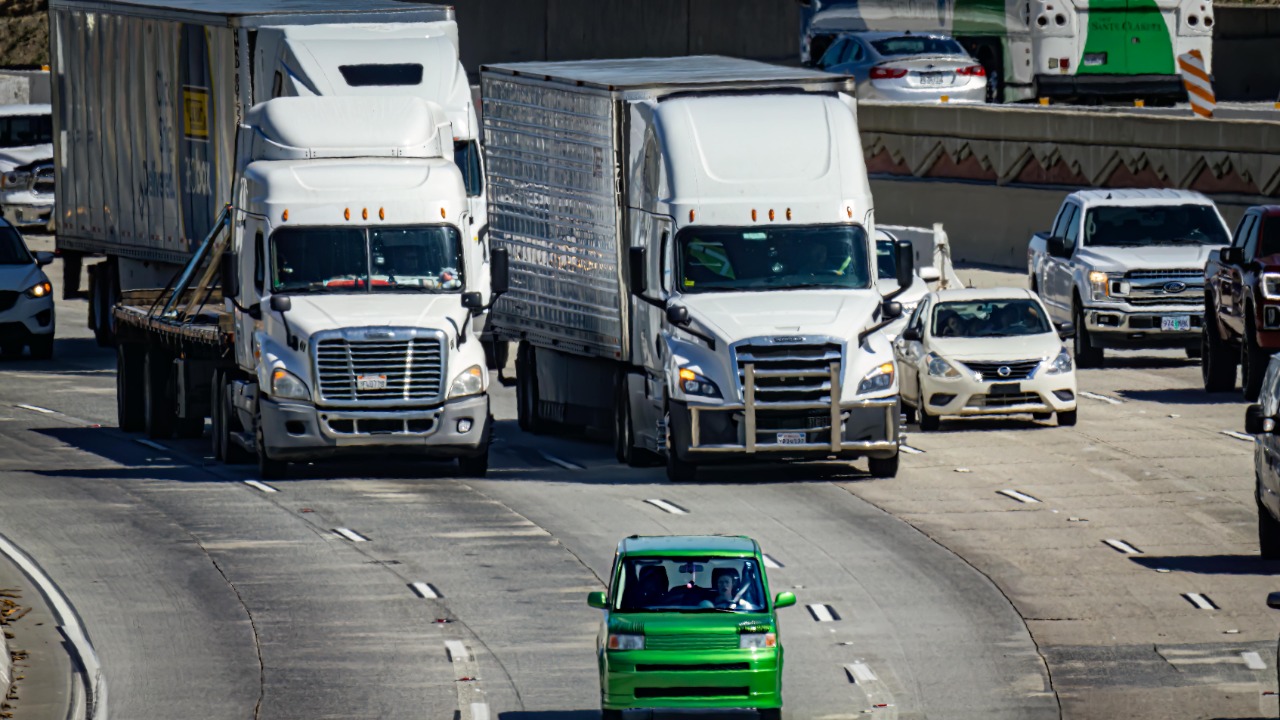

Self-driving trucks are often sold as a clean technological upgrade, a way to move goods faster, cheaper, and with fewer crashes. Beneath that promise sits a more uncomfortable reality: long-haul trucking is one of the last remaining blue-collar jobs that can still support a middle class life without a college degree, and automation is poised to hollow it out. If that income disappears faster than new, comparable work appears, the result will not just be job churn, but a direct hit to the consumer spending and local tax bases that keep the middle class economy alive.
The stakes are not abstract. Long-haul drivers anchor small towns along the interstate, support diners, motels, repair shops, and help sustain families in regions that have already lost factories and mines. As fleets experiment with autonomous systems that can run rigs around the clock, the risk is that efficiency gains will be privatized at the top of the income ladder while the costs are socialized across communities that can least afford another economic shock.
The economic logic pushing drivers off the road
From a balance-sheet perspective, replacing human drivers with software is brutally compelling. Labor is one of the largest operating costs in trucking, and autonomous systems promise trucks that can run longer hours without overtime, rest breaks, or health insurance. Analysts point out that long-haul rigs often travel tens of billions of miles empty, and that Trucking companies estimate they lose between 50 cents and more per mile on those deadhead runs, a gap automation could narrow by better routing and nonstop operation. When investors see a path to reclaiming billions in wasted fuel, wages, and idle equipment, the pressure to automate becomes relentless.
That pressure is already visible in how logistics giants experiment with platooning, remote monitoring, and highway-only autonomy that keeps trucks moving while minimizing human input. Advocates argue that this will cut crashes and emissions, but critics warn that the gains will flow to a narrow slice of shareholders and executives. One analysis notes that companies like Amazon are already using automation to shift income toward the top of the distribution, and that when wages fall for workers, they also fall as consumers of services, shrinking local economies that depend on their spending, a dynamic highlighted in work by One analyst. The more freight is moved by code instead of people, the more that feedback loop threatens to erode the middle tier of the economy.
Who loses work, and what replaces it
Labor researchers are blunt about the distributional impact. A major study of driverless freight warns that, Without policy intervention, automation will likely eliminate high- and mid-wage trucking jobs while creating only low-quality replacements in support roles. The same work suggests that splitting freight into long-haul highway segments run by autonomous systems and local routes handled by humans could preserve some employment, but only if strong job-quality standards are attached to those remaining roles, a point underscored in analysis from Sep. In other words, the default trajectory is fewer well-paid drivers and more precarious, lower-paid work.
Industry-backed reports sometimes counter that the transition will be gradual and cushioned by demographics. One study notes that the average age of a long-haul driver is relatively high, and that many current workers may retire before full automation arrives, which is framed as somewhat good news for those already in the cab. Yet the same report stresses that future entrants, especially those without a college degree, will find fewer paths into the field, a warning echoed in coverage from Mar. The risk is not a sudden pink slip for every driver, but a slow closing of one of the last accessible doors to middle class stability.
Promises of growth versus regional collapse
Supporters of automation point to macroeconomic gains. A study commissioned in California argues that autonomous freight could expand the state’s output, cut congestion, and reduce crashes. In that work, Laura Wilkinson of the Silicon Valley Leadership Group Foundatio describes how new logistics hubs and technology jobs around SAN JOSE could benefit from safer, more efficient freight corridors, including reductions in fatalities and safety costs tied to human error, as detailed in research cited by Laura Wilkinson. For coastal tech centers and major ports, the shift looks like a growth story.
Zoom in on the interstate towns that depend on truck stops and depots, however, and the picture darkens. Analysts warn that when a high-wage occupation disappears in a region with few alternatives, the damage ripples outward through diners, motels, and local tax receipts. Commentators who track automation’s social impact argue that self-driving freight could trigger exactly this pattern, with There being a driver in each truck at first, but with their feet off the pedals and hands off the wheel, and with the expectation that They can eventually be removed entirely, a scenario described in a widely shared critique linked to Nov. Once the human presence is treated as a temporary safety measure rather than a core part of the job, the countdown to full displacement begins, and with it the risk of regional economic collapse.
The new logistics map and who controls it
Autonomous freight is not just a labor story, it is a power shift inside logistics. Investors like Sanar, who specializes in logistics and transportation, describe a “middle mile” market worth $300 billion, a segment that covers regional and highway routes between major hubs, as discussed in a detailed presentation shared in Oct. Whoever controls the software and data that orchestrate that $300 billion flow will be able to dictate terms to shippers, warehouses, and smaller carriers, concentrating leverage in a handful of platform companies.
At the same time, industry groups emphasize the potential for cleaner, safer roads. Advocates for Aurora-style systems argue that Autonomous trucks could reduce emissions, make roads safer, and speed up deliveries, which they say would lower the cost of shipped goods and effectively turbocharge the broader economy, as described in analysis from Jun. The question is whether those gains will be shared with the workers and communities that currently keep freight moving, or whether they will be captured by a narrow layer of software vendors and mega-carriers.
Costs, safety, and the politics of transition
Even on the cost side, the story is more complicated than a simple swap of wages for code. A detailed review of The Financial Implications of Autonomous Trucking notes that Initial Investment and Technology Costs are substantial, including sensors, computing hardware, and new maintenance regimes, and that other upfront costs required to deploy autonomous trucks at scale could slow adoption in the short term, as outlined in research from Financial Implications of. Some industry voices argue that, once those systems are amortized, the savings will be dramatic, but even enthusiasts concede that the economics depend on high utilization and careful integration with human-driven “final mile” routes.
Drivers themselves are divided. Doug Bloch, the political director of the Teamsters Joint Council 7, which represents 100,000 teamsters in the West, has argued that automation could, in theory, improve safety and working conditions if unions and regulators shape the rollout, a position captured in reporting on Doug Bloch. Others warn that, without strong bargaining power, drivers will be pushed into lower-paid local roles that simply chase the algorithms, loading and unloading freight on tighter and tighter schedules.
Safety gains and the “final mile” trap
Proponents of self-driving semis lean heavily on safety. Pilot programs in the United States test highway-only systems that promise fewer fatigue-related crashes and smoother traffic flow. Coverage of these trials notes that Autonomous semi-trucks are being put to the test with the idea that they could remedy driver shortages, reduce accidents, and improve fuel efficiency, as described in reporting from Mar. Those are real benefits, but they do not erase the need to manage what happens to the people whose livelihoods are tied to the current, imperfect system.
Industry consultants often sketch a hybrid future in which autonomous rigs handle long stretches of interstate while human drivers manage complex urban streets and customer interactions. One logistics firm notes that Autonomous trucks will hit the industry hardest on long-haul routes, while humans are likely to remain essential for the “final mile,” especially in dense cities where nuanced judgment, quick braking, and spatial awareness are critical, a view laid out in analysis from Jul. That sounds like a compromise, but it risks turning many drivers into lower-paid shuttle operators, stripped of the long-haul miles that currently justify higher wages.
What a just transition would actually require
Behind the spreadsheets and pilot projects lies a basic political choice. Commenters who have dug into the numbers argue that, while automation will eventually cut operating costs, the savings are often overstated, with one detailed breakdown noting that Your costs are way off when people assume instant, massive savings, and that in practice trucking will likely keep human drivers to handle the “final mile” for a long time, a perspective shared in a discussion on Feb. That window creates space for policy, from wage insurance and retraining to requirements that companies share productivity gains with workers rather than simply cutting payroll.
Some union leaders and policymakers argue that the technology itself is not the villain, the problem is who writes the rules. If regulators insist that new autonomous corridors come with binding labor standards, local hiring for support roles, and dedicated funding for communities that lose trucking income, the shift could be managed without detonating the middle class economy. If, instead, fleets are allowed to automate on purely financial terms, the likely outcome is a familiar one: concentrated gains at the top, and a long tail of hollowed-out towns watching self-driving trucks roll past without stopping.
More from Morning Overview