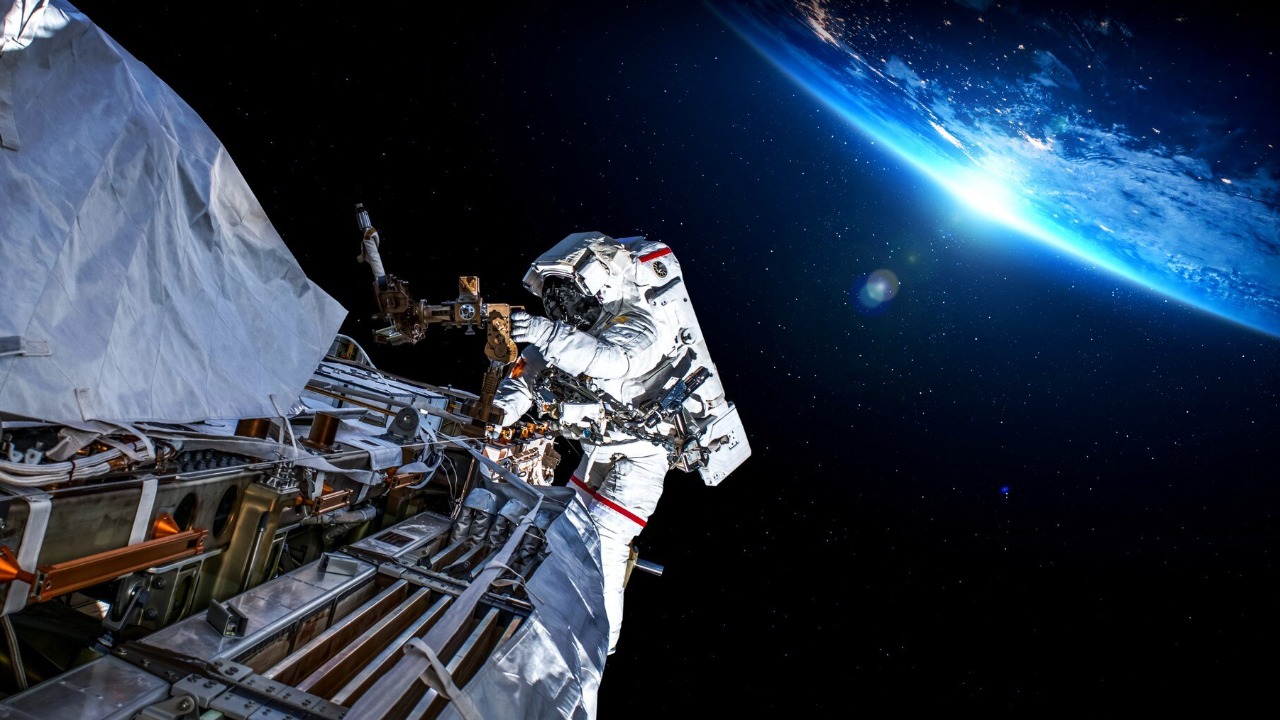

When something goes wrong with a human body in orbit, there is no nearby emergency room, no quick ambulance ride, and no easy way home. NASA has had to build an entire parallel health system that can function in microgravity, inside a cramped spacecraft, and often days or months away from a hospital. Handling astronaut medical emergencies in space is less about heroics in the moment and more about years of planning, training, and engineering to make sure a crisis never spirals out of control.
That planning is being tested in real time as missions stretch longer and farther from Earth, from the International Space Station to future journeys toward Mars. The same protocols that protect crews today will have to evolve into something closer to a self-contained space clinic, where astronauts can diagnose, stabilize, and sometimes evacuate a patient with only limited help from the ground.
From space medicine to everyday care in orbit
NASA’s approach starts with a discipline known as Space medicine, which blends space physiology, preventive medicine, primary care, emergency medicine, acute care medicine, and austere medicine into a single toolkit. The goal is to understand how microgravity, radiation, confinement, and isolation change the human body, then design countermeasures before those changes become emergencies. That is why NASA tracks how bones thin, muscles weaken, and fluids shift toward the head in orbit, and why it studies how surgically implantable heart pacemakers and other devices behave in “zero gravity.”
On the International Space Station, that science translates into routine monitoring and early intervention. NASA explains that the human body in space adapts in ways that can affect vision, balance, and cardiovascular function, so crews follow strict exercise regimens and medical checkups to keep those systems stable. Crew members also perform ultrasound scans on each other to monitor organ health, a practice that doubles as training for emergency imaging if someone becomes sick during a mission.
Telemedicine, flight surgeons, and Crew Medical Officers
When something does go wrong, NASA leans heavily on telemedicine. Crews on the space station have real-time access to a flight surgeon at Mission Control, who can guide them through diagnosis and treatment much as a doctor might supervise a remote clinic on Earth. For the most part, For the International Space Station, NASA uses this model to manage everything from minor infections to more complex procedures, with ground teams helping crews interpret symptoms and operate specialized equipment.
Inside the spacecraft, responsibility falls to designated non-physician medics. The The Role of Crew Medical Officers is central: Each mission includes at least two Crew Medical Officers who receive training in space physiology, medical procedures, and behavioral health so they can act as first responders. Earlier programs formalized this further, with documents noting that For Shuttle two crewmembers were selected by the Commander of each flight as Crew Medical Officers and given dedicated medical instruction. That legacy continues on the station, where one astronaut is in charge of treatments and coordinates with the ground when a crewmate falls ill.
Tools of a spaceborne emergency room
Even the best trained astronaut is limited without the right tools, so NASA has turned the station into a compact diagnostic lab. The agency highlights how NASA manages astronaut health with effective diagnostics research, developing compact devices that can analyze blood and other samples with minimal power and volume. One example is the rHEALTH One analyzer, which can run a broad panel of tests from a single drop, a capability that becomes critical when every vial and reagent has to be launched from Earth.
These devices are part of a broader strategy to make the station medically self-sufficient. ESA (European Space Agency) astronaut Samantha Cristoforetti has operated the rHEALTH One analyzer on the International Space Station, demonstrating how astronauts can run sophisticated diagnostics without a lab technician. At the same time, One approach to space medical technology has been to integrate sensors, decision-support software, and communication systems so that ground teams can provide real-time support while the crew carries out procedures.
CPR, trauma, and surgery when gravity is gone
Some emergencies cannot wait for a lab result or a teleconference. Cardiac arrest, severe bleeding, or trauma from a collision demand immediate action, and microgravity changes even the most basic techniques. Traditional chest compressions rely on body weight, which does not work when you are floating, so trainers have developed zero-gravity CPR techniques that use leg braces, handholds, or “straddling” positions to generate force. A detailed guide to CPR in space describes how NASA is preparing astronauts to save lives with methods tailored to the station’s cramped modules.
Trauma and surgical emergencies pose an even tougher challenge. Researchers studying Facing Trauma and Surgical Emergency in Space point out that mass, volume, and power constraints limit what equipment can fly, while microgravity makes it hard to control blood, instruments, and contamination. That is why NASA and its partners have prioritized a subset of conditions that are both likely and life threatening, with one effort focusing on 10 medical conditions drawn from a list of 100 priority scenarios, including visual impairment and intracranial pressure syndrome. The aim is to design protocols and tools that can stabilize a patient long enough to either recover in orbit or survive the trip home.
Evacuation as the last line of defense
Sometimes, even the best on-board care is not enough, and the safest option is to bring the astronaut back to Earth. NASA has always treated evacuation as a core part of its emergency planning, much as maritime operators are told that If the condition is beyond the capabilities of onboard treatment, you may need to call for a medical evacuation. On the station, that lifeboat is a docked spacecraft kept ready to undock on short notice, a concept underscored when NASA’s plan for bringing astronauts home included using a capsule as a lifeboat in case of an emergency.
The stakes of that decision became clear earlier this year, when a NASA crew prepared for a rare early return after a medical issue in space. The affected crew member is in stable condition and is not expected to receive special treatment on Earth, but the agency still chose to adjust the mission timeline rather than risk a deterioration in orbit. Reporting on the same episode noted that Jan marked the first time NASA planned to return 4 astronauts home early in a formal medical evacuation from the International Space Station, a move that underscored how seriously it treats even non-critical conditions when they unfold hundreds of kilometers above Earth.
Inside NASA’s evacuation playbook
Behind that decision sits a detailed contingency plan. In the event of a serious illness or injury, In the event of a medical emergency that machines alone cannot handle, NASA can order a spacecraft to undock and return to Earth ahead of schedule. A separate report on the same incident described a mysterious medical issue that forced the agency to consider its evacuation plan for astronauts, with officials stressing that the astronaut was stable on the station but that the option to leave early had to be ready.
That readiness depends on having both medical and transportation redundancy. Japanese materials for younger readers explain that Each astronaut in the Space Shuttle era had a specific assignment, including one in charge of medical treatments, and that many medical instruments and medicines are stored on board to support the flight back to Earth. Today’s station missions follow the same logic, ensuring that a docked capsule can serve as a rapid return vehicle while the onboard medical kit can stabilize a patient through reentry and recovery.
Preparing for Mars, where evacuation is not an option
All of these systems are being stress-tested as NASA looks beyond low Earth orbit. The agency notes that NASA is developing the capabilities needed to send humans to an asteroid by 2025 and Mars in the 2030s, with Future Mars exploration counted among its core goals. On those journeys, distance from Earth will make real-time telemedicine and rapid evacuation impossible. As one analysis of Distance from Earth points out, Astronauts on deep-space missions must be self-sufficient, with limited supplies and no quick resupply or return if a serious ailment develops.
That reality is pushing NASA to refine its entire medical architecture, from training to hardware. The agency’s own overview of astronaut health care in space emphasizes how long-duration missions on the International Space Station already serve as a testbed for future exploration. A more detailed section notes that NASA has a team of flight surgeons and specialists who support every mission to the space station, and that a typical mission to the International Space Stat lasts months, not weeks. As those missions lengthen and move farther out, the balance will shift from Earth-led telemedicine to truly autonomous care, where crews must diagnose, treat, and, if necessary, perform complex procedures with only delayed guidance from home.
More from Morning Overview