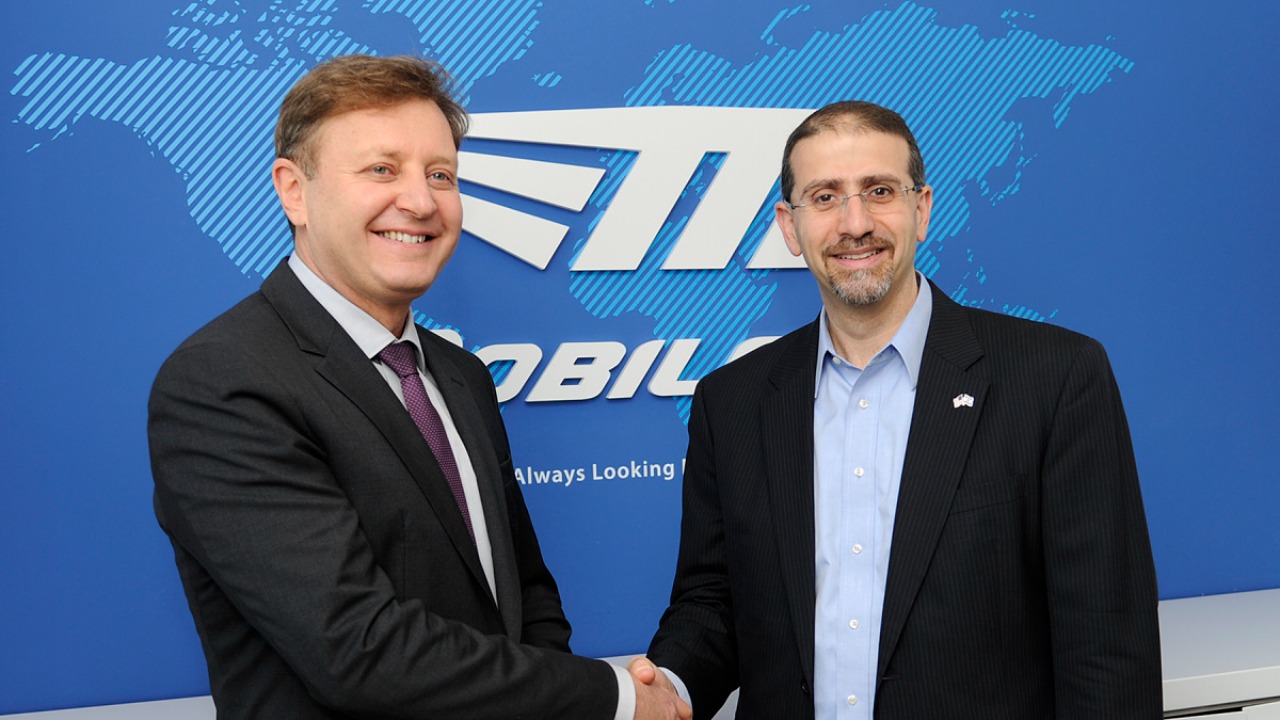

Mobileye just committed roughly $900 million to a humanoid robotics bet that reaches far beyond its roots in driver-assistance chips. The acquisition of Mentee Robotics is not a side project, it is a statement that the company sees “physical AI” as the next logical step after teaching cars to drive themselves. I see this deal as a test of whether the playbook that turned Mobileye into an automotive powerhouse can be stretched to robots that walk into homes and warehouses.
Why a car-vision giant is buying a humanoid startup
Mobileye built its reputation by teaching machines to understand roads, traffic and human behavior, then packaging that intelligence into systems that automakers could bolt into millions of vehicles. Moving into humanoid robots looks like a leap, but strategically it is an extension of the same idea: perception, planning and control, now applied to legs and arms instead of wheels and steering racks. By spending close to $900 million on Mentee Robotics, the company is effectively saying that the same stack that powers advanced driver assistance and robotaxis can also anchor robots that navigate kitchens, loading docks and factory aisles.
The structure of the deal underlines how serious that bet is. Under the agreement, Under the terms, Mobileye will buy Mentee Robotics for about $612 m in cash and up to 26.2 m shares of its stock, a mix that ties the startup’s upside directly to the larger company’s future. That combination of $612 million and equity gives Mobileye control of a humanoid platform while preserving incentives for the robotics team to keep pushing the technology forward inside a much bigger organization. For a company that already sells its chips and software into production vehicles, this is less a moonshot than a calculated expansion of its autonomy franchise.
How the $900 million price tag is structured
When people hear that Mobileye is spending around $900 million on a humanoid robotics startup, it is easy to imagine a single, eye-popping wire transfer. In reality, the structure is more nuanced, blending cash and stock in a way that spreads risk and aligns incentives. The cash portion, about $612 m, gives Mentee’s founders and early backers a concrete payout, while the stock component, up to 26.2 m shares, effectively turns them into long-term partners in Mobileye’s broader autonomy strategy.
That mix matters because it signals how Mobileye thinks about the time horizon for humanoid robots. By committing $612 million up front and reserving a large block of shares, the company is acknowledging that Mentee’s technology will take years to mature into commercial products, but it also wants the team fully invested in that journey. The valuation implied by the cash and equity package, which together push the total consideration toward the $900 million mark, reflects not just the current state of Mentee’s prototypes but the belief that a vertically integrated humanoid platform can eventually sit alongside Mobileye’s existing automotive business as a second major revenue engine.
What Mobileye is actually buying in Mentee Robotics
On paper, Mentee Robotics is a humanoid robotics startup, but what Mobileye is really acquiring is a full-stack approach to “physical AI.” The company has been developing a third-generation, vertically integrated humanoid robot that combines mechanical design, sensors, on-board compute and high-level software into a single platform. In its own announcement from LAS VEGAS, Jan Mobileye described entering a definitive agreement to acquire Mentee Robotics Ltd specifically to accelerate its leadership in this kind of embodied intelligence, with that third-generation, vertically integrated humanoid robot at the center.
That vertical integration is crucial because it mirrors how Mobileye has long operated in automotive, where it designs chips, writes perception and planning software, and delivers complete systems to automakers. By bringing Mentee’s humanoid platform in-house, Mobileye is not just buying a robot body, it is acquiring a development environment where it can plug in its own perception algorithms, mapping tools and safety frameworks. The result is a foundation on which Mobileye can iterate quickly, from early prototypes walking around test labs to specialized versions tailored for logistics, retail or even elder care, all built on a common hardware and software spine.
Inside Mentee’s humanoid: from household chores to warehouses
Mentee Robotics has not been shy about its ambitions for where its humanoids will work. The company has showcased a system it describes as Mentee Robotics Unveils AI, Powered Humanoid Robot for Household and Warehouse Applications Mentee Robotics, positioning the platform as flexible enough to handle both domestic tasks and industrial jobs. That dual focus is important, because it suggests the robots are being designed to operate in cluttered, unstructured environments like kitchens and living rooms, as well as more predictable but demanding spaces such as fulfillment centers and storage facilities.
Designing for both households and warehouses forces Mentee to solve a wide range of problems, from safe interaction with children and pets to precise manipulation of boxes and tools. By acquiring a platform that already targets these use cases, Mobileye is effectively buying a shortcut into markets that span consumer services and enterprise logistics. The household angle hints at long-term visions of robots that can unload groceries or assist with mobility, while the warehouse focus aligns more immediately with corporate customers that already invest heavily in automation and could be early adopters of humanoid systems that can navigate existing infrastructure without expensive retrofits.
How Mobileye’s self-driving tech fits a walking robot
Mobileye’s core competency is teaching machines to see and move safely through complex environments, and that expertise transfers surprisingly well from cars to bipedal robots. The company’s self-driving system is built to interpret camera feeds, lidar and radar, then make split-second decisions about steering, braking and acceleration. According to its own description, Mobileye‘s innovative self-driving system can be implemented to disrupt various industries by turning them autonomous, from advanced driver assistance all the way to fully self-driving vehicles and robotaxis, which shows how adaptable the underlying technology already is.
Translating that stack to a humanoid robot means swapping steering angles for joint torques and lane lines for stair edges, but the underlying perception and planning challenges are similar. A robot walking through a warehouse needs to detect obstacles, predict human motion and choose safe, efficient paths, just as a robotaxi does on city streets. By embedding its existing autonomy software into Mentee’s vertically integrated platform, Mobileye can reuse years of work on mapping, redundancy and safety validation, potentially giving its humanoids a head start over rivals that are still building those capabilities from scratch. In practice, that could mean robots that navigate crowded aisles or busy kitchens with the same confidence that Mobileye-powered cars show in dense traffic.
Why investors cheered the deal
Markets do not always reward big, long-term bets, but the initial reaction to Mobileye’s move into humanoids was notably positive. After the company announced the roughly $900 million acquisition of the humanoid robotics startup, its shares were trading nearly 6 percent higher in after-hours action on Tuesday, a sign that investors see strategic logic rather than reckless spending. The reaction captured in the phrase Investing, Mobileye, Tuesday reflects a view that the deal could open new growth avenues beyond the cyclical automotive sector.
That response matters because it gives Mobileye more room to invest aggressively in integrating Mentee’s technology without immediately facing pressure to cut back. A stock price bump also makes the equity portion of the deal, up to 26.2 m shares, more attractive to Mentee’s stakeholders, reinforcing the alignment between the two companies. For shareholders, the bet is that Mobileye can leverage its existing relationships with automakers and mobility providers to seed early deployments of humanoid robots in controlled environments, then scale into broader markets as the technology matures, turning today’s $90 and $900 million headlines into recurring revenue streams.
From driver assistance to “physical AI” platforms
Mobileye’s evolution from a supplier of driver-assistance chips to a would-be leader in “physical AI” is not happening in a vacuum. The company already offers a spectrum of products, from basic lane-keeping and collision warnings to full self-driving systems that can power robotaxis and autonomous shuttles. Its own materials emphasize that its self-driving system can be implemented to disrupt various industries by turning them autonomous, which hints at a strategy that treats autonomy as a horizontal capability rather than a product limited to cars.
By acquiring Mentee Robotics, Mobileye is extending that horizontal strategy into the realm of humanoid platforms. Instead of building one-off robots for single tasks, the goal is to create a general-purpose body and brain that can be reconfigured for different jobs, much like its automotive stack can be tuned for a compact hatchback or a heavy-duty truck. In my view, this is where the $612 million cash and 26.2 m share commitment becomes most interesting: it is not just paying for a startup’s current prototypes, it is funding a bet that Mobileye can become the default autonomy layer for machines that move through the world on two legs as well as four wheels.
The competitive stakes in humanoid robotics
Humanoid robots have shifted from science fiction to a crowded competitive field, with automotive giants, tech conglomerates and specialized startups all racing to build machines that can work in human environments. In that context, Mobileye’s decision to spend close to $900 million on Mentee is as much a defensive move as an offensive one. If humanoids do become the next major platform for automation, the company cannot afford to watch rivals lock up the best technology and talent while it remains confined to vehicles.
What sets Mobileye’s approach apart is the combination of a proven autonomy stack and a vertically integrated humanoid platform that already targets both household and warehouse applications. Mentee Robotics Unveils AI, Powered Humanoid Robot for Household and Warehouse Applications Mentee Robotics is more than a marketing phrase, it signals a design philosophy that aligns with Mobileye’s own history of building systems that can scale across use cases. If the company can successfully merge its perception and planning software with Mentee’s hardware and control systems, it will not just have bought a robot, it will have positioned itself as a central player in the emerging market for physical AI, where the same algorithms that keep cars between lane lines could soon help robots carry boxes, fold laundry or assist an aging population.
More from Morning Overview