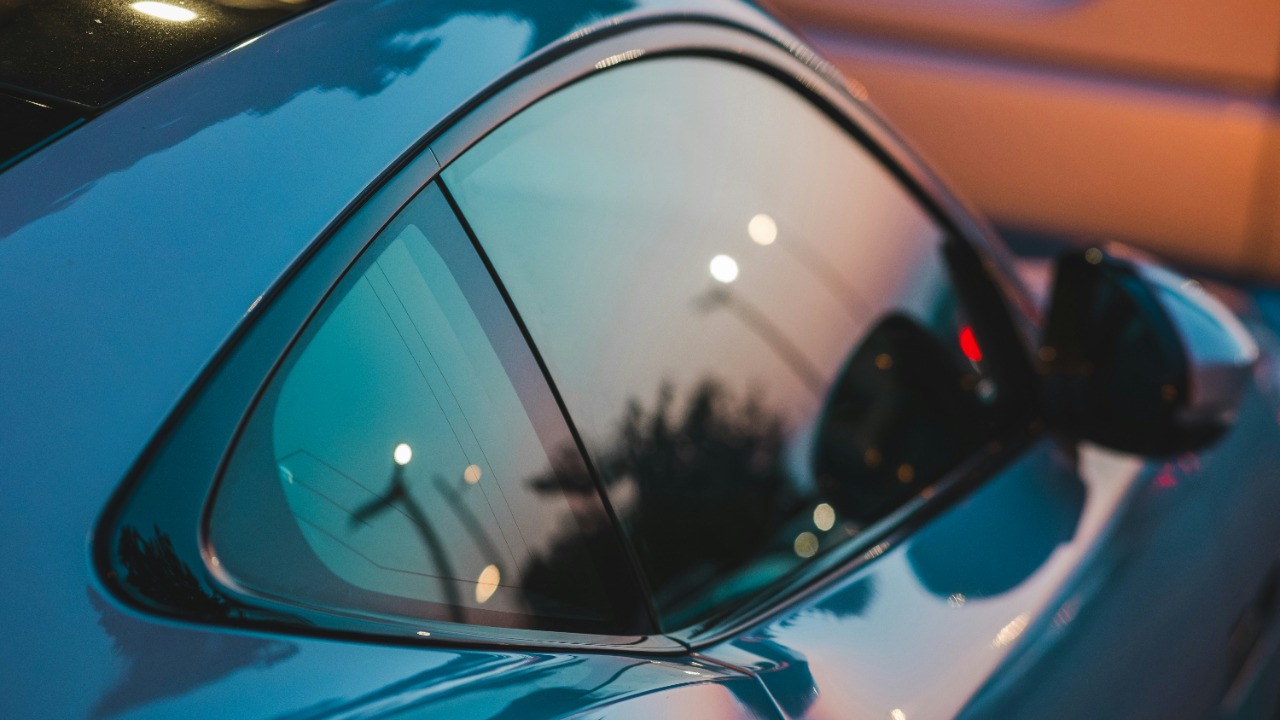

Bullet-resistant car windows look deceptively ordinary, yet every pane is a small engineering project built to catch and slow bullets instead of shattering on impact. Layer by layer, glass, plastics, and adhesives are stacked, heated, and curved until they behave less like a fragile window and more like transparent armor. To understand how that transformation happens, I need to start with the basic physics of stopping a projectile and then follow the build process from raw sheet to installed window.
What emerges is a very specific recipe: hard layers to deform the bullet, soft layers to absorb its energy, and careful lamination so the whole sandwich stays clear enough to drive behind. The result is not truly “bulletproof” in the absolute sense, but a calibrated barrier rated to survive particular calibers and attack scenarios that would obliterate Standard automotive glass.
From “bulletproof” myth to bullet-resistant reality
The first step in understanding armored car windows is accepting that “bulletproof” is marketing shorthand, not a literal promise. In technical language, the material is described as bullet-resistant or ballistic glass, a transparent armor system that can be penetrated if the threat is powerful enough or sustained long enough. Even the most advanced panes are designed around specific test rounds and velocities, not every possible weapon a car might encounter.
That is why specialists stress that Bulletproof glass, also called ballistic glass or transparent armor, is rated against defined threats such as a 9 mm 124 grain round at a specified speed, rather than an open-ended guarantee of invulnerability. The ability of the polycarbonate and glass layers to stop those rounds depends on thickness, composition, and how the laminate is bonded, all of which are tuned to meet industry standards like UL 752 and similar ballistic classifications.
Why car glass starts from a different baseline
Armored vehicles do not begin with a blank slate, they start from the complex glazing already used in modern cars. Standard automotive glass is not one uniform material, it is a mix of tempered side windows and laminated windshields, each engineered to break in a controlled way that protects occupants in crashes rather than in gunfire. Tempered side glass explodes into small cubes, while laminated windshields hold together around a plastic interlayer.
When builders talk about upgrading a vehicle, they are replacing or overlaying that Standard glass with multi-layer ballistic assemblies that are much thicker and heavier. Reports on how “bulletproof” car windows are made describe how different manufacturers may use their own recipes of glass and plastic, but all must match the original window openings, curves, and mounting points so the armored glass integrates cleanly into the rest of the vehicle structure.
The basic sandwich: hard face, soft core, tough back
At the heart of every ballistic window is a simple idea: combine a hard strike face that can flatten and deform a bullet with softer, more elastic layers that soak up the remaining energy. The hard side, usually facing the outside world, is typically a high quality glass sheet that resists scratching and maintains optical clarity, while the inner layers are plastics such as polycarbonate or specialized interlayers that flex instead of shattering. This combination turns a high speed projectile into a slowed, mushroomed mass trapped inside the laminate.
Technical guides on Bulletproof glass explain that the hard glass layer first blunts and spreads the bullet, then the polycarbonate and other plastics stretch and absorb the impact, preventing spall and keeping fragments from spraying into the cabin. The ability of the polycarbonate to stop a given round depends on its thickness and how it is bonded to the glass, which is why armored car windows often look slightly thicker and may show a faint edge profile where multiple sheets have been laminated together.
Layering and lamination: how the stack is built
Once engineers decide on the mix of glass and plastic, the real work begins in the lamination line. Multiple sheets are cut to shape, cleaned to remove any dust that could cloud the view, and then stacked in a precise order that might alternate glass and polycarbonate or use several glass plies followed by a thick plastic core. Adhesive interlayers or resins are added between each sheet so the stack can be fused into a single monolithic unit under heat and pressure.
Manufacturing walkthroughs describe this as a Layering process in which Multiple layers of glass and plastic are assembled, then placed in an autoclave or similar oven where heat and vacuum drive out air and cure the bonding material. The result is a clear, solid panel that behaves as one piece even though it may contain half a dozen or more individual plies, each contributing a specific property such as hardness, flexibility, or resistance to UV and chemicals.
Different materials for different threats
Not every armored car window uses the same recipe, because the threat profile and budget can vary from a lightly protected SUV to a head-of-state limousine. One common approach is to use monolithic acrylic, a single thick plastic sheet that can be installed as a solid pane, typically in thicknesses like 1 1/4 or 1 3/8 inches depending on the required level of protection. Acrylic is lighter than glass and can be polished to good clarity, but it can scratch more easily and may not handle very high caliber rounds as efficiently as more complex laminates.
Another widely used option is laminated polycarbonate glass, where polycarbonate is sandwiched between two spreads of glass to create a hybrid that leverages the hardness of glass and the toughness of plastic. Guides on How the Four Types of Bulletproof Glass Are Made and What Bulletproof Glass Is Made of explain that this laminated polycarbonate glass is often used for protection levels 1, 2, and 3, where the goal is to stop handguns and some lower energy threats while keeping weight manageable for vehicle doors and frames.
Curving, fitting, and matching factory lines
Building a flat ballistic panel is one challenge, but turning it into a car window that follows the curves of a BMW X7 or a Toyota Land Cruiser is another. Armored glass for vehicles must be bent or formed to match the original glazing so that seals, window frames, and door structures still work as intended. That means heating the laminated stack to controlled temperatures and using molds or tooling that reproduce the factory curvature without introducing optical distortion.
Specialists in armored glass emphasize that Multiple layers are Usually made from laminated glass and polycarbonate, and the bonding process must hold everything together, preventing shattering even when the pane is curved. The adhesive interlayer acts as a structural glue that keeps fragments attached after impact, while careful forming ensures the driver’s view is not warped, which is critical when a heavy ballistic window is installed where a thin Standard side glass once sat.
From lab rating to real-world performance
Once the pane is built and shaped, its performance is defined by ballistic ratings that translate lab tests into real-world expectations. In the automotive world, Understanding Protection Levels Ballistic glass means matching the window to standards that specify which calibers, bullet types, and shot patterns it must survive. For example, some levels focus on handgun threats, while higher levels are tested against rifle rounds and even armor piercing ammunition.
At the top end of civilian protection, descriptions of How the Strongest Bulletproof Glass Is Made note that Level 10 bulletproof glass is designed to withstand multiple hits from a high powered rifle, a level of performance that requires very thick, heavy laminates. Armored car builders choose these ratings based on the client’s risk profile, knowing that higher levels add weight that affects door hinges, window regulators, and even suspension tuning, which is why not every “bulletproof” SUV carries the same invisible armor behind its tinted glass.
How the layers actually stop a bullet
On impact, the physics inside a ballistic window unfold in milliseconds. The outer glass layer cracks in a spiderweb pattern as it absorbs the initial shock, spreading the force over a wider area and beginning to deform the bullet. As the projectile pushes deeper, softer layers like polycarbonate stretch and compress, converting kinetic energy into heat and plastic deformation rather than allowing the bullet to punch straight through.
Technical explainers on how Bulletproof glass works describe how the hard outer layer and softer inner layers work together so that the bullet either stops within the laminate or exits with dramatically reduced energy, often trapped by the final inner ply. The History of Bulletproof Glass traces this concept back to early experiments by Edouard Benedictus, a French chemist who discovered that a plastic coated glass could crack without disintegrating, a principle that evolved into modern laminated safety and ballistic glazing used in today’s armored vehicles.
Vehicle specific challenges: doors, frames, and weight
Installing these heavy laminates into a car is not as simple as swapping one pane for another. A ballistic side window can weigh several times more than the tempered glass it replaces, which puts new loads on door hinges, window regulators, and even the door latch mechanisms. Armoring firms often reinforce the door structure, upgrade hinges, and in some cases limit how far windows can roll down to keep the added mass under control.
Video explainers on how bullet resistant vehicle glass works show how builders integrate the thicker panes into existing frames, sometimes adding steel channels or brackets to support the extra weight. Over the whole vehicle, these changes are part of a broader armored vehicle equation that includes reinforced pillars, roof, and floor, all of which must work together so the transparent armor does not become the weak link when the rest of the car has been upgraded to withstand similar ballistic threats.
Beyond bullets: other kinds of attacks
Although the primary design target is gunfire, armored car windows are also expected to handle other forms of violence, from thrown bricks to improvised tools and even blasts. The same laminated structure that catches bullets also resists forced entry, because the Multiple layers and tough interlayers keep the pane from opening a clean hole even after repeated blows. Attackers may crack and craze the surface, but the window tends to remain in place, buying occupants time to escape.
Analyses of What Bulletproof Glass can handle point out that Bulletproof glass is more resistant to such attacks than ordinary glazing, although it is not invulnerable to sustained assault with heavy tools or explosives. For instance, bulletproof glass is often tested for resistance to blunt impacts and edge attacks, and while it can outperform standard safety glass by a wide margin, designers still treat it as one part of a larger security system that includes reinforced body panels, run flat tires, and secure locking mechanisms.
Choosing the right build for the right car
For a client, the process of specifying armored windows is a balancing act between threat level, weight, cost, and day to day usability. A discreetly protected Mercedes S-Class used for city driving might prioritize lighter laminates that stop handguns and keep the doors easy to operate, while a convoy vehicle in a higher risk environment might accept thicker, heavier glass rated against armor piercing rifle rounds. In both cases, the builder must ensure that the glass, frames, and body armor are matched so there is no obvious weak point.
Guides on bulletproof glass for vehicles explain that You can obtain bulletproof glass by placing polycarbonate between glass layers that are bonded together with heat, but the exact thickness and composition are customized for each project. Some clients request mirrored windows or tinted finishes for privacy, others focus on maintaining factory like appearance so the car does not advertise its armored status, and all of these choices are layered on top of the core engineering that turns a stack of glass and plastic into a life saving barrier.
Why the term “Standard” still matters
Even as armoring technology advances, the contrast with unarmored glazing remains stark. Standard automotive glass is optimized for crash safety, cost, and weight, not for stopping bullets, which is why it fails so dramatically when struck by gunfire. In a typical car, side windows shatter out of the frame and windshields crack but remain mostly intact, behaviors that are ideal for accident scenarios but disastrous in an ambush.
Reports on how “bulletproof” car windows are made underline that Standard glass is engineered to different specifications depending on where it sits in the vehicle, and that every armored upgrade must respect those original design constraints while adding ballistic performance. That is why armoring firms invest so much effort in matching curvature, mounting hardware, and even defroster elements, so that the final product looks and functions like a normal window until the moment its layered structure is called on to do something very abnormal: catch a bullet in mid flight and hold it there.
More from MorningOverview