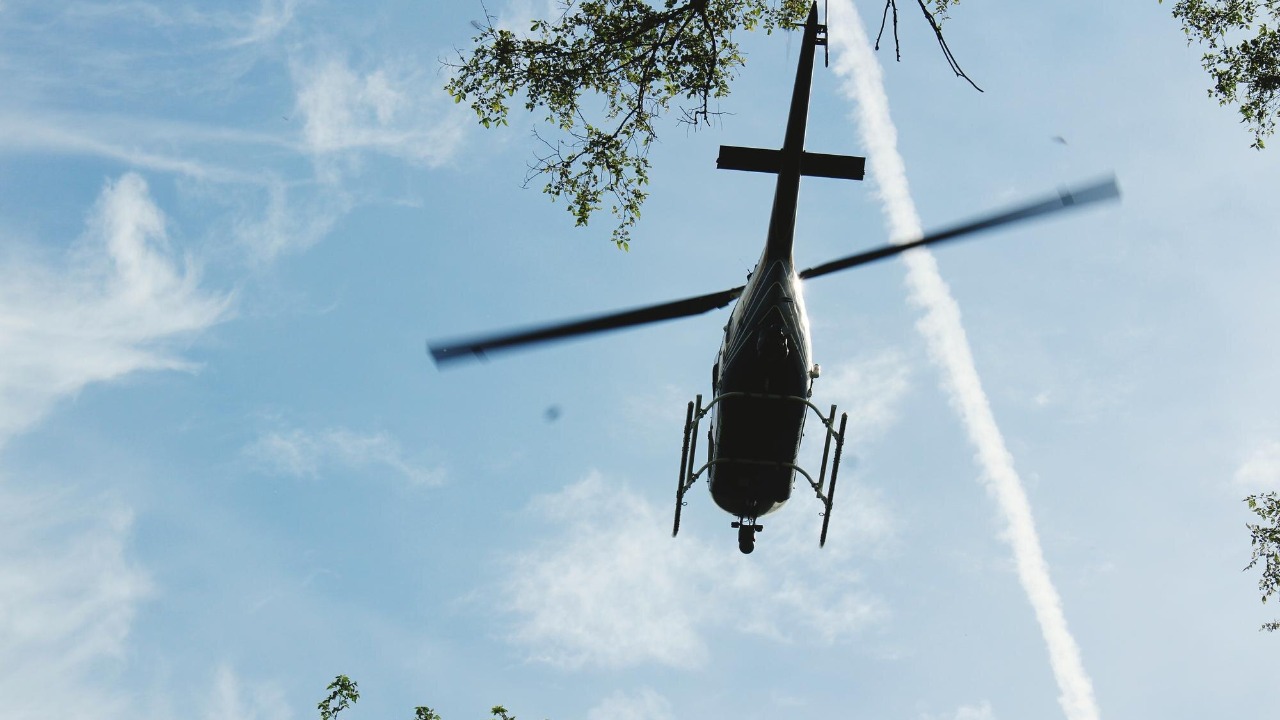

A sightseeing helicopter carrying four family members crashed in the mountains of central Arizona after apparently striking a slackline stretched high across a canyon, killing everyone on board. The collision has stunned both the aviation and highlining communities, raising urgent questions about how a known aerial hazard remained in the flight path despite advance warnings. As investigators work to piece together what happened in the seconds before impact, the case is already testing how well current safety systems protect aircraft from unconventional obstacles.
Early accounts from witnesses, federal records and local authorities point to a rare but devastating intersection between a recreational tightrope and low‑flying rotorcraft. The slackliners had notified aviation officials of their plan, yet the helicopter still flew into the line, prompting scrutiny of how that warning was shared, how pilots are trained to interpret it and whether regulators have kept pace with fast‑growing adventure sports.
What investigators say happened in the Arizona canyon
According to initial accounts from the Pinal County Sheriff Office and federal agencies, the helicopter was flying through rugged terrain near the mining town of Superior when it appears to have struck a slackline suspended across a canyon. A witness told officials that the aircraft hit the line that stretched from rim to rim, after which the helicopter went down and burst into flames in steep, rocky country that is popular with climbers and highliners. Early descriptions indicate the aircraft was an MD 369FF model, a light helicopter often used for charter flights and utility work in tight mountain terrain, which matches details shared with investigators about the Helicopter type.
Officials have said the crash killed all four people aboard, with no survivors found at the remote site despite rapid response from local rescuers and federal teams. Reporting from the scene describes the helicopter appearing to collide with a recreational slackline, sometimes called a highline when it is rigged hundreds of feet above the ground, before plummeting into the canyon below. The Pinal County Sheriff Office has been coordinating with federal investigators as they document wreckage patterns and interview witnesses, a process that will help determine how the aircraft approached the canyon and whether the pilot had any chance to see or avoid the line before impact, as outlined in early summaries of the apparent slackline collision.
The victims: a contract pilot and three young relatives
Authorities and family members have identified the dead as a well‑known contract helicopter pilot and three young women who were all related to him. The pilot, named in one account as David Mccardi, was described as experienced in mountain flying and charter work, and he was taking his nieces on a sightseeing trip when the helicopter went down on Friday the morning of the crash. A detailed remembrance shared by relatives and friends online refers to the loss of David Mccardi and his three nieces as a devastating blow to a close‑knit family that had gathered in Arizona for the holidays, a portrait that aligns with descriptions in a video report on how a highline slackline killed four.
Other reporting specifies that the four victims were all family members, including a 59-year-old pilot, a 22-year-old woman and two 21-year-old women who had joined the flight. Local coverage from Oregon notes that Three Oregon women were aboard the helicopter when it crashed in Arizona, tying the tragedy to communities far beyond the desert canyon where the wreckage was found. Those accounts emphasize that the three passengers were young women with deep roots in Oregon, while the pilot was an older relative who had built a career in aviation, details that appear in both the description of four family members killed and the account of 3 Oregon women, pilot killed.
How a highline became an aerial hazard
The slackline involved in the crash was not a casual backyard setup but a highline, a specialized form of slacklining in which athletes rig a narrow webbing across vast gaps and walk it at extreme heights. In the canyon outside Superior, highliners had stretched a line across a wide chasm, turning the rocky walls into anchor points for an activity that blends climbing, balance and exposure. Reports indicate that no one was walking on the line at the time of the incident, yet the webbing itself, likely tensioned and elevated hundreds of feet above the canyon floor, still posed a serious hazard to any low‑flying aircraft that crossed its path, a point underscored in detailed coverage of the Arizona highline setup.
Highlines are typically made from synthetic webbing that can be difficult to see from a distance, especially against complex backgrounds like rock walls and shadowed ravines. In this case, the line reportedly stretched across a canyon that also attracts low‑level helicopter flights, creating a conflict between a niche adventure sport and routine aviation routes. Witnesses told officials that the helicopter hit the slackline that stretched across the canyon, a description repeated in multiple accounts of how the slackline spanned the gorge, and investigators are now examining how visible the line would have been from the cockpit and whether any markers or flags were attached to make it stand out.
The Notam that warned pilots, and why it was not enough
One of the most troubling elements of the case is that the slackliners had filed an official aviation safety notice, known as a Notam, before rigging their highline. A Notam, short for Notice to Air Missions, is the standard way to alert pilots to temporary hazards such as cranes, parachute jumps or aerial surveys, and the highlining group used that system to flag their line as an obstacle. Federal aviation records show that a week before the fatal helicopter crash, a notice was issued that a tightrope would be stretched across the canyon so pilots could factor it into their planning as they charted flights through the region, according to summaries of the Federal aviation notice.
Despite that warning, the helicopter still flew into the line, which has led to intense scrutiny of how Notams are displayed and used in day‑to‑day flying. Some pilots have long complained that the system is cluttered with dense, text‑heavy alerts that can obscure the most critical hazards, and this crash is already being cited as a stark example of what happens when a key warning does not translate into practical avoidance. Coverage of the incident notes that the slackliners did what regulators ask by filing a Notam, yet the aircraft still struck the line, a disconnect that is now central to questions about whether the Notam system protected the flight.
Inside the federal investigation and the NTSB’s focus
Federal investigators have opened a full inquiry into the crash, with the National Transportation Safety Board expected to examine both the physical evidence at the site and the paper trail that preceded the flight. An Expert familiar with NTSB procedures has said the board will likely review the slackline alert as part of its work, looking closely at how the Notam was worded, how it appeared in pre‑flight briefings and whether any additional steps should have been taken to mark or restrict the area. The crash occurred outside Superior, and Federal investigators are treating the highline as a central factor in their reconstruction of the accident sequence, a focus reflected in early analysis of how the NTSB will review the slackline alert.
Beyond the Notam, the NTSB will look at the helicopter’s route, altitude and speed, as well as weather conditions and any potential mechanical issues that could have limited the pilot’s ability to maneuver. Investigators will also examine whether the highline complied with all relevant regulations, including any requirements for lighting or visual markers when lines are strung across known flight paths. Federal aviation officials have already confirmed that the crash happened about 64 miles, or 103 kilometers, east of Phoenix after the helicopter took off from a nearby airport, and that the notice described a tightrope that would be flagged and lit, details that appear in a wire account of how the slackline warning preceded the crash.
Families, friends and a shaken slackline community
In the days since the crash, relatives of the victims have shared grief and tributes that underscore how deeply the loss is being felt across multiple states. One family member, identified as Gallup, wrote that “All the love and support is welcome. We truly have no words right now,” capturing the shock of losing four members of the same family in a single flight. The International Slac community, which represents slackliners and highliners around the world, has also been following developments closely, both mourning the victims and bracing for potential regulatory fallout that could reshape how and where they rig lines, sentiments reflected in coverage of how All the love and support has poured in.
Highliners who were involved in setting up the canyon line have reportedly cooperated with investigators and expressed their own anguish that a recreational project they believed was properly documented ended in catastrophe. Many in the community see the crash as a painful reminder that their sport, which often prides itself on meticulous rigging and risk management, exists in shared spaces with other users who may not fully understand or anticipate the presence of a nearly invisible line. As more details emerge about the planning that went into the highline and the steps taken to notify aviation authorities, the slackline world is grappling with how to honor the victims while also defending a sport that has rarely intersected with aviation in such a deadly way.
What the crash reveals about aviation safety gaps
From an aviation safety perspective, the Arizona crash exposes a blind spot in how regulators and pilots account for unconventional obstacles in low‑level airspace. Helicopter operations in mountainous terrain already carry elevated risk because pilots often fly close to terrain and man‑made structures, and the addition of a highline across a canyon introduces a hazard that is both narrow and hard to detect visually. The fact that Four people died after the helicopter appears to have struck a recreational slackline in Arizona has prompted renewed debate over whether existing rules and guidance adequately address activities like highlining, which can place thin, tensioned lines directly in the path of sightseeing or utility flights, as described in accounts of the 4 dead after helicopter appears to strike slackline.
The case is also sharpening criticism of how hazard alerts are integrated into real‑world flying. If a Notam about a tightrope across a canyon can be filed yet still fail to prevent a collision, pilots and regulators may need to rethink how such warnings are prioritized, displayed and briefed. Some experts have suggested that temporary obstacles like highlines in popular flight corridors should trigger more prominent graphical depictions on digital maps or even temporary flight restrictions, rather than relying solely on text notices. As federal agencies review the chain of communication that preceded the Arizona crash, the outcome could influence how future recreational projects are coordinated with aviation authorities and how pilots are trained to interpret and act on unusual hazard descriptions.
Lingering questions about accountability and reform
Even as the investigation continues, the crash has already sparked difficult questions about who bears responsibility when a known hazard still leads to a fatal accident. The slackliners followed protocol by filing a Notam, and there is no indication so far that they violated any explicit prohibition on rigging a line across the canyon. At the same time, the helicopter’s operator and pilot had access to the same information, raising the possibility that the warning was missed, misunderstood or deemed manageable in practice. Coverage of new details on the deadly Arizona helicopter crash, including commentary from an Expert and references to the NTSB and Federal review, suggests that regulators may ultimately look beyond individual decisions to examine whether systemic changes are needed in how such hazards are flagged and mitigated, a theme that runs through updates on the Superior helicopter crash latest.
For now, many of the most pressing questions remain unanswered, and I have to treat several potential explanations as unverified based on available sources. It is not yet clear, for example, whether the line was lit or flagged exactly as described in the notice, how prominently the hazard appeared in the pilot’s pre‑flight briefing, or whether any last‑second evasive maneuvers were attempted before the collision. What is clear is that the crash killed All four people aboard, that a Federal aviation notice had warned of a tightrope in the area, and that both the aviation and highlining communities are now confronting the uncomfortable reality that even when procedures are followed on paper, they may not be enough to prevent a tragedy when a helicopter and a slackline share the same slice of sky.
More from Morning Overview